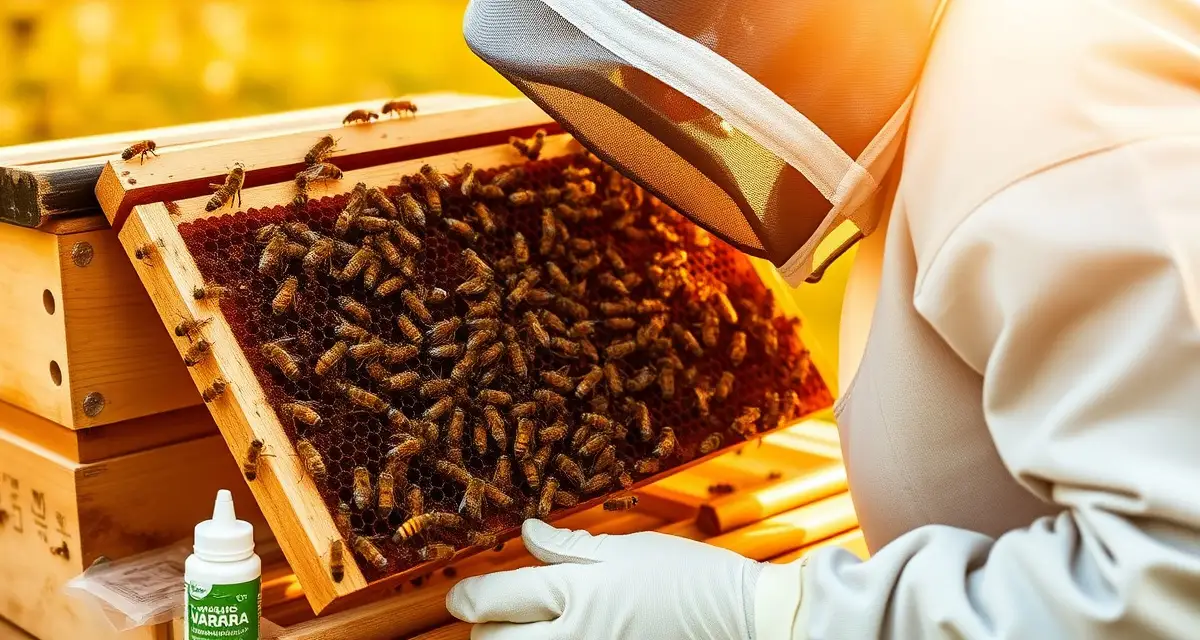
Varroa Treatment for Organic Beekeepers: Approved Substances and Records
Organic honey production under the USDA National Organic Program requires using only approved substances and maintaining records that document compliance. For varroa management, that means understanding exactly which treatments the NOP approves, keeping precise treatment records, and being ready to provide those records during a certification audit.
USDA NOP approval for honey operations includes oxalic acid, formic acid, thymol, and hop beta acids only. Every synthetic acaricide, including amitraz (Apivar), coumaphos (Apistan in some formulations), and fluvalinate (Apistan), is prohibited under organic certification. If you've ever treated with a prohibited substance, there's a transition period before you can certify organic.
TL;DR
- Organic-certified beekeeping permits only approved treatments: oxalic acid, formic acid, and thymol
- Amitraz (Apivar) and coumaphos are not permitted under USDA National Organic Program (NOP) standards
- Organic treatment records must document the specific approved product, batch number, application date, and rate
- Third-party certifiers may require annual treatment record submission as part of certification renewal
- VarroaVault's organic certification mode logs only approved treatments and flags any non-organic product entry
- Building a 3-year treatment history using only approved products strengthens certification applications
The Approved Varroa Treatments for Organic Production
Oxalic Acid (OA)
Oxalic acid is the most widely used organic-compliant varroa treatment in the US. It's a naturally occurring compound found in many plants, including rhubarb and spinach. The EPA registered it for apiculture use, and it's included on the USDA NOP National List as an approved material.
Approved formulations:
- OA dribble (3.2% solution per EPA label)
- OA vaporization (using EPA-registered vaporizers)
- Extended-release OA products (such as Api-Bioxal extended glycerin preparations)
OA has no mandatory pre-harvest interval. There is no PHI requirement, making it one of the cleanest options from a harvest timing standpoint.
Efficacy note: OA's effectiveness depends heavily on application method and brood status. On broodless colonies, dribble achieves 95-97% efficacy. With brood present, repeat vaporization is required for comparable results. Organic beekeepers relying on OA need to understand its brood-state limitations.
Formic Acid
Formic acid is naturally produced by honey bees and found at trace levels in honey. Both MAQS and Formic Pro are approved for use in organic operations.
The advantage of formic acid is brood penetration: it kills mites inside capped cells, not just phoretic mites on adult bees. This makes it effective even when brood is present, a major limitation of OA dribble.
Temperature requirements: Formic acid products have label temperature requirements (generally 50-85°F). This limits application windows in hot summers and cold falls. Organic beekeepers in warm climates may find formic acid use restricted to spring and fall.
Formic acid has a short PHI under most certifier interpretations, typically 0 to a few days. Always verify with your certifier's specific requirements.
Thymol
Thymol, a naturally occurring compound in thyme, is on the NOP approved list. Commercial thymol-based products include Apiguard and ApiLife VAR.
Temperature requirements: Thymol treatments require consistent temperatures in the 60-85°F range for effective vaporization. In cold climates, this limits the effective treatment window to summer and early fall.
PHI: Check the label and your certifier's guidance. Thymol leaves traces in honey at high levels during treatment; product labels specify treatment-to-harvest intervals.
Hop Beta Acids
HopGuard II and similar hop beta acid products are NOP-approved. These are less widely used than OA, formic, or thymol but provide an additional option for rotation purposes.
Efficacy data for hop beta acids is more variable than for OA or formic acid treatments. Some beekeepers use them as a rotation option when other approved treatments have been used in recent cycles.
Building an Organic-Compliant Treatment Rotation
Resistance management matters for organic beekeepers just as it does for conventional ones. Rotating between OA, formic acid, and thymol over successive treatment cycles reduces selection pressure on any single mode of action.
A sample organic rotation for a year with 3-4 treatment events:
- Spring: Formic Pro (brood-penetrating, effective during warm spring)
- Summer: OA vaporization (ongoing monitoring, treat at threshold)
- Fall: Thymol (Apiguard in temperature-appropriate window) or formic acid
- Winter/broodless: OA dribble (maximum efficacy when no brood is present)
Vary the sequence based on what threshold crossings occur and seasonal temperature constraints. The principle is to avoid using the same active substance in consecutive treatment cycles.
Record-Keeping Requirements for Organic Certification
Organic certifiers will request records demonstrating that only approved substances were used in the specified periods. For varroa treatment records, you typically need:
- Product name and formulation
- Lot number
- Application date
- Colony or apiary treated
- Dose applied
- Application method
- Who applied the treatment
VarroaVault's organic treatment filter restricts the treatment log to NOP-approved substances only when organic mode is enabled. When you log a treatment with organic mode on, you can't accidentally log a prohibited product. Every treatment in your log is certified as NOP-approved.
The certification export feature generates certifier-formatted compliance records that cover whatever date range your certifier requests. These records include all required fields in a signed, dated PDF ready for auditor review.
Connect your organic compliance records to the honey harvest safety guide for PHI and harvest documentation, and review the organic certification compliance beekeeping guide for the full certification record framework.
The Transition Period
If you're currently using conventional treatments and want to transition to organic certification, you must go through a transition period during which you use only approved substances. Most certifiers require a minimum of 3 years of organic management before granting full certification. For beekeeping, the transition period requirements vary by certifier, but the substance prohibition applies from day one of the transition period.
VarroaVault's treatment history export can document your transition period substance use as part of your certification application. Ensure that all treatments during the transition period are logged with lot numbers and accurate dates.
Handling Threshold Situations When Only Organic Options Are Available
The honest reality: organic-only treatments are somewhat less convenient and in some cases less effective than synthetic alternatives. When mite loads spike above threshold late in the season and temperatures are restricting formic acid use, organic beekeepers face harder choices.
The tools available:
OA vaporization with multiple treatments: Repeated OA vaporization every 5 days for 3 applications can approach the efficacy of a single synthetic treatment even with brood present. This requires access to a quality vaporizer and 3 hive visits over 10-15 days.
Brood break + OA dribble: A deliberately created broodless period via queen caging converts the otherwise-limited OA dribble into a near-complete mite kill. This takes 25-28 days to set up but delivers excellent results.
Formic acid in temperature windows: Even in late summer heat, early morning temperatures may fall into the formic acid treatment window. Monitor temperature carefully and apply in the coolest part of the day when possible.
Accept that monitoring must be more aggressive. Because organic treatments require more care in timing and application, staying below threshold with frequent monitoring is more important for organic beekeepers than for conventional ones. Catching a threshold crossing early, when colony strength and treatment window options are both better, prevents the late-season crisis scenario.
Frequently Asked Questions
Which varroa treatments are approved for organic honey production?
USDA NOP approved varroa treatments for honey production include: oxalic acid (as dribble, vaporization, and extended-release formulations), formic acid (MAQS, Formic Pro), thymol (Apiguard, ApiLife VAR), and hop beta acids (HopGuard II and similar products). Synthetic acaricides including amitraz (Apivar), coumaphos, and fluvalinate (Apistan) are prohibited under organic certification. All approved treatments must be used per their EPA label requirements even within organic management.
How do I maintain organic certification records for varroa treatment?
You need treatment records showing product name, formulation, lot number, application date, colony or apiary treated, dose, and application method for every varroa treatment during the certification period. Certifiers typically request records going back 3 years. VarroaVault's organic mode restricts the treatment log to NOP-approved substances and generates certifier-formatted compliance exports covering any specified date range. The signed, dated PDF export meets most organic certifier documentation requirements for apiary inspection audits.
Does VarroaVault support organic compliance record exports?
Yes. VarroaVault's organic mode filters the treatment log to show only NOP-approved substances, preventing accidental logging of prohibited products. When you need to generate compliance records for a certification audit, the one-click compliance export generates a signed, dated PDF covering your complete treatment history for any date range. The export format matches the documentation fields that most USDA-accredited certifiers require. VarroaVault also tracks your treatment rotation across approved substances to help you maintain rotation discipline within the limited set of organic-compliant options.
How do I know if my varroa treatment is working?
Run a mite count 2-4 weeks after the treatment ends and compare it to your pre-treatment count. The efficacy formula is: ((pre-count - post-count) / pre-count) x 100. A result above 90% indicates effective treatment. Results below 80% should trigger investigation for possible resistance, application error, or reinfestation. Log both counts in VarroaVault to track efficacy trends across treatment cycles.
How often should I check mite levels in my hives?
At minimum, once per month (every 3-4 weeks) during the active season. Increase to every 2 weeks when counts are near threshold or after a treatment to verify it worked. In fall, monitoring frequency matters most because the window to treat before winter bees are raised is narrow. VarroaVault's monitoring reminders can be set to your preferred interval for each apiary.
What records should I keep for varroa management?
Each record should include: date of count or treatment, hive identifier, monitoring method used, number of bees sampled, mites counted, infestation percentage, treatment product name and EPA registration number, dose applied, treatment start and end dates, and PHI end date. State apiarists typically expect this level of detail during inspections. VarroaVault captures all of these fields in a single log entry.
What is Varroa Treatment for Organic Beekeepers: Approved Substances and Records?
Varroa Treatment for Organic Beekeepers: Approved Substances and Records is a guide covering which varroa treatments are permitted under the USDA National Organic Program (NOP) and how to document them. It explains that only oxalic acid, formic acid, thymol, and hop beta acids are approved for certified organic honey operations, while synthetic acaricides like amitraz (Apivar) and fluvalinate (Apistan) are prohibited. It also outlines record-keeping requirements needed to maintain certification and pass audits.
How much does Varroa Treatment for Organic Beekeepers: Approved Substances and Records cost?
There is no direct cost associated with the information in this guide. However, obtaining and maintaining USDA organic certification involves fees paid to a third-party certifier, which vary by provider and operation size. The approved treatments themselves—oxalic acid, formic acid, and thymol—are generally affordable compared to synthetic alternatives. VarroaVault's organic certification mode can help streamline record-keeping, reducing administrative overhead and the risk of costly compliance errors during renewal.
How does Varroa Treatment for Organic Beekeepers: Approved Substances and Records work?
Organic varroa management works by restricting beekeepers to naturally derived treatments approved by the NOP. Oxalic acid is applied by dribble, vaporization, or extended-release methods; formic acid works via evaporation strips or pads; thymol is dispensed through gel or pad formulations. Each application must be logged with the product name, batch number, application date, and rate. Third-party certifiers review these records annually to verify no prohibited substances were used.
What are the benefits of Varroa Treatment for Organic Beekeepers: Approved Substances and Records?
Following NOP-approved varroa treatment protocols protects organic certification status, preserves market access to premium organic honey prices, and ensures honey is free from synthetic pesticide residues. Rigorous record-keeping also provides a defensible audit trail, reducing the risk of decertification. Using naturally derived treatments like oxalic acid and thymol supports consumer trust in the organic label and aligns beekeeping practices with broader ecological and sustainability standards.
Who needs Varroa Treatment for Organic Beekeepers: Approved Substances and Records?
Any beekeeper producing honey under USDA organic certification—or planning to transition to organic—needs this guidance. It is especially relevant to those who have previously used synthetic treatments and need to understand the transition period before certification is possible. Commercial and small-scale organic producers alike must meet NOP documentation requirements, making accurate treatment records essential for anyone subject to third-party certifier audits or annual certification renewal reviews.
Sources
- American Beekeeping Federation (ABF)
- USDA ARS Bee Research Laboratory
- Honey Bee Health Coalition
- Penn State Extension Apiculture Program
- Project Apis m.
Get Started with VarroaVault
Organic-certified beekeeping means limiting your treatment options and maintaining documentation that your certifier can verify. VarroaVault's organic mode logs only approved treatments and generates certification-ready records. See pricing and free tools at varroavault.com.