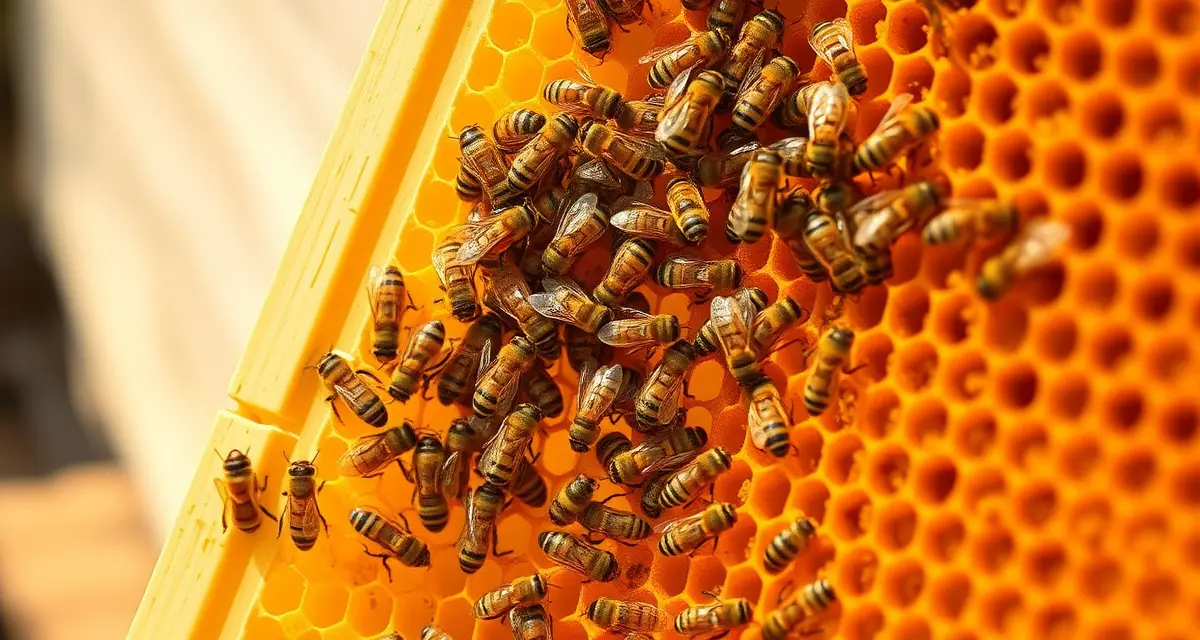
Package Bees and Varroa: Starting Clean and Staying Ahead
Package bees from commercial sources may arrive with mite loads of 1-3%. That's not a disaster, but it's not nothing either. A 2% mite load in a freshly installed package, with no brood yet, is actually a more concentrated varroa problem than it sounds. Those mites are riding on adult bees with no capped cells to retreat into. When the queen starts laying and capped brood appears, that mite population will immediately begin reproducing.
Package bees varroa management starts before your first inspection. The moment you install a package, you've started a clock. You have roughly 30 days before brood begins to cap and varroa shifts from fully exposed phoretic mites to partially protected reproductive ones. That 30-day window is your best early intervention opportunity.
Generic beekeeping guides give package advice but no structured varroa baseline protocol. VarroaVault's new colony onboarding flow includes a first-count protocol for packages and nucs at day 30.
TL;DR
- Package bees from commercial suppliers arrive with variable mite loads; never assume they are mite-free
- Test within 2 weeks of installation before the first brood cycle produces a large capped brood population
- Early mite monitoring in packages allows oxalic acid dribble treatment on the broodless period after queen release
- Package bees from the southern US often have higher initial mite loads than locally-raised bees
- Log the package source, installation date, and first mite count in VarroaVault to track mite introduction history
- Establishing a monitoring schedule from day one prevents the common first-year mistake of untested packages
Why Package Mite Loads Matter From Day One
Here's the chain of events that kills first-year colonies from varroa:
- Package arrives with 1-2% mite load on adult bees
- Queen begins laying in week 1-2
- First brood caps in week 3
- Mites immediately begin reproducing in capped brood
- By week 6, mite load has already doubled or tripled
- By late summer, colony is at or past the 3% treatment threshold
- fall treatment is delayed or skipped because beekeeper assumes first-year packages are clean
- Winter bees develop under high mite pressure
- Colony collapses in late winter or early spring
This is the most common failure pattern for new beekeeper packages. The beekeeper didn't do anything obviously wrong, they just didn't know the clock had started at installation.
When to First Check a New Package for Varroa
Day 30 after installation is your first recommended varroa count. By this time, the queen has been laying for 3-4 weeks and brood should be capping. You'll have bees that can be sampled for an alcohol wash.
Why wait until day 30? Trying to count mites in the first two weeks is unreliable, there's limited brood and a small bee population that makes sampling difficult. Waiting longer than 30 days means you're already missing the early intervention window if counts are elevated.
At day 30, do a full alcohol wash with a minimum 100-bee sample. If your infestation rate is:
- Below 1%: Monitor monthly and watch trends. Your package started in decent shape.
- 1-2%: Monitor closely and plan a treatment before your count exceeds 3%.
- Above 2%: Treat immediately. This package arrived with elevated mites and the brood rearing has already accelerated the problem.
Should You Treat a New Package Immediately at Installation?
This is a common question. The answer depends on what you know about the package source and your philosophy on preventive treatment.
Arguments for treating immediately:
- Packages with mite loads are fully exposed during the broodless period at installation
- OA dribble applied to a freshly installed, broodless package achieves high efficacy
- Early treatment sets the colony up with a clean mite baseline before brood production begins
Arguments against immediate treatment:
- Stresses bees during the already stressful installation period
- OA dribble is a safe enough option that the stress is minimal
- If the package has low mite loads, treatment may not be necessary
If you choose to treat immediately, OA dribble is the appropriate method. The package is broodless, which is exactly the condition under which OA dribble achieves near-100% efficacy. Apply at installation or within the first few days before brood caps.
If you prefer to wait and count first, do your day-30 count without fail.
Building Your First-Year Varroa Program for Packages
Your first year with a package colony should include at minimum:
Day 0-3: Consider OA dribble if you want to start with a clean slate. Package is fully broodless.
Day 30: First official mite count. Log in VarroaVault and set your baseline.
Week 8 (approximately): Second count. You're now seeing the trend. Is the mite load flat, rising slowly, or accelerating?
July-August: Critical summer check. First-year colonies often hit treatment threshold by mid-summer. Don't assume first-year packages are immune.
August-September: Fall treatment if counts warrant. This is not optional. First-year colonies heading into winter need the same fall treatment protection as established colonies.
VarroaVault's new colony onboarding flow guides you through this sequence. You log the installation date, set a day-30 count reminder, and the system builds your first-year monitoring schedule automatically.
Common First-Year Mistakes
Skipping the first count. The most common error. First-year beekeepers assume packages start clean. They don't always.
Treating and then not counting post-treatment. You treated, did it work? You don't know unless you count 4-6 weeks later.
Skipping fall treatment. "It's only the first year, I don't need to worry yet." Wrong. Your colony needs its winter bee cohort protected regardless of age.
Not knowing the source's mite history. Ask your package supplier about their varroa management program. Reputable suppliers will tell you. Uncertainty is a reason to count early.
FAQ
When should I first check a new package for varroa?
Your first mite count should happen at day 30 after installation, when brood has been capping for 1-2 weeks and you have a sufficient adult bee population to sample. Use alcohol wash with a minimum 100-bee sample for an accurate count. If you chose to treat at installation with OA dribble, your day-30 count serves as your post-treatment efficacy confirmation.
Should I treat a new package for varroa immediately?
If you can treat immediately after installation while the package is fully broodless, OA dribble achieves its highest possible efficacy and gives your colony the best possible start. This approach is especially sensible if you don't know the mite history of your package source. If you prefer to count first, set a firm day-30 count date and act on what you find.
How do I build a varroa program for new package bees?
Start with a day-30 baseline count. Follow up monthly through summer. Plan a fall treatment regardless of your summer counts. The winter bee cohort needs protection in every colony, first-year or not. Log every count and treatment in VarroaVault so your data builds across the season and gives you trend information to act on.
How do I know if my varroa treatment is working?
Run a mite count 2-4 weeks after the treatment ends and compare it to your pre-treatment count. The efficacy formula is: ((pre-count - post-count) / pre-count) x 100. A result above 90% indicates effective treatment. Results below 80% should trigger investigation for possible resistance, application error, or reinfestation. Log both counts in VarroaVault to track efficacy trends across treatment cycles.
How often should I check mite levels in my hives?
At minimum, once per month (every 3-4 weeks) during the active season. Increase to every 2 weeks when counts are near threshold or after a treatment to verify it worked. In fall, monitoring frequency matters most because the window to treat before winter bees are raised is narrow. VarroaVault's monitoring reminders can be set to your preferred interval for each apiary.
What records should I keep for varroa management?
Each record should include: date of count or treatment, hive identifier, monitoring method used, number of bees sampled, mites counted, infestation percentage, treatment product name and EPA registration number, dose applied, treatment start and end dates, and PHI end date. State apiarists typically expect this level of detail during inspections. VarroaVault captures all of these fields in a single log entry.
What is Package Bees and Varroa: Starting Clean and Staying Ahead?
Package Bees and Varroa: Starting Clean and Staying Ahead is a beekeeping guide covering varroa mite management when starting a new colony from package bees. It explains that commercial packages can arrive with mite loads of 1–3%, outlines the critical 30-day window before brood capping begins, and provides a structured early-intervention protocol—including a first-count baseline test—to help beekeepers get ahead of mite reproduction before it becomes a serious problem.
How much does Package Bees and Varroa: Starting Clean and Staying Ahead cost?
Package Bees and Varroa: Starting Clean and Staying Ahead is a free educational article published on VarroaVault. There is no cost to read it. VarroaVault offers this content as part of its mission to help beekeepers monitor and manage varroa mite infestations more effectively, including a new colony onboarding flow with first-count protocols for packages and nucs available to registered users.
Sources
- American Beekeeping Federation (ABF)
- USDA ARS Bee Research Laboratory
- Honey Bee Health Coalition
- Penn State Extension Apiculture Program
- Project Apis m.
Your Package Deserves a Real Varroa Plan
A good package and a good queen are the foundation of a new colony. Varroa management from day one is what keeps that foundation intact. Learn more about varroa management for first-year beekeepers and review the alcohol wash guide to make sure your day-30 count is accurate.
Set up your new colony in VarroaVault and start your first-year program with a clear schedule, not a guess.
Get Started with VarroaVault
The information in this guide is most useful when you have your own mite count data to apply it to. VarroaVault stores every count, flags threshold crossings automatically, and builds the treatment history you need for state inspections and effective management decisions. See pricing and free tools at varroavault.com.