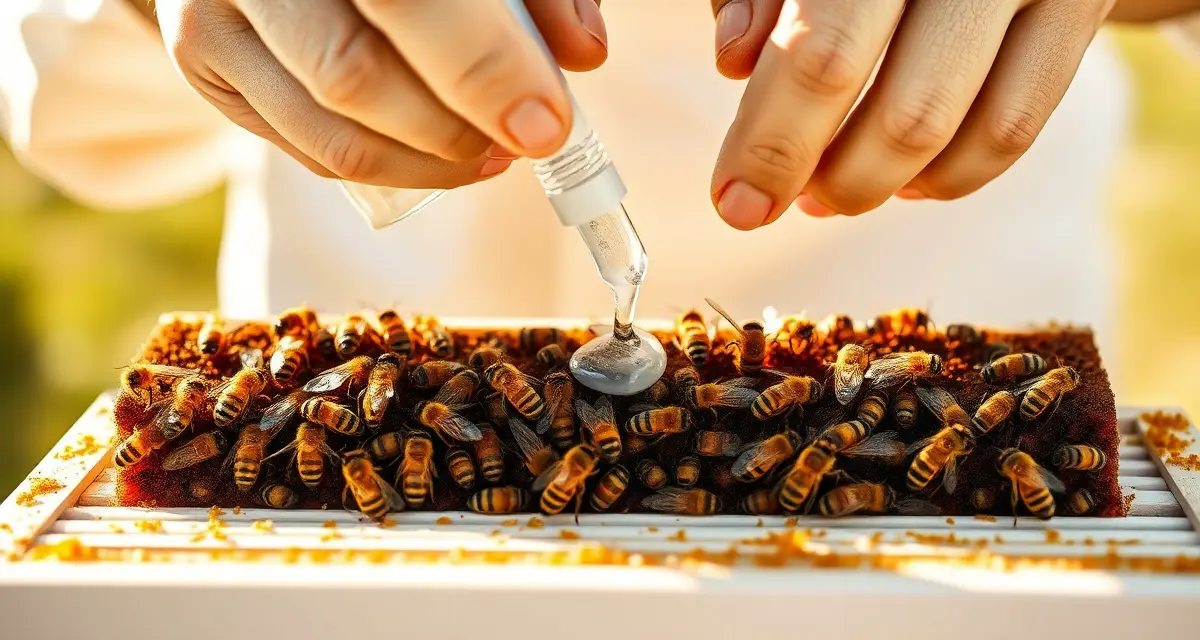
First-Year Beekeeper Guide to Varroa Management
Every new beekeeper eventually hears that varroa is the biggest threat to managed honey bees. This is true and has been true for decades. But the practical guidance on what to actually do about varroa is often inconsistent, sometimes overwhelming, and occasionally wrong. Here is a straightforward approach to varroa management for beekeepers in their first year with bees.
Understanding the Threat
Varroa destructor is a parasitic mite that feeds on honey bee pupae and adult bees. Left uncontrolled, varroa populations grow exponentially through the brood season. A colony that starts spring with a moderate mite load may be overwhelmed by late summer. The mites themselves weaken bees, but the viruses they transmit, particularly Deformed Wing Virus, cause the most visible damage: bees with shriveled wings who cannot fly, shortened lifespans, and a colony that collapses even as it still looks populated in late summer.
The good news is that varroa is manageable. Millions of beekeepers keep healthy colonies by monitoring mite levels and treating when necessary. The skill is not complicated. It just requires consistency.
When to Start Monitoring
If you installed a package or nuc in spring, begin your first mite count about 4 to 6 weeks after installation. By this time, the colony has established a brood nest and the mite population is beginning to build alongside bee population growth. A count at 4 to 6 weeks gives you a baseline.
If you acquired bees in another way, such as a swarm or an established hive, count mites within the first week or two. You do not know that hive's history and cannot assume mite levels are low.
How to Do an Alcohol Wash
The alcohol wash is the most reliable method for measuring mite infestation rates. You need a half-pint jar, a piece of screen mesh that fits over the opening, rubbing alcohol (70% isopropyl), and a white plate or white container for counting.
Steps:
- Find a frame with brood in the center of the nest. Bees on brood frames are more likely to include nurse bees, which carry more mites than field bees.
- Shake or brush about 100 bees from the frame into your jar. One hundred bees is roughly the volume of a half cup.
- Pour enough alcohol to cover the bees. Cap the jar with the screen and shake for 30 to 60 seconds.
- Pour the alcohol through the screen into your white container. The bees stay in the jar. The mites, being smaller, pass through the screen with the alcohol.
- Count the brown oval-shaped mites in the white container.
Your infestation rate equals the number of mites counted divided by the number of bees in your sample, expressed as a percentage. If you count 3 mites in a 100-bee sample, your infestation rate is 3%.
When to Treat
The standard treatment threshold during active brood season is 2%, or 2 mites per 100 bees. At or above this level, treat. Below this level, monitor and count again in 4 weeks.
Do not wait until you see symptoms of mite damage before treating. By the time you see bees with deformed wings crawling in front of the hive, your mite population has been elevated for weeks and the colony's winter bee cohort may already be compromised.
Treatment Options for New Beekeepers
For a first-year beekeeper with a single colony, the most approachable treatments are:
Apivar strips (amitraz): Place two strips in the brood area in contact with bees. Leave for 6 to 8 weeks. Remove all strips after treatment is complete. No temperature restrictions in the normal treatment range. One of the most reliable options for fall treatment.
Oxalic acid vaporization (OAV): Effective and relatively inexpensive per treatment. Requires a vaporizer and safety equipment (respirator rated for acid vapors, gloves, eye protection). During broodlessness, a single treatment is highly effective. During brood-on conditions, three treatments 5 days apart are needed. Not suitable for use without proper safety equipment.
Apiguard (thymol): A gel placed on top of the frames. Requires temperatures above 60 degrees Fahrenheit to volatilize properly. Effective and easy to use. Not compatible with honey supers in place.
Recording Your Results
New beekeepers often do not keep records because they only have one or two hives and feel like they will remember. They do not, or at least not reliably. A few data points per inspection, logged consistently, become genuinely useful within one season.
Record each mite count with the date and result. Record each treatment with the product, dates in and out. Record a post-treatment count 10 to 14 days after treatment ends. This is the minimum viable record that lets you know whether your management is working.
VarroaVault is designed to make this easy even for beekeepers just starting out. You log your hive, enter mite counts, and the platform calculates your infestation rate and alerts you when counts exceed threshold. The mite count tracking app guide walks through the field entry workflow in detail.
The First-Year Summary
Count mites starting at 4 to 6 weeks after installation. Count every 4 weeks through the season. Treat at or above 2%. Verify the treatment worked with a post-treatment count. Repeat. Every serious beekeeper who keeps healthy hives year after year does some version of this.
Varroa management is not complicated. It is consistent.
FAQ
What is First-Year Beekeeper Guide to Varroa Management?
The First-Year Beekeeper Guide to Varroa Management is a practical resource designed to help new beekeepers understand and control Varroa destructor, the most significant threat to managed honey bee colonies. It covers how mites spread, when and how to monitor mite levels, which treatments are appropriate at different infestation thresholds, and how to time interventions across your first full beekeeping season. The goal is to cut through inconsistent advice and give beginners a clear, actionable framework.
How much does First-Year Beekeeper Guide to Varroa Management cost?
The guide itself is free to read on VarroaVault. Varroa management does carry real costs in practice: alcohol wash supplies run a few dollars, and approved treatments such as oxalic acid, ApiVar strips, or formic acid pads typically cost between $15 and $60 per treatment depending on the product and colony count. Investing in proper monitoring and treatment early is far cheaper than losing a colony, which can cost $150 to $250 or more to replace.
How does First-Year Beekeeper Guide to Varroa Management work?
The guide works by walking first-year beekeepers through a season-long varroa management cycle. It explains how mite populations grow exponentially through the brood season, when to perform your first alcohol wash or sugar roll count, how to interpret results against established thresholds, and which treatments to apply based on mite load and time of year. It emphasizes consistency: regular monitoring every four to six weeks and prompt action when counts exceed safe levels.
What are the benefits of First-Year Beekeeper Guide to Varroa Management?
Following a structured varroa management approach in your first year gives your colony the best chance of surviving into year two. It reduces the viral load transmitted by mites, particularly Deformed Wing Virus, which causes visible bee deformities and shortened lifespans. Early intervention prevents exponential mite population growth that can collapse an otherwise healthy colony by late summer. Beekeepers who monitor and treat consistently lose significantly fewer colonies than those who wait for visible symptoms.
Who needs First-Year Beekeeper Guide to Varroa Management?
Any beekeeper with at least one managed colony needs a varroa management plan, but first-year beekeepers are particularly at risk. Without prior experience, new beekeepers often miss the early warning signs of rising mite levels and act too late. The guide is written specifically for hobbyists who installed a package or nuc in spring and may be unfamiliar with alcohol washes, mite thresholds, or treatment windows. It assumes no prior knowledge and builds skills from scratch.
How long does First-Year Beekeeper Guide to Varroa Management take?
The guide can be read in under an hour. Implementing a full varroa management cycle takes your entire first season. Plan to perform your first mite count four to six weeks after installation, then recheck every four to six weeks through the active season. Treatments typically require one to two days to apply and several weeks to take effect. Building the habit of regular monitoring is more time-intensive than any single task, but each session takes less than 30 minutes.
What should I look for when choosing First-Year Beekeeper Guide to Varroa Management?
When evaluating any varroa management guide, look for science-backed treatment thresholds rather than anecdotal rules. Good resources recommend monitoring with alcohol washes or sugar rolls rather than sticky boards alone, which are less accurate. Look for clear guidance on the 2% mite wash threshold, seasonal timing of treatments, and approved miticides. The VarroaVault guide prioritizes consistency, uses current thresholds from extension research, and avoids recommending untested or ineffective approaches.
Is First-Year Beekeeper Guide to Varroa Management worth it?
Yes. Varroa is the leading cause of colony loss in managed beehives, and most first-year colony deaths are preventable with basic monitoring and timely treatment. The knowledge in this guide costs nothing to acquire and takes minimal time to apply. Beekeepers who understand mite biology, test regularly, and treat when necessary consistently maintain healthier colonies. For anyone serious about keeping bees alive past their first winter, a structured approach to varroa management is not optional — it is foundational.