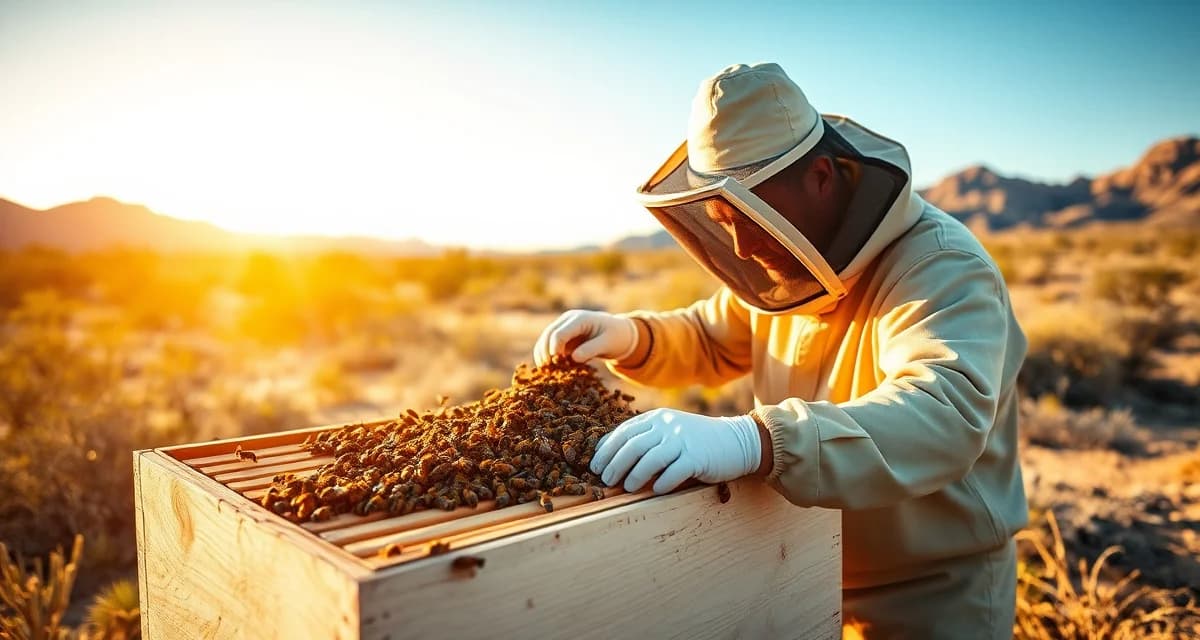
Beekeeping Software for Arizona Beekeepers: Year-Round Varroa Management
Arizona beekeepers often manage 3 separate honey flows annually, requiring careful PHI management across treatments. Add the complications of Africanized honey bee overlap, summer temperatures that limit treatment options, and year-round brood cycles, and you've got one of the more complex beekeeping environments in the US.
VarroaVault's Arizona-specific PHI calendar accounts for all three seasonal flows and the treatment windows between them, so you're not accidentally treating during a flow or harvesting before your PHI clears.
TL;DR
- Arizona's climate means desert climate allows year-round brood rearing with summer dearth periods that affect mite monitoring timing
- Summer temperatures above 105 degrees f make formic acid dangerous and limit thymol effectiveness
- All EPA-registered varroa treatments are available in Arizona; check with your state apiarist for local restrictions
- Monthly mite monitoring (every 30 days) is recommended year-round to catch pressure spikes early
- PHI management is important around Arizona's nectar flows to avoid contaminating honey
- VarroaVault exports treatment records formatted for Arizona state inspection requirements
The Arizona Beekeeping Context
Arizona's diverse geography means beekeeping conditions vary dramatically. The low desert (Phoenix, Tucson) supports year-round bee activity with multiple flows: citrus in late winter, desert wildflower in spring, and monsoon-season fall flows. Higher elevation areas (Flagstaff, White Mountains) follow a more traditional seasonal pattern with a compressed summer season.
Year-round brood in low desert apiaries means varroa never stops reproducing. This requires the same level of continuous monitoring as Gulf Coast states. But Arizona adds the complication of extreme summer heat. Temperatures routinely exceed 110°F in low desert areas, which eliminates formic acid from the summer treatment toolkit entirely.
Africanized honey bees are established throughout much of southern and central Arizona. While AHBs often show elevated grooming behavior that may moderately reduce mite loads, Arizona beekeepers working in AHB-overlap areas need to consider bee genetics in their queen management decisions.
3 Key Points for Arizona Varroa Management
1. Heat eliminates formic acid from May through September. Arizona's summer heat regularly exceeds the 85-92°F upper limit for formic acid. Planning your summer treatments around oxalic acid vaporization and HopGuard III, both of which have no temperature ceiling, keeps your options open during the hottest months.
2. PHI planning around three flows is non-negotiable. With citrus (February-March), spring desert (April-May), and monsoon season (August-September) flows all requiring clean honey, any fall or winter treatment needs to have its PHI cleared before the citrus flow begins. Map your treatment calendar against all three flow windows before the year starts.
3. Year-round brood means year-round monitoring. In low desert apiaries, monthly mite counts are required year-round. There is no off-season. The summer varroa pressure guide covers peak-season management in detail.
Using VarroaVault in Arizona
Configure your three seasonal flow windows in VarroaVault's flow calendar. The PHI tracker will automatically block harvest windows that conflict with treatment PHIs and flag any treatment plan that would run into an upcoming flow.
For state registration and inspection records, Arizona Department of Agriculture (AZDA) manages apiary registration and inspection programs. VarroaVault's state inspection requirements export generates records compatible with AZDA inspection documentation.
Related Articles
FAQ
What varroa treatments work best in Arizona heat?
For summer treatment in Arizona (May-September), oxalic acid vaporization is the primary option, it has no upper temperature limit. Hopguard III is also heat-safe and labeled for use with supers on. Apivar strips work at any temperature but require supers to be removed. Avoid formic acid from May through September when temperatures regularly exceed 85-92°F. In cooler months (October-April in low desert, most of summer at higher elevations), formic acid becomes a viable option with brood-penetrating efficacy.
How does VarroaVault handle Arizona's year-round brood cycle?
VarroaVault's continuous monitoring mode sends monthly mite check reminders year-round for Arizona accounts configured in low-desert zones. There's no winter break in the reminder schedule. The flow calendar handles Arizona's three annual flow windows, automatically calculating PHI clearance before each flow opens. Temperature-based treatment alerts can be configured to notify you when conditions are outside the safe range for formic acid, helping you avoid applying temperature-sensitive treatments during unsuitable weather.
Are there state-specific treatment records required in Arizona?
Arizona requires commercial beekeepers to register apiaries with AZDA. Treatment records should be maintained and available for inspection, including product name, application date, active ingredient, and applicant information. VarroaVault's export function generates state-formatted treatment history records. Check with the Arizona state apiarist for current registration requirements and any recent changes to record-keeping standards.
Is VarroaVault available to beekeepers in Arizona?
Yes. VarroaVault is available to beekeepers across all 50 states including Arizona. The app supports state-specific PHI calendars, monitoring reminders calibrated to your region's nectar flow and temperature patterns, and export formats suitable for Arizona apiary inspection requirements.
What records does the Arizona state apiarist expect during an apiary inspection?
While requirements vary and you should confirm with your state apiarist, most states expect treatment records that include the product name, EPA registration number, application dates, hive identifiers, and applicant name. Beekeepers in Arizona should also be prepared to document mite count results from the monitoring periods before and after each treatment. VarroaVault's export function generates this information in a formatted PDF.
Does VarroaVault support tracking multiple apiaries in Arizona?
Yes. VarroaVault supports unlimited apiary locations within a single account. Each apiary can have its own set of hives with individual treatment and mite count records. For Arizona beekeepers managing multiple yards across different counties or climate zones, yard-level reporting allows you to compare mite pressure and treatment efficacy between locations.
What is Beekeeping Software for Arizona Beekeepers: Year-Round Varroa Management?
VarroaVault is beekeeping management software designed to help Arizona beekeepers navigate the state's unique challenges, including year-round brood cycles, summer heat that limits treatment options, Africanized honey bee overlap, and three annual honey flows. It provides an Arizona-specific PHI calendar that tracks treatment windows around each nectar flow, monthly mite monitoring reminders, and exports treatment records formatted for Arizona state inspection requirements.
How much does Beekeeping Software for Arizona Beekeepers: Year-Round Varroa Management cost?
VarroaVault offers a free trial so you can explore its Arizona-specific features before committing. Paid plans are available with full access to PHI calendars, treatment tracking, mite monitoring logs, and state inspection record exports. For current pricing details, visit VarroaVault.com to see the latest plan options and any regional or seasonal promotions that may be available.
Sources
- American Beekeeping Federation (ABF)
- USDA ARS Bee Research Laboratory
- Honey Bee Health Coalition
- Penn State Extension Apiculture Program
- Project Apis m.
Managing Arizona's Unique Complexity
Arizona beekeeping isn't simple. Three flows, year-round brood, extreme summer heat, and Africanized bee management create a management environment that demands a systematic approach. VarroaVault keeps your mite counts organized, your PHI deadlines visible across all three flow windows, and your AZDA records ready when you need them. Set up your flow calendar today, before the citrus season opens.
Get Started with VarroaVault
Arizona beekeepers face specific varroa management challenges that generic beekeeping apps are not designed around. VarroaVault handles monitoring reminders, PHI tracking, treatment efficacy scoring, and state inspection export in a single tool built specifically for varroa management. See pricing and free tools at varroavault.com.