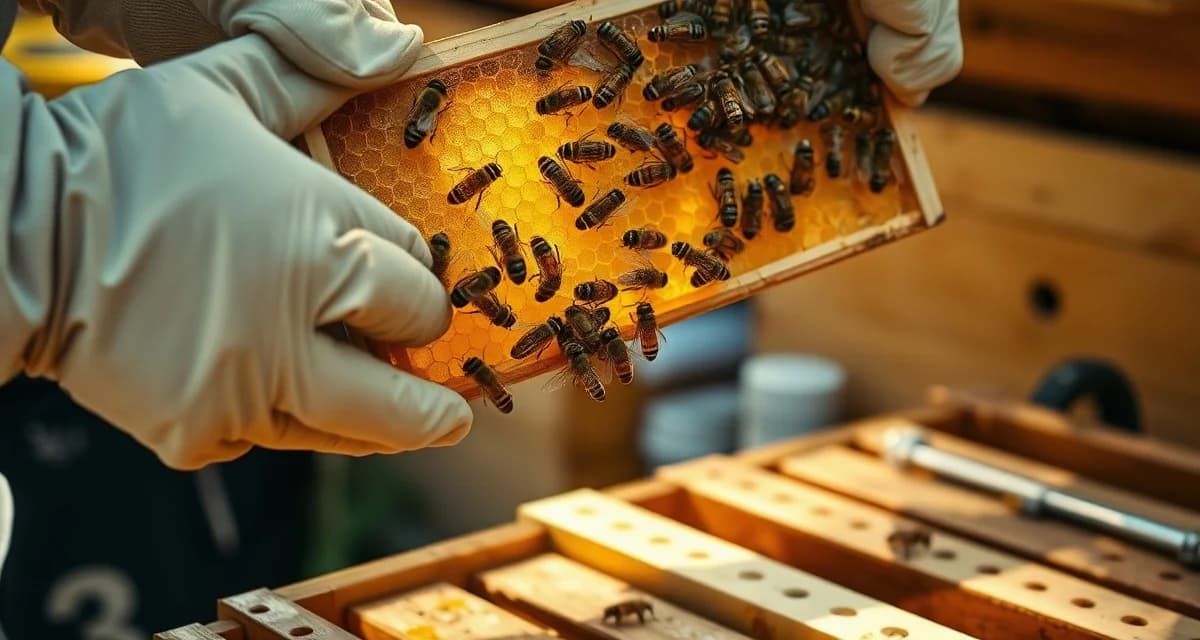
Varroa Management for Backyard Beekeepers: Practical Guide for 1-5 Hives
Backyard beekeepers with untreated varroa are a mite source for their entire neighborhood. That's not said to alarm you. It's said because it's true and because it changes how you think about the stakes of managing varroa in your two backyard hives. You're not just protecting your own bees. Every colony in your neighborhood benefits from you keeping your mite levels low.
Even with just one or two hives, varroa management requires a real system. Not a complicated one, but a real one.
TL;DR
- Backyard beekeepers with 1-5 hives face the same varroa pressure as commercial operations
- A minimum monitoring schedule of once per month (every 3-4 weeks in peak season) catches problems early
- The 2% threshold in spring/summer and 1% in fall applies regardless of hive count
- alcohol wash takes about 10 minutes per hive and is more accurate than sugar roll
- Record keeping matters even at small scale -- most state apiarists expect treatment records on request
- VarroaVault's free tier covers small operations with full mite tracking and PHI reminders
Why Backyard Beekeepers Need a System
The temptation with small operations is to rely on intuition and observation. "The hive looks good, so it must be okay." Varroa doesn't work that way. A colony with 3% mite infestation looks great on the outside. The mites are inside capped cells, invisible during normal inspection, quietly damaging the next generation of bees while the colony still appears active and healthy.
By the time a varroa problem is visible in colony behavior or population, you've already passed multiple opportunities for earlier intervention. The only way to know your mite level is to count.
The good news for backyard beekeepers is that four counts per year is enough, combined with one or two treatments when counts warrant. You don't need to count every month. You need a schedule, some basic supplies, and a record of what you found and what you did.
The Essentials: What You Actually Need
Supplies:
- Isopropyl alcohol (70% or higher), approximately 1 quart per season
- A mason jar with a mesh lid (or a commercial mite wash container)
- A collection container (a second jar or a white tray)
- A measuring cup or scale to confirm approximately 300 bees (half a cup)
- Your chosen treatment product on hand for August
Schedule:
- April count (baseline)
- July count (mid-season check)
- August treatment (regardless of July count, or triggered earlier by high counts)
- October count (pre-winter check)
Records:
The absolute minimum: date, colony name, bees sampled, mites found, percentage, what you did. That's it. A simple paper log or a VarroaVault entry on your phone.
The Simplest Treatment Decision
Backyard beekeepers often overthink the treatment decision. Here's a simple framework:
Above 2% in spring or summer: Treat now.
Above 1% in late July or early August: Treat now (protecting winter bees).
Any count in late July/August, even below 1%: Apply an August treatment anyway. The risk of not treating outweighs the cost of treating a colony that's already at 0.8%.
Above 1% in October: Apply an OA treatment during the upcoming broodless period.
Below 1% in October: Good. Log it and monitor in spring.
The most important treatment of the year is the August one. Set a calendar reminder right now for the second week of August, regardless of what your July count says. That's the one you can't miss.
Backyard Treatment Options
For 1-5 hives, you don't need the commercial-scale efficiency of a vaporizer ratchet-strap setup. Here's what works at backyard scale:
OA dribble: Simple, cheap, no equipment needed beyond a syringe. Best during broodless periods in fall. Less effective when brood is present.
OA vaporization: Requires a vaporizer (they run $30-$200 depending on type). Most versatile option; effective whether or not brood is present, works at any temperature. One vaporizer handles 5 hives easily.
Apivar (amitraz strips): The simplest application. Hang strips, remove after 42-63 days. Works in brood-present conditions. 56-day PHI. Good for summer treatment when you have supers off.
MAQS (formic acid): Fast treatment (7 days). Zero PHI. Temperature restrictions apply (50-93°F). Works when brood is present, though efficacy is somewhat reduced compared to broodless OA.
Why Even Small Operations Affect the Neighborhood
Bees forage up to 3 miles from the hive. Your backyard bees and your neighbors' bees share foraging territory, and they drift between each other's hives. An untreated backyard hive with 6% mite infestation is a source colony that spreads mites through robbing and drift to every other hive within a mile or two.
This is especially relevant in suburban areas where beekeeping density is increasing. You may not know every beekeeper within your bees' flight range, but they're affected by your management decisions regardless.
VarroaVault's hobby tier works for backyard beekeepers tracking up to 10 hives with full treatment outcome logging. It's not overbuilt for your operation. For more on the basic backyard program, see our backyard beekeeper varroa program guide, which lays out the 4-step plan in detail. For your first year specifically, the first-year beekeeper varroa guide covers what a new beekeeper needs to know.
Frequently Asked Questions
When should a backyard beekeeper start treating for varroa?
Your first treatment decision comes from your first count. If your April count is above 2%, treat before spring brood builds further. If your April count is below 1%, monitor through summer and plan for August treatment regardless. The August treatment for winter bee protection is the non-negotiable intervention for all backyard beekeepers, regardless of count level.
What is the simplest varroa treatment for a backyard beekeeper?
Apivar strips are the simplest application for summer treatment: hang them in the brood box and remove them 42-63 days later. For fall broodless OA treatment, a syringe dribble of 3.5% OA solution requires no equipment beyond the syringe. For a versatile all-season option, an OA vaporizer handles both summer and fall treatments with one piece of equipment.
How often do I need to check for varroa with just 2 hives?
Minimum four times per year: April, July, August (optional if treating regardless), and October. That's two hours total for both hives across all counts. If a count comes back above threshold, increase to monthly monitoring until you treat and confirm the treatment worked. With just two hives, each count takes 10-15 minutes start to finish.
How do I know if my varroa treatment is working?
Run a mite count 2-4 weeks after the treatment ends and compare it to your pre-treatment count. The efficacy formula is: ((pre-count - post-count) / pre-count) x 100. A result above 90% indicates effective treatment. Results below 80% should trigger investigation for possible resistance, application error, or reinfestation. Log both counts in VarroaVault to track efficacy trends across treatment cycles.
How often should I check mite levels in my hives?
At minimum, once per month (every 3-4 weeks) during the active season. Increase to every 2 weeks when counts are near threshold or after a treatment to verify it worked. In fall, monitoring frequency matters most because the window to treat before winter bees are raised is narrow. VarroaVault's monitoring reminders can be set to your preferred interval for each apiary.
What records should I keep for varroa management?
Each record should include: date of count or treatment, hive identifier, monitoring method used, number of bees sampled, mites counted, infestation percentage, treatment product name and EPA registration number, dose applied, treatment start and end dates, and PHI end date. State apiarists typically expect this level of detail during inspections. VarroaVault captures all of these fields in a single log entry.
What is Varroa Management for Backyard Beekeepers: Practical Guide for 1-5 Hives?
This guide is a practical varroa management resource for hobbyist beekeepers managing 1-5 hives. It covers why small-scale beekeepers face the same mite pressure as commercial operations, how to monitor mite levels accurately using alcohol wash or sugar roll methods, when to treat based on established thresholds, and how to keep records that satisfy state apiarist requirements. The guide also introduces VarroaVault's free tracking tools designed specifically for backyard operations.
How much does Varroa Management for Backyard Beekeepers: Practical Guide for 1-5 Hives cost?
The guide itself is free. VarroaVault offers a free tier that covers small operations with full mite tracking, treatment logging, and PHI (pre-harvest interval) reminders — no subscription required for 1-5 hives. There are no hidden costs to access the core monitoring and record-keeping features that backyard beekeepers need to stay on top of varroa pressure throughout the season.
How does Varroa Management for Backyard Beekeepers: Practical Guide for 1-5 Hives work?
The system works on a monthly monitoring schedule — every 3-4 weeks during peak season. Beekeepers perform an alcohol wash (about 10 minutes per hive) to get an accurate mite count, then compare results against action thresholds: 2% in spring and summer, 1% in fall. When counts exceed those thresholds, treatment is applied. VarroaVault logs counts, tracks treatments, and sends PHI reminders so nothing falls through the cracks.
What are the benefits of Varroa Management for Backyard Beekeepers: Practical Guide for 1-5 Hives?
Managing varroa protects not just your own hives but every colony in your neighborhood, since untreated hives act as mite sources for surrounding bees. A consistent monitoring system catches infestations before they become colony-threatening. Accurate records satisfy state apiarist requests. Using alcohol wash over sugar roll gives more reliable data. VarroaVault's free tools remove the friction of manual tracking, making it easier to stay consistent even with just one or two hives.
Who needs Varroa Management for Backyard Beekeepers: Practical Guide for 1-5 Hives?
Any beekeeper keeping 1-5 hives who wants to protect their colonies and be a responsible member of their local beekeeping community. This is especially relevant for urban and suburban beekeepers, where hive density means mite drift between colonies is common. New beekeepers building their first management routine and experienced hobbyists who have relied on intuition rather than systematic monitoring will both find clear, actionable guidance here.
Sources
- American Beekeeping Federation (ABF)
- USDA ARS Bee Research Laboratory
- Honey Bee Health Coalition
- Penn State Extension Apiculture Program
- Project Apis m.
Get Started with VarroaVault
The information in this guide is most useful when you have your own mite count data to apply it to. VarroaVault stores every count, flags threshold crossings automatically, and builds the treatment history you need for state inspections and effective management decisions. See pricing and free tools at varroavault.com.