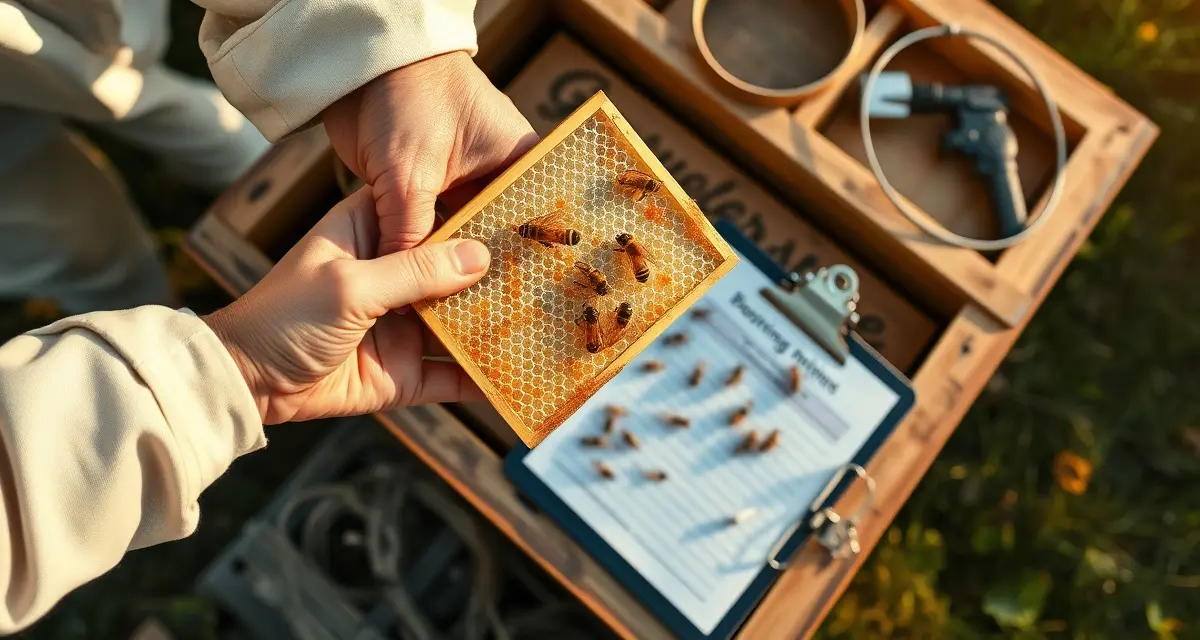
Varroa Management for a 5-Hive Beekeeper: Simple Annual Program
A 5-hive beekeeper spending 4 hours per year on structured varroa management prevents an average of 1.5 colony losses annually. That's the bottom line. You don't need a spreadsheet, a complex system, or an agronomist's toolkit. You need six monitoring events, two treatment windows, and a logging habit.
This guide builds that program for you. It assumes you're keeping bees as a hobby or serious side interest, you want your colonies to survive, and you don't want managing varroa to take over your beekeeping life.
TL;DR
- This guide covers key aspects of varroa management for a 5-hive beekeeper: simple annual prog
- Mite monitoring should happen at minimum every 3-4 weeks during active season
- The 2% threshold in spring/summer and 1% in fall are standard action points based on HBHC guidelines
- Always run a pre-treatment and post-treatment mite count to calculate efficacy
- Treatment records including product name, EPA number, dates, and counts are required for state inspection compliance
- VarroaVault stores all monitoring and treatment data with automatic threshold comparison and state export formatting
Your Annual Program at a Glance
The 5-hive varroa program has six monitoring events and two treatment windows. That's it.
April: First count of the season. Establish your baseline.
June: Pre-flow check. Confirm counts are low before the nectar flow.
July: Mid-season check. Catch any colonies that are climbing.
August 1-15: Fall treatment window. Treat every hive, regardless of count.
September: Post-treatment count. Verify efficacy.
October/November: Broodless period OA dribble if a confirmed broodless window occurs.
Five monitoring events, one or two treatment events. At 30-40 minutes per monitoring session (5 hives x 5-7 minutes per count), that's under 3.5 hours of actual count work for the year, plus treatment application time.
Step 1: Set Up Your April Baseline
Your first spring count tells you where you're starting. An April count on a healthy overwintered colony should be below 1%. If it's above 2%, you have a problem that needs attention before the spring buildup amplifies it.
Method: alcohol wash on 300 bees from the brood nest. Count the mites in the liquid, divide by 3, and that's your percentage. Log it in VarroaVault's spring mite management tracker the same day you do the count. VarroaVault sets the April count as the seasonal baseline starting point for your trend graph.
Don't panic if one of your five hives comes in at 2-3% in April. At that level in early spring, you have time. Recount in May. If it's still elevated, treat before the flow.
Step 2: June Pre-Flow Check
June is typically when nectar flows are active and you're thinking about honey production. That's exactly why this count matters -- it's your last chance to catch a problem before high mite levels during the flow create a fall crisis.
Colony populations are large in June, mite reproduction is accelerating, and you want to know your status before the math gets worse. A June count at 1% sounds fine. At the growth rate typical of summer, 1% in June reaches 2-3% by early August without intervention.
If your June count is above 2%, consider a mid-season intervention. Formic acid products (MAQS or Formic Pro) can be used during the flow per label directions, or you can remove supers, treat with Apivar for 6 weeks, then replace supers with a 14-day clearance for the fall flow. The nectar flow mite monitoring guide covers the flow-treatment decision in detail.
Step 3: July Mid-Season Check
This is your warning check. If any of your five hives is above 3% in July, it's an emergency situation for that colony. A 5% count in July will reach colony-fatal levels before September. Don't wait for the August treatment window -- treat now.
For most beekeepers with well-managed hives, July counts will be in the 0.5-2% range. Log them and move on. The trend matters as much as the number: a hive at 1.5% in July that was at 0.3% in April is growing faster than you want.
Step 4: August Treatment Window
August is non-negotiable. Treat every hive in your 5-hive apiary between August 1 and August 15, regardless of your July counts. Even a 0.5% count in July can spike to 2-3% by August 10 during peak summer mite reproduction.
The recommended product for most 5-hive beekeepers in a standard fall treatment: Apivar strips. Apply 2 strips per brood box, leave in for 42-56 days, remove before supers go on next spring. Cost: roughly $10-15 for 5 hives in materials. VarroaVault's mite count tracking app sends an August 1 alert for your treatment window.
If you're managing organically, OA vaporization on a 3-treatment schedule at 5-day intervals, or formic acid in the appropriate temperature window, are your alternatives.
Step 5: September Post-Treatment Count
Three to four weeks after your Apivar strips go in (or after your formic protocol completes), do a count on every hive. You're expecting to see counts below 1% -- ideally below 0.5%.
If all five hives come back clean, you're in great shape for winter. Log the results in VarroaVault and set a reminder to check again in October for any sign of reinfestation.
If any hive comes back above 1% after treatment, that's a red flag. It may mean the treatment is underperforming (resistance risk), the colony has high reinfestation from neighbors, or the treatment was applied incorrectly. Don't wait on this -- consult your state extension specialist and consider a second treatment with a different active ingredient class.
Step 6: Optional Broodless Period OA Dribble
If your Apivar strips come out in October and you get a confirmed broodless period in late October or November, this is an excellent opportunity to drive mite loads even lower with an OA dribble. A single dribble on a broodless colony achieves 90%+ mite reduction. Cost: under $2 per hive in materials.
"Confirmed broodless" means you've opened the hive and physically confirmed there are no capped brood cells. Don't assume -- check. An OA dribble on a brood-present colony is far less effective and should be replaced with a vaporization series if you have any brood present.
Time Budget for 5 Hives
- April baseline count (5 hives): 40 minutes
- June pre-flow count: 40 minutes
- July mid-season count: 40 minutes
- August treatment application (Apivar): 30 minutes
- September post-treatment count: 40 minutes
- October broodless dribble (optional): 20 minutes
- Logging and record review: 30 minutes total
Total: approximately 4 hours per year. That's the investment. The return is an expected 1.5 fewer colony losses per year, or roughly $400-750 in replacement costs avoided annually.
Frequently Asked Questions
What does a varroa program for 5 hives actually look like?
It's six monitoring events and one or two treatment events spread across the season. April baseline, June pre-flow check, July mid-season check, August treatment, September post-treatment count, and an optional October or November OA dribble during the broodless period. You're using a consistent method (alcohol wash on 300 bees), logging every count, and treating to a threshold rather than a fixed schedule -- with the exception of August, when you treat regardless.
How many hours per year does varroa management take for 5 hives?
About 4 hours of actual apiary work, spread across 6 visits. Each monitoring session takes 30-40 minutes for 5 hives including count, record entry, and any observations. Treatment application days take 20-30 minutes. The time investment is minimal compared to the colony losses it prevents. A 5-hive account setup in VarroaVault generates the full annual program in under 10 minutes, and all reminders and threshold alerts run automatically from there.
Does VarroaVault simplify varroa management for small apiaries?
Yes. The biggest challenges for small-apiary beekeepers aren't the physical counting work -- it's remembering when to count, knowing what the results mean, and knowing what to do next. VarroaVault sends the reminders, interprets the count results with context (the same number means different things in April versus August), and walks you through the treatment decision. For a 5-hive beekeeper, it replaces the mental overhead of keeping the management calendar in your head.
How do I know if my varroa treatment is working?
Run a mite count 2-4 weeks after the treatment ends and compare it to your pre-treatment count. The efficacy formula is: ((pre-count - post-count) / pre-count) x 100. A result above 90% indicates effective treatment. Results below 80% should trigger investigation for possible resistance, application error, or reinfestation. Log both counts in VarroaVault to track efficacy trends across treatment cycles.
How often should I check mite levels in my hives?
At minimum, once per month (every 3-4 weeks) during the active season. Increase to every 2 weeks when counts are near threshold or after a treatment to verify it worked. In fall, monitoring frequency matters most because the window to treat before winter bees are raised is narrow. VarroaVault's monitoring reminders can be set to your preferred interval for each apiary.
What records should I keep for varroa management?
Each record should include: date of count or treatment, hive identifier, monitoring method used, number of bees sampled, mites counted, infestation percentage, treatment product name and EPA registration number, dose applied, treatment start and end dates, and PHI end date. State apiarists typically expect this level of detail during inspections. VarroaVault captures all of these fields in a single log entry.
What is Varroa Management for a 5-Hive Beekeeper: Simple Annual Program?
Varroa Management for a 5-Hive Beekeeper: Simple Annual Program is a structured approach to controlling varroa mite infestations across a small hobby apiary. It consists of six monitoring events and two treatment windows per year, requiring approximately four hours of dedicated varroa work annually. The program follows HBHC threshold guidelines, establishes a consistent logging habit, and is designed to prevent an average of 1.5 colony losses per year without complex tools or spreadsheets.
How much does Varroa Management for a 5-Hive Beekeeper: Simple Annual Program cost?
The program itself is free — it's a management framework, not a paid product. VarroaVault, the platform referenced throughout the guide, offers digital logging and threshold tracking to support the program. Costs associated with implementation include mite-testing supplies such as alcohol wash kits, and any treatments used during the two annual treatment windows. Treatment product costs vary, but oxalic acid and Apivar are among the most affordable and widely used options for small-scale beekeepers.
How does Varroa Management for a 5-Hive Beekeeper: Simple Annual Program work?
The program works by scheduling six mite counts throughout the active season and positioning two treatment windows — typically in late spring and late summer or fall — around natural brood breaks or low-brood periods. Each monitoring event uses a standardized alcohol wash or sugar roll to calculate mite load per 100 bees. If counts exceed 2% in spring or summer, or 1% in fall, treatment is triggered. Pre- and post-treatment counts confirm efficacy and are logged for compliance.
What are the benefits of Varroa Management for a 5-Hive Beekeeper: Simple Annual Program?
The primary benefit is colony survival: structured monitoring prevents the silent mite buildup that kills untreated hives over winter. Beekeepers also gain compliance readiness, since the program generates the treatment records required during state inspections. The four-hour annual time commitment makes it sustainable for hobbyists. Using a tool like VarroaVault adds automatic threshold alerts and state-formatted export, reducing the cognitive load of tracking multiple hives across a full season.
Who needs Varroa Management for a 5-Hive Beekeeper: Simple Annual Program?
This program is designed for hobbyist or serious backyard beekeepers managing three to six hives who want a reliable varroa strategy without the complexity of commercial-scale systems. It suits beekeepers who have lost colonies to mites before and want a preventive structure, as well as newer beekeepers building their first annual management routine. Anyone subject to state apiary inspections will also benefit from the built-in recordkeeping component.
Sources
- American Beekeeping Federation (ABF)
- USDA ARS Bee Research Laboratory
- Honey Bee Health Coalition
- Penn State Extension Apiculture Program
- Project Apis m.
Get Started with VarroaVault
The information in this guide is most useful when you have your own mite count data to apply it to. VarroaVault stores every count, flags threshold crossings automatically, and builds the treatment history you need for state inspections and effective management decisions. See pricing and free tools at varroavault.com.