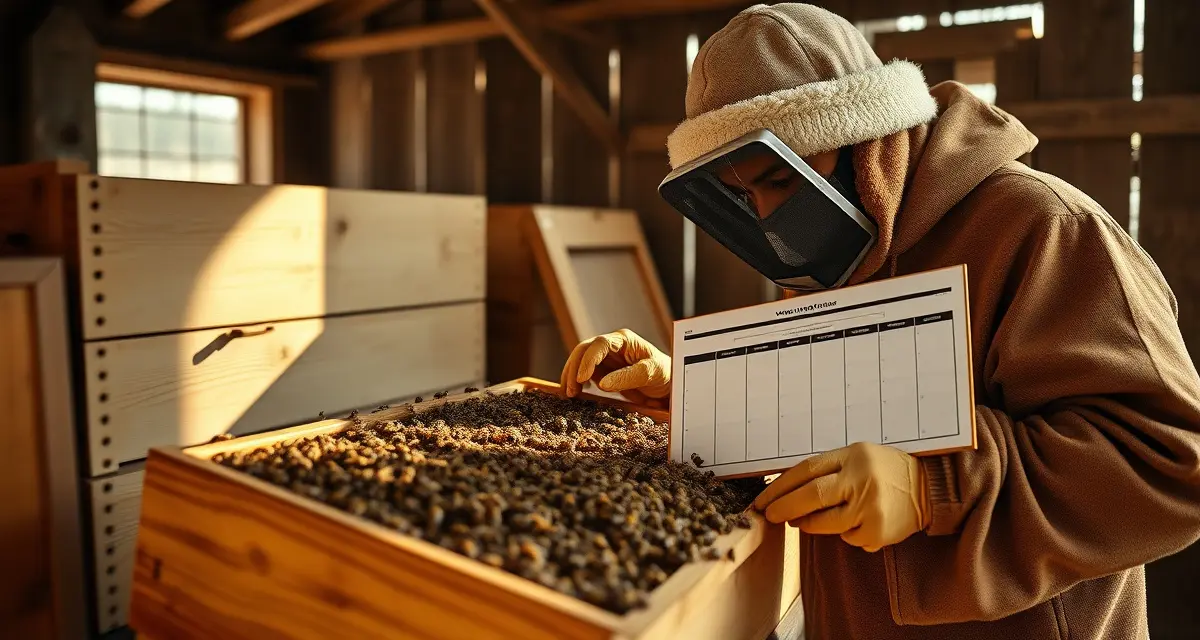
January Varroa Review: Assess Your Winter Survival and Plan for Spring
January is the quietest month in beekeeping and the most important month for planning. Beekeepers who review their annual varroa data in January start their spring monitoring an average of 3 weeks earlier than those who wait until colonies become active, according to VarroaVault user data. Three weeks earlier is substantial: in a season where mite populations can double every 25-30 days, an earlier start means catching problems before they compound.
VarroaVault generates an annual mite management report automatically on January 1 for all accounts with a year of data. This isn't a marketing email. It's your operational data: count trends by colony, treatment efficacy scores, winter loss tally, and a recommended spring plan based on what worked and what didn't.
TL;DR
- January treatment decisions should be based on a current mite count, not calendar date alone
- Temperature constraints in January may limit which treatments are effective in your climate zone
- PHI timing for January treatments affects when honey supers can be added or must be removed
- Log a mite count before starting any January treatment to calculate efficacy post-treatment
- VarroaVault's treatment reminders for January account for regional temperature and flow calendars
- Recording January treatment dates creates the audit trail needed for state inspection compliance
Colony Checks in January
Most colony checks in January are non-invasive. In cold climates, your January colony management looks like this:
Weekly: Heft the hive from the back to estimate stores weight. A full colony should feel heavy. A hive that feels light (under 40 pounds in a single deep) may be in trouble. Note the weight in your records.
After every warm spell above 50F: Listen at the entrance for the hum of an active cluster. A faint hum means the cluster is alive. Silence doesn't necessarily mean dead: very cold clusters sometimes don't produce a sound you can hear without a stethoscope pressed against the box.
On a warm day above 55F: Look through the top if you have a screen inner cover or a window. You should see bees moving in the upper part of the hive, covering stores. If the cluster appears to be on the bottom board or is very small, note it.
Do not open frames in January in cold climates. Breaking the cluster in January is one of the most common causes of otherwise preventable winter losses. Save the inspection for a warm spell in late February or March.
Interpreting Your January Losses
If you find a dead colony in January, document it before you disturb anything. Note:
- The colony's last recorded mite count and treatment date
- Whether the cluster died up (ran out of food) or down (starvation at cluster level)
- Whether there are dead bees with deformed wings, which points to DWV from high varroa load
- Whether the cluster was small going into winter based on your fall records
Cross-referencing winter deaths against your varroa mite data analysis records often reveals patterns. Colonies with October mite counts above 2% die at significantly higher rates than those below 2%. If you're finding correlations, that information changes how aggressively you treat next fall.
Building Your Spring Plan in January
The best January task is scheduling. Pull up VarroaVault and confirm your spring reminder dates are set:
- April: First count (temperature-triggered)
- April or May: OA dribble on early broodless windows if applicable
- May: Baseline count
- June: Pre-flow check
If you're new to structured management, the winter hive prep guide has a January-through-March transition plan that covers both monitoring tasks and the administrative side of getting your season set up. Reviewing it now, before April, means you'll be ready when the bees start flying.
Frequently Asked Questions
What should I do for varroa in January?
January is observation and planning, not treatment. Monitor colony health by hefting for stores weight and listening for cluster activity. Review your previous season's mite count data in VarroaVault and identify where you had gaps or treatment failures. Plan your spring monitoring calendar and order treatment supplies for the coming season. If you're in a mild climate (zone 7+) and have a warm day above 50F with a confirmed broodless colony, an OA dribble is appropriate, but most beekeepers are in passive monitoring mode in January.
How do I check my winter colonies without disturbing them?
Use non-invasive methods: heft the hive from the back to feel the weight of stores, press your ear or a stethoscope against the side of the box to listen for the cluster hum, and use a flashlight at the entrance to see if bees are clustered near the bottom. If you have a screen bottom board, you can look through it from below to confirm the cluster position. Don't remove covers or open frames in cold temperatures. Wait for a warm spell in late February or March for your first visual inspection.
Does VarroaVault generate a January annual summary?
Yes. VarroaVault generates your annual mite management report on January 1 for all accounts with 12 months of data. The report includes count trends by colony (graph view), treatment efficacy scores, a comparison of your mite management against the prior year if available, and winter survival data. It also generates a recommended treatment rotation for the new season and a spring monitoring schedule based on your location. You can access the report at any time from the annual summary section, but it's automatically pushed to your notification feed on January 1 so you see it when planning is most valuable.
How do I know if my varroa treatment is working?
Run a mite count 2-4 weeks after the treatment ends and compare it to your pre-treatment count. The efficacy formula is: ((pre-count - post-count) / pre-count) x 100. A result above 90% indicates effective treatment. Results below 80% should trigger investigation for possible resistance, application error, or reinfestation. Log both counts in VarroaVault to track efficacy trends across treatment cycles.
How often should I check mite levels in my hives?
At minimum, once per month (every 3-4 weeks) during the active season. Increase to every 2 weeks when counts are near threshold or after a treatment to verify it worked. In fall, monitoring frequency matters most because the window to treat before winter bees are raised is narrow. VarroaVault's monitoring reminders can be set to your preferred interval for each apiary.
What records should I keep for varroa management?
Each record should include: date of count or treatment, hive identifier, monitoring method used, number of bees sampled, mites counted, infestation percentage, treatment product name and EPA registration number, dose applied, treatment start and end dates, and PHI end date. State apiarists typically expect this level of detail during inspections. VarroaVault captures all of these fields in a single log entry.
What is January Varroa Review: Assess Your Winter Survival and Plan for Spring?
January Varroa Review: Assess Your Winter Survival and Plan for Spring is a seasonal beekeeping framework for evaluating mite data collected throughout the previous year. It involves reviewing colony survival rates, treatment efficacy, and mite count trends to build an informed spring management plan. VarroaVault users with a full year of data receive an automatic annual report on January 1 that summarizes this information and generates a recommended action plan based on what worked and what didn't across their apiary.
How much does January Varroa Review: Assess Your Winter Survival and Plan for Spring cost?
January Varroa Review is a free practice built into the VarroaVault platform at no additional cost. All accounts with at least one year of logged data automatically receive an annual mite management report on January 1. There is no upgrade required to access this report. The cost of varroa management itself varies depending on which treatments you use, but the review process and VarroaVault's planning tools are included with your standard account.
How does January Varroa Review: Assess Your Winter Survival and Plan for Spring work?
The January Varroa Review works by pulling your logged mite counts, treatment records, and colony notes from the past year into a single summary. VarroaVault calculates treatment efficacy scores, tracks mite population trends by colony, and flags winter losses. Based on your regional climate zone and historical data, the platform generates a recommended spring monitoring schedule. Beekeepers then use this report to prioritize which colonies need early intervention and which treatments are appropriate given current temperatures and honey flow timing.
What are the benefits of January Varroa Review: Assess Your Winter Survival and Plan for Spring?
Reviewing your varroa data in January gives you a meaningful head start before spring buildup begins. VarroaVault data shows that beekeepers who complete a January review begin spring monitoring about three weeks earlier than those who wait. Since mite populations can double every 25 to 30 days, those three weeks represent a significant difference in catching infestations before they compound. The review also clarifies which treatments worked best in your specific conditions, so you spend less time guessing and more time acting effectively.
Who needs January Varroa Review: Assess Your Winter Survival and Plan for Spring?
Any beekeeper who managed colonies through winter and wants to reduce spring losses should complete a January varroa review. It is especially valuable for those who experienced unexplained winter die-offs, had inconsistent treatment results, or are expanding their apiary. New beekeepers benefit from establishing a baseline review habit early. Experienced beekeepers with multiple hives gain the most from colony-level efficacy comparisons. If you use VarroaVault and have a year of data, the annual report is already waiting for you on January 1.
Related Articles
- Spring Treatment After First Inspection: A Decision Checklist
- Spring Varroa Treatment FAQ: Answering Your Most Common Spring Questions
- Varroa Mite Treatment in Spring: Timing, Options, and Thresholds
Sources
- American Beekeeping Federation (ABF)
- USDA ARS Bee Research Laboratory
- Honey Bee Health Coalition
- Penn State Extension Apiculture Program
- Project Apis m.
Get Started with VarroaVault
The information in this guide is most useful when you have your own mite count data to apply it to. VarroaVault stores every count, flags threshold crossings automatically, and builds the treatment history you need for state inspections and effective management decisions. See pricing and free tools at varroavault.com.