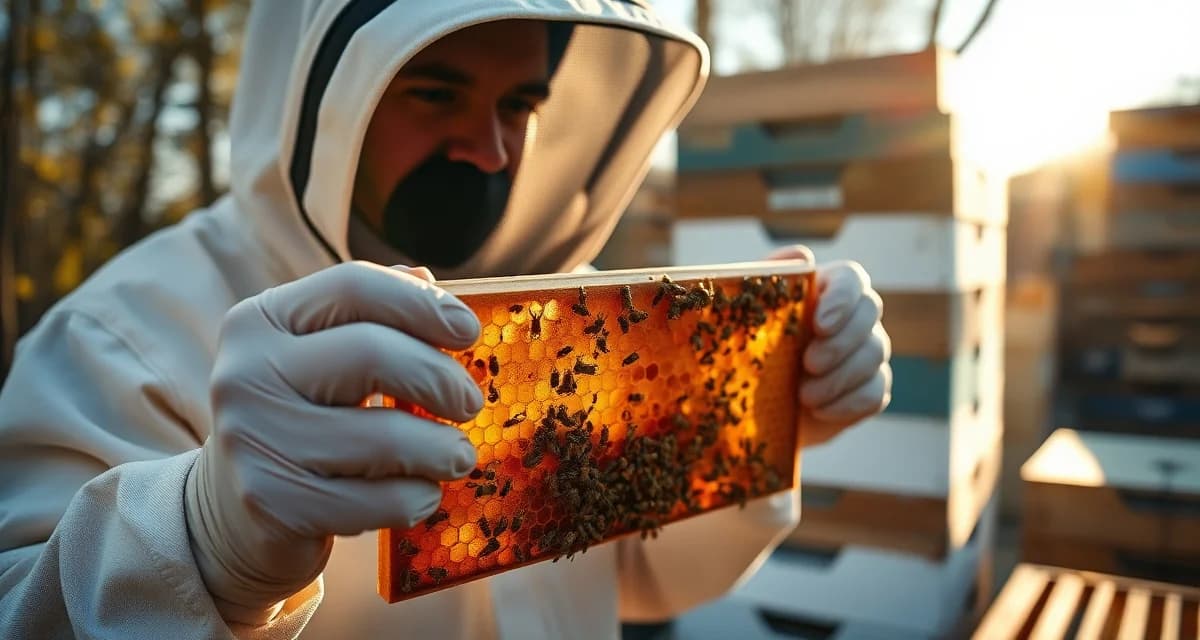
Winter Hive Prep: Varroa Checks and Treatment Before Cluster
Colonies going into winter above 1% infestation have a 70% chance of dying before spring. That number should be the reason you're reading this guide. Winter hive prep isn't just about wrapping hives or reducing entrances. It's about making sure the bees that cluster are healthy enough to survive.
This guide covers the complete winter prep checklist: when to do your final mite check, how to do an oxalic acid dribble on a broodless colony, and what else to address before your bees cluster for winter.
TL;DR
- Winter colony losses caused by varroa are largely preventable with effective fall treatment before winter bees are raised
- Winter bees raised under high mite pressure in August-September have shorter lifespans and cannot sustain the cluster
- The fall treatment window (August-September in most regions) is the most important management action of the year
- Oxalic acid dribble during a true broodless period (December-January in northern states) can rescue high-mite colonies
- A 1% mite threshold in fall (vs. 2% in summer) reflects the higher stakes of winter bee quality
- Track fall mite counts and winter survival rates together in VarroaVault to measure the impact of your treatment timing
The Two Phases of Fall/Winter Prep
Most beekeepers conflate fall varroa treatment (August-September) and winter hive prep (October-November), but they're separate steps with different goals.
Fall treatment (August-September): Protect the bees being raised as winter bees. This is the critical window. If you haven't done this yet, go read the fall treatment window guide first.
Winter prep (October-November): Once the colony has gone broodless or near-broodless, do a final mite count, treat broodless colonies with OA dribble for maximum efficacy, and address the physical hive. This is the cleanup step that gives your bees the best possible starting point.
When to Do Your Winter Mite Check
Time your winter mite check to coincide with the broodless or near-broodless period in your region. This is when an OA dribble will be most effective: no capped brood means all mites are on adult bees and exposed to the treatment.
General timing by region:
- Northern states (Z4 and colder): Late October to mid-November
- Mid-Atlantic and Midwest: Early to mid-November
- South and Gulf Coast: Late November to December, or during the short broodless period when night temps drop below 50°F consistently
Don't wait for the first hard freeze. Check a brood frame in mid-October. If you see capped brood decreasing sharply and your night temperatures are in the 40s, you're approaching the window.
Do not do the OA dribble if there's substantial capped brood present. The dribble doesn't penetrate cells, so you'd be killing mites on adult bees but leaving a full reservoir of reproducing mites in the brood nest. Wait for broodless.
The Final Mite Count
Your winter mite check serves two purposes: it tells you whether your fall treatment worked, and it tells you whether you need a final OA intervention before cluster.
Do an alcohol wash. Yes, even in November. Yes, even on a cold day (just wait for temperatures above 45°F and make it quick).
What the numbers mean in late fall:
- Below 1%: Good result from fall treatment. OA dribble is still worthwhile but you're in good shape.
- 1-2%: Fall treatment underperformed or reinfestation occurred. Definitely dribble. Monitor spring count carefully.
- Above 2%: Your fall treatment didn't work well enough. Dribble immediately on broodless colony and investigate why: resistance, late start, or incomplete protocol.
Log this count in VarroaVault. It's the last data point of your season and the first anchor for next year's spring comparison.
The Oxalic Acid Dribble: How to Do It
The OA dribble on a broodless cluster is one of the most effective single varroa treatments available. When there's no capped brood, every mite in the colony is on an adult bee. OA contact kills them directly. Studies show 90-95%+ efficacy on broodless colonies.
What you need:
- Oxalic acid solution (4.2% OA in sugar syrup, sold pre-mixed as Api-Bioxal)
- A 60mL or 30mL syringe
- A hive tool to identify frame seams
- Protective gloves (OA irritates skin)
Step by step:
- Wait for a calm day with temperatures between 25°F and 55°F. The colony needs to be clustered but not frozen solid.
- Open the hive quickly to minimize heat loss. Remove the inner cover.
- Identify the cluster. You'll see the bees between the frames.
- Apply 5mL of OA solution per occupied frame seam. A "frame seam" is the space between two frames where bees are clustered.
- Apply directly onto the bees in each seam. You want the solution to contact the bees, not fall to the bottom board.
- Replace the inner cover and hive cover immediately. Keep the hive open as briefly as possible.
- Do not disturb the colony again for at least 2 weeks.
Standard dose: 5mL per occupied frame seam, maximum 50mL per colony. For a winter cluster occupying 5-7 frame seams, that's 25-35mL total.
Log the treatment in VarroaVault: product, date, dose, hive ID. Your PHI for OA is zero, so this creates no harvest restriction for the following year.
The Complete Winter Prep Checklist
Beyond the mite count and OA dribble, here's what to address before your bees cluster:
Hive configuration:
- Condense from two deeps to one and a half if the colony isn't large enough to fill both. Small colonies in big boxes can't maintain cluster warmth.
- Make sure the cluster has honey stores within easy reach. Winter starvation often happens when bees are clustered away from their honey stores.
- Check that upper ventilation exists. A small top entrance or moisture quilt prevents condensation from dripping onto the cluster.
Physical protection:
- Install mouse guards. Mice find clustered hive interiors irresistible in winter. Standard entrance reducers with small holes are sufficient.
- Reduce the main entrance to the smallest setting.
- In northern climates, consider a windbreak for exposed apiaries. Prevailing west and north winds stress wintering colonies.
Final food assessment:
- Heft the hive. A colony needs 40-60+ pounds of winter stores depending on your region and winter length. If the hive feels light, feed syrup now (while temperatures are still above 50°F) or add winter emergency candy boards.
Record in VarroaVault:
VarroaVault's winter prep checklist generates a to-do list for every hive in your apiary based on their last mite count, treatment date, and any hive notes you've logged through the season. Each item is checked off as you complete it, giving you a per-hive completion record that you can review in spring.
What Not to Do in Winter Prep
Don't disturb the cluster once it forms. Opening a clustered hive in hard-frost conditions stresses the colony. Your winter prep should be done before sustained cluster. Make your November check your last hive opening until spring.
Don't OA dribble a colony with capped brood. You'll waste treatment and leave a mite reservoir. Wait for broodless.
Don't assume last year's approach will work this year. If you had high winter losses, review your fall treatment records. High spring counts will tell you whether the problem was in the fall treatment timing, efficacy, or a late-season reinfestation event.
Related Articles
FAQ
What mite level is safe for winter cluster?
Below 1% is the target. Colonies entering winter above 1% have considerably elevated loss risk. Studies put 70%+ mortality risk for colonies above that threshold. Below 0.5% is ideal. If your pre-cluster OA dribble brings you below 0.5%, you're starting the winter in good shape regardless of where you started before the fall treatment.
When is the best time to do a winter oxalic acid dribble?
When the colony is broodless or near-broodless, and temperatures are between 25°F and 55°F. In most northern states, this is late October through mid-November. In the South, it may be December or a brief cold spell earlier. The exact timing depends on your local queen's laying pattern. Some queens stop laying earlier than others. Check a brood frame before you treat; if capped brood is still present in notable numbers, wait another 2-3 weeks.
How do I log winter prep in VarroaVault?
Log your final mite count as a standard alcohol wash entry. The app will flag it as your end-of-season count automatically. Log your OA dribble as a treatment event with the product name (Api-Bioxal), date, dose per hive, and any notes about brood status. The winter prep checklist module generates a per-hive task list based on your season's records. As you complete each task, mouse guards installed, entrance reduced, food checked, OA dribbled, tap to check it off. You'll have a timestamped completion record for every hive going into winter.
Can I treat for varroa during winter?
In northern regions where colonies form a tight winter cluster with no brood (typically December-February), oxalic acid dribble is an effective and label-approved treatment. It achieves very high efficacy during true broodless periods because all mites are phoretic. The temperature should be above 40 degrees F during dribble application for bee welfare. Vaporization is also possible but requires safe outdoor conditions for the applicator.
How do I know if my colony survived winter in good mite condition?
Do an early spring mite count (February-March in most regions) as soon as the colony is active and temperatures allow. A count below 1% suggests winter treatment was effective and the colony has a good start. A count above 2% in early spring indicates mites survived in high numbers and a spring treatment should be started promptly before brood population expands.
What is Winter Hive Prep: Varroa Checks and Treatment Before Cluster?
Winter hive prep is the process of evaluating and treating your bee colonies before they form their winter cluster. It focuses on reducing varroa mite loads to safe levels (below 1% infestation) so that winter bees — the long-lived bees that must sustain the colony through cold months — are raised healthy. It also includes physical preparations like entrance reduction, but varroa management is the most critical factor in colony survival.
How much does Winter Hive Prep: Varroa Checks and Treatment Before Cluster cost?
Winter hive prep practices are free to implement beyond the cost of mite-testing supplies (around $1–5 per alcohol wash or sugar roll) and any treatment products. Oxalic acid, one of the most effective broodless-period treatments, costs just a few dollars per hive. VarroaVault offers tools to track mite counts and treatment timing so you can measure the impact of your management decisions across seasons.
How does Winter Hive Prep: Varroa Checks and Treatment Before Cluster work?
Winter hive prep works by eliminating the varroa mite buildup that would otherwise weaken winter bees during the critical August–September rearing window. A fall treatment brings mite levels below the 1% threshold before winter bees are raised. If mite levels remain high into December, an oxalic acid dribble during a true broodless period can rescue at-risk colonies by killing exposed mites when none are protected inside capped brood cells.
Sources
- American Beekeeping Federation (ABF)
- USDA ARS Bee Research Laboratory
- Honey Bee Health Coalition
- Penn State Extension Apiculture Program
- Project Apis m.
Going Into Winter With Confidence
Winter prep done right isn't dramatic. It's methodical. You count, you treat if needed, you address the physical hive, and you close it up for winter.
The beekeepers who lose the most hives in winter are usually the ones who skipped the fall treatment window or skipped the final mite check. The bees that cluster in a high-mite colony in November are already compromised: fat bodies depleted, immune systems stressed, lifespans shortened.
Do the count. Do the dribble. Check your stores. Put on the mouse guards. Then leave them alone until spring, when a low mite count will tell you whether everything you did worked the way it should.
Get Started with VarroaVault
Winter losses are largely a fall varroa management problem. VarroaVault helps you track fall treatment timing, verify efficacy with post-treatment counts, and build the record that shows you whether your winter preparation is actually working year over year. See pricing and free tools at varroavault.com.