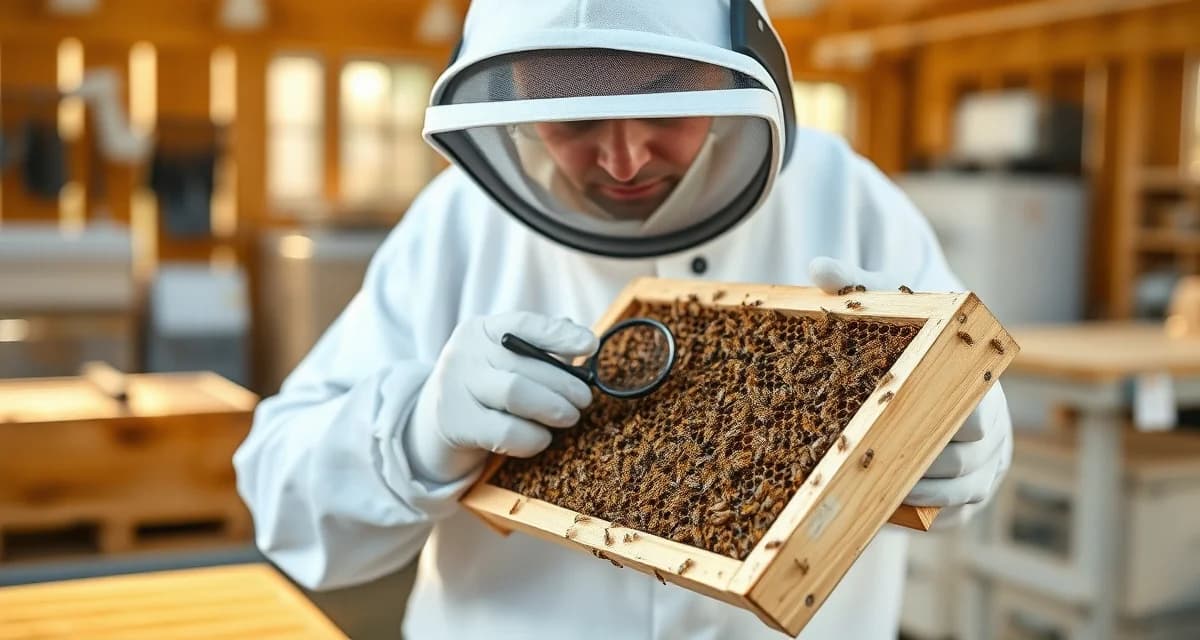
March Varroa Prep: What to Do Before the Season Starts
March is your best chance to set the entire beekeeping season up for success. You're not monitoring in March in most climates because colonies are still building up and temperatures are often too low for a reliable alcohol wash. But what you do in March determines whether you're proactive or reactive for the next eight months. Beekeepers who order treatment supplies in March rather than July avoid the summer supply chain delays that affect roughly 25% of beekeepers, who find products out of stock or backordered when mite counts are already above threshold.
VarroaVault's March prep checklist includes your equipment list, a treatment order reminder, and an account setup prompt so you're ready to log your first count the moment conditions allow. Think of March as the administrative month for beekeeping: you're setting up the systems that will operate all season.
TL;DR
- March treatment decisions should be based on a current mite count, not calendar date alone
- Temperature constraints in March may limit which treatments are effective in your climate zone
- PHI timing for March treatments affects when honey supers can be added or must be removed
- Log a mite count before starting any March treatment to calculate efficacy post-treatment
- VarroaVault's treatment reminders for March account for regional temperature and flow calendars
- Recording March treatment dates creates the audit trail needed for state inspection compliance
Your March Equipment Check
Before the season starts, confirm you have everything you need for varroa monitoring:
Monitoring equipment:
- A mite washing jar or wide-mouth container with a hardware cloth lid
- Isopropyl alcohol at 70% concentration (easily available at pharmacies; don't use denatured alcohol)
- A measuring cup or graduated cylinder for measuring bee samples
- A white shallow container for counting mites after washing
- A phone with VarroaVault installed for logging in the apiary
The total cost of this kit is under $15 if you build it from scratch. Most beekeepers already have most of these items. Check them in March and replace anything depleted from last season.
Treatment supplies:
- Confirm your fall treatment product is ordered. Apivar (amitraz strips), oxalic acid (Api-Bioxal), or formic acid products (MAQS, Formic Pro) take time to ship and are sometimes backordered in peak season. Order in March to guarantee availability in August.
- If you use a vaporizer for OA vaporization, check the heating element and replace if the element shows corrosion or reduced performance. Replacement elements are inexpensive but take time to arrive.
- Check that you have the PPE required for your treatment products: nitrile gloves for all treatments, a half-face respirator with organic vapor/P100 cartridges for OA vaporization.
Setting Up Your VarroaVault Account in March
If you're setting up VarroaVault for a new season, March is the time. The March setup prompt walks you through:
- Entering or updating your hive list with colony IDs and locations
- Setting your climate zone for location-specific reminders
- Entering last year's treatment history if you have it, so the app can factor in product rotation for this season
- Setting your monitoring cadence preference (monthly recommended)
If you treated in winter and have a result, log it now. A February or late-January OA dribble result entered in March gives VarroaVault your starting data point for the season trend.
Reviewing Last Year's Data
March is also when you look back. Pull up your count records from last season and answer these questions:
- Did you hit your monitoring schedule? How many counts did you miss?
- Did your treatments achieve the expected efficacy?
- At what point in the season did you have your highest count?
- Did you hit the fall treatment window on time?
That review informs your March planning. If last season showed you consistently missed July counts, set a recurring calendar reminder now. The spring mite management guide has a March planning checklist you can use alongside your VarroaVault setup. For a complete season overview, the how to set up a varroa treatment program guide walks through the full annual planning process from March prep through November close-out.
Frequently Asked Questions
What varroa supplies do I need to order in March?
Order your fall treatment product in March to avoid summer stock shortages. For most beekeepers, this means Apivar strips or oxalic acid (Api-Bioxal). If you use formic acid products (MAQS or Formic Pro), order those as well. Apivar is usually the hardest to find in August when demand peaks. For monitoring supplies, isopropyl alcohol is available locally, but if you want a commercial mite washing kit with integrated measuring lines, order that online in March. Also check your vaporizer (if applicable) and PPE: respirator cartridges have a shelf life and should be replaced if unused for more than 6 months.
How do I prepare VarroaVault for the new season in March?
Open VarroaVault and run through the March prep checklist in the seasonal planning section. Update your colony list to remove any winter losses and add any new packages or nucs you're expecting. Set your location and climate zone if you moved any apiaries. Review your product rotation history and confirm your plan for this season uses a different active ingredient class than last year if you're due for a rotation. Set your April count reminder based on your expected first warm spell. The whole March setup process takes about 15-20 minutes.
When should I do my first mite count after March?
Your first count should happen when temperatures reliably exceed 50F during the day and your colonies have at least 3 frames of brood. In most of the US, this is mid to late April. In zone 7 and warmer, it can be late March. VarroaVault will send your April count reminder based on your location's actual temperature data. Don't rush the first count: a too-early count on a small cluster in cold weather produces unreliable results and stresses the colony. Wait for conditions to be right, then count every 30 days through the season.
How do I know if my varroa treatment is working?
Run a mite count 2-4 weeks after the treatment ends and compare it to your pre-treatment count. The efficacy formula is: ((pre-count - post-count) / pre-count) x 100. A result above 90% indicates effective treatment. Results below 80% should trigger investigation for possible resistance, application error, or reinfestation. Log both counts in VarroaVault to track efficacy trends across treatment cycles.
How often should I check mite levels in my hives?
At minimum, once per month (every 3-4 weeks) during the active season. Increase to every 2 weeks when counts are near threshold or after a treatment to verify it worked. In fall, monitoring frequency matters most because the window to treat before winter bees are raised is narrow. VarroaVault's monitoring reminders can be set to your preferred interval for each apiary.
What records should I keep for varroa management?
Each record should include: date of count or treatment, hive identifier, monitoring method used, number of bees sampled, mites counted, infestation percentage, treatment product name and EPA registration number, dose applied, treatment start and end dates, and PHI end date. State apiarists typically expect this level of detail during inspections. VarroaVault captures all of these fields in a single log entry.
What is March Varroa Prep: What to Do Before the Season Starts?
March Varroa Prep refers to the proactive steps beekeepers take in March to set up a successful varroa management season. Because colonies are still building up and temperatures are often too low for reliable alcohol washes, March is the time to order treatments, organize equipment, and set up mite-tracking systems. Acting in March means you're ready to monitor and treat the moment conditions allow, rather than scrambling reactively when mite counts are already dangerously high.
How much does March Varroa Prep: What to Do Before the Season Starts cost?
March Varroa Prep is a free checklist and planning framework provided by VarroaVault. There is no cost to access the prep guide or set up a VarroaVault account to log your mite counts. The only costs involved are the varroa treatments and monitoring supplies you choose to order — and ordering those in March rather than summer helps you avoid the backorders and stock shortages that affect roughly 25% of beekeepers during peak season.
How does March Varroa Prep: What to Do Before the Season Starts work?
March Varroa Prep works by shifting your beekeeping from reactive to proactive. You start by reviewing your equipment, ordering treatment supplies before summer demand peaks, and setting up your VarroaVault account. When temperatures rise enough for a reliable alcohol wash, you log your first mite count immediately. That baseline count drives every treatment decision for the season, ensuring you treat based on real data rather than guesswork or calendar date alone.
What are the benefits of March Varroa Prep: What to Do Before the Season Starts?
The core benefit is control over the entire season. Beekeepers who prep in March avoid supply shortages, enter spring with a clear mite management plan, and can calculate treatment efficacy accurately because they logged a pre-treatment baseline count. PHI timing is also easier to manage when treatments are planned in advance, protecting honey harvest windows. Early preparation consistently separates beekeepers who stay proactive from those reacting to high mite counts mid-summer.
Who needs March Varroa Prep: What to Do Before the Season Starts?
Any beekeeper who wants to protect colony health through the active season should complete March Varroa Prep — from hobbyists managing a single hive to commercial operations running dozens. It is especially valuable for beekeepers who have experienced summer treatment shortages, lost colonies to varroa in previous years, or struggled to stay on top of monitoring schedules. If you are new to varroa management, March is the ideal time to build the habits and systems that support consistent monitoring all season.
Related Articles
Sources
- American Beekeeping Federation (ABF)
- USDA ARS Bee Research Laboratory
- Honey Bee Health Coalition
- Penn State Extension Apiculture Program
- Project Apis m.
Get Started with VarroaVault
The information in this guide is most useful when you have your own mite count data to apply it to. VarroaVault stores every count, flags threshold crossings automatically, and builds the treatment history you need for state inspections and effective management decisions. See pricing and free tools at varroavault.com.