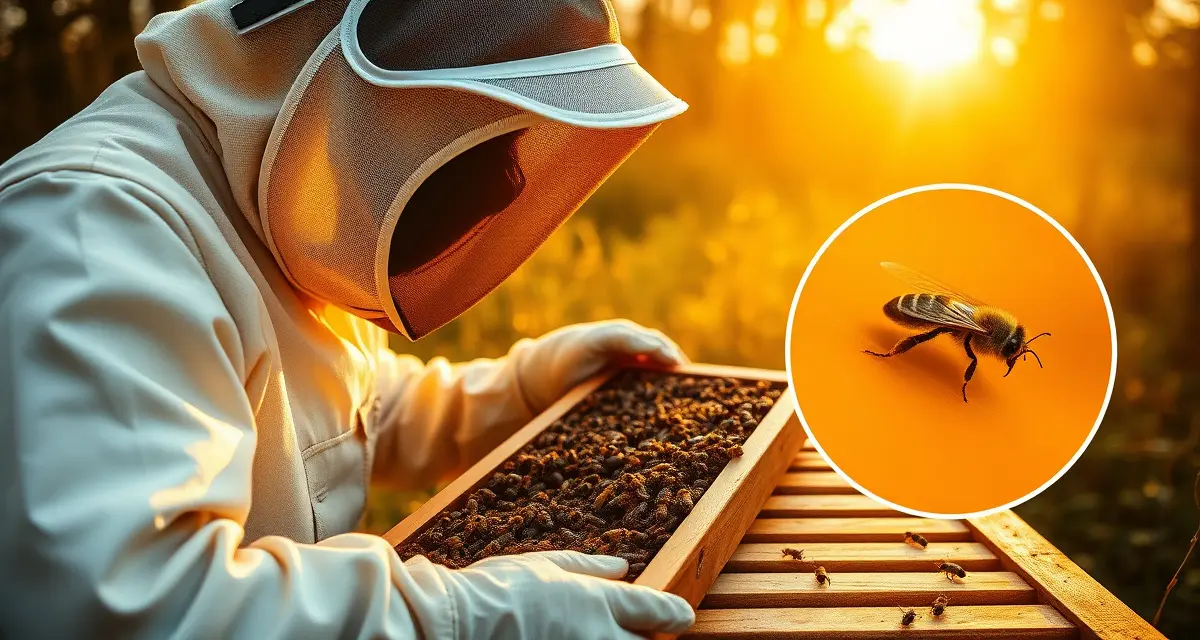
Varroa Mite Treatment in Fall: The Critical Late-Season Window
Here's the number every beekeeper should have memorized: colonies treated in September have 3x higher winter mortality than those treated in August.
That's not a small difference. That's the difference between an apiary that comes out of winter intact and one that loses half its hives. And the only variable in that comparison is timing, August versus September.
Varroa mite treatment fall season is the most consequential intervention you'll make all year. Miss the window and you pay for it in April.
TL;DR
- The fall treatment window (August-September in most regions) is the highest-leverage varroa management window of the year
- Winter bees raised in August-September are the colony's survival mechanism through winter; high mite loads during this period cause permanent damage
- The treatment threshold in fall drops to 1% (versus 2% in spring/summer) because winter bee quality is so critical
- Oxalic acid, formic acid (MAQS/Formic Pro), and amitraz (Apivar) are all effective fall options depending on temperature
- Missing the fall window by even 2-3 weeks can mean the difference between a colony surviving or dying in February
- VarroaVault's fall treatment reminders fire based on your location's historical first frost date
Why Fall Matters More Than Any Other Season
The critical period is about winter bees. Starting in late summer, the colony shifts from producing short-lived summer workers (5-6 week lifespan) to long-lived winter bees (5-6 month lifespan). These winter bees need to be healthy to survive until spring.
Varroa damages winter bees in two ways. Direct feeding weakens the bee's immune system and fat body. Viral transmission, especially deformed wing virus, causes shortened lifespan and reduced ability to thermoregulate in the cluster.
If your mite load is high in August and September, the winter bees being produced right now are varroa-damaged winter bees. You won't see the effect until January or February, when the cluster starts to fail.
Fall urgency score in VarroaVault shows how many winter bees will be mite-damaged if treatment is delayed 1, 2, or 4 weeks, putting a real number on what procrastination costs.
The August Deadline
Most experienced beekeepers target August 1-15 as the ideal fall treatment start. Here's the reasoning:
- The honey flow is typically winding down, so most synthetic treatments are now feasible
- Brood production is still active enough that formic acid penetration in capped cells is valuable
- Treatment started in August allows the full 6-8 week Apivar window to complete before October
- Winter bee production begins in late August in most regions, treating before this point protects the bees that will actually overwinter
Treatment started in September is later than ideal. Treatment started in October is a late-season emergency intervention, not a planned program.
What Treatments Work in Fall?
Oxalic Acid (OA)
OA becomes increasingly attractive as fall progresses and brood dwindles. By October in most regions, many colonies have reduced or absent capped brood, making OA dribble or vaporization highly effective.
The ideal OA scenario: a fully broodless colony in early winter where OA dribble achieves near-100% efficacy. If you can get there with a low count already (from a successful August treatment), a winter OA dribble is excellent insurance.
For colonies with brood still present in September-October, the extended vaporization protocol (3 treatments at 5-day intervals) gives better coverage than a single application.
Formic Acid (MAQS/Formic Pro)
Formic acid is powerful in early fall because it penetrates capped brood. If you have a high count in August and still have brood, MAQS or Formic Pro is often the right choice, provided temperatures are in the 50-85°F range.
In August, heat is still the risk. In September and October, the risk shifts to temperatures dropping below 50°F, which shuts down efficacy. Watch the forecast.
Amitraz (Apivar)
Apivar is a strong fall option if you apply early enough. Starting Apivar by August 1 means strips complete by mid-September to early October. That's a well-timed treatment window.
Starting Apivar in September means strips run into October-November, which is fine for mite control but reduces the time between strip removal and winter cluster formation. Most beekeepers prefer to have Apivar out before the colony fully clusters.
Thymol
Thymol works in fall provided temperatures stay above 60°F. In regions with warm Septembers, thymol-based treatments (ApiLife Var, Apiguard) are viable. Once nighttime lows consistently drop below 60°F, thymol efficacy drops to near zero. This typically limits thymol to August and early September in most of the US.
The Urgency Score: What Delay Actually Costs
Here's a way to think about fall treatment delay in concrete terms.
A colony producing winter bees in August-September is rearing roughly 1,000-1,500 winter-destined bees per day. If your mite infestation is at 3% and climbing, a meaningful proportion of those bees are being damaged before they emerge.
Delay treatment by 2 weeks, and you've potentially damaged 14,000-21,000 winter bees. Those bees have shorter lifespans and weaker cluster cohesion. The colony enters winter already compromised.
VarroaVault's fall urgency score translates this directly: enter your current mite count, and the app estimates how many winter bees are being affected per week of delay. It's an uncomfortable number. That's the point.
Monitoring in Fall: How Often?
Mite populations accelerate in late summer as colony population starts to decline. More mites per fewer bees means the percentage climbs faster even if absolute mite numbers aren't growing as fast.
Recommended fall count frequency:
- August 1: First fall count. This is your decision point for early treatment.
- Every 3 weeks through October: Continued monitoring until treatment is verified and mites are below threshold going into winter.
If you're using Apivar and started in early August, a post-treatment count in late September confirms efficacy before winter.
How VarroaVault Reminds You About Fall Treatment Deadlines
VarroaVault's fall treatment deadline reminders are set based on your geographic region. You enter your state, and the app calculates the optimal first-count date and treatment window for your climate.
If you haven't logged a fall treatment by the regional deadline, you get a push notification. Not a gentle nudge, a specific date-based alert that's calibrated to your location, not a national average.
For the fall treatment calendar and regional timing details, the fall treatment window guide covers state-by-state timing. For winter preparation following your fall treatment, see the winter hive prep guide.
Why is fall the most important treatment window?
Fall treatment protects the winter bees, the long-lived bees produced in August-September that must survive 5-6 months until spring. If these bees are mite-damaged, the cluster fails in winter. A spring treatment can't fix this because the damaged bees are already dead. The fall window is your last opportunity to protect the specific bee cohort that will overwinter. Treating in August gives you the best chance; treating in September is adequate but with higher winter mortality risk; missing the window entirely is the leading cause of spring colony failure.
What treatments work in fall?
All major treatment types have fall applications, with timing and temperature determining which is appropriate. Apivar and formic acid are preferred in August through early September because brood is still present (formic acid penetrates capped cells; Apivar requires 42-56 days of brood contact). Oxalic acid becomes more powerful as fall progresses and brood diminishes, it's ideal for October treatment on colonies with little or no capped brood. By November in most regions, OA dribble on a broodless cluster is the primary option.
How does VarroaVault remind me about fall treatment deadlines?
VarroaVault sets region-specific fall treatment reminders based on your state. When your optimal treatment window opens, you get a push notification. If you haven't logged a treatment or a mite count by a region-specific date, a second alert fires. The fall urgency score in the app shows you, in real numbers, how many winter bees are being damaged per week of treatment delay based on your current mite count, making the cost of delay visible rather than abstract.
What if I miss the fall treatment window?
If you miss the ideal August-September window, treatment in October is still worth doing in most regions even if less effective than ideal timing. An oxalic acid dribble or vaporization in November-December during the broodless period can significantly reduce mite loads heading into winter. A colony treated late with high mite loads has a better chance than an untreated colony with critical mite levels.
Can I do a fall treatment while still harvesting honey?
It depends on the treatment. Formic acid (MAQS, Formic Pro) and oxalic acid have no PHI restriction and can be used with supers in place according to label instructions. Amitraz (Apivar) requires supers to be removed during treatment. If you need to harvest late into fall, plan your fall treatment around the products that allow super presence.
How do I know if fall treatment actually worked?
Run a post-treatment mite count 2-4 weeks after the treatment ends. A successful treatment should bring infestation below 1% in fall. If counts remain above 1%, the treatment may have failed due to resistance, application error, or reinfestation from neighboring colonies. Log both pre- and post-counts in VarroaVault to calculate and store the efficacy percentage.
FAQ
What is Varroa Mite Treatment in Fall: The Critical Late-Season Window?
Fall varroa mite treatment refers to applying mite-control interventions during the critical August-September window before winter bees are raised. This period is the highest-leverage management opportunity of the year because the bees emerging in late summer will carry the colony through winter. Missing this window by even a few weeks can triple winter colony mortality. Beekeepers use this treatment window to knock down mite loads before they permanently damage the long-lived winter bee population.
How much does Varroa Mite Treatment in Fall: The Critical Late-Season Window cost?
Fall varroa treatment costs vary by method. Oxalic acid dribble or vaporization is the most affordable option, with supplies running $10–$30. Formic acid products like MAQS or Formic Pro typically cost $15–$25 per colony. Apivar amitraz strips run approximately $5–$10 per strip, with two strips required per colony. The real cost of skipping treatment is far higher—replacing a dead-out colony can cost $150–$250 or more in package bees or nucs come spring.
How does Varroa Mite Treatment in Fall: The Critical Late-Season Window work?
Fall varroa treatment works by reducing the number of mites feeding on developing and adult bees during the critical winter bee-raising period. Treatments like oxalic acid kill phoretic mites on adult bees. Formic acid penetrates capped brood to kill mites inside cells. Apivar strips release amitraz continuously over 6–8 weeks, killing mites as they contact the strips. Each method targets mites at different life stages to bring infestation levels below the 1% fall threshold.
What are the benefits of Varroa Mite Treatment in Fall: The Critical Late-Season Window?
The primary benefit of fall varroa treatment is colony survival. Colonies treated in August are three times more likely to survive winter than those treated in September. Beyond survival, timely treatment produces healthier winter bees with undamaged fat bodies, which directly impacts the colony's ability to raise spring brood. Well-timed fall treatment also reduces the risk of mite-vectored viruses like Deformed Wing Virus, which causes permanent developmental damage to individual bees.
Who needs Varroa Mite Treatment in Fall: The Critical Late-Season Window?
Every beekeeper with managed honey bee colonies needs to perform fall varroa treatment—no exceptions. This includes hobbyist backyard beekeepers, sideliners, and commercial operations. Colonies that appear strong in August are not immune; high mite loads can be present without obvious symptoms until it's too late. New beekeepers are especially at risk of missing the window due to inexperience with monitoring. If you're keeping bees in a region with winter, fall varroa treatment is non-negotiable.
How long does Varroa Mite Treatment in Fall: The Critical Late-Season Window take?
The treatment itself takes 30–60 minutes per apiary visit depending on the method. Oxalic acid vaporization takes about 5–10 minutes per hive. Formic acid pad placement or Apivar strip insertion requires opening the hive briefly, typically under 10 minutes. However, the full treatment duration—meaning the period the product must remain in the hive—ranges from a single application for oxalic acid to 6–8 weeks for Apivar. Plan to complete treatment before your local nectar flow ends.
What should I look for when choosing Varroa Mite Treatment in Fall: The Critical Late-Season Window?
When choosing a fall varroa treatment, consider three factors: temperature range, brood presence, and resistance risk. Oxalic acid is most effective when broodless but safe to use anytime. Formic acid requires temperatures between 50°F and 85°F for efficacy and safety. Apivar works across a wider temperature range but requires rotation to prevent amitraz resistance. Always confirm the treatment threshold first—if mite loads are below 1%, monitor closely rather than treating automatically. Use a product registered in your country.
Is Varroa Mite Treatment in Fall: The Critical Late-Season Window worth it?
Yes, fall varroa treatment is absolutely worth it. The cost of a single treatment is a fraction of the cost of replacing a dead colony in spring. More importantly, the winter bees raised in August and September are irreplaceable—once they emerge damaged from high mite loads, no spring treatment can undo that harm. Beekeepers who treat consistently in fall report significantly higher winter survival rates. It is the single most impactful management decision you can make in a calendar year.
Sources
- American Beekeeping Federation (ABF)
- USDA ARS Bee Research Laboratory
- Honey Bee Health Coalition
- Penn State Extension Apiculture Program
- Project Apis m.
Get Started with VarroaVault
The fall treatment window is your most important varroa management action of the year. VarroaVault's fall monitoring reminders fire at the right time for your region, and efficacy scoring confirms your treatment actually brought mite levels below the winter threshold. See pricing and free tools at varroavault.com.