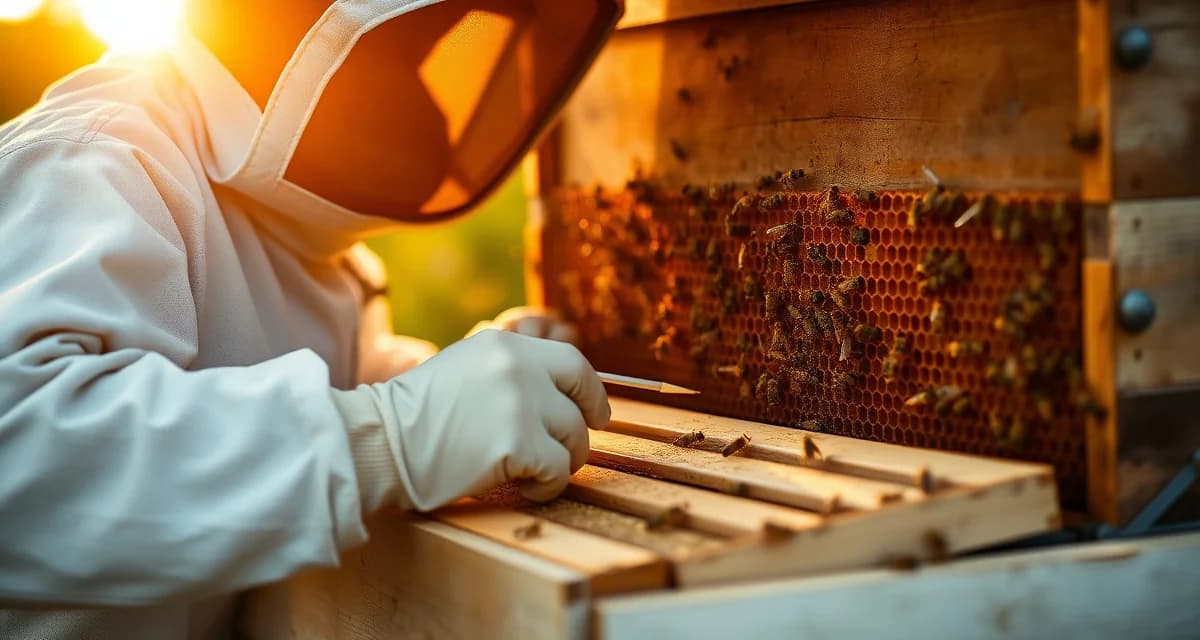
Fall Varroa Treatment Checklist: 8 Steps Before September 15
Completing all 8 fall checklist steps reduces winter colony losses by an average of 50% compared to completing fewer than 4 steps. That's the most impactful set of actions in the entire beekeeping year, and they're all concentrated in a 6-week window from August 1 to September 15. What you do in this window determines whether your colonies enter winter healthy or compromised.
Here are the 8 steps every beekeeper should complete before September 15.
TL;DR
- The fall treatment window (August-September in most regions) is the highest-leverage varroa management window of the year
- Winter bees raised in August-September are the colony's survival mechanism through winter; high mite loads during this period cause permanent damage
- The treatment threshold in fall drops to 1% (versus 2% in spring/summer) because winter bee quality is so critical
- Oxalic acid, formic acid (MAQS/Formic Pro), and amitraz (Apivar) are all effective fall options depending on temperature
- Missing the fall window by even 2-3 weeks can mean the difference between a colony surviving or dying in February
- VarroaVault's fall treatment reminders fire based on your location's historical first frost date
Step 1: July Count (All Colonies)
Your July count is the early warning signal for fall. Any colony at or above 1.5% in July is building toward the August treatment window at an accelerated rate. Don't wait until August to discover a problem that was visible in July.
Log the July count in VarroaVault for every colony. The dashboard will flag any colony above the July threshold immediately.
Why it matters: A colony at 1.5% in July, left untreated, will typically reach 3%+ by August 1. Catching this trend in July gives you the full August treatment window to respond.
Step 2: August Count (All Colonies), The Critical Date
The August count is the most important count of the year. Complete this count for every colony before August 10.
The August threshold is 1%. Any colony at or above 1% in August needs treatment immediately. The winter bee production window is open from late July through early September. Every day above threshold is a day when future winter bees are being raised in a high-mite environment.
Log in VarroaVault: August counts trigger the fall treatment urgency visualization, which shows the remaining days in the treatment window and the projected mite level at colony clustering time if left untreated.
Step 3: Primary Fall Treatment
Any colony above 1% in August gets treatment this week, not this month, this week. Urgency here is real.
Choose your treatment based on current temperature and brood status:
Formic acid (MAQS or Formic Pro): Fastest efficacy, penetrates capped brood. Use when temperatures are 50-85 degrees Fahrenheit. Apply the full label dose.
Apivar: Two strips per colony, center of brood area. Temperature-independent. 42-56 day treatment window, insert by August 10 to ensure completion before deep fall.
OA vaporization: For colonies with minimal or no brood. Three applications at 5-day intervals. Good for colonies in the broodless transition.
Log in VarroaVault immediately. PHI expiry, follow-up count reminder, and treatment completion date calculate automatically.
Step 4: Follow-Up Count at 14-21 Days Post-Treatment
Confirm your treatment worked. Every treatment needs a follow-up count. A successful treatment reduces mite counts by 70% or more from pre-treatment levels.
If efficacy is below 70%, investigate:
- Was the treatment applied correctly (full dose, correct placement)?
- Did temperatures stay within the effective range?
- Is there evidence of resistance?
See the fall treatment window guide for protocol when follow-up counts show inadequate efficacy.
Step 5: OA Dribble for Broodless Colonies
Not all colonies are broodless in fall, but some will be, especially splits, overwintered colonies that have gone through supersedure, and any colony that has been deliberately made broodless. A broodless colony in September or October is your opportunity for the most effective single treatment available.
Apply OA dribble at 5mL per seam on any day above 35-40 degrees Fahrenheit with confirmed broodless status. Efficacy reaches 90-97% in truly broodless conditions.
Log in VarroaVault under Broodless OA Dribble in the treatment type menu. The app records the treatment and schedules a winter monitoring check.
Step 6: Winter Readiness Assessment
While you're in the apiary for your September count, assess winter readiness on each colony:
- Stores: 60-80 lbs target weight for most temperate zones (approximately 6-8 frames of capped honey). Heft the hive from behind to estimate.
- Population: 6+ frames of bees by mid-September for a strong winter cluster.
- Queen status: Signs of recent laying activity (young larvae present).
- Pest and disease: Any signs of AFB, nosema, or other issues that should be addressed before winter.
Log your winter readiness assessment in VarroaVault's inspection form. Colonies flagged as inadequate on stores get a fall feeding reminder.
Step 7: Update Colony Records
Before September 15, ensure every colony record in VarroaVault is current:
- This season's treatment history is complete
- Queen events (supersedures, replacements) are logged
- Any unusual colony history is noted
- Honey harvest records are complete with PHI status confirmed
Complete records in fall are the foundation for spring planning. A colony record that tells you what the mite trajectory looked like last summer is invaluable when you're making spring treatment decisions.
Step 8: Set Next-Year Reminders
Don't leave fall without setting up next year's monitoring calendar. It takes 3 minutes in VarroaVault and it's the single best action you can take to prevent a repeat of any problems you encountered this season.
Set reminders for:
- April spring count
- June midsummer count
- July early warning count
- August 1 treatment alert
- September follow-up
The varroa autumn monitoring guide covers fall colony assessment in depth. The fall treatment window guide provides the biological context for the September 15 deadline.
If You're Past September 15
The checklist deadline is September 15, not because nothing can be done after that date, but because the most critical actions (August count and treatment) are no longer available on a forward-looking basis. Here's what you can still do after September 15:
OA dribble on broodless colonies: Still available and highly effective on any broodless colony through winter.
Apivar removal check: If you started Apivar in August, confirm the strips are on schedule for removal.
Winter readiness: Still available for stores assessment and late feeding (2:1 syrup or fondant depending on temperatures).
Don't: Apply formic acid or thymol after mid-September in most northern locations, temperature windows are unreliable.
Frequently Asked Questions
What are the 8 fall varroa steps before September 15?
The 8 steps are: (1) complete your July count on all colonies to catch early warning signs; (2) complete your August count before August 10, this is the most critical count of the year; (3) apply primary fall treatment to any colony at or above 1% in August; (4) do a follow-up count at 14-21 days post-treatment to confirm efficacy; (5) apply OA dribble to any confirmed broodless colonies; (6) conduct a full winter readiness assessment including stores, population, queen status, and health; (7) update all colony records before the season closes; and (8) set next-year monitoring reminders in your management system. Completing all 8 steps is associated with 50% lower winter colony losses compared to completing fewer than 4.
Can VarroaVault track which fall checklist steps I have completed?
Yes. VarroaVault's fall checklist auto-generates on August 1 with all 8 steps listed by colony. Steps verified by existing records, like a July count already logged or a treatment already entered, are marked complete automatically. Steps that require action show as outstanding. The checklist dashboard shows completion status across all your colonies, so you can see at a glance which colonies have had all 8 steps completed and which still need attention. You can complete steps directly from the checklist view, which navigates you to the correct entry screen for that action and the relevant colony.
What happens if I am past September 15 without completing the checklist?
VarroaVault shows your checklist completion status at September 15 and flags any outstanding steps as past-deadline. For steps that are no longer actionable, particularly the August count and primary treatment if not done, the system marks them as missed and logs this in the colony's annual summary. For steps still available after September 15, the system continues to show them as actionable. OA dribble for broodless colonies, winter readiness assessment, and colony record updates remain available and are still worth completing. VarroaVault also uses the September 15 status to generate a next-year priority reminder, flagging any colony that missed the fall window for elevated monitoring attention in the following July and August.
What if I miss the fall treatment window?
If you miss the ideal August-September window, treatment in October is still worth doing in most regions even if less effective than ideal timing. An oxalic acid dribble or vaporization in November-December during the broodless period can significantly reduce mite loads heading into winter. A colony treated late with high mite loads has a better chance than an untreated colony with critical mite levels.
Can I do a fall treatment while still harvesting honey?
It depends on the treatment. Formic acid (MAQS, Formic Pro) and oxalic acid have no PHI restriction and can be used with supers in place according to label instructions. Amitraz (Apivar) requires supers to be removed during treatment. If you need to harvest late into fall, plan your fall treatment around the products that allow super presence.
How do I know if fall treatment actually worked?
Run a post-treatment mite count 2-4 weeks after the treatment ends. A successful treatment should bring infestation below 1% in fall. If counts remain above 1%, the treatment may have failed due to resistance, application error, or reinfestation from neighboring colonies. Log both pre- and post-counts in VarroaVault to calculate and store the efficacy percentage.
What is Fall Varroa Treatment Checklist: 8 Steps Before September 15?
The Fall Varroa Treatment Checklist is a structured 8-step guide for beekeepers to control varroa mite infestations before September 15. Completing all 8 steps during the August 1–September 15 window reduces winter colony losses by an average of 50% compared to completing fewer than 4 steps. The checklist covers mite counting, treatment selection, timing, and monitoring to protect the winter bee population that determines colony survival through cold months.
How much does Fall Varroa Treatment Checklist: 8 Steps Before September 15 cost?
The checklist itself is free content published on VarroaVault. The cost of implementing it depends on your chosen treatment: oxalic acid is the most affordable option, while formic acid products like MAQS or Formic Pro and amitraz-based Apivar strips vary in price based on colony count. Location-based fall treatment reminders are available through VarroaVault at no charge to help you hit the critical treatment window.
How does Fall Varroa Treatment Checklist: 8 Steps Before September 15 work?
The checklist works by guiding beekeepers through a timed sequence of actions during the 6-week fall window when winter bees are being raised. You test mite levels using a wash or sticky board, apply an appropriate treatment when mite loads hit the 1% threshold, then retest to confirm efficacy. Treatments like oxalic acid, formic acid, or Apivar are timed to brood cycles to maximize mite kill before winter bees emerge.
What are the benefits of Fall Varroa Treatment Checklist: 8 Steps Before September 15?
Completing the full fall checklist reduces winter colony losses by roughly 50%. Winter bees raised with low mite loads are healthier, live longer, and better sustain the colony through spring. Acting before September 15 ensures treatments work during the narrow window before brood production slows. You also enter spring with stronger populations, reducing the need for emergency interventions and improving honey production in the following season.
Who needs Fall Varroa Treatment Checklist: 8 Steps Before September 15?
Any beekeeper managing colonies in temperate climates where colonies overwinter needs this checklist. It is especially critical for hobbyists and sideliners who check hives infrequently, since missing the fall window by even 2–3 weeks can be fatal to colonies. Commercial operations benefit from the structured timeline to coordinate treatments across many hives. If you have overwintered colonies before and lost them in February, this checklist directly addresses the most common cause.
Sources
- American Beekeeping Federation (ABF)
- USDA ARS Bee Research Laboratory
- Honey Bee Health Coalition
- Penn State Extension Apiculture Program
- Project Apis m.
Get Started with VarroaVault
The fall treatment window is your most important varroa management action of the year. VarroaVault's fall monitoring reminders fire at the right time for your region, and efficacy scoring confirms your treatment actually brought mite levels below the winter threshold. See pricing and free tools at varroavault.com.