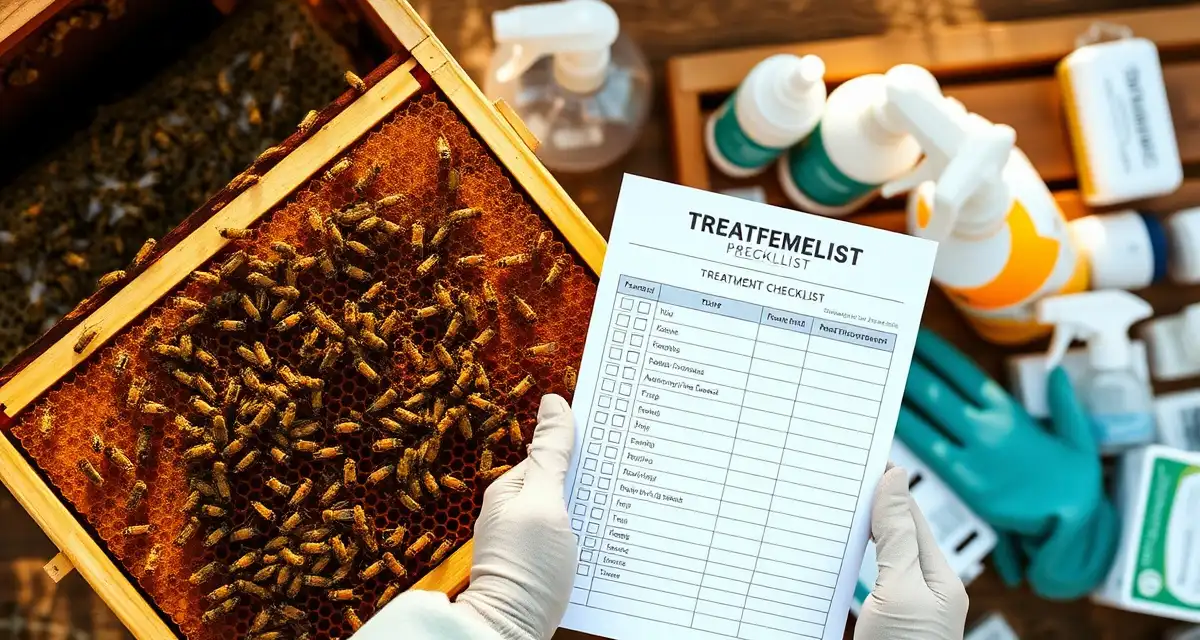
Varroa Mite Treatment Checklist: Before, During, and After
Beekeepers who follow a pre-treatment checklist are 70% less likely to make application errors that reduce treatment efficacy. That statistic reflects a consistent truth: errors happen at moments of distraction, and a checklist prevents distraction from becoming a mistake.
Use this checklist for every treatment event, whether it's a single hive or a 50-hive batch.
TL;DR
- Treatment decisions should always be triggered by a mite count result, not a fixed calendar date
- Different treatments have different temperature requirements, PHI restrictions, and brood penetration capabilities
- Always run a post-treatment count 2-4 weeks after treatment ends to calculate efficacy
- Efficacy below 80% warrants investigation -- possible resistance, application error, or reinfestation
- Rotate treatment chemistry to prevent resistance buildup across successive cycles
- VarroaVault logs treatment events, calculates efficacy, and flags when rotation is recommended
PRE-TREATMENT CHECKLIST (Complete Before Opening Any Hive)
Planning and Product
- [ ] Mite count logged within the past 72 hours (pre-treatment baseline)
- [ ] Count confirms treatment is warranted (at or approaching threshold)
- [ ] Treatment product selected based on: season, temperature, honey super status, organic certification status
- [ ] Product registration number confirmed (EPA reg number on label)
- [ ] Sufficient product on hand for all hives in this treatment event
- [ ] Product within use-by date (check expiration)
Temperature Check
- [ ] Current ambient temperature is within product requirements:
- OA dribble: above freezing (32°F), bees clustered
- OA vaporization: above 50°F preferred
- MAQS/Formic Pro: 50-85°F
- Apiguard/ApiLife VAR: above 59°F
- Apivar: no temperature restriction
- [ ] Weather forecast for treatment duration confirms temperature compliance
- For Apiguard (28 days): no periods below 59°F forecast
- For MAQS (7 days): no periods below 50°F or above 85°F
Honey Super Status
- [ ] Honey super status confirmed per product requirements:
- Apivar: supers REMOVED
- Apiguard: supers REMOVED
- MAQS: supers can remain per label (verify current label)
- OA vaporization: verify current Api-Bioxal label for super status
- OA dribble: confirm with current label
PPE (Personal Protective Equipment)
- [ ] Nitrile gloves (required for all chemical treatments)
- [ ] Eye protection (goggles or safety glasses)
- [ ] Respiratory protection if applying OA vaporization (N100 respirator)
- [ ] Standard bee veil and protective clothing
Equipment
- [ ] Appropriate applicator ready (syringe for dribble, vaporizer for OA vape, knife/scorer for strips)
- [ ] Timer or watch for timing multi-step applications
- [ ] Tally sheet or phone with VarroaVault open for batch logging
- [ ] Hive tool
DURING-TREATMENT CHECKLIST (At Each Hive)
Before Applying
- [ ] Hive ID confirmed (treating the right hive, logging to the right record)
- [ ] Queen status noted (if queen introduction recently done, verify product safety)
- [ ] Honey super status verified at this specific hive
Application Steps
For OA Dribble:
- [ ] Confirm no capped brood visible (open and check if unsure)
- [ ] Count occupied seams with bees
- [ ] Apply 5ml per occupied seam at consistent pace (10-15 sec per seam)
- [ ] Total dose logged (number of seams, total ml)
For OA Vaporization:
- [ ] Hive sealed (entrance reducer, all gaps plugged)
- [ ] 1g OA per brood box loaded into vaporizer
- [ ] Vaporizer heated per equipment instructions
- [ ] Full volatilization confirmed before removing equipment
- [ ] Entrance plugged for 10-15 minutes post-treatment
For Apivar:
- [ ] Two strips per hive confirmed
- [ ] Strips scored/perforated to increase surface area
- [ ] Strip 1 placed between frames 3-4 in brood cluster
- [ ] Strip 2 placed between frames 7-8 in brood cluster
- [ ] Both strips hanging vertically in cluster contact
For MAQS/Formic Pro:
- [ ] Two pads placed on top bars over cluster
- [ ] Outer cover propped slightly for ventilation if temperature above 75°F
- [ ] Treatment start date noted for strip removal timing
For Apiguard:
- [ ] Extra super or eke added for head space
- [ ] Foil partially removed (1/4 to full, per your practice)
- [ ] Tray placed centered over cluster on top bars
Logging
- [ ] Treatment logged in VarroaVault immediately at this hive
- [ ] Product, dose, date, applicator confirmed in log entry
- [ ] PHI automatically calculated and confirmed in VarroaVault
- [ ] Next step reminder scheduled (second dose, strip removal, follow-up count)
POST-TREATMENT CHECKLIST (Follow-Up)
Immediate Follow-Up (Days 1-7)
- [ ] Monitor for abnormal bee behavior (excessive clustering at entrance, unusual mortality)
- [ ] Check temperature if using temperature-sensitive products (Apiguard, formic acid)
- [ ] Second application reminder confirmed (Apiguard day-14, MAQS repeat if needed)
Treatment Step Reminders (From VarroaVault)
- [ ] Apiguard dose 2: Day 14 reminder set
- [ ] Apivar check and efficacy count: Day 42 reminder set
- [ ] Apivar removal: Day 42-56 reminder set
- [ ] OA vaporization next application (extended protocol): Day 5-7 reminder set
Post-Treatment Efficacy Count
- [ ] Post-treatment count scheduled and logged in VarroaVault at appropriate interval:
- OA dribble/vaporization: Day 7-14 after final application
- MAQS/Formic Pro: Day 14 after strip removal
- Apiguard: Day 14 after dose 2
- Apivar: Day 42 from application date
- [ ] Efficacy calculated by VarroaVault (target: 90%+)
- [ ] If efficacy below 90%: application error investigated, resistance reported if appropriate
Using This Checklist in VarroaVault
VarroaVault's digital treatment checklist pre-fills from your hive record data to reduce manual entry at every step. When you open the treatment checklist for a hive, it automatically:
- Loads your most recent mite count and displays whether treatment is recommended
- Shows the temperature compliance status for your location
- Populates the honey super status from your last inspection log
- Pre-fills product details if you've used the same product before
You can complete the checklist in the field and it auto-generates the treatment log entry when you submit.
Frequently Asked Questions
What should I check before applying a varroa treatment?
Before any treatment, verify: your pre-treatment mite count is logged, your product is appropriate for the season and temperature, honey supers are managed per label requirements, you have sufficient product, and you have appropriate PPE. Temperature compliance is the most commonly overlooked pre-treatment check.
Is there a post-treatment follow-up checklist I should use?
Yes. After treatment, confirm follow-up reminders are set for treatment steps (second Apiguard dose, Apivar strip removal, next OA vaporization), schedule your post-treatment efficacy count at the appropriate interval, and verify efficacy is above 90% when that count is logged. VarroaVault automates all of these reminders when you log the treatment.
Does VarroaVault have a built-in treatment checklist?
Yes. VarroaVault's digital treatment checklist pre-fills from your hive record data and generates the treatment log entry automatically when submitted. It covers pre-treatment verification, application steps, and post-treatment follow-up reminders in a single workflow.
How do I know if my varroa treatment is working?
Run a mite count 2-4 weeks after the treatment ends and compare it to your pre-treatment count. The efficacy formula is: ((pre-count - post-count) / pre-count) x 100. A result above 90% indicates effective treatment. Results below 80% should trigger investigation for possible resistance, application error, or reinfestation. Log both counts in VarroaVault to track efficacy trends across treatment cycles.
How often should I check mite levels in my hives?
At minimum, once per month (every 3-4 weeks) during the active season. Increase to every 2 weeks when counts are near threshold or after a treatment to verify it worked. In fall, monitoring frequency matters most because the window to treat before winter bees are raised is narrow. VarroaVault's monitoring reminders can be set to your preferred interval for each apiary.
What records should I keep for varroa management?
Each record should include: date of count or treatment, hive identifier, monitoring method used, number of bees sampled, mites counted, infestation percentage, treatment product name and EPA registration number, dose applied, treatment start and end dates, and PHI end date. State apiarists typically expect this level of detail during inspections. VarroaVault captures all of these fields in a single log entry.
What is Varroa Mite Treatment Checklist: Before, During, and After?
The Varroa Mite Treatment Checklist: Before, During, and After is a structured guide for beekeepers to follow at every treatment event. It organizes critical steps into three phases—pre-treatment planning, active application, and post-treatment verification—helping beekeepers avoid common errors like mismatched temperatures, skipped mite counts, or improper product selection. Research shows beekeepers using a checklist are 70% less likely to make application errors that reduce treatment effectiveness.
How much does Varroa Mite Treatment Checklist: Before, During, and After cost?
The checklist itself is free educational content available on VarroaVault. The actual cost of varroa management depends on the treatment products you choose—options range from organic acids like oxalic acid to synthetic miticides like Apivar. VarroaVault's logging and efficacy-tracking tools help you get the most out of whatever product you use, reducing wasted treatments from application errors or poorly timed interventions.
How does Varroa Mite Treatment Checklist: Before, During, and After work?
The checklist works by breaking varroa treatment into three structured phases. Before treatment, you confirm mite counts, select the right product for current conditions, and verify temperature and brood status. During treatment, you follow application protocols precisely. After treatment, you run a follow-up mite count 2–4 weeks later to calculate efficacy. If efficacy falls below 80%, the checklist helps you investigate whether resistance, reinfestation, or application error is the cause.
What are the benefits of Varroa Mite Treatment Checklist: Before, During, and After?
Following a structured varroa treatment checklist reduces application errors, improves treatment efficacy, and protects colony health. It ensures treatment decisions are data-driven—triggered by mite counts, not guesswork—and that chemistry is rotated to prevent resistance. Post-treatment counts give you measurable outcomes rather than assumptions. Over time, this systematic approach leads to healthier colonies, lower mite loads, and better long-term survival rates across your apiary.
Who needs Varroa Mite Treatment Checklist: Before, During, and After?
Any beekeeper managing varroa mites should use this checklist—whether you keep one hive or hundreds. It is especially valuable for newer beekeepers building consistent habits, and for experienced beekeepers managing large apiaries where distraction and shortcuts are more likely. If you have ever had a treatment underperform, experienced unexplained colony losses after treatment, or are unsure whether to rotate chemistry, this checklist provides a reliable framework to follow.
Related Articles
Sources
- American Beekeeping Federation (ABF)
- USDA ARS Bee Research Laboratory
- Honey Bee Health Coalition
- Penn State Extension Apiculture Program
- Project Apis m.
Get Started with VarroaVault
The information in this guide is most useful when you have your own mite count data to apply it to. VarroaVault stores every count, flags threshold crossings automatically, and builds the treatment history you need for state inspections and effective management decisions. See pricing and free tools at varroavault.com.