How Varroa Mites Develop Resistance to Acaricides
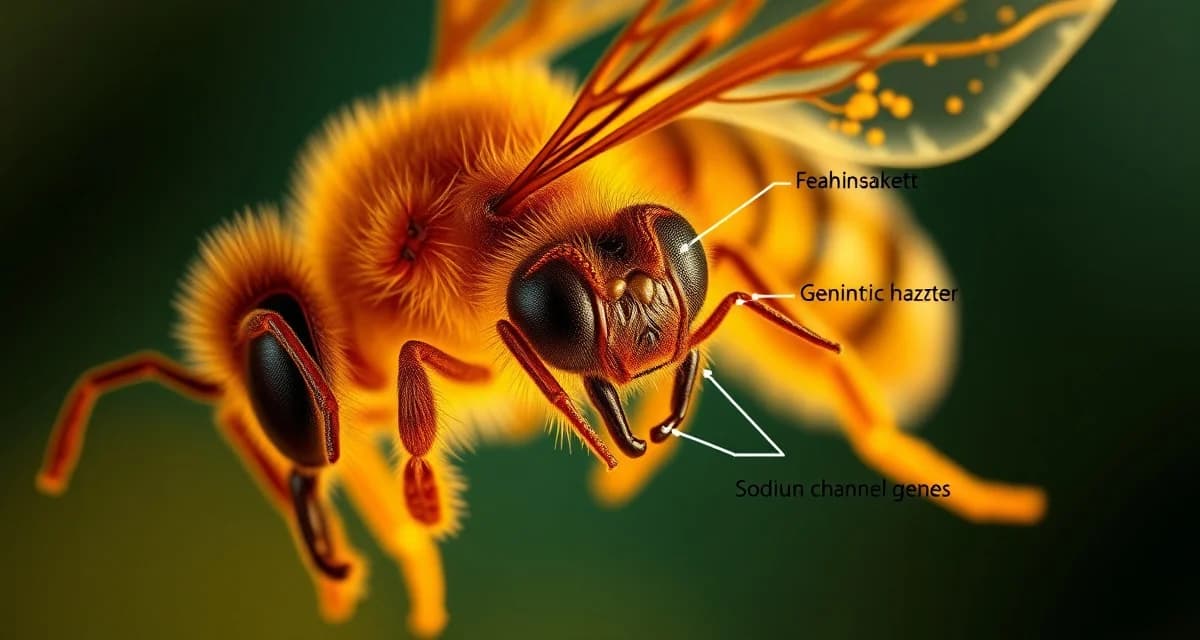
Pyrethroid resistance in varroa is conferred by a single point mutation in the sodium channel gene, making it highly heritable. That single genetic fact explains why pyrethroid treatments (Apistan, CheckMite+) have become largely ineffective in many US bee populations: the mutation is simple, dominant, and once present in a population, spreads rapidly under treatment pressure.
Understanding how resistance develops helps you make better decisions about treatment rotation, when to test for resistance, and why VarroaVault's rotation tracking matters for long-term treatment effectiveness.
TL;DR
- This guide covers key aspects of how varroa mites develop resistance to acaricides
- Mite monitoring should happen at minimum every 3-4 weeks during active season
- The 2% threshold in spring/summer and 1% in fall are standard action points based on HBHC guidelines
- Always run a pre-treatment and post-treatment mite count to calculate efficacy
- Treatment records including product name, EPA number, dates, and counts are required for state inspection compliance
- VarroaVault stores all monitoring and treatment data with automatic threshold comparison and state export formatting
What Is Acaricide Resistance?
Resistance is the heritable ability of a mite population to survive exposure to a chemical that previously killed it. It's not tolerance or toughening up from exposure. It's genetic. Mites with a specific mutation survive treatment that kills their non-resistant relatives. Those survivors reproduce. Their offspring inherit the resistance. Over several generations, the resistant genotype dominates the population.
For resistance to develop, several conditions need to be present:
- A heritable genetic variant that reduces the treatment's effectiveness
- Selection pressure from treatment exposure that kills non-resistant mites and allows resistant ones to reproduce
- Sufficient generations for resistant genotypes to increase in frequency
With varroa, all three conditions are routinely met when the same active ingredient is used repeatedly.
Pyrethroid Resistance: The Point Mutation Mechanism
Tau-fluvalinate (Apistan) and coumaphos (CheckMite+) are synthetic acaricides that were widely used in the 1990s and early 2000s. Pyrethroid resistance in varroa developed within years of widespread Apistan use and is now prevalent throughout North America and Europe.
The resistance mechanism is a point mutation in the para-type sodium channel gene. Sodium channels are the molecular target of pyrethroids. When the channel's structure is altered by the mutation, the pyrethroid can no longer bind effectively and fails to disrupt nerve function in the mite.
The specific mutation is called the "kdr" (knockdown resistance) mutation in many insect systems. In varroa, the equivalent mutation in the sodium channel gene has been identified and sequenced. It's a single base pair change that results in an amino acid substitution in the channel protein.
This mutation is dominant, meaning a mite needs only one copy (not two) to express resistance. It's highly heritable because it's a single gene change. In a treated mite population, resistant mites survive and reproduce while sensitive mites die. Within 3-5 years of widespread use, a treatment can shift from near-complete efficacy to near-complete failure.
Amitraz Resistance: A Different Mechanism
Amitraz (Apivar) acts on a different target, octopamine receptors, rather than sodium channels. The resistance mechanism for amitraz in varroa is less well characterized than pyrethroid resistance, but field resistance has been documented in some populations.
Amitraz resistance appears to involve multiple genetic loci, making it more complex and slower to develop than pyrethroid resistance. This is one reason Apivar has retained efficacy longer than pyrethroids in most markets. But resistance is documented, and treatment efficacy should not be assumed to last indefinitely.
Monitoring for amitraz resistance involves comparing pre-treatment and post-treatment counts. If post-treatment counts don't drop by the expected 80-95%, resistance or application failure should be investigated.
Oxalic Acid: Why Resistance Is Unlikely
Oxalic acid (OA) has a physical mode of action rather than a biochemical one. It kills mites through direct contact and is thought to work by disrupting the mite's cuticle and causing desiccation, or by affecting ionic transport mechanisms. Because this mechanism doesn't target a specific protein that can be altered by a point mutation, classical genetic resistance is unlikely to develop.
This is one reason OA is considered a cornerstone long-term treatment option. It's also why VarroaVault's resistance monitoring section flags OA as a stable baseline treatment while emphasizing rotation for amitraz and other biochemically targeted treatments.
How VarroaVault Helps Monitor for Resistance
VarroaVault's resistance warning flags activate when post-treatment counts suggest treatment failure. The algorithm compares your pre-treatment count, the treatment applied, and your post-treatment count at 3-4 weeks. If efficacy falls below expected levels, the system flags a resistance investigation prompt.
The resistance warning links to the mite resistance management article which explains the investigation steps: confirm application was correct, rule out reinfestation, consider an efficacy test using a fresh product batch, and if failure persists, switch active ingredient class.
VarroaVault's treatment rotation planning feature tracks which active ingredient you've used in each treatment cycle and flags repetition of the same mode of action, which is the primary driver of resistance development.
Detecting Resistance in Your Own Apiary
You can't genotype your mites in the field. But you can detect functional resistance through before-and-after counts:
- Count mite infestation before treatment (baseline)
- Apply treatment correctly following label directions
- Count again 3-4 weeks after treatment ends
- Calculate efficacy: ((pre-count - post-count) / pre-count) x 100
Expected efficacy:
- OA (broodless): 90-99%
- OA (with brood, multiple treatments): 70-85%
- Apivar (correct application): 85-95%
- MAQS (correct temperature, with brood): 75-90%
If your efficacy falls significantly below these ranges and application errors have been ruled out, functional resistance is a likely explanation. Switch active ingredient class and retest.
Frequently Asked Questions
How do varroa mites become resistant to treatments?
Through natural selection. Mites with genetic variants that allow them to survive treatment exposure reproduce, passing that variant to offspring. Over successive treatment cycles, resistant genotypes increase in frequency while sensitive genotypes die. For pyrethroids, a single point mutation in the sodium channel gene confers high-level resistance. For amitraz, the mechanism involves multiple genes. For oxalic acid, classical genetic resistance is considered unlikely due to its physical rather than biochemical mode of action.
Can I detect resistance in my own apiary?
Not at the genetic level without lab testing, but functionally yes. Compare your pre-treatment mite count to your post-treatment count at 3-4 weeks. If efficacy is significantly below expected ranges (90%+ for broodless OA, 85-95% for correctly applied Apivar) and application errors are ruled out, functional resistance is likely. Switch to a different active ingredient class and retest efficacy.
How does VarroaVault help me monitor for resistance development?
VarroaVault tracks your pre-treatment and post-treatment counts and calculates treatment efficacy automatically. If efficacy falls below expected thresholds, a resistance investigation flag appears on the hive dashboard with a link to troubleshooting guidance. The treatment rotation tracker flags repeat use of the same active ingredient class, which is the primary driver of resistance. You can also view your full treatment history and efficacy scores to identify patterns across seasons.
How do I know if my varroa treatment is working?
Run a mite count 2-4 weeks after the treatment ends and compare it to your pre-treatment count. The efficacy formula is: ((pre-count - post-count) / pre-count) x 100. A result above 90% indicates effective treatment. Results below 80% should trigger investigation for possible resistance, application error, or reinfestation. Log both counts in VarroaVault to track efficacy trends across treatment cycles.
How often should I check mite levels in my hives?
At minimum, once per month (every 3-4 weeks) during the active season. Increase to every 2 weeks when counts are near threshold or after a treatment to verify it worked. In fall, monitoring frequency matters most because the window to treat before winter bees are raised is narrow. VarroaVault's monitoring reminders can be set to your preferred interval for each apiary.
What records should I keep for varroa management?
Each record should include: date of count or treatment, hive identifier, monitoring method used, number of bees sampled, mites counted, infestation percentage, treatment product name and EPA registration number, dose applied, treatment start and end dates, and PHI end date. State apiarists typically expect this level of detail during inspections. VarroaVault captures all of these fields in a single log entry.
What is How Varroa Mites Develop Resistance to Acaricides?
Varroa mite resistance to acaricides is the heritable ability of mite populations to survive chemical treatments that would normally kill them. In practice, this means common treatments like Apistan and CheckMite+ lose effectiveness over time. Pyrethroid resistance is particularly concerning because it stems from a single dominant gene mutation that spreads rapidly through mite populations under treatment pressure, rendering entire product classes ineffective across regional bee populations.
How much does How Varroa Mites Develop Resistance to Acaricides cost?
Understanding varroa resistance is free knowledge — but the cost of ignoring it is high. Continuing to use ineffective treatments wastes money, delays real mite control, and allows populations to explode past damaging thresholds. VarroaVault's rotation tracking and treatment records are included in the platform to help beekeepers avoid this trap by flagging when a product may no longer be working based on pre- and post-treatment mite count data.
How does How Varroa Mites Develop Resistance to Acaricides work?
Resistance develops through natural selection: mites with genetic mutations that help them survive a treatment reproduce, passing those traits to offspring. With pyrethroids, a single point mutation in the sodium channel gene is enough. Each treatment cycle kills susceptible mites while survivors breed, so within a few generations the resistant genotype dominates. Running pre- and post-treatment alcohol washes to calculate efficacy is the only reliable way to detect this happening in your hives.
What are the benefits of How Varroa Mites Develop Resistance to Acaricides?
Knowing how resistance develops lets you make smarter treatment decisions. Rotating between chemical classes — rather than repeatedly using the same product — slows resistance spread. Monitoring mite loads before and after treatment reveals whether a product is still working. Following action thresholds (2% in spring/summer, 1% in fall) ensures you treat when intervention matters most, preserving colony health before populations reach damaging levels.
Who needs How Varroa Mites Develop Resistance to Acaricides?
Any beekeeper using synthetic acaricides — especially pyrethroids like Apistan or CheckMite+ — needs to understand resistance dynamics. Hobbyist and commercial beekeepers in regions with established treatment history are at highest risk of encountering resistant mite populations. Beekeepers required to maintain state inspection records also benefit, since VarroaVault stores product name, EPA number, treatment dates, and mite counts in a compliant, exportable format.
Sources
- American Beekeeping Federation (ABF)
- USDA ARS Bee Research Laboratory
- Honey Bee Health Coalition
- Penn State Extension Apiculture Program
- Project Apis m.
Get Started with VarroaVault
The information in this guide is most useful when you have your own mite count data to apply it to. VarroaVault stores every count, flags threshold crossings automatically, and builds the treatment history you need for state inspections and effective management decisions. See pricing and free tools at varroavault.com.