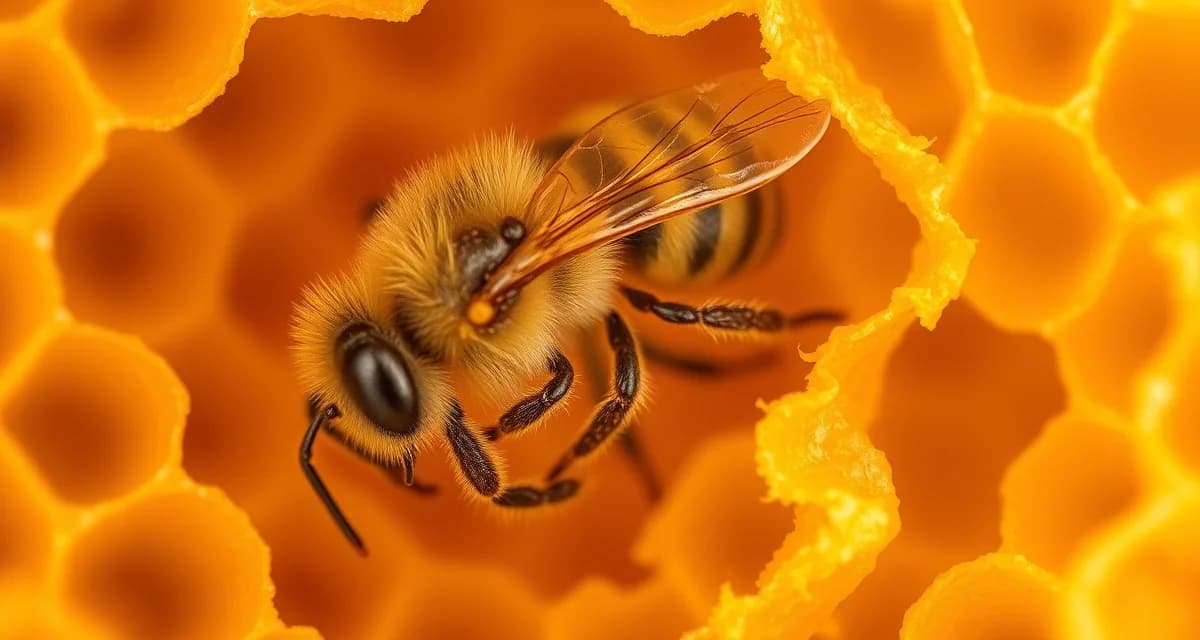
How Varroa Mites Weaken Colony Strength: The Mechanism
Varroa feeds on fat bodies of developing pupae, shortening adult bee lifespan by 20-50%. That's the core of how varroa weakens a colony: it doesn't just parasitize individual bees, it produces a population of bees that live shorter lives and perform their jobs less effectively. Weaker individual bees mean weaker colony function across every measure: foraging, brood care, food storage, and disease resistance.
Varroa-damaged bees have 25% less hemolymph protein than healthy bees, reducing their immune response and lifespan. This isn't a gradual drift. At high mite loads, the effect is substantial and measurable within a single brood cycle.
TL;DR
- This guide covers key aspects of how varroa mites weaken colony strength: the mechanism
- Mite monitoring should happen at minimum every 3-4 weeks during active season
- The 2% threshold in spring/summer and 1% in fall are standard action points based on HBHC guidelines
- Always run a pre-treatment and post-treatment mite count to calculate efficacy
- Treatment records including product name, EPA number, dates, and counts are required for state inspection compliance
- VarroaVault stores all monitoring and treatment data with automatic threshold comparison and state export formatting
The Fat Body Connection
The fat body is the bee's primary storage and metabolic organ. It's analogous to a mammalian liver in several functions: protein synthesis, fat storage, vitellogenin production, and immune peptide synthesis. The fat body is what allows a winter bee to live 6 months instead of the 6 weeks a summer bee lives.
Varroa mites primarily feed on fat body tissue during their reproductive period inside capped brood cells. A mite feeding on a developing pupa removes fat body mass that the pupa would have used to build its adult body. The resulting adult bee is smaller, with a depleted fat body.
The specific consequences of fat body depletion:
Shorter lifespan: Bees with depleted fat bodies cannot sustain themselves through an extended period. Summer bees live shorter. Winter bees, which depend on their fat body reserves to survive 6 months, may live only 2-3 months.
Reduced vitellogenin: Vitellogenin is a protein produced in the fat body and transported in hemolymph. It's used for royal jelly production in nurse bees, for egg production in queens, and as a key immune molecule. Mite-damaged bees produce less vitellogenin, which cascades into reduced nursing capacity and immune function.
Reduced immune peptide production: Antimicrobial peptides like defensin-1, abaecin, and hymenoptaecin are synthesized in the fat body. Depleted fat bodies mean reduced production of these immune molecules. Mite-damaged bees are immunologically compromised from the moment they emerge.
The Colony-Level Consequences
What does a population of fat-body-depleted bees look like at the colony level?
Reduced foraging capacity: Bees with shorter lifespans make fewer foraging trips and carry smaller loads before dying. Colony food stores build more slowly.
Reduced brood care quality: Nurse bees with depleted vitellogenin produce lower-quality royal jelly. Larval nutrition declines. Queens raised in these conditions may be smaller and shorter-lived.
Increased disease susceptibility: The suppressed immune function creates an opening for viruses and bacteria. deformed wing virus becomes clinically significant because mite-damaged bees can't control viral replication. American foulbrood and European foulbrood may gain footholds they couldn't establish in healthy colonies.
Declining population: Shorter individual lifespans mean the colony can't maintain population without high brood production. The queen increases laying to compensate, which creates more brood for varroa to reproduce in, which creates more mite-damaged bees, which die sooner. The cycle compounds.
Can a Colony Look Strong But Have Dangerous Mite Levels?
Yes. This is one of the most important things to understand about varroa. A colony can look visually healthy, with good brood pattern, active foraging, and full population, while carrying a 3-5% mite infestation.
The damage is occurring invisibly. The mites are in the capped cells. The damaged bees haven't emerged yet. A colony inspection tells you very little about mite levels. alcohol wash tells you.
By the time the colony looks weak and declining, the mite population has already been high enough to do damage for several weeks or months. You've missed the window for early intervention.
Colony Strength Trend in VarroaVault
VarroaVault's colony strength trend graph shows the correlation between your mite count history and your brood area measurements over time. As mite counts rise over successive counts, and as brood area observations show the colony struggling to maintain population, the relationship becomes visible in the data.
For colonies where you're recording both mite counts and colony strength scores in your inspection logs, the correlation analysis shows whether your colony's strength is trending with mite load as expected. If a colony has rising mite counts and declining colony strength, that's a combined early warning signal.
For the complete picture on how varroa suppresses the immune system specifically, see our varroa mite and honeybee immune system guide. The mite count tracking app stores the count data that feeds the trend correlation.
Frequently Asked Questions
How does varroa damage bee health beyond killing larvae?
Varroa primarily feeds on the fat body of developing pupae rather than killing larvae directly. The surviving adult bee emerges with depleted fat body tissue, reduced vitellogenin production, suppressed immune peptide synthesis, and shortened lifespan. These effects reduce the bee's functional capacity throughout its adult life. Summer bees live shorter foraging careers. Winter bees may fail to survive the full winter period. The colony-level consequence is a population of underperforming bees across all functions.
Can a colony look strong but still have dangerous mite levels?
Yes. A visually healthy, active colony with good brood pattern and strong population can carry 3-5% mite infestation with the damage invisible during inspection. Mites in capped cells aren't visible during inspection, and the bees being damaged inside those cells haven't emerged yet. Only alcohol wash reveals true mite levels. By the time the colony looks weak, the damage has been accumulating for weeks or months.
Does VarroaVault show the relationship between mite levels and colony strength?
Yes. When you log both mite counts and colony strength observations in your inspection records, VarroaVault's colony strength trend graph shows both metrics over time on the same chart. Rising mite counts alongside declining strength scores create a visible correlation pattern. This data view helps you see whether your colony's strength trends are tracking with mite load history as the research would predict.
How do I know if my varroa treatment is working?
Run a mite count 2-4 weeks after the treatment ends and compare it to your pre-treatment count. The efficacy formula is: ((pre-count - post-count) / pre-count) x 100. A result above 90% indicates effective treatment. Results below 80% should trigger investigation for possible resistance, application error, or reinfestation. Log both counts in VarroaVault to track efficacy trends across treatment cycles.
How often should I check mite levels in my hives?
At minimum, once per month (every 3-4 weeks) during the active season. Increase to every 2 weeks when counts are near threshold or after a treatment to verify it worked. In fall, monitoring frequency matters most because the window to treat before winter bees are raised is narrow. VarroaVault's monitoring reminders can be set to your preferred interval for each apiary.
What records should I keep for varroa management?
Each record should include: date of count or treatment, hive identifier, monitoring method used, number of bees sampled, mites counted, infestation percentage, treatment product name and EPA registration number, dose applied, treatment start and end dates, and PHI end date. State apiarists typically expect this level of detail during inspections. VarroaVault captures all of these fields in a single log entry.
What is How Varroa Mites Weaken Colony Strength: The Mechanism?
Varroa mites weaken honey bee colonies by feeding on the fat bodies of developing pupae, which are critical for immune function, protein synthesis, and longevity. This damage shortens adult bee lifespan by 20–50% and reduces hemolymph protein levels by 25%. The result is a colony populated by bees that forage less effectively, care for brood poorly, store less food, and resist disease at a fraction of their normal capacity.
How much does How Varroa Mites Weaken Colony Strength: The Mechanism cost?
This article is free educational content published by VarroaVault. There is no cost to read it. VarroaVault offers a paid monitoring and record-keeping platform for beekeepers who want to track mite counts, compare against treatment thresholds, log treatments with EPA numbers, and export state-compliant inspection records—but accessing this guide requires no subscription.
How does How Varroa Mites Weaken Colony Strength: The Mechanism work?
Varroa mites enter capped brood cells just before sealing and feed on fat body tissue during the pupal stage. Fat bodies regulate immune response, detoxification, and protein storage in bees. Mite feeding depletes these reserves before a bee ever emerges, producing adults with measurably shorter lifespans and weakened immune systems. At high mite loads, this effect compounds rapidly across an entire brood cycle.
What are the benefits of How Varroa Mites Weaken Colony Strength: The Mechanism?
Understanding this mechanism helps beekeepers act before visible colony decline occurs. Knowing that fat body damage happens during the pupal stage explains why mite counts must stay low before brood is capped—not after problems appear. It also clarifies why post-treatment counts matter: even a reduced but present mite population continues producing physiologically damaged bees that shorten colony lifespan and productivity.
Who needs How Varroa Mites Weaken Colony Strength: The Mechanism?
Any beekeeper managing honey bee colonies needs to understand varroa's mechanism of harm, not just its presence. Hobbyists, sideliners, and commercial operators all face colony losses driven by this damage pathway. It is especially critical knowledge for those managing colonies through winter buildup, spring splits, or nucleus colony establishment, when population dynamics make fat body depletion particularly consequential to survival.
Sources
- American Beekeeping Federation (ABF)
- USDA ARS Bee Research Laboratory
- Honey Bee Health Coalition
- Penn State Extension Apiculture Program
- Project Apis m.
Get Started with VarroaVault
The information in this guide is most useful when you have your own mite count data to apply it to. VarroaVault stores every count, flags threshold crossings automatically, and builds the treatment history you need for state inspections and effective management decisions. See pricing and free tools at varroavault.com.