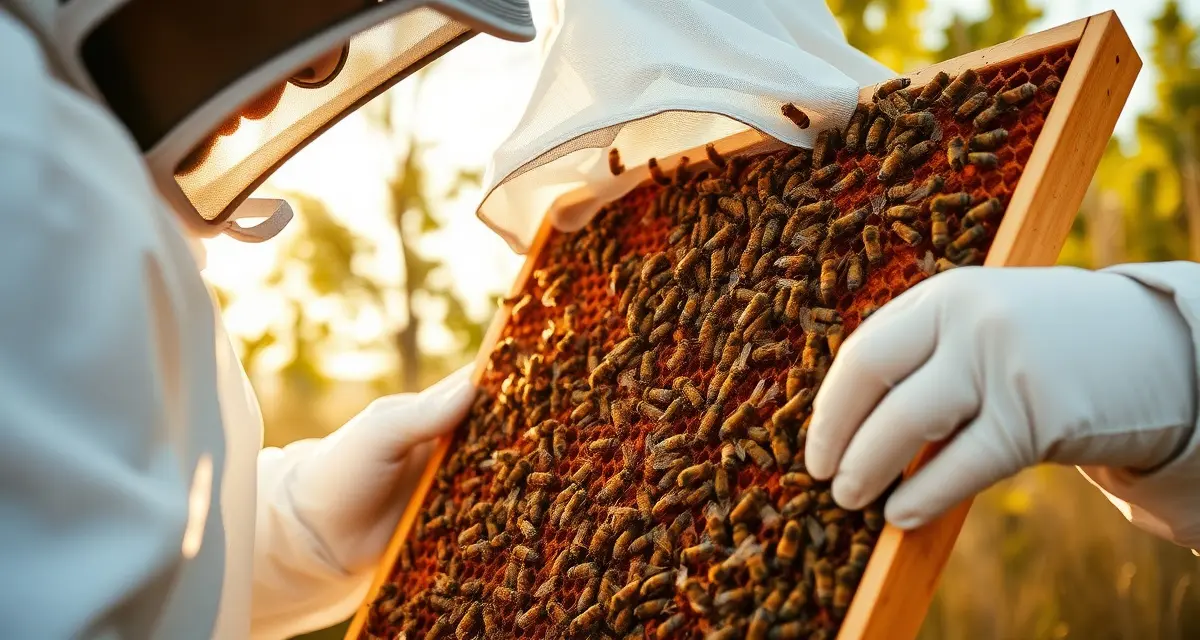
Varroa Treatment for Strong Fall Colonies: Maximizing Winter Bee Production
A strong 12-frame colony above 2% in August needs treatment as urgently as a weaker colony because the mite reproduction rate is proportionally higher. This surprises some beekeepers who assume a big, thriving colony has a buffer against varroa. It doesn't. A large colony has more bees, and more brood cells, which means more reproductive opportunities for mites in exactly the window when winter bees are being produced.
The strength of a colony doesn't reduce varroa urgency. It just means more bees are at risk.
TL;DR
- The fall treatment window (August-September in most regions) is the highest-leverage varroa management window of the year
- Winter bees raised in August-September are the colony's survival mechanism through winter; high mite loads during this period cause permanent damage
- The treatment threshold in fall drops to 1% (versus 2% in spring/summer) because winter bee quality is so critical
- Oxalic acid, formic acid (MAQS/Formic Pro), and amitraz (Apivar) are all effective fall options depending on temperature
- Missing the fall window by even 2-3 weeks can mean the difference between a colony surviving or dying in February
- VarroaVault's fall treatment reminders fire based on your location's historical first frost date
The Math Behind the Misconception
Here's why strong colonies aren't protected by their size:
In a colony at 2% infestation, 2 mites exist for every 100 adult bees. In a small 5-frame colony, that might mean 200 mites. In a strong 12-frame colony, that 2% might represent 800 mites.
Mites don't care about colony size for their reproductive logic. Each mite pair reproduces at the same rate regardless of how many bees surround them. The 800 mites in the large colony are producing offspring at the same per-mite rate as the 200 mites in the small colony. The large colony actually has four times as many mites reproducing simultaneously.
If mite population growth rate is 1.5x per brood cycle (typical for summer), the large colony goes from 800 to 1,200 mites in one cycle while the small colony goes from 200 to 300. The large colony adds 400 more mites per cycle.
The percentage of 2% doesn't change faster in the large colony, but the absolute mite count grows faster, and each additional mite is another reproductive pair producing offspring in the cells that will become winter bees.
Why August Is the Critical Window
Winter bees, the long-lived fat bees that survive the cluster, are produced from eggs laid in late July and August. Pupae developing in August are the exact developmental stage where varroa mite parasitism does the most damage to winter bee quality.
A varroa mite reproducing in the cell of a future winter bee reduces that bee's:
- Fat body reserves (critical for winter cluster energy)
- Hypopharyngeal gland development
- Immune system function
- Expected lifespan (from 6 months to potentially weeks)
Treating a strong colony that's at 2% in August isn't just about reducing the count. It's about ensuring the bees being raised in the next 6 weeks, the actual winter cluster, develop without mite parasitism.
Every week of delay after August 1 with a count above 2% means more winter bees are parasitized during their development. The cluster heading into winter is physically compromised before it even clusters.
Treatment Selection for Strong Fall Colonies
Strong colonies tolerate a wider range of treatment options than small or stressed colonies. The question isn't safety, it's speed and efficacy.
Formic acid (MAQS, Formic Pro): The fastest-acting option with brood penetration. Kills mites in capped cells, not just phoretic mites. A full formic acid treatment in August can achieve 60-80% efficacy in a queenright colony, including mites in brood. Uses the full label dose for strong colonies. Requires temperatures above 50 degrees Fahrenheit. Don't use above 85 degrees Fahrenheit.
Apivar (amitraz strips): Reliable, temperature-independent option. Two strips per strong colony, placed in the center of the brood area. 42-56 day treatment window catches mites across multiple brood cycles. Excellent choice if temperatures will be variable. Best for colonies where you want reliable, extended-duration efficacy.
OA vaporization (multiple applications): Three applications at 5-day intervals in queenright colonies with brood. Less acute impact than formic acid but well-tolerated in strong colonies. Good option if you're avoiding chemical residues in wax or if the temperature window for formic acid has passed.
OA dribble: Only appropriate for broodless colonies. A strong fall colony is rarely broodless until late September at earliest. For a strong colony with active brood in August, OA dribble is not the right choice.
Speed Matters More Than Efficiency
For strong fall colonies in August, the priority is speed. You want the fastest route to a significantly reduced mite load, measured at the count date, not the count date six weeks after treatment.
That favors formic acid if temperatures allow, or Apivar if you need temperature flexibility. OA vaporization is effective but requires three separate applications over 10-15 days, meaning the full effect takes longer to reach.
In the August window, "fast" means treatment complete and mite load significantly reduced by August 20-25. A treatment started August 15 using Apivar strips won't show full efficacy until September 30. The winter bees you're trying to protect are being raised right now.
Consider formic acid first for August emergency treatment if your temperatures are below 85 degrees Fahrenheit. If temperatures are running high (above 82-85 degrees Fahrenheit during the day), Apivar strips are safer and still faster than waiting.
Post-Treatment Verification
Count at 14-21 days after treatment completion (not after application, after the treatment period ends). For Apivar, count 5 days after strip removal. For formic acid, count 7-10 days after the last pad removal.
A successful treatment in a strong colony should show at least 70% reduction from pre-treatment levels. If the count isn't down by 70%, something went wrong: product inefficacy, possible resistance, or treatment ended early. See the treatment failure protocol in VarroaVault for next steps.
VarroaVault's strong colony fall treatment decision tree recommends the fastest-acting protocol based on your current brood status. When you log the August count and the system identifies it as above threshold in a strong colony, the recommendation prioritizes speed over treatment duration.
The fall treatment window guide provides the seasonal framework, and the August treatment guide covers the specifics of late-summer urgency in detail.
Frequently Asked Questions
Does a strong colony need less urgent varroa treatment?
No. Colony strength doesn't reduce the urgency of varroa treatment, it changes the absolute mite count while keeping the percentage the same. A 12-frame colony at 2% infestation has roughly four times as many mites as a 3-frame colony at 2%, and all of those mites are reproducing at the same per-mite rate. The goal of fall treatment isn't to protect the current adult bee population, which can handle mite loads reasonably well. The goal is to reduce mite levels before winter bees are raised in late July and August. In a large colony, this is equally urgent because the large brood area contains more cells being parasitized simultaneously. Strong colonies sometimes give beekeepers a false sense of security. The visual health of the colony doesn't reflect the mite count trend.
What is the best treatment for a strong colony in August?
For a strong colony in August with active brood, formic acid (MAQS or Formic Pro) is typically the fastest-acting choice because it penetrates capped brood cells to some degree and achieves significant efficacy within 7-10 days of application. Use it when temperatures are consistently between 50 and 85 degrees Fahrenheit. If temperatures are running above 85 degrees Fahrenheit during the day, Apivar strips are the safer alternative, insert two strips per strong colony in the center of the brood area and leave for the full 42-56 day treatment period. OA vaporization with multiple applications is also effective for strong colonies but takes longer to complete. The priority in August is speed: the sooner mite loads are reduced, the more winter bees develop in low-mite conditions.
Does VarroaVault adjust fall treatment urgency for colony strength?
VarroaVault's fall treatment decision tree considers both mite count and colony strength when recommending treatment urgency and product choice. For strong colonies with above-threshold counts in August, the system flags maximum urgency regardless of colony size because the large brood area represents a large population of developing bees at risk. The recommendation prioritizes fast-acting treatments over extended-duration options when the calendar date suggests winter bee production is active. The system also calculates the absolute mite count (not just percentage) based on your estimated colony strength, showing you the actual number of reproducing mites in your colony as context for the urgency recommendation.
What if I miss the fall treatment window?
If you miss the ideal August-September window, treatment in October is still worth doing in most regions even if less effective than ideal timing. An oxalic acid dribble or vaporization in November-December during the broodless period can significantly reduce mite loads heading into winter. A colony treated late with high mite loads has a better chance than an untreated colony with critical mite levels.
Can I do a fall treatment while still harvesting honey?
It depends on the treatment. Formic acid (MAQS, Formic Pro) and oxalic acid have no PHI restriction and can be used with supers in place according to label instructions. Amitraz (Apivar) requires supers to be removed during treatment. If you need to harvest late into fall, plan your fall treatment around the products that allow super presence.
How do I know if fall treatment actually worked?
Run a post-treatment mite count 2-4 weeks after the treatment ends. A successful treatment should bring infestation below 1% in fall. If counts remain above 1%, the treatment may have failed due to resistance, application error, or reinfestation from neighboring colonies. Log both pre- and post-counts in VarroaVault to calculate and store the efficacy percentage.
What is Varroa Treatment for Strong Fall Colonies: Maximizing Winter Bee Production?
Varroa treatment for strong fall colonies is a critical beekeeping practice focused on reducing mite loads during August and September to protect winter bee production. Winter bees—those raised in late summer—are the colony's survival mechanism through cold months. Because mite loads above 1% during this window permanently damage developing winter bees, fall treatment is considered the highest-leverage varroa management opportunity of the entire beekeeping year.
How much does Varroa Treatment for Strong Fall Colonies: Maximizing Winter Bee Production cost?
The treatments themselves are relatively affordable. Oxalic acid costs a few dollars per application, formic acid products like MAQS or Formic Pro run $15–$30 per treatment, and Apivar strips typically cost $20–$40 for a hive. The real cost of skipping fall treatment is far higher: losing a colony in February means replacing bees in spring, often $150–$200 or more for a new package or nucleus colony.
How does Varroa Treatment for Strong Fall Colonies: Maximizing Winter Bee Production work?
Fall varroa treatment works by reducing the mite population during the critical window when winter bees are being reared. Oxalic acid kills phoretic mites on adult bees. Formic acid (MAQS/Formic Pro) penetrates capped brood to kill mites in cells. Amitraz (Apivar) works as a slow-release strip over several weeks. Each method disrupts mite reproduction at a point when even small mite loads cause disproportionate colony damage.
What are the benefits of Varroa Treatment for Strong Fall Colonies: Maximizing Winter Bee Production?
Treating strong colonies in fall protects the quality of winter bees, which must survive 4–6 months and raise the first spring brood. High mite loads during their development cause shortened lifespans, weakened immune systems, and deformed wings. A successful fall treatment can be the difference between a thriving spring colony and a deadout in February. It also reduces the mite reservoir entering winter, giving the colony a much stronger start the following season.
Who needs Varroa Treatment for Strong Fall Colonies: Maximizing Winter Bee Production?
Any beekeeper managing colonies through winter needs to prioritize fall varroa treatment—especially those with strong, large colonies. Counterintuitively, a robust 12-frame colony is not protected by its size; more bees mean more brood cells and more reproductive opportunities for mites. Beekeepers in most northern regions should treat in August or early September. Those who delay because a colony 'looks healthy' risk losing it entirely, since colony collapse often doesn't become visible until midwinter.
Sources
- American Beekeeping Federation (ABF)
- USDA ARS Bee Research Laboratory
- Honey Bee Health Coalition
- Penn State Extension Apiculture Program
- Project Apis m.
Get Started with VarroaVault
The fall treatment window is your most important varroa management action of the year. VarroaVault's fall monitoring reminders fire at the right time for your region, and efficacy scoring confirms your treatment actually brought mite levels below the winter threshold. See pricing and free tools at varroavault.com.