How to Use Apiguard Correctly: Thymol Gel Application Guide
Apiguard requires minimum 59 degrees Fahrenheit for efficacy. Applications below this temperature achieve only 20% efficacy, compared to the 90%+ label claim when used within the recommended temperature range. In practical terms, applying Apiguard in a cold snap doesn't just reduce efficacy slightly. It nearly eliminates it.
This guide covers every step of Apiguard application, with particular focus on the temperature requirements that make or break the treatment.
TL;DR
- This guide covers key aspects of how to use apiguard correctly: thymol gel application guide
- Mite monitoring should happen at minimum every 3-4 weeks during active season
- The 2% threshold in spring/summer and 1% in fall are standard action points based on HBHC guidelines
- Always run a pre-treatment and post-treatment mite count to calculate efficacy
- Treatment records including product name, EPA number, dates, and counts are required for state inspection compliance
- VarroaVault stores all monitoring and treatment data with automatic threshold comparison and state export formatting
What Apiguard Is and How It Works
Apiguard is a thymol-based gel that releases vapors as the bees work the material. Thymol is a natural compound found in thyme oil. It's approved under USDA NOP for certified organic operations, has no PHI requirement when used per label, and has a resistance profile that makes it valuable in rotation with amitraz and organic acids.
Efficacy: 74-87% when used correctly per label (two doses). Lower than synthetic acaricides or OA in ideal conditions, but valuable for organic compliance and resistance rotation.
Important note: Apiguard efficacy against mites in capped brood is limited. Like OA, it primarily affects phoretic mites. Using it after supers are off and with active brood present is less effective than using it in a low-brood scenario.
Temperature Requirements: The Critical Factor
Thymol evaporates at temperatures above 59°F (15°C). Below this threshold, evaporation nearly stops and the gel sits in the hive doing almost nothing. You won't see the bees removing it or showing agitation, which means you might not notice the treatment is failing.
Optimal temperature range: 59-85°F (15-30°C) daytime highs.
Below 59°F: Do not apply. The treatment will not work.
Above 85°F: Be cautious. High temperatures can cause excessive thymol vapor release, which stresses bees and may cause queen loss or brood abandonment in hot weather. Some beekeepers report issues in heat waves; monitor closely above 85°F.
This window makes Apiguard primarily useful in late summer/early fall (August-September) after super removal. In most US regions, you need to start the first dose no later than mid-August to ensure both doses complete before temperatures drop below 59°F in late September or October.
Check your forecast before applying. If a cold front is moving in within 5 days of your planned application, wait for the next warm window.
What You Need
- Apiguard trays (50g each, 2 per hive for the full treatment)
- Hive tool
- Extra super or eke (4-inch spacer) to create head space above the frames
- VarroaVault open for logging
Step 1: Prepare the Hive
Remove honey supers. Apiguard cannot be used when honey supers intended for human consumption are in place. The thymol vapor can taint honey. Remove supers before applying.
Create head space above the frames. Apiguard needs air circulation above the open gel tray for the vapor to disperse through the hive. If your hive has a solid inner cover sitting directly on the top box, add an empty super or a 4-inch eke (shallow spacer box) to create head space.
Without adequate head space, the thymol vapor accumulates excessively near the tray and doesn't disperse through the brood nest, reducing efficacy.
Step 2: Open the Tray
Apiguard comes in 50g aluminum foil trays with a plastic cover. To open:
- Remove the plastic cover completely
- Score or remove a portion of the foil on top (some beekeepers remove the top foil entirely; others remove only 1/4 to 1/3 to control vapor rate)
- Removing more foil increases vapor release rate but may increase bee stress in warm weather
Check the temperature. If it's above 59°F, proceed.
Step 3: Place the Tray
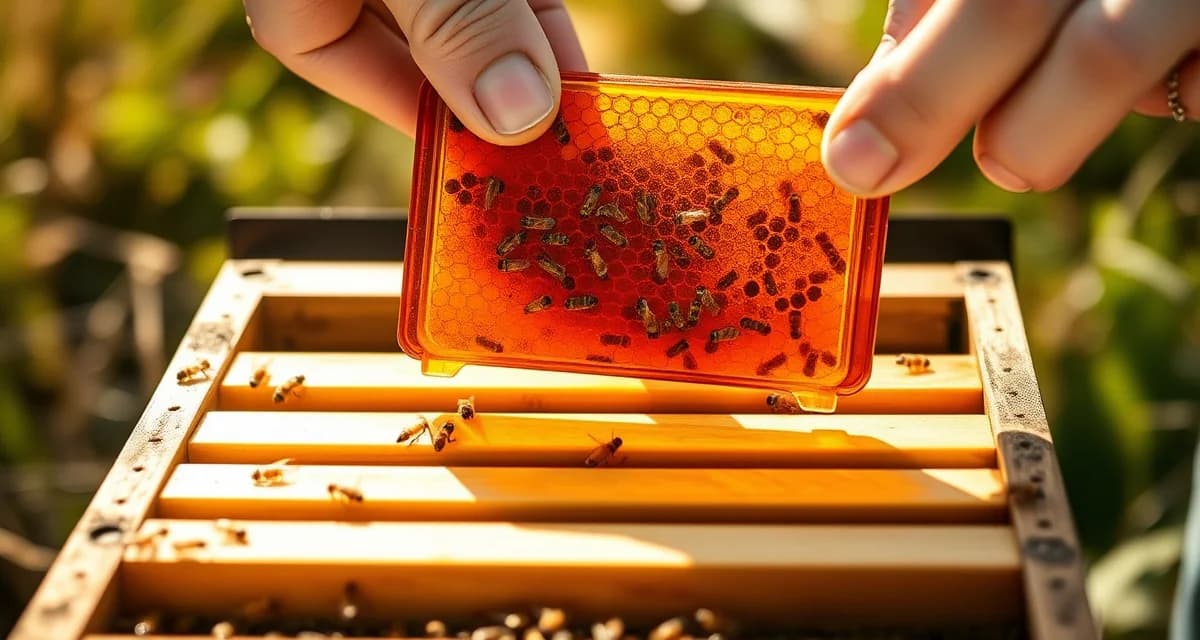
Place the open Apiguard tray directly on top of the top bars of the uppermost brood box, centered over the cluster area. The gel side faces up.
Do not place the tray on the bottom board or inside the supers. The gel needs to be close to the bee cluster for effective vapor contact.
If you have the extra super or eke in place, the tray sits on the top bars inside this extra space, with the inner cover and outer cover above.
Step 4: Log Dose 1 in VarroaVault
Log immediately after placing the first tray:
- Product: Apiguard (thymol)
- Dose: 1 tray (50g)
- Date: today
- Temperature: current ambient temperature
- Applicator: your name
VarroaVault automatically schedules a day-14 reminder for the second dose application.
Step 5: Expect Some Bee Disruption
Thymol vapors cause temporary bee agitation. You may see:
- Increased bee activity at the entrance
- Some propolis deposited around the tray
- Bees clustering at the entrance rather than inside (in the first few days)
- Increased bearding
This is normal. Don't be alarmed. The disruption typically subsides after 3-5 days as the colony acclimates to the vapor.
Step 6: Apply Dose 2 at Day 14
At day 14 after dose 1, return to the hive and replace the first tray (which will be largely depleted or propolis-covered) with a fresh second tray. Apply the second tray the same way as the first.
VarroaVault's day-14 reminder fires as an SMS or email alert on the correct day.
Log the second dose in VarroaVault:
- Product: Apiguard (thymol)
- Dose: 2nd tray (50g)
- Date: today
- Temperature: current ambient temperature
Step 7: Treatment Complete at Day 28 (After Dose 2)
After the second tray has been in place for 14 days (28 days total from first application), remove the depleted tray. Treatment is complete.
Perform a post-treatment mite count at day 28-30 from first application. Log in VarroaVault. The app calculates your efficacy against the pre-treatment baseline.
Expected efficacy from a properly applied two-dose Apiguard treatment: 74-87%.
If efficacy is below 74%, consider whether temperature compliance was maintained throughout both dose periods. A period of cool weather (below 59°F) during treatment significantly reduces outcomes.
Frequently Asked Questions
What temperature does Apiguard require?
Apiguard requires a minimum daytime temperature of 59°F (15°C) to release thymol vapors effectively. Below this threshold, efficacy drops to approximately 20%. The optimal range is 59-85°F. Do not apply before checking your local weather forecast for the 14-day treatment period.
When do I apply the second Apiguard tray?
Apply the second Apiguard tray exactly 14 days after the first. Remove the depleted first tray and replace it with a fresh 50g tray in the same position on top of the cluster frames. VarroaVault sends an automatic day-14 reminder after you log the first dose.
Does VarroaVault remind me about my second Apiguard dose?
Yes. When you log the first Apiguard dose, VarroaVault automatically schedules a day-14 SMS and email reminder for the second dose application. A follow-up count reminder is also scheduled at day 28-30 after the first dose.
How do I know if my varroa treatment is working?
Run a mite count 2-4 weeks after the treatment ends and compare it to your pre-treatment count. The efficacy formula is: ((pre-count - post-count) / pre-count) x 100. A result above 90% indicates effective treatment. Results below 80% should trigger investigation for possible resistance, application error, or reinfestation. Log both counts in VarroaVault to track efficacy trends across treatment cycles.
How often should I check mite levels in my hives?
At minimum, once per month (every 3-4 weeks) during the active season. Increase to every 2 weeks when counts are near threshold or after a treatment to verify it worked. In fall, monitoring frequency matters most because the window to treat before winter bees are raised is narrow. VarroaVault's monitoring reminders can be set to your preferred interval for each apiary.
What records should I keep for varroa management?
Each record should include: date of count or treatment, hive identifier, monitoring method used, number of bees sampled, mites counted, infestation percentage, treatment product name and EPA registration number, dose applied, treatment start and end dates, and PHI end date. State apiarists typically expect this level of detail during inspections. VarroaVault captures all of these fields in a single log entry.
What is How to Use Apiguard Correctly: Thymol Gel Application Guide?
Apiguard is a thymol-based gel treatment used to control Varroa mites in honey bee colonies. This guide walks beekeepers through every step of correct Apiguard application, with special emphasis on the critical temperature requirements that determine treatment success. Apiguard requires a minimum of 59°F to work effectively. Below that threshold, efficacy drops to around 20%—far below the 90%+ achievable under proper conditions. The guide also covers mite monitoring, pre- and post-treatment counts, and record-keeping for state inspection compliance.
How much does How to Use Apiguard Correctly: Thymol Gel Application Guide cost?
Apiguard itself is a commercially purchased product, typically ranging from $10–$30 per treatment depending on supplier and quantity. This guide is free educational content provided by VarroaVault to help beekeepers apply Apiguard correctly. VarroaVault also offers tools to log mite counts, track treatment records, and compare results against HBHC thresholds—available through VarroaVault's platform. Always factor in the cost of mite monitoring supplies alongside treatment costs when budgeting for Varroa management.
How does How to Use Apiguard Correctly: Thymol Gel Application Guide work?
Apiguard works by releasing thymol vapors as bees move the gel around the hive. Thymol, a natural compound derived from thyme oil, is toxic to Varroa mites at effective concentrations. Temperature drives vapor release—below 59°F, the gel barely off-gasses, rendering treatment nearly useless. Above the threshold, vapors permeate the brood area and contact mites on adult bees. Two tray applications spaced 2–4 weeks apart are typically required to achieve the 90%+ efficacy stated on the label.
What are the benefits of How to Use Apiguard Correctly: Thymol Gel Application Guide?
Apiguard offers several advantages for Varroa management: it is USDA NOP-approved for certified organic operations, leaves no synthetic residues in wax or honey when applied correctly, and is relatively easy to apply. Thymol also has low mammalian toxicity, making it safer to handle than synthetic miticides. When used within the recommended temperature window, it delivers high efficacy comparable to chemical alternatives. Pairing Apiguard with pre- and post-treatment mite counts lets beekeepers confirm treatment success and meet state inspection record requirements.
Who needs How to Use Apiguard Correctly: Thymol Gel Application Guide?
Any beekeeper managing Varroa mite loads should understand this guide—especially those who have previously applied Apiguard in cool weather and seen poor results without knowing why. It is particularly relevant for organic or treatment-light beekeepers seeking non-synthetic options, new beekeepers learning integrated pest management, and anyone whose state requires treatment records. If your mite counts exceed the 2% threshold in spring/summer or 1% in fall, and temperatures are suitable, this guide will help you apply Apiguard effectively.
Related Articles
- ApiLife Var and Thymol Treatments for Varroa: Complete Guide
- Apivar (Amitraz) for Varroa: Application Guide and Resistance Tracking
- Coumaphos Varroa Treatment Guide: CheckMite Application and Safety
- HopGuard for Varroa: When to Use It and How to Track Efficacy
Sources
- American Beekeeping Federation (ABF)
- USDA ARS Bee Research Laboratory
- Honey Bee Health Coalition
- Penn State Extension Apiculture Program
- Project Apis m.
Get Started with VarroaVault
Thymol treatment efficacy depends heavily on temperature during application. VarroaVault logs your treatment dates alongside post-treatment counts so you can see whether your thymol applications delivered expected results in your climate. See pricing and free tools at varroavault.com.