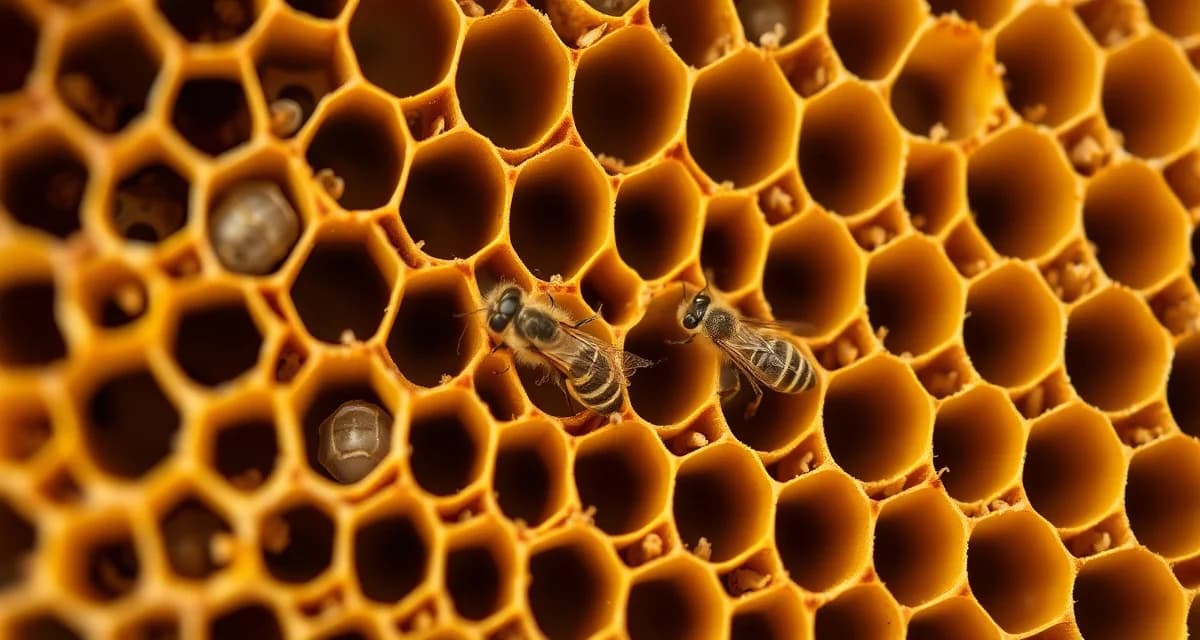
Varroa Mite Detection in Brood Cells: Visual Inspection Guide
Visual brood inspection is less quantitative than alcohol wash, but it can confirm mite presence quickly. That distinction matters, knowing the difference between what brood inspection can and can't tell you is what determines whether you're using it appropriately or relying on it when you shouldn't.
Varroa mite brood cell inspection is one method in your diagnostic toolkit. It's not a replacement for wash methods, and it's not as accurate. But it's fast, non-destructive, and can give you immediate confirmation of active varroa reproduction in the hive.
BeeScanning automates photo-based detection, but no app teaches when to rely on manual inspection vs wash methods, or lets you track method accuracy over time. VarroaVault logs your inspection method alongside counts so you can compare method accuracy across your own data.
TL;DR
- Most US states require apiaries to maintain varroa treatment records available for inspection on request
- Records must include: product name, EPA registration number, application date, hive ID, and applicant name
- Commercial operations with pollination contracts may face additional compliance documentation requirements
- USDA APHIS has increased attention on treatment resistance management as part of honey bee health initiatives
- Digital records with timestamping and audit trails meet higher evidentiary standards than handwritten notebooks
- VarroaVault generates formatted PDF exports suitable for state apiarist inspections in under 60 seconds
What Brood Cell Inspection Tells You
Opening capped brood cells and examining the contents directly shows you:
- Whether mites are present in that specific cell
- Whether you can see adult mites, daughter mites, or mite eggs
- The reproductive stage of any mites found
- The condition of the developing pupa (pale, damaged, normal-looking)
What it doesn't tell you: the overall infestation percentage. Finding mites in some cells doesn't tell you what percentage of your colony's bee population is infested. For that, you need an alcohol wash or sugar roll.
This is the core limitation of visual brood inspection as a primary monitoring method.
When Visual Inspection Is Useful
Confirming Mite Presence
If you've never seen varroa in your hive and want to confirm they're present before doing a wash, opening a few suspect cells is a fast way to get a yes/no answer. Red-brown adult mites are visible to the naked eye in the right lighting.
Identifying High-Risk Cells
Drone brood is preferentially targeted by varroa for reproduction, mites reproduce at roughly 8-10x the rate in drone cells compared to worker cells. Opening a section of capped drone brood and checking for mites can give you a rapid indication of whether your colony has active varroa reproductive pressure.
Assessing Mite Life Stage
If you're timing a treatment around the mite reproductive cycle, knowing whether you're seeing primarily adult mites or active reproduction with eggs and daughters tells you something about timing. This level of assessment requires uncapping brood, examining cell contents carefully, and some experience interpreting what you see.
Field Confirmation Alongside a Wash
During a regular inspection when you're about to do an alcohol wash anyway, a quick visual check of a few suspect cells adds context without adding notable time. You might find both methods confirming the same picture, which increases your confidence in the diagnosis.
How to Do a Brood Cell Inspection
What You Need
- Capping scratcher or uncapping fork
- Good light source (headlamp or natural light)
- Magnifying glass or loupe (5-10x), helpful but not always necessary
Selecting Target Cells
Target capped worker brood that shows any of these signs:
- Slightly sunken or discolored cappings
- Cappings that have been partially opened and re-sealed
- Cells adjacent to known mite-infested areas
Also target capped drone brood, especially in early spring and fall when drone brood serves as a mite trap.
The Inspection Process
- Select a frame with capped brood in good lighting
- Use your capping scratcher to uncap 20-30 cells across the frame, spread your sample rather than concentrating on one area
- Examine each opened cell carefully. Look at the pupa's body surface and the cell walls
- Adult varroa: reddish-brown, flat, oval, about 1.1mm wide, visible to the naked eye
- Daughter mites: smaller, whitish, partially developed, harder to see without magnification
- Mite feces: small white pinhead-sized deposits on cell walls, can indicate recent mite activity even if the mite has moved on
- Mite eggs: tiny, elongated, attached to the cell wall, require magnification to see clearly
Interpreting What You Find
- Mites in more than 20% of opened cells: notable infestation, do an alcohol wash for confirmation and prepare to treat
- Mites in 5-20% of opened cells: Moderate infestation, follow up with alcohol wash to quantify
- Mites in fewer than 5% of cells: Lower infestation, not definitive, still do a wash before concluding mite loads are acceptable
- No mites found: Do not conclude the hive is mite-free. Visual inspection of 20-30 cells is a very small sample. Do an alcohol wash to confirm.
What Percentage of Cells Should You Inspect?
To get a statistically meaningful result from visual brood inspection alone, you'd need to uncap and examine a very large number of cells, far more than is practical in a field inspection. This is the fundamental limitation of the method.
A sample of 30 cells is a quick confirmatory tool. It's not a quantitative monitoring method. The alcohol wash remains the standard precisely because it gives you a quantifiable percentage from a known sample size.
Think of brood inspection as a supplement to the wash, not a replacement for it.
When Visual Inspection Is Better Than Alcohol Wash
There are situations where a quick visual inspection adds value that a wash doesn't:
When you need an immediate yes/no answer: Is varroa reproducing in this colony right now? Opening a few cells is faster than doing a complete wash when you need to make a quick field decision.
For educational purposes: Showing a new beekeeper or student what varroa mites actually look like in their natural reproductive context is often more impactful than an abstract alcohol wash count.
For assessing reproductive stage: If you're specifically trying to understand whether you're seeing active mite reproduction (eggs, daughters) or primarily phoretic adult mites, brood inspection gives you that information.
When you're already in the hive doing other work: Adding a quick scan of uncapped cells to your regular inspection adds minimal time and can flag emerging problems.
FAQ
How do I find varroa mites in capped brood?
Use a capping scratcher to uncap 20-30 cells of capped worker or drone brood. Examine each opened cell with good light and magnification. Adult varroa mites appear as reddish-brown flat oval discs about 1mm wide, visible on the pupa's body or on cell walls. Look also for white debris and small white daughter mites in older infested cells. Concentrate your search on cells with slightly discolored or sunken cappings.
What percentage of cells should I inspect for varroa?
To draw meaningful conclusions, you'd need to inspect several hundred cells, far more than is practical. Visual inspection of 20-30 cells is useful for rapid field confirmation of mite presence but is not quantitative enough to determine your actual infestation percentage. Always follow up with an alcohol wash mite count for accurate monitoring data.
When is visual inspection better than alcohol wash?
Visual inspection is better when you need immediate confirmation that varroa is present, when you want to assess the reproductive stage of mites in your colony, or when you're already inspecting brood for other reasons. Alcohol wash is better for quantitative monitoring, threshold assessment, and treatment decision-making. Use both: visual inspection as a quick field check, alcohol wash for your official monitoring data.
How do I know if my varroa treatment is working?
Run a mite count 2-4 weeks after the treatment ends and compare it to your pre-treatment count. The efficacy formula is: ((pre-count - post-count) / pre-count) x 100. A result above 90% indicates effective treatment. Results below 80% should trigger investigation for possible resistance, application error, or reinfestation. Log both counts in VarroaVault to track efficacy trends across treatment cycles.
How often should I check mite levels in my hives?
At minimum, once per month (every 3-4 weeks) during the active season. Increase to every 2 weeks when counts are near threshold or after a treatment to verify it worked. In fall, monitoring frequency matters most because the window to treat before winter bees are raised is narrow. VarroaVault's monitoring reminders can be set to your preferred interval for each apiary.
What records should I keep for varroa management?
Each record should include: date of count or treatment, hive identifier, monitoring method used, number of bees sampled, mites counted, infestation percentage, treatment product name and EPA registration number, dose applied, treatment start and end dates, and PHI end date. State apiarists typically expect this level of detail during inspections. VarroaVault captures all of these fields in a single log entry.
What is Varroa Mite Detection in Brood Cells: Visual Inspection Guide?
Varroa Mite Detection in Brood Cells: Visual Inspection Guide is a practical resource on VarroaVault that teaches beekeepers how to visually inspect brood cells for varroa mite activity. It explains when visual inspection is appropriate versus wash-based methods like alcohol wash, how to identify signs of active mite reproduction, and how tracking your inspection method alongside mite counts in VarroaVault can help you compare accuracy across your own data over time.
How much does Varroa Mite Detection in Brood Cells: Visual Inspection Guide cost?
The Varroa Mite Detection in Brood Cells: Visual Inspection Guide is free to read on VarroaVault. It is published as an educational article available to all beekeepers without a paywall. VarroaVault also offers tools to log mite counts and track inspection method accuracy over time, which may have their own access options, but the guide itself costs nothing to access.
Sources
- American Beekeeping Federation (ABF)
- USDA ARS Bee Research Laboratory
- Honey Bee Health Coalition
- Penn State Extension Apiculture Program
- Project Apis m.
Track Your Method Alongside Your Counts
The method you use to count matters as much as the count itself. Learn how mite count methods compare across visual inspection, alcohol wash, and sugar roll, and review the alcohol wash guide for the step-by-step quantitative monitoring process.
In VarroaVault, log the method you used for each count. Over time, you'll see whether your visual inspection estimates align with your wash results, and you'll know how much to trust each method in your hands.
Get Started with VarroaVault
The information in this guide is most useful when you have your own mite count data to apply it to. VarroaVault stores every count, flags threshold crossings automatically, and builds the treatment history you need for state inspections and effective management decisions. See pricing and free tools at varroavault.com.