Varroa Mite Damage in Brood: What to Look For During Inspections
Visible varroa brood damage in more than 5% of open cells indicates a mite load already above 3%. By the time you're seeing damage that's visible during a normal hive inspection, your colony is past the point of early intervention. That's not a reason to despair. It's a reason to treat immediately and to start monitoring earlier in the future.
Brood damage from varroa is a lagging indicator. The bees you see with wing deformities or undersized bodies today were damaged weeks ago when they were developing as pupae. The mites that caused that damage are still in the colony, reproducing. Current damage tells you what was happening three weeks ago. What's happening today requires an alcohol wash to know.
TL;DR
- This guide covers key aspects of varroa mite damage in brood: what to look for during inspect
- Mite monitoring should happen at minimum every 3-4 weeks during active season
- The 2% threshold in spring/summer and 1% in fall are standard action points based on HBHC guidelines
- Always run a pre-treatment and post-treatment mite count to calculate efficacy
- Treatment records including product name, EPA number, dates, and counts are required for state inspection compliance
- VarroaVault stores all monitoring and treatment data with automatic threshold comparison and state export formatting
What Varroa Brood Damage Looks Like
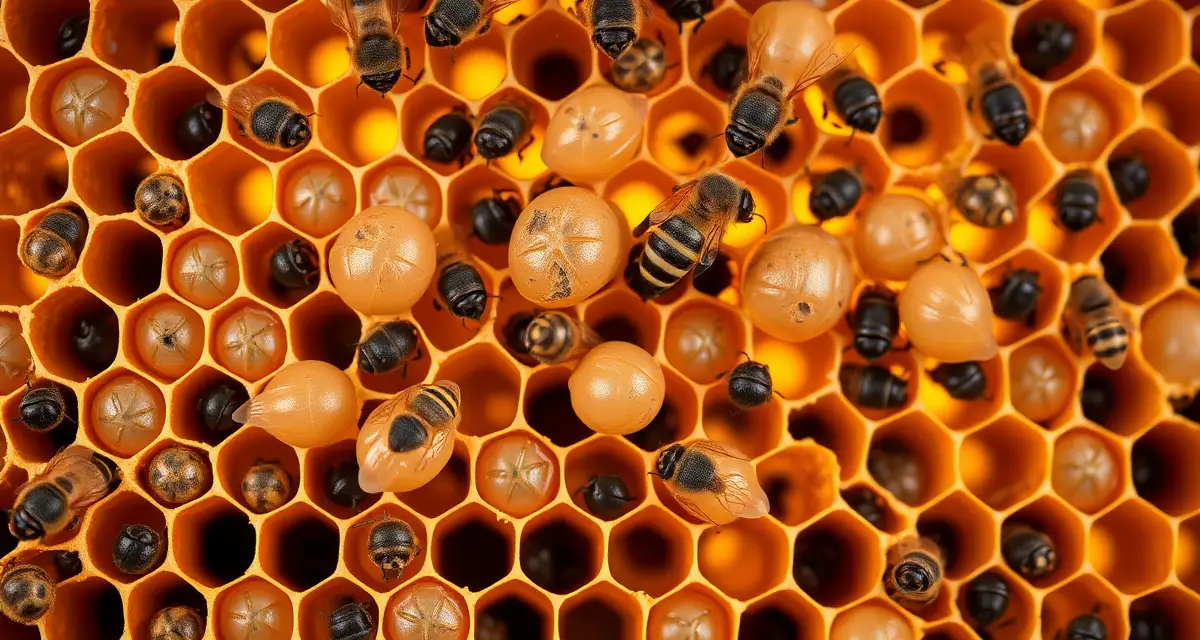
Varroa damage to developing bees produces a distinct set of signs that you can learn to identify during inspection. The damage varies by the stage at which mites fed and by the number of mites per cell.
deformed wing virus (DWV) wing deformities: The most recognizable sign of varroa damage. Bees with crumpled, shortened wings that can't fly. Wings look like wet, crinkled paper. These bees often crawl at the hive entrance or on the ground below. DWV is transmitted and amplified by varroa feeding. Seeing multiple DWV-affected bees is a strong indicator of ongoing high mite pressure.
Undersized adult bees: Varroa feeding during pupal development reduces the amount of protein and fat available to the developing bee. The resulting adult is measurably smaller than a normally developed bee. This is harder to spot than wing deformities unless you're comparing frames across multiple colonies.
Sunken or punctured cappings: During inspection of capped brood, look for cappings that appear slightly sunken or have small holes. Some removal of varroa-damaged brood by hygienic bees results in these punctured cappings. This is actually a sign of the colony's hygiene behavior attempting to remove mite-infested cells.
Spotty brood pattern with white-to-brown pupa visible in open cells: Some varroa-damaged pupae die before emerging. You may see mottled, discolored pupae in opened cells during inspection. If a beekeeper sees this alongside wing-damaged adults, varroa is the primary suspect.
White mites visible in open cells: During inspection, you may occasionally see a female varroa mite in an open cell, particularly in cells that have recently been opened by the bees. The mites are reddish-brown and about 1.5mm long. Seeing them during inspection suggests high mite density.
Brood Damage vs. Disease
Varroa brood damage can be confused with brood diseases. Here's how to distinguish:
- American foulbrood causes a ropy, coffee-colored pupal remains with a foul smell. Varroa damage does not produce this.
- European foulbrood causes twisted or melted larvae that look yellowish. Varroa damage occurs at the pupal stage, not larval.
- Sacbrood causes mummified, sack-like pupae. Varroa can amplify sacbrood virus, so both may be present simultaneously in high-mite colonies.
- Chalkbrood produces white chalk-like mummies in cells. A distinct appearance, not confused with varroa damage once you've seen it.
If you're unsure, an alcohol wash count resolves the question. High mite loads alongside brood symptoms strongly suggest varroa as the primary driver.
Interpreting Brood Damage Severity
The frequency of visible damage during inspection gives you a rough gauge of your mite pressure:
- Occasional DWV bees (1-2 per inspection): Some mite pressure but may still be manageable. Count immediately for precision.
- Multiple DWV bees per frame or crawling bees at entrance: Elevated mite pressure, likely above treatment threshold. Count and treat.
- Widespread DWV, spotty brood, multiple signs: You're likely well above threshold. Count for the record, but don't wait for results before preparing to treat.
Visible brood damage should always prompt an immediate count. Brood damage tells you the mite population has been elevated for at least 3 weeks (the time it takes for a damaged pupa to emerge as a damaged adult). The current count may be even higher.
Logging Brood Damage in VarroaVault
VarroaVault's inspection log includes a brood damage score field. You can record:
- No visible damage
- Occasional DWV bees (1-3 per inspection)
- Frequent DWV bees (4+ per inspection)
- Multiple signs (DWV + spotty brood + other indicators)
The brood damage score contributes to VarroaVault's colony health index alongside your mite count data. A high brood damage score triggers a heightened alert even if your most recent count is from several weeks ago. It prompts an immediate recount and urgency flag.
For the best photos and a visual guide to varroa identification, see our varroa mite photos and identification guide. The mite count tracking app stores your brood damage observations alongside count data for the complete colony health picture.
Frequently Asked Questions
What does varroa damage look like in brood cells?
The most visible sign is Deformed Wing Virus in adult bees: crumpled, non-functional wings and bees that can't fly. In open cells during inspection, you may see discolored or dead pupae, and occasionally a mite visible in an open cell. Sunken or punctured cappings on sealed brood suggest the colony's hygienic bees are removing mite-damaged cells. Undersized adult bees are another sign but require comparison to normal-sized bees from low-mite colonies to recognize.
Does brood damage mean I need to treat immediately?
If you're seeing frequent DWV-affected bees (multiple per frame) or widespread brood signs, yes. Do an alcohol wash to confirm your current mite count, but prepare to treat. Visible brood damage indicates the mite population has been elevated for at least 3 weeks. Current counts are likely above threshold. If you're seeing only occasional DWV bees, count immediately and treat based on the result.
How do I score brood damage in VarroaVault?
In VarroaVault's inspection log, open the hive record, tap "Inspection," and navigate to the brood health section. Select the brood damage score that best matches your observations: no visible damage, occasional DWV (1-3 per inspection), frequent DWV (4+), or multiple signs. The score records with your inspection date and contributes to the colony health index. A high brood damage score triggers an early-alert flag for the next count reminder.
How do I know if my varroa treatment is working?
Run a mite count 2-4 weeks after the treatment ends and compare it to your pre-treatment count. The efficacy formula is: ((pre-count - post-count) / pre-count) x 100. A result above 90% indicates effective treatment. Results below 80% should trigger investigation for possible resistance, application error, or reinfestation. Log both counts in VarroaVault to track efficacy trends across treatment cycles.
How often should I check mite levels in my hives?
At minimum, once per month (every 3-4 weeks) during the active season. Increase to every 2 weeks when counts are near threshold or after a treatment to verify it worked. In fall, monitoring frequency matters most because the window to treat before winter bees are raised is narrow. VarroaVault's monitoring reminders can be set to your preferred interval for each apiary.
What records should I keep for varroa management?
Each record should include: date of count or treatment, hive identifier, monitoring method used, number of bees sampled, mites counted, infestation percentage, treatment product name and EPA registration number, dose applied, treatment start and end dates, and PHI end date. State apiarists typically expect this level of detail during inspections. VarroaVault captures all of these fields in a single log entry.
What is Varroa Mite Damage in Brood: What to Look For During Inspections?
This article is a practical guide to identifying varroa mite damage in honeybee brood during hive inspections. It explains how to recognize physical signs of infestation—such as wing deformities and undersized bees—and what those signs tell you about mite load history. It also covers why visible brood damage is a lagging indicator, what thresholds signal an urgent need to treat, and how to pair visual inspection with alcohol wash monitoring for a complete picture of colony health.
How much does Varroa Mite Damage in Brood: What to Look For During Inspections cost?
This is a free educational resource—there is no cost to read it. The article is published on VarroaVault, a platform designed to help beekeepers monitor and manage varroa infestations. While the article itself is free, VarroaVault also offers tools for logging mite counts and treatment records. Pricing for those features, if any, would be found on the VarroaVault platform directly. The knowledge and inspection techniques described require no paid subscription to apply in your apiary.
How does Varroa Mite Damage in Brood: What to Look For During Inspections work?
The guide walks you through a visual inspection of open brood cells during a routine hive check. If more than 5% of open cells show damage signs, mite load is likely already above 3%—past early intervention thresholds. Because brood damage is a lagging indicator reflecting conditions three weeks prior, the article directs beekeepers to follow up with an alcohol wash to assess current mite levels. It also outlines HBHC action thresholds: 2% in spring/summer, 1% in fall.
What are the benefits of Varroa Mite Damage in Brood: What to Look For During Inspections?
Understanding varroa brood damage helps beekeepers act faster and more confidently. Recognizing visible signs—deformed wings, undersized adults—tells you the infestation was serious weeks ago, prompting immediate treatment rather than continued monitoring. The article also helps beekeepers build better habits: monitoring every 3–4 weeks, recording pre- and post-treatment counts, and maintaining treatment logs required for state inspection compliance. Earlier detection means less colony damage, higher winter survival rates, and more effective treatment outcomes overall.
Who needs Varroa Mite Damage in Brood: What to Look For During Inspections?
Any beekeeper managing colonies during active season needs this knowledge—from backyard hobbyists to commercial operators. It is especially critical for those who have never experienced a varroa outbreak, those returning to beekeeping after a break, or anyone who relies solely on visual inspection without running mite counts. If you keep bees in a region with established varroa populations (virtually everywhere outside Australia), understanding how to read brood damage and respond appropriately is a core competency for keeping colonies alive.
Sources
- American Beekeeping Federation (ABF)
- USDA ARS Bee Research Laboratory
- Honey Bee Health Coalition
- Penn State Extension Apiculture Program
- Project Apis m.
Get Started with VarroaVault
The information in this guide is most useful when you have your own mite count data to apply it to. VarroaVault stores every count, flags threshold crossings automatically, and builds the treatment history you need for state inspections and effective management decisions. See pricing and free tools at varroavault.com.