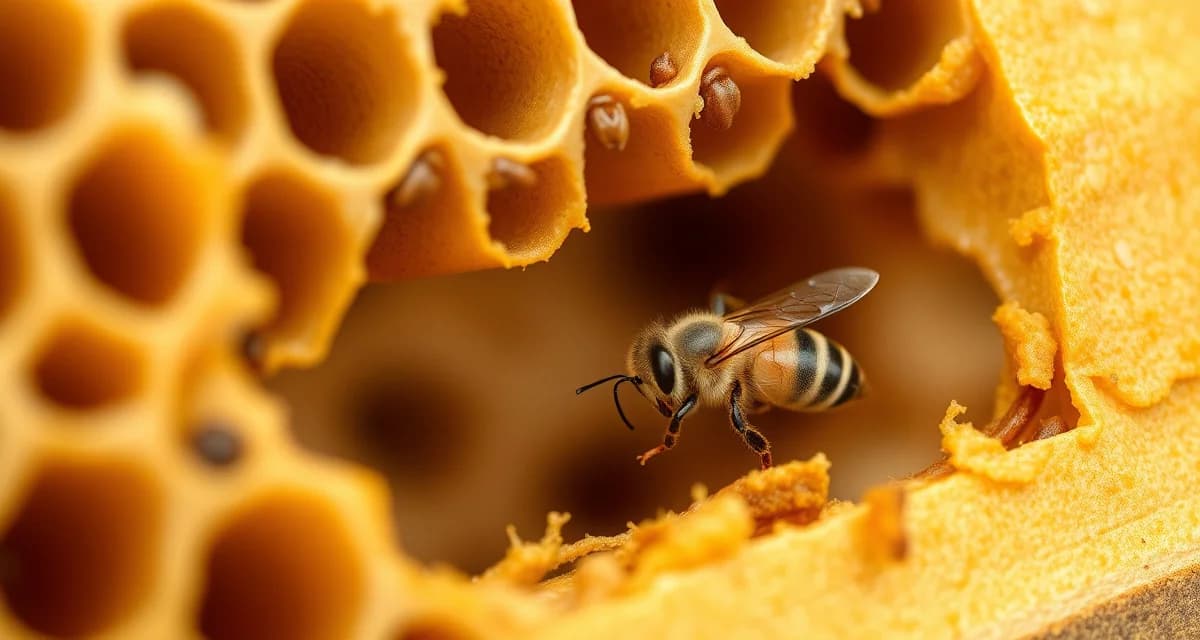
Varroa Brood Inspection Guide: What to Look for in Open and Capped Brood
Finding a single mite visible on a pupa during brood inspection usually indicates an infestation above 2%. That's not because one mite is alarming; it's because finding a mite during a casual visual inspection means the population density is high enough that mites are visible without specifically looking for them. Below 1-2%, you won't typically see mites in brood without specifically uncapping and examining cells.
Brood inspection is a complement to mite washing, not a replacement. But it provides information that a mite wash doesn't: what's happening inside the brood, what the brood pattern looks like, and whether visible disease signs (like DWV) are present.
TL;DR
- Most US states require apiaries to maintain varroa treatment records available for inspection on request
- Records must include: product name, EPA registration number, application date, hive ID, and applicant name
- Commercial operations with pollination contracts may face additional compliance documentation requirements
- USDA APHIS has increased attention on treatment resistance management as part of honey bee health initiatives
- Digital records with timestamping and audit trails meet higher evidentiary standards than handwritten notebooks
- VarroaVault generates formatted PDF exports suitable for state apiarist inspections in under 60 seconds
What Varroa Looks Like in Brood
In open brood (larvae): You won't normally see mites in open brood cells. Mites enter cells just before capping and are visible on older larvae, but this window is brief. Open brood with mites visible should prompt an immediate mite wash.
In capped brood (pupae): To find mites in capped brood, you need to uncap cells and examine the white pupae directly. A mite on a pupa appears as a reddish-brown oval, roughly 1-1.5mm long, clearly visible against the white background. Adult female mites are most common; you may also see pale, immature mites (offspring) attached near the pupa or on the cell walls.
Uncapping technique: Use your hive tool to slice across the top of a capped worker cell, then lift the cap. Tilt the frame toward the light. The pupa should be visible in the cell. Examine several cells in different areas of the brood nest.
What proportion to expect: In an infestation at 2-3%, roughly 10-20% of capped worker cells contain at least one mite. You shouldn't have to uncap many cells before finding evidence.
Brood Signs of High Mite Infestation
Spotty brood pattern: Empty cells scattered irregularly through an otherwise capped brood area. Some spotting is normal (hygienic behavior, failed eggs), but heavy spotting in a colony that was previously solid suggests elevated mite levels. Mites and the associated viruses can cause larvae to fail, which workers remove, creating the spotty pattern.
Perforated or sunken cappings: Worker bees sometimes partially uncap and recap cells where mites are present. Perforated or sunken cappings can indicate mite activity inside the cell, though they can also indicate other issues (sacbrood, for example).
deformed wing virus (DWV) in emerging bees: DWV is the most commonly mite-vectored virus in European honey bees. Emerging bees with crumpled, vestigial, or absent wings are DWV symptomatic. Finding more than 1-2 DWV-symptomatic bees per inspection is a significant mite signal. At high mite loads, you may see multiple symptomatic bees emerging over a short observation period.
Pale or malformed pupae: Pupae heavily parasitized by mites may appear discolored, malformed, or dead. These are visible when you uncap cells for direct examination.
Can Brood Inspection Replace a Mite Wash?
No. Brood inspection is a qualitative tool; an alcohol wash is a quantitative tool. Here's why the distinction matters:
An alcohol wash gives you a percentage that you can compare directly to your treatment threshold. 2.4% tells you something specific about where you are relative to the 2% pre-winter threshold. You can make a definitive treatment decision from that number.
A brood inspection tells you "there are mites" or "I can see DWV symptoms" without giving you a number. You can't make a threshold decision from qualitative observations. An inspection that shows no visible mites doesn't mean mites aren't present at 1.5% or 1.8%, which may still warrant treatment depending on season.
Use brood inspection to:
- Confirm that a colony is worth counting (a devastated colony with obvious collapse underway doesn't need a formal count: it needs immediate action)
- Provide supplemental context to a count (a count of 2.1% with DWV-symptomatic bees is more urgent than a count of 2.1% with no visible symptoms)
- Conduct a quick field check between scheduled counts to see if things look normal
Use alcohol wash to:
- Make all threshold decisions
- Establish pre-treatment baselines
- Confirm post-treatment efficacy
Recording Brood Inspection Findings in VarroaVault
VarroaVault's inspection template includes five brood health indicators alongside the standard mite count field:
- Brood pattern (solid, moderate spotting, heavy spotting)
- Capping condition (normal, some perforated/sunken cappings, significant abnormal cappings)
- DWV-symptomatic bees observed (none, 1-2, several)
- Mites visible on uncapped brood (yes/no)
- Larval condition (normal, some malformed/discolored larvae visible)
These fields appear in the inspection log alongside your mite count entry. When you complete a formal count, these observations provide context. When you're doing a routine inspection without a count, these fields still let you log warning signs.
If multiple concerning indicators appear in the same inspection (spotty brood, DWV symptoms, mites visible), VarroaVault flags the inspection record with a recommendation to perform a count within the next 7 days regardless of your scheduled monitoring interval.
Frequently Asked Questions
What does varroa look like in a brood cell?
Adult female varroa mites are reddish-brown ovals roughly 1-1.5mm long, clearly visible against the white background of a bee pupa when you uncap cells for examination. Finding one mite on a pupa during a casual inspection typically indicates an infestation above 2%, because at lower levels mites aren't common enough to encounter without specifically searching. Immature mites (pale, smaller) may also be visible on the cell walls or pupa body.
Can brood inspection replace a mite wash for monitoring?
No. Brood inspection is qualitative (mites present or not, symptoms visible or not). Alcohol wash is quantitative (percentage that can be compared directly to a treatment threshold). You can't make a definitive treatment decision from visual inspection alone. Use brood inspection as a supplemental tool between scheduled counts and as a quick field check, but always use alcohol wash to make threshold-based treatment decisions.
How do I record brood inspection findings in VarroaVault?
VarroaVault's inspection template includes five brood health fields: brood pattern, capping condition, DWV-symptomatic bees observed, mites visible on uncapped brood, and larval condition. These appear alongside your mite count field in the inspection log. If multiple concerning indicators appear together, VarroaVault flags the record with a recommendation to perform a formal count within 7 days.
How do I know if my varroa treatment is working?
Run a mite count 2-4 weeks after the treatment ends and compare it to your pre-treatment count. The efficacy formula is: ((pre-count - post-count) / pre-count) x 100. A result above 90% indicates effective treatment. Results below 80% should trigger investigation for possible resistance, application error, or reinfestation. Log both counts in VarroaVault to track efficacy trends across treatment cycles.
How often should I check mite levels in my hives?
At minimum, once per month (every 3-4 weeks) during the active season. Increase to every 2 weeks when counts are near threshold or after a treatment to verify it worked. In fall, monitoring frequency matters most because the window to treat before winter bees are raised is narrow. VarroaVault's monitoring reminders can be set to your preferred interval for each apiary.
What records should I keep for varroa management?
Each record should include: date of count or treatment, hive identifier, monitoring method used, number of bees sampled, mites counted, infestation percentage, treatment product name and EPA registration number, dose applied, treatment start and end dates, and PHI end date. State apiarists typically expect this level of detail during inspections. VarroaVault captures all of these fields in a single log entry.
What is Varroa Brood Inspection Guide: What to Look for in Open and Capped Brood?
A Varroa Brood Inspection Guide for open and capped brood is a practical framework for visually identifying mite infestations and disease signs directly inside the hive. It teaches beekeepers what to look for when examining brood cells — from spotting mites on pupae to recognizing deformed wing virus (DWV) symptoms. This type of inspection complements mite washing by revealing brood pattern quality and infestation pressure that sampling alone cannot show.
How much does Varroa Brood Inspection Guide: What to Look for in Open and Capped Brood cost?
This guide is free educational content published on VarroaVault. There is no cost to read or apply the inspection techniques described. VarroaVault is a beekeeping resource focused on varroa management education, treatment tracking, and hive health monitoring. Some platform features — like PDF record exports and digital treatment logs — may require a VarroaVault account, but the inspection guide itself is openly accessible to all beekeepers.
How does Varroa Brood Inspection Guide: What to Look for in Open and Capped Brood work?
Brood inspection works by visually examining both open (uncapped) and capped cells for signs of varroa infestation and brood disease. Beekeepers look for mites visible on pupae, irregular capping, sunken or punctured cappings, and deformed larvae. A key rule of thumb: spotting even one mite casually during inspection typically signals an infestation above 2%, because mites only become casually visible at higher population densities.
What are the benefits of Varroa Brood Inspection Guide: What to Look for in Open and Capped Brood?
Brood inspection reveals information a mite wash cannot: brood pattern health, visible mite presence on pupae, and early signs of DWV or other brood diseases. It gives beekeepers a real-time snapshot of colony health beyond raw mite counts. Used alongside alcohol wash or sugar roll sampling, it provides a more complete picture of infestation pressure and helps beekeepers make faster, more informed treatment decisions before populations reach damaging thresholds.
Who needs Varroa Brood Inspection Guide: What to Look for in Open and Capped Brood?
Any beekeeper managing colonies for mite pressure can benefit from this guide — from hobbyists with a few hives to commercial operations managing hundreds. It is especially valuable for those new to varroa management who want to understand what healthy versus infested brood looks like. Beekeepers subject to state inspection requirements or pollination contract compliance will also find brood inspection skills essential for maintaining documented, defensible hive health records.
Related Articles
Sources
- American Beekeeping Federation (ABF)
- USDA ARS Bee Research Laboratory
- Honey Bee Health Coalition
- Penn State Extension Apiculture Program
- Project Apis m.
Get Started with VarroaVault
The information in this guide is most useful when you have your own mite count data to apply it to. VarroaVault stores every count, flags threshold crossings automatically, and builds the treatment history you need for state inspections and effective management decisions. See pricing and free tools at varroavault.com.