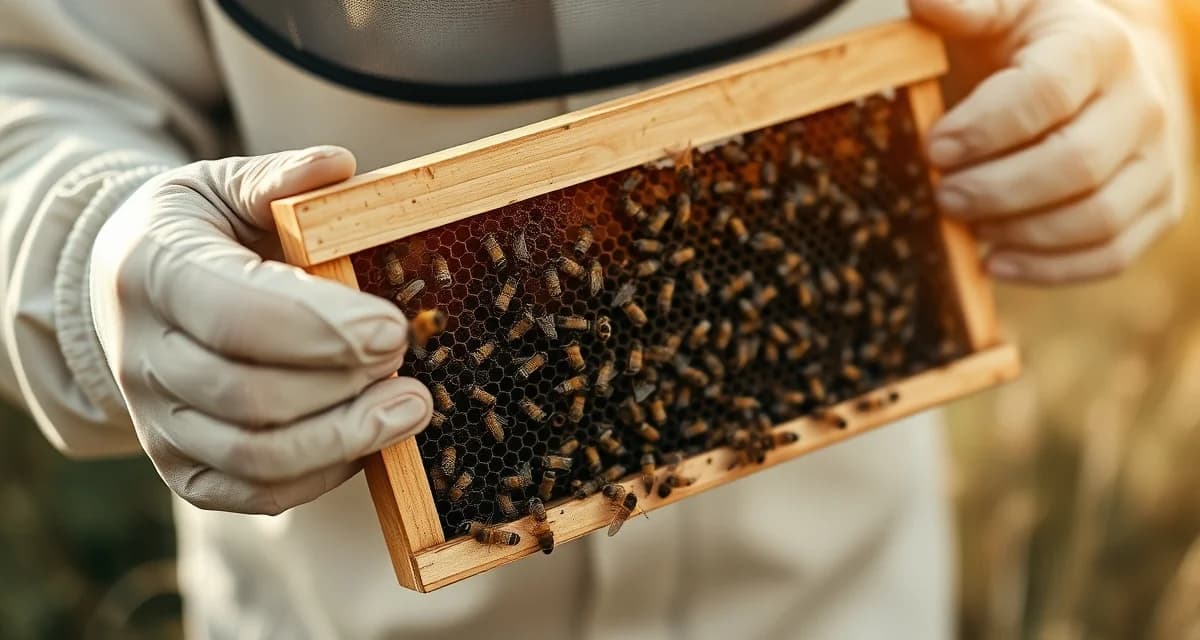
Hive Inspection Checklist: What to Look for at Every Visit
Beekeepers who log all inspection fields consistently are 3 times more likely to detect threshold breaches before colony collapse. That's the difference between a managed outcome and a bad surprise in October.
The problem with most inspection approaches is that they're ad hoc. You open the hive, look around, note what seems important, close it. What you notice depends on what you were looking for, what caught your eye, and whether anything seemed obviously wrong. Over 30 hives, that inconsistency means your data has gaps you can't see.
A structured inspection checklist forces you to evaluate the same things at every hive, every visit. Combined with a mite count entry in the same workflow, every inspection becomes a complete data record.
TL;DR
- Most US states require apiaries to maintain varroa treatment records available for inspection on request
- Records must include: product name, EPA registration number, application date, hive ID, and applicant name
- Commercial operations with pollination contracts may face additional compliance documentation requirements
- USDA APHIS has increased attention on treatment resistance management as part of honey bee health initiatives
- Digital records with timestamping and audit trails meet higher evidentiary standards than handwritten notebooks
- VarroaVault generates formatted PDF exports suitable for state apiarist inspections in under 60 seconds
The Complete Inspection Checklist
1. Colony Strength Assessment
Estimate the number of frames of bees. Count frames with visible coverage of at least 60% of the frame face. A healthy summer colony in most zones should have 7-10 frames of bees at peak. Record this as a frame count.
Why it matters: Colony strength is context for everything else. A 2% mite count in a 10-frame colony is different from a 2% count in a 3-frame colony. A colony that's been losing frames of bees over successive inspections is trending toward a problem regardless of what individual data points say.
2. Brood Pattern and Quality
Assess the brood pattern in all boxes with open or sealed brood. A healthy pattern is mostly filled, with very few empty cells scattered randomly within a brood area.
Note:
- Estimated percentage of filled cells in the brood area (solid, patchy, or scattered)
- Color of cappings (normal brown/tan paper color, or anything darker, sunken, or perforated)
- Presence of dead or suspicious larvae
- Any cells with multiple eggs (may indicate laying workers)
3. Queen Status
Note the queen's confirmed status at each inspection:
- Seen: You saw the queen directly
- Eggs present: You saw fresh eggs, indicating a laying queen within the past 3 days
- Young larvae: Indicates a queen was laying within the past 6-8 days
- No brood or eggs: Queen status uncertain, needs follow-up
- Queen seen, caged/event: Note any queen events
You don't have to find the queen at every inspection. Confirming fresh eggs is usually sufficient to verify queen presence without the time cost of hunting.
4. Mite Count (Alcohol Wash)
This is where most inspection checklists stop having a mite entry. HiveTracks, for instance, has an inspection log but no integrated mite count entry in the same workflow.
VarroaVault's single-screen inspection form captures brood score, queen status, strength estimate, and mite count in one visit. You don't need to navigate between different logging screens.
Run an alcohol wash when:
- It's your scheduled monthly monitoring visit
- The colony is within 0.5% of threshold from the last count
- You notice any concerning visual symptoms
- 30 days have passed since your last treatment
Not every inspection requires an alcohol wash. But every scheduled monitoring visit should have one.
5. Disease and Pest Indicators
Quick visual checks during each inspection:
Chalkbrood: Hard, gray or white mummified larvae in or near the entrance
Sacbrood: Sac-like dead larvae in open cells, yellowish-to-brown
American Foulbrood: Sunken, perforated cappings with ropy dead larvae and foul smell
deformed wing virus: Crawling bees with crumpled wings at the entrance
Small hive beetle: Adult beetles running from light in corners, or evidence of larval sliming in combs
Wax moth: Webbing on combs, usually in areas without good bee coverage
Note any of these observations in your inspection record. Even if they seem minor, the history of disease observations over time reveals patterns.
6. Colony Behavior
Brief notes on colony temperament and behavior:
- Normal forager activity at the entrance
- Any signs of robbing activity (fighting at entrance, unusual bee flight patterns)
- Defensive behavior (unprovoked following, excessive alarm behavior)
- Any unusual sounds (excessive fanning, unusual humming)
Behavior changes between inspections often signal something worth investigating even before visual evidence appears.
7. Resource Status
For colonies you manage for honey production:
- Estimated honey stores (frames of capped honey)
- Pollen availability (frames with visible pollen in cells)
- Any honey super additions or removals to note
- PHI clearance status if active treatment is logged (VarroaVault shows this automatically)
8. Action Items and Next Steps
Before closing the hive, decide:
- Any treatment needed based on today's count?
- Next monitoring date (VarroaVault auto-schedules based on season and count)
- Any follow-up needed (requeen, combine, add super, etc.)
Using VarroaVault for Single-Screen Inspections
VarroaVault's inspection form captures all of the above fields in a single view. You work through the colony top to bottom during the inspection, enter observations as you go, and save when you close the hive. The whole logging process takes about 2-3 minutes per colony once you're comfortable with the workflow.
After saving, VarroaVault:
- Evaluates the mite count against your threshold
- Checks whether the inspection reveals any disease flags
- Updates the colony's strength trend graph
- Schedules your next monitoring reminder based on season and recent count trend
- Links any disease observations to your treatment history for correlation tracking
You can access the inspection workflow through the varroa mite treatment software to see how it connects to your treatment decisions, and through the mite count tracking app for detailed count logging guidance.
What to Log Even When Everything Looks Fine
The biggest inspection recording mistake is only logging when something is wrong. A clean inspection record is valuable data. It confirms the colony was healthy and at strength on that date, it establishes the baseline that makes a future decline visible, and it creates the documentation history that matters for compliance and certification.
Log everything, every time. Even when the answer is "looks great, 0.8% mites, queen laying well, no disease signs." That record has value when you compare it to what you find three months later.
Frequently Asked Questions
What should I check at every hive inspection?
Every inspection should cover: colony strength estimate (frames of bees), brood pattern assessment (coverage, capping color, any dead or unusual larvae), queen status confirmation (queen seen, eggs present, or unknown), disease and pest indicator check (visual scan for chalkbrood, DWV, AFB signs, SHB, wax moth), behavior observation, and resource status. On scheduled monitoring visits (typically monthly in spring/summer, every 2-3 weeks in August-September), add an alcohol wash mite count to the inspection workflow.
How do I log a full inspection in VarroaVault?
VarroaVault's single-screen inspection form captures colony strength, brood pattern, queen status, disease observations, mite count, behavior notes, and resource status in a unified entry. Open the inspection form from the colony view in the mobile app, work through the fields as you inspect the hive, and save before moving to the next colony. The form is designed for use with gloves and in field conditions, with large tap targets and minimal navigation. Logging a complete inspection takes about 2-3 minutes per colony.
How does VarroaVault link inspection data to treatment decisions?
VarroaVault's inspection form includes the mite count entry in the same workflow, so the count immediately evaluates against your threshold and triggers a treatment alert if needed. Disease symptom flags in the inspection, such as DWV or brood disorder observations, trigger recommended follow-up count and treatment notifications linked to the disease-specific urgency. Colony strength trends across successive inspections feed into the platform's risk scoring, which elevates alert priority for colonies showing declining strength alongside rising mite counts. The connected inspection and treatment workflow is the core of VarroaVault's integrated management approach.
How do I know if my varroa treatment is working?
Run a mite count 2-4 weeks after the treatment ends and compare it to your pre-treatment count. The efficacy formula is: ((pre-count - post-count) / pre-count) x 100. A result above 90% indicates effective treatment. Results below 80% should trigger investigation for possible resistance, application error, or reinfestation. Log both counts in VarroaVault to track efficacy trends across treatment cycles.
How often should I check mite levels in my hives?
At minimum, once per month (every 3-4 weeks) during the active season. Increase to every 2 weeks when counts are near threshold or after a treatment to verify it worked. In fall, monitoring frequency matters most because the window to treat before winter bees are raised is narrow. VarroaVault's monitoring reminders can be set to your preferred interval for each apiary.
What records should I keep for varroa management?
Each record should include: date of count or treatment, hive identifier, monitoring method used, number of bees sampled, mites counted, infestation percentage, treatment product name and EPA registration number, dose applied, treatment start and end dates, and PHI end date. State apiarists typically expect this level of detail during inspections. VarroaVault captures all of these fields in a single log entry.
What is Hive Inspection Checklist: What to Look for at Every Visit?
A hive inspection checklist is a structured framework that guides beekeepers through evaluating the same key indicators at every hive visit. Rather than relying on what catches your eye, it ensures you systematically assess brood pattern, queen presence, mite load, colony population, food stores, and pest or disease signs. Combined with a mite count entry, each inspection becomes a complete, comparable data record — critical for detecting varroa threshold breaches before they cause colony collapse.
How much does Hive Inspection Checklist: What to Look for at Every Visit cost?
The hive inspection checklist itself is free — it's a methodology and record-keeping framework, not a paid product. VarroaVault provides digital tools to log inspection data, track mite counts, and maintain treatment records. Some digital hive management platforms offer premium tiers for advanced analytics, compliance reporting, or multi-apiary dashboards. The real cost of not using a structured checklist is far higher: missed threshold breaches, emergency treatments, and potential colony losses.
How does Hive Inspection Checklist: What to Look for at Every Visit work?
At each hive visit, you work through a fixed set of evaluation fields in the same order: brood pattern and capped brood percentage, queen status, adult bee population, varroa mite count method and result, food stores, and any signs of disease or pests. You record each field immediately, creating a timestamped data entry. Over multiple visits, these records reveal trends — rising mite loads, declining brood, dwindling stores — that a single ad hoc observation would miss.
What are the benefits of Hive Inspection Checklist: What to Look for at Every Visit?
Consistent checklist-based inspections make you three times more likely to detect varroa threshold breaches before colony collapse. They eliminate the blind spots created by ad hoc observation across large apiaries, produce treatment records that meet state regulatory requirements, and build a longitudinal dataset for smarter management decisions. For commercial operations, structured digital records with audit trails also satisfy pollination contract compliance documentation and support resistance management practices now under increased USDA APHIS scrutiny.
Who needs Hive Inspection Checklist: What to Look for at Every Visit?
Any beekeeper managing more than a few hives benefits from a structured inspection checklist, but it's essential for hobbyists scaling up, sideliners, and commercial operations where consistency across 20, 50, or 300+ hives is impossible without a system. It's also critical for beekeepers in states requiring varroa treatment records available on request, those with USDA-facing pollination contracts, and anyone who has previously lost colonies to late-detected mite threshold breaches.
Sources
- American Beekeeping Federation (ABF)
- USDA ARS Bee Research Laboratory
- Honey Bee Health Coalition
- Penn State Extension Apiculture Program
- Project Apis m.
Get Started with VarroaVault
The information in this guide is most useful when you have your own mite count data to apply it to. VarroaVault stores every count, flags threshold crossings automatically, and builds the treatment history you need for state inspections and effective management decisions. See pricing and free tools at varroavault.com.