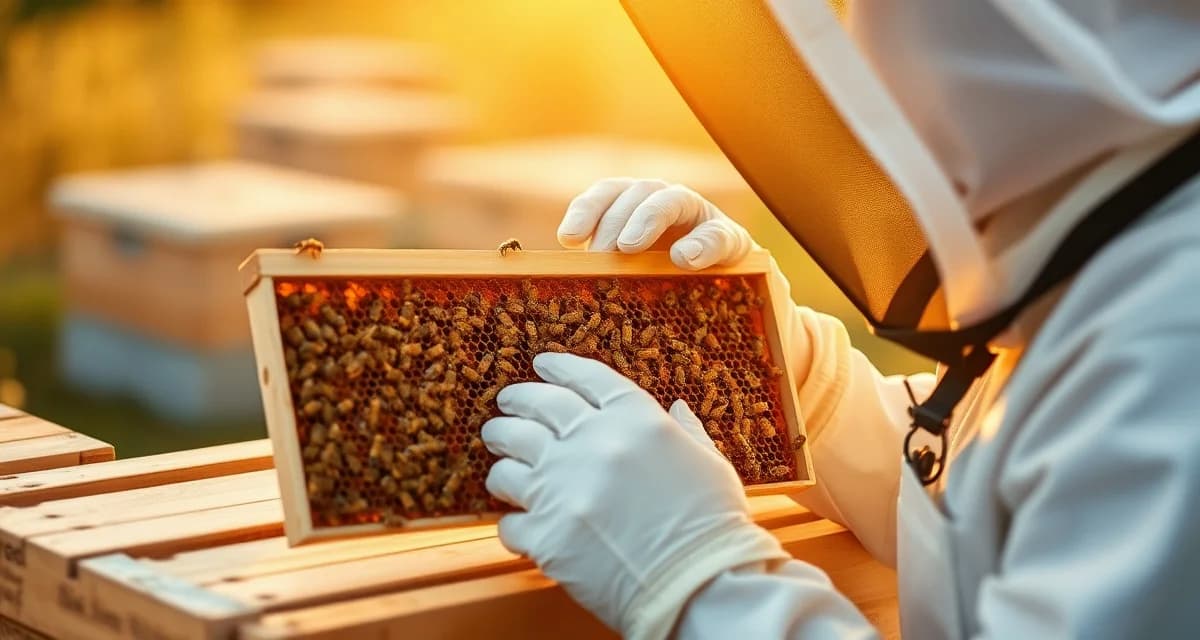
Annual Varroa Monitoring Checklist: Every Task for the Full Year
Beekeepers who complete all 7 annual monitoring checklist items reduce winter colony losses by an average of 50%. Not marginal improvement -- half of their typical losses eliminated by working through a defined list of tasks across the season.
This is that list. Every task, every month that matters, with what to do and what to decide at each step.
TL;DR
- Varroa monitoring should happen at minimum once per month during active season (every 3-4 weeks)
- Sticky board counts are the least accurate method; alcohol wash is the gold standard
- The 2% threshold in spring/summer and 1% in fall are widely recommended action points
- Monitoring before and after every treatment allows efficacy calculation and resistance detection
- A count from the outer frames or entrance produces lower, less accurate results than brood nest samples
- VarroaVault stores every count with date, method, and result to build a trend dataset over multiple seasons
February: Season Planning
Tasks:
- Review last year's annual summary (count results, treatment efficacy, winter loss rate)
- Identify which product class you used last fall and set your rotation for this year
- Order treatment products for the coming season before spring prices and shortages hit
- Schedule your April inspection date in your calendar
- Confirm your monitoring equipment is ready (mite wash jar, isopropyl alcohol, measuring cup, white counting tray)
Decisions to make:
- Which product class will you use for your fall treatment this year based on your rotation schedule?
- Do any colonies from last year need attention based on your winter check results?
What this prevents: Running out of treatment product in August when you need it most; arriving at spring without a plan.
April: Spring Baseline Count
Tasks:
- Open hives for first spring inspection once ambient temperature is consistently above 55°F
- Conduct alcohol wash on every hive (or representative sample if you have more than 20 hives)
- Log each count result with date, hive ID, method, bee count, and mite count
- Assess colony strength: frames of bees, frames of brood, queen status
- Apply any needed early spring treatments if counts are above 2%
Decisions to make:
- Are any colonies above the 2% spring action threshold?
- Are any colonies weak enough to require extra monitoring attention?
- Is your queen status normal across the apiary?
What this prevents: Arriving at May or June with no spring baseline; missing colonies that came through winter with elevated loads.
May: Pre-Flow Follow-Up
Tasks:
- Recount any April colonies that were at 1-2% (elevated but below action threshold)
- Install honey supers once flow begins (note the date -- this starts your PHI clock)
- Log super installation date per hive
- Confirm PHI clearance for any treatments started in spring
Decisions to make:
- Are the 1-2% colonies from April trending up or stable?
- If trending up, does the colony need treatment before the main flow begins?
- Do you need to treat before supers go on to avoid PHI conflicts?
What this prevents: Spring counts that were borderline in April crossing the threshold during peak flow when treatment options are most limited.
June: Pre-Treatment Threshold Check
Tasks:
- Full apiary count before the July heat sets in
- Log each count and calculate trend from your April result
- Assess honey super progress and expected pull date
Decisions to make:
- Is any colony above 2% heading into July?
- Is your mite growth rate consistent with your expectations from prior seasons?
- Are any colonies trending toward emergency territory (3%) before August?
What this prevents: Arriving at July with no count data and having to make August treatment decisions without knowing your June baseline.
July: Mid-Season Emergency Gate
Tasks:
- Full apiary count, July 1-15
- Log results and calculate trend from June
- Treat any colony above 2% within 7-14 days
- Treat any colony above 3% immediately regardless of honey super status
Decisions to make:
- Emergency action required for any colony above 3%?
- Treatment needed for colonies at 2-3% before August window opens?
- Is your summer dearth window open? (If yes, broader product options available)
What this prevents: The single most costly monitoring gap -- missing July and arriving at August without knowing whether your colonies need emergency intervention rather than standard fall treatment.
August 1-15: Fall Treatment Window
Tasks:
- Pre-treatment count on every hive (this is your before number for efficacy calculation)
- Begin fall treatment on ALL hives August 1-15 regardless of count results
- Remove honey supers before applying any product that requires it
- Log treatment start date, product, and application method for each hive
- Calculate PHI clearance date for fall honey harvest planning
Decisions to make:
- Which product are you using this fall (per your rotation plan)?
- Do you have any broodless colonies that qualify for OA dribble?
- What is your expected strip removal date (for Apivar/Apistan)?
What this prevents: The single most important window in your entire annual management program. Missing August is the most consequential management error a beekeeper can make. The bees raised in August-September carry the colony through winter. Treating in August gives those bees a protected development environment.
September: Post-Treatment Verification
Tasks:
- Remove Apivar strips if you're at day 42-56 (log the removal date -- this starts PHI)
- Count every hive 30-45 days after treatment start
- Calculate treatment efficacy: ((pre-count - post-count) / pre-count) x 100
- Log efficacy results and flag any below 80% for investigation
- Reinstall honey supers after PHI clearance if fall flow is active
Decisions to make:
- Any hives with efficacy below 80% requiring investigation or retreatment?
- Is any hive above 1% post-treatment requiring an additional clean-up treatment?
- Do you have a fall flow? When do supers go back on relative to PHI?
What this prevents: Assuming your fall treatment worked without verification; entering winter with elevated mite loads because a treatment underperformed and you didn't catch it.
October-November: Broodless Period Check
Tasks:
- Inspect each hive for brood presence (broodless status needed for OA dribble)
- Count any colony above 1% post-treatment from September
- Apply OA dribble to confirmed broodless colonies above 1%
- Feed colonies that need winter stores if applicable
- Log final count and any winter preparation treatments
Decisions to make:
- Which colonies are confirmed broodless and eligible for OA dribble clean-up?
- Are any colonies above 2% at this point requiring additional intervention?
- Does any colony need requeening before cluster formation?
What this prevents: Entering winter with avoidably high mite loads; missing the broodless window that allows the most effective single-application OA treatment.
Using This Checklist
Print this checklist or import it into your planning calendar before the season starts. Work through each month sequentially rather than jumping to later steps.
The varroa monitoring frequency by season guide covers the biology behind each timing recommendation. The varroa mite treatment plan generator tool generates a personalized version of this checklist based on your location, hive count, and super schedule.
VarroaVault's annual checklist auto-generates at account creation based on your location and hive count. Each item fires as a push notification at the appropriate time, with the context for why the task matters and what to do with the result.
Frequently Asked Questions
What are the annual varroa monitoring milestones?
The 7 annual milestones are: February planning (product ordering and rotation review), April spring baseline count, May pre-flow follow-up for borderline colonies, June-July mid-season emergency threshold checks, August 1-15 fall treatment window with pre-treatment count, September post-treatment verification and efficacy calculation, and October-November broodless period check with clean-up OA dribble option. Each milestone has a specific task, a threshold to evaluate, and a decision to make. Completing all 7 is associated with 50% lower average winter colony loss rates.
How do I track my annual monitoring checklist in VarroaVault?
VarroaVault generates your personalized annual checklist at account setup based on your ZIP code, hive count, honey super schedule, and certification status. Each checklist item appears as a calendar event with a push notification reminder when it's time to act. As you log count and treatment data, the checklist items automatically mark as complete with a green checkmark. Your completion percentage is visible on the dashboard throughout the season.
Can I download the annual monitoring checklist as a printable?
Yes. VarroaVault exports your personalized checklist as a PDF from the Calendar section of your account. The printed version includes each task, the date it's due for your zone, and a blank field for recording your result. You can also generate a generic version of this checklist without a VarroaVault account from the resources page -- enter your ZIP code and it generates a zone-appropriate dated checklist you can print immediately.
How do I know if my varroa treatment is working?
Run a mite count 2-4 weeks after the treatment ends and compare it to your pre-treatment count. The efficacy formula is: ((pre-count - post-count) / pre-count) x 100. A result above 90% indicates effective treatment. Results below 80% should trigger investigation for possible resistance, application error, or reinfestation. Log both counts in VarroaVault to track efficacy trends across treatment cycles.
How often should I check mite levels in my hives?
At minimum, once per month (every 3-4 weeks) during the active season. Increase to every 2 weeks when counts are near threshold or after a treatment to verify it worked. In fall, monitoring frequency matters most because the window to treat before winter bees are raised is narrow. VarroaVault's monitoring reminders can be set to your preferred interval for each apiary.
What records should I keep for varroa management?
Each record should include: date of count or treatment, hive identifier, monitoring method used, number of bees sampled, mites counted, infestation percentage, treatment product name and EPA registration number, dose applied, treatment start and end dates, and PHI end date. State apiarists typically expect this level of detail during inspections. VarroaVault captures all of these fields in a single log entry.
What is Annual Varroa Monitoring Checklist: Every Task for the Full Year?
The Annual Varroa Monitoring Checklist is a structured, month-by-month guide covering every critical varroa management task across the full beekeeping year. It outlines when to monitor, which methods to use, how to interpret results, and when to treat. Beekeepers who follow a complete annual checklist reduce winter colony losses by an average of 50%, making it one of the highest-impact practices in modern apiary management.
How much does Annual Varroa Monitoring Checklist: Every Task for the Full Year cost?
The checklist itself is free. The real costs involve monitoring supplies—alcohol wash equipment runs $10–30—and treatment products, which vary by type and colony count. Oxalic acid treatments are among the most affordable options, while some synthetic miticides cost more. Planning purchases in February, before spring shortages hit, helps manage expenses. VarroaVault tracks your monitoring data at no cost to help you make smarter treatment decisions.
How does Annual Varroa Monitoring Checklist: Every Task for the Full Year work?
The checklist works by assigning specific monitoring and treatment tasks to each month of the active season. You sample bees using an alcohol wash or sugar roll at regular intervals, compare your mite counts against established action thresholds (2% in spring/summer, 1% in fall), then treat when needed and retest afterward to confirm efficacy. Logging every result builds a multi-season trend dataset that improves future decisions.
What are the benefits of Annual Varroa Monitoring Checklist: Every Task for the Full Year?
Following a full annual checklist reduces winter losses by around 50% on average. It helps you catch mite infestations before they become critical, rotate treatment classes to slow resistance development, and verify that treatments actually worked. Structured pre- and post-treatment counts let you identify resistance early. Over multiple seasons, your trend data reveals colony-specific patterns that make each intervention more targeted and effective.
Who needs Annual Varroa Monitoring Checklist: Every Task for the Full Year?
Any beekeeper managing colonies through winter should use an annual varroa checklist—hobbyists and commercial operations alike. It's especially valuable for those who have experienced unexplained winter losses, suspect treatment resistance, or manage multiple apiaries where results vary. New beekeepers benefit from the structured framework, while experienced beekeepers use it to systematize what they already know and build a defensible, data-backed management record.
Sources
- American Beekeeping Federation (ABF)
- USDA ARS Bee Research Laboratory
- Honey Bee Health Coalition
- Penn State Extension Apiculture Program
- Project Apis m.
Get Started with VarroaVault
The information in this guide is most useful when you have your own mite count data to apply it to. VarroaVault stores every count, flags threshold crossings automatically, and builds the treatment history you need for state inspections and effective management decisions. See pricing and free tools at varroavault.com.