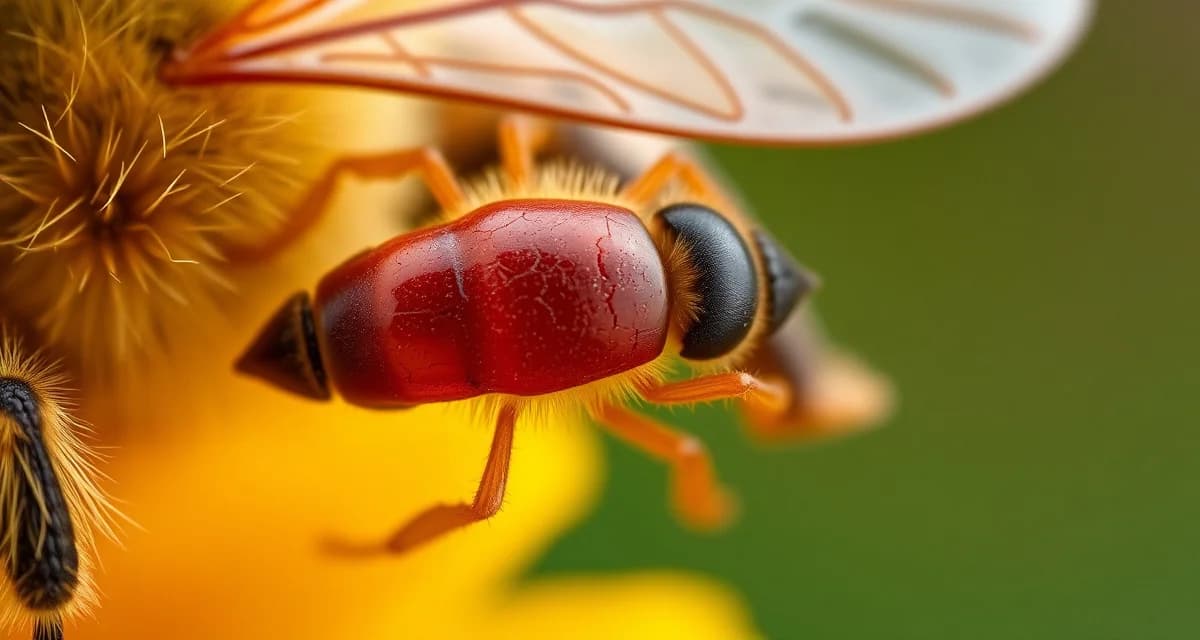
Varroa Mite Photo Identification Guide: What Varroa Looks Like
Varroa destructor females are 1.1mm wide and 1.6mm long. That's smaller than a pinhead, larger than most other mites you might encounter on bees, and visible to the naked eye under good lighting, though easy to miss if you're not looking carefully. The characteristic that most helps new beekeepers identify varroa is their shape and color: a reddish-brown oval, distinctly wider than it is long, that looks like a tiny crab riding on the back of a bee.
Once you've seen one clearly, the identification becomes intuitive. The challenge is knowing what to look for before you've seen one.
TL;DR
- This guide covers key aspects of varroa mite photo identification guide: what varroa looks li
- Mite monitoring should happen at minimum every 3-4 weeks during active season
- The 2% threshold in spring/summer and 1% in fall are standard action points based on HBHC guidelines
- Always run a pre-treatment and post-treatment mite count to calculate efficacy
- Treatment records including product name, EPA number, dates, and counts are required for state inspection compliance
- VarroaVault stores all monitoring and treatment data with automatic threshold comparison and state export formatting
What Varroa Looks Like: Physical Description
Color: Adult female varroa mites are reddish-brown to mahogany in color. They're slightly lighter in color when young, darkening with age. The color is distinctive against the lighter-colored abdomen segments of honey bees where they typically attach.
Shape: Distinctly oval but wider than long. This dorsoventral (wider than tall) flattened profile is characteristic of varroa and different from most other bee-associated mites, which tend to be more elongated or circular. When viewed from above, the varroa mite has visible legs extending from its sides.
Size: 1.1mm wide by 1.6mm long for adult females. About the size of a sesame seed, maybe slightly smaller. Large enough to see with the naked eye under good daylight or with a basic hand lens (10x loupe), but small enough to miss in a cursory glance.
Male varroa mites are smaller and yellowish-white. They're rarely seen because they stay inside capped cells and die after mating. You'll essentially never see male varroa mites during standard inspections.
Immature mites (protonymph, deutonymph): Found only inside capped cells. White to yellowish in color, smaller than adults. You won't see these during alcohol wash counts because they're killed during the wash but remain inside the capped cells that stay on the frame.
Where to Look for Varroa
On Adult Bees
Varroa mites prefer to attach to the underside of the bee's abdomen, near the segment junctions where the soft intersegmental membrane is accessible. This positioning gives the mite access to the fat body just below the cuticle surface.
When looking for mites on adult bees, check the bee's abdomen from below if possible. The mite will appear as a distinct reddish-brown oval, often with legs visible at the edges.
During a full colony inspection, check a few bees from the brood nest area specifically, as this is where phoretic mite concentrations are highest (nurse bees near brood have higher mite loads than foragers).
During an Alcohol Wash
An alcohol wash is the clearest opportunity to see varroa mites. After agitation and straining, look in the wash liquid or on the white plate/bowl surface where the liquid was poured. Varroa mites float or settle in the wash liquid as distinct reddish-brown ovals. They're very easy to count against a white background in good lighting.
VarroaVault's mite count tracking app includes a photo upload field in the inspection log where you can attach images of your wash count results. This creates a visual record alongside the numerical count.
On Newly Emerged Bees
Freshly emerged bees from heavily infested colonies sometimes emerge with visible mites already attached. If you're uncapping cells during inspection, check the emerging bee. A mite visible on a freshly hatched bee confirms active infestation.
In Capped Cells (Brood Inspection)
Varroa inside capped cells is not visible without uncapping. You can uncap suspected cells and use a tool to carefully extract the pupa and look for mites inside the cell. You may see:
- Adult female mite (the foundress) inside the cell
- Smaller, whitish immature mites (offspring) in the cell
- Mite feces, which looks like white deposits on the cell walls
This kind of hands-on brood inspection confirms infestation but is impractical at scale. Alcohol wash remains the standard for quantitative assessment.
Varroa vs. Other Bee Mites
Not every mite you find on a bee is varroa. A few mites you might confuse with varroa:
Tropilaelaps mites: Not currently established in the US, but present in Asia. Narrower and more elongated than varroa. If you're beekeeping in Asia or inspect imported comb, Tropilaelaps awareness matters. In the US, any mite on your bees is almost certainly varroa.
Pollen mites: Sometimes seen on bees returning from specific pollen sources. Much smaller than varroa, often whitish or yellowish, and don't attach to the bee's body in the distinctive way varroa does. Usually found in pollen loads rather than on the bee's abdomen.
Dust mites: Occasionally seen in hive environments. Much smaller than varroa, moving in different patterns.
If you're uncertain whether what you're seeing is varroa, the size and color are your key identifiers. A reddish-brown oval 1-1.5mm wide on a bee's abdomen is varroa until proven otherwise. A whitish or very small mite is something else.
For confirmation in any uncertain case, contact your local extension service or state apiarist. They can often confirm from a submitted photo or sample.
Using the Photo Upload Feature in VarroaVault
VarroaVault's inspection log includes a photo upload field that allows you to attach mite images to count records. This is useful for:
- Documenting high-count inspections with visual evidence
- Creating a training record for your own reference when learning identification
- Providing visual evidence when uncertain and seeking external confirmation
When uploading alcohol wash photos, place the wash liquid strainer contents on a white surface in good lighting before photographing. A simple white paper plate under natural daylight is usually enough for a clear count photo.
For on-bee photos, use your smartphone camera with maximum zoom and have a second person hold the bee or take the photo while you hold the bee if possible. A 10x loupe lens attachment for smartphone cameras ($10-15) makes close-up mite photography much easier.
The mite wash process provides additional guidance on the alcohol wash technique itself.
Frequently Asked Questions
What does a varroa mite look like?
Varroa destructor females are reddish-brown ovals approximately 1.1mm wide by 1.6mm long, about the size of a sesame seed. They're distinctly wider than they are long, giving them a crab-like profile that's different from most other insects. Mites are typically found on the underside of a bee's abdomen, near the segment junctions. They're visible to the naked eye under good lighting and very easy to see in an alcohol wash against a white background.
Can I see varroa with the naked eye?
Yes, though it can be difficult without good lighting and a practiced eye. Varroa females at 1.1mm wide are at the edge of easy naked-eye visibility. Under direct daylight or a bright flashlight on a bee's abdomen, a mite appears as a distinct reddish-brown dot. An alcohol wash makes mites much easier to see: they appear clearly as brown ovals against white wash liquid or a white bowl surface. For inspections where you want to see mites on bees directly, a 10x hand lens makes identification much more reliable.
How do I confirm I am finding varroa and not another mite species?
In the US, the mite you find on honey bees in the brood nest or on adult bee abdomens is almost certainly Varroa destructor. The distinctive features to confirm: reddish-brown to mahogany color, wider than long (1.1mm wide x 1.6mm long), visible legs at the sides. Pollen mites are much smaller and whitish. Tropilaelaps mites are not established in the US. If you're genuinely uncertain, submit a sample to your state's apiary program or extension lab for identification. Most state apiary programs offer free identification services for unusual pest samples.
How do I know if my varroa treatment is working?
Run a mite count 2-4 weeks after the treatment ends and compare it to your pre-treatment count. The efficacy formula is: ((pre-count - post-count) / pre-count) x 100. A result above 90% indicates effective treatment. Results below 80% should trigger investigation for possible resistance, application error, or reinfestation. Log both counts in VarroaVault to track efficacy trends across treatment cycles.
How often should I check mite levels in my hives?
At minimum, once per month (every 3-4 weeks) during the active season. Increase to every 2 weeks when counts are near threshold or after a treatment to verify it worked. In fall, monitoring frequency matters most because the window to treat before winter bees are raised is narrow. VarroaVault's monitoring reminders can be set to your preferred interval for each apiary.
What records should I keep for varroa management?
Each record should include: date of count or treatment, hive identifier, monitoring method used, number of bees sampled, mites counted, infestation percentage, treatment product name and EPA registration number, dose applied, treatment start and end dates, and PHI end date. State apiarists typically expect this level of detail during inspections. VarroaVault captures all of these fields in a single log entry.
What is Varroa Mite Photo Identification Guide: What Varroa Looks Like?
The Varroa Mite Photo Identification Guide is a visual reference that helps beekeepers recognize Varroa destructor mites on their bees and in brood. It covers the mite's distinctive reddish-brown oval shape, crab-like appearance, and 1.1mm x 1.6mm dimensions. The guide explains how to spot mites under natural lighting, what distinguishes varroa from other bee parasites, and where to look during hive inspections — making it an essential starting point for any beekeeper learning to monitor for varroa.
How much does Varroa Mite Photo Identification Guide: What Varroa Looks Like cost?
The guide itself is free to read on VarroaVault. There is no charge to access the identification reference, photo descriptions, or monitoring thresholds covered in the article. VarroaVault does offer tools for logging mite counts, tracking treatment records, and generating state-compliant inspection reports — features available through the platform. The identification guide is provided as a public educational resource to help beekeepers confidently recognize varroa at any experience level.
How does Varroa Mite Photo Identification Guide: What Varroa Looks Like work?
The guide works by describing the key physical features that distinguish varroa from other mites: reddish-brown coloring, a flattened oval body wider than it is long, and a size just under 1.6mm. It pairs these descriptions with context on where mites appear — clinging to adult bees or tucked into capped brood cells. Once you know the visual signature, spotting varroa during alcohol washes, sugar rolls, or brood inspections becomes much faster and more reliable.
What are the benefits of Varroa Mite Photo Identification Guide: What Varroa Looks Like?
Understanding what varroa looks like is the foundation of effective hive management. Beekeepers who can visually identify mites catch infestations earlier, conduct more accurate brood inspections, and validate alcohol wash and sugar roll counts with confidence. The guide also helps beekeepers distinguish varroa from harmless mite species, reducing false alarms. Combined with regular monitoring against the 2% spring/summer and 1% fall thresholds, accurate identification supports timely treatment decisions that protect colony health.
Who needs Varroa Mite Photo Identification Guide: What Varroa Looks Like?
Any beekeeper responsible for hive health can benefit from this guide, but it is especially valuable for new beekeepers who have never seen a varroa mite in person. Hobbyists managing a few hives, sideliners scaling up, and commercial operators training new staff all need a reliable visual reference. Beekeepers in states with mandatory inspection compliance will also find it useful, as accurate mite identification supports the monitoring records required for state reporting.
Related Articles
Sources
- American Beekeeping Federation (ABF)
- USDA ARS Bee Research Laboratory
- Honey Bee Health Coalition
- Penn State Extension Apiculture Program
- Project Apis m.
Get Started with VarroaVault
The information in this guide is most useful when you have your own mite count data to apply it to. VarroaVault stores every count, flags threshold crossings automatically, and builds the treatment history you need for state inspections and effective management decisions. See pricing and free tools at varroavault.com.