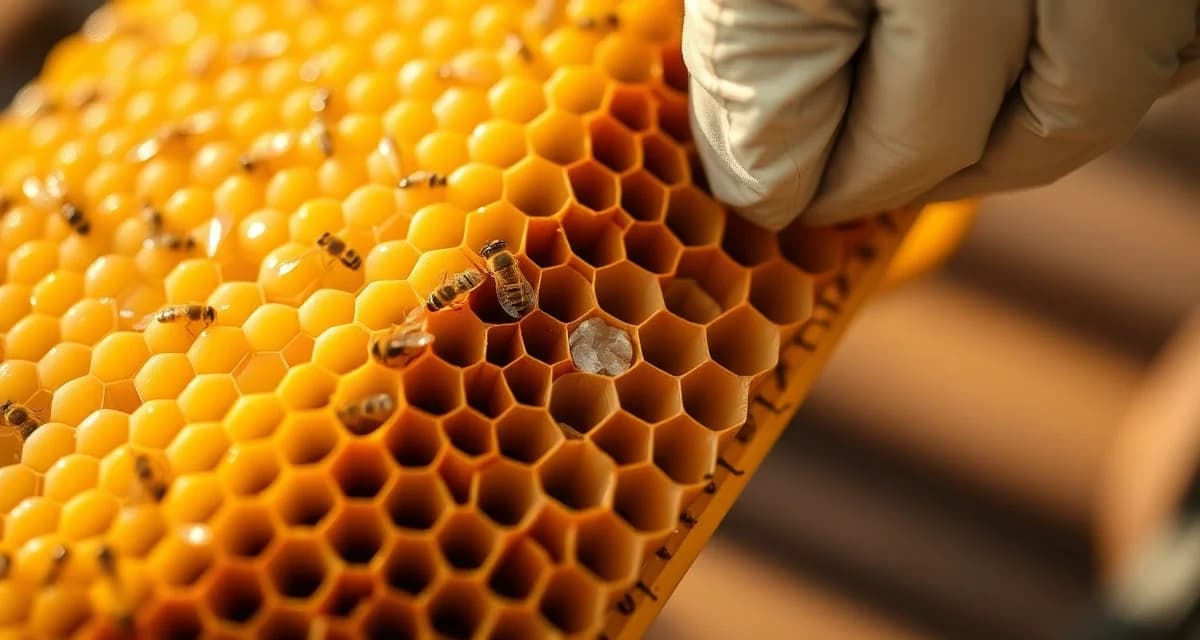
Drone Brood Removal for Varroa Control: Does It Work?
Varroa mites prefer drone brood over worker brood at a ratio of about 8:1. The longer capping period for drone brood (24 days versus 21 for workers) gives mites more reproductive time, and drone cells are slightly larger, which mites may preferentially select. This biology creates an opportunity: you can exploit varroa's preference to trap mites in drone comb, then remove that comb from the colony.
A single drone comb removal can reduce the total mite population by 20-30% when timed correctly. That's meaningful, though not a replacement for chemical treatment when counts are above threshold. Used as part of an integrated pest management approach, drone brood removal is a useful tool that many beekeepers underutilize.
TL;DR
- This guide covers key aspects of drone brood removal for varroa control: does it work?
- Mite monitoring should happen at minimum every 3-4 weeks during active season
- The 2% threshold in spring/summer and 1% in fall are standard action points based on HBHC guidelines
- Always run a pre-treatment and post-treatment mite count to calculate efficacy
- Treatment records including product name, EPA number, dates, and counts are required for state inspection compliance
- VarroaVault stores all monitoring and treatment data with automatic threshold comparison and state export formatting
How Drone Brood Trapping Works
You insert a frame of drone-sized foundation or empty drone comb into the brood nest. The bees draw it out and the queen preferentially lays drone eggs in it. Mites disproportionately enter the drone cells as brood is capped. You wait until the drone comb is fully capped (about 24 days from egg to capping), then remove the frame before any drones emerge.
When you remove the capped frame, you're removing those mites from the population. They're capped inside the cells and can't escape. You can freeze the frame (which kills drones and mites), then return it to the colony later for the bees to clean out, or cut out and dispose of the capped brood.
The cycle repeats: insert fresh drone comb, let mites load it up, remove before emergence.
When Does Drone Brood Removal Work Best?
Drone brood trapping is most effective during the spring and early summer buildup period when drone production is highest and the colony is actively drawing comb. This is when the mite population is building but still manageable, and when removing mites from the reproductive cycle has the biggest downstream impact.
During peak summer, when worker brood volume is massive, the proportional impact of removing one drone frame is smaller. The technique still works but produces a smaller percentage reduction in total mite population.
Drone brood removal is most powerful as a preventive measure, reducing the rate of mite population growth during the season rather than addressing an existing infestation above threshold. If you're already at 3% mites, you need a chemical treatment. Drone brood removal then becomes a complementary tool to slow regrowth after treatment.
Timing the Removal Correctly
This is the step most beekeepers get wrong. You need to remove the capped drone frame before any drones emerge, because once they emerge, the mites emerge with them and ride back into the colony population.
Insert the drone frame and mark the approximate date when you expect it to be fully capped with drone pupae. Drone development is 24 days from egg to emergence. Worker bees cap drone cells around day 10-11. So after insertion, you're looking at about 10-11 days to capping, then another 13-14 days before emergence.
The removal window is the approximately 13-day period between full capping (around day 10-11 post-laying) and emergence (around day 24 post-laying). Don't cut it close. Remove by day 20 at the latest to give yourself margin.
VarroaVault's drone frame insertion and removal tracking shows mite load reduction impact in your count trend graph. When you log a drone frame insertion date, the platform calculates the recommended removal date and sends a reminder before the emergence window.
Combining Drone Removal with Your Regular Program
Drone brood removal works well alongside chemical treatments rather than instead of them. A reasonable integrated approach:
- Insert drone frames in early spring at the start of the buildup season
- Remove every 3-4 weeks (insert, let cap, remove, insert fresh frame)
- Monitor monthly and treat with registered products when counts cross threshold
- Use the drone removal data in VarroaVault to track its contribution to your mite management
Comparing your count trends between seasons with and without drone brood removal helps quantify the actual impact in your apiary. Many beekeepers find 2-4 drone frame removals per season keep peak season mite counts 0.5-1% lower than they would otherwise reach.
Practical Tips
Use green drone foundation or a drone-sized frame. Bees draw drone comb more consistently on drone-sized cells than on standard worker foundation. You can purchase dedicated green-colored drone frames that are easy to identify at a glance.
Place the drone frame at the edge of the brood nest. The queen will find it more readily when it's adjacent to active brood rather than on the outside edge of the hive.
Keep good records. Logging frame insertion and removal dates in VarroaVault's mite count tracking app alongside your regular alcohol wash counts lets you see whether drone removal is having a measurable impact on your trend data.
Don't skip months. An inserted drone frame you forgot about for 5 weeks hatched out and released all those mites back into the colony. Scheduled removal reminders prevent this.
Integrate this technique with your full pest management approach using the integrated pest management for bees framework.
Does Drone Brood Removal Replace Chemical Treatment?
Honest answer: no, not for most beekeepers in most situations. Drone brood removal is a useful tool that reduces mite population growth rate and can help extend the interval between chemical treatments in operations that are managing proactively. But once mite loads are above threshold, chemical treatment remains the fastest and most effective intervention.
Think of drone brood removal as the kind of regular maintenance that keeps you from needing emergency repairs. It's complementary to your monitoring program, not a substitute for it.
Frequently Asked Questions
How does drone brood removal reduce varroa?
Varroa mites prefer to reproduce in drone brood over worker brood at a ratio of about 8:1. By inserting drone comb frames into the brood nest, you attract disproportionate numbers of mites to reproduce in those cells. When the drone comb is fully capped with developing drones and mites, you remove it before any adults emerge. The mites capped inside the removed frame are eliminated. A single well-timed drone comb removal can reduce the total mite population by 20-30%. The key is removing the frame before the 24-day drone development period completes and adults emerge.
How often should I insert and remove drone comb?
For a continuous drone brood trapping program during the active season, cycle every 3-4 weeks: insert fresh drone comb, let it fill and cap (about 10-11 days to full capping), then remove by day 20-21 post-laying before any drones emerge. Multiple cycles through spring and summer produce compounding mite reduction. The technique is most effective during spring buildup when drone production is highest. In midsummer with very high worker brood volumes, the proportional impact per frame decreases but the technique remains worthwhile.
How do I log drone comb removal in VarroaVault?
In VarroaVault's hive events log, record drone frame insertion with the date and colony. The platform calculates the recommended removal window based on the 24-day drone development timeline and sends a reminder when the frame should be removed. When you remove the frame, log the removal date and estimated number of capped cells. Over time, VarroaVault's mite count trend graph shows whether your count trajectory during drone removal periods differs from periods without drone trapping, helping you quantify the technique's impact in your specific operation.
How do I know if my varroa treatment is working?
Run a mite count 2-4 weeks after the treatment ends and compare it to your pre-treatment count. The efficacy formula is: ((pre-count - post-count) / pre-count) x 100. A result above 90% indicates effective treatment. Results below 80% should trigger investigation for possible resistance, application error, or reinfestation. Log both counts in VarroaVault to track efficacy trends across treatment cycles.
How often should I check mite levels in my hives?
At minimum, once per month (every 3-4 weeks) during the active season. Increase to every 2 weeks when counts are near threshold or after a treatment to verify it worked. In fall, monitoring frequency matters most because the window to treat before winter bees are raised is narrow. VarroaVault's monitoring reminders can be set to your preferred interval for each apiary.
What records should I keep for varroa management?
Each record should include: date of count or treatment, hive identifier, monitoring method used, number of bees sampled, mites counted, infestation percentage, treatment product name and EPA registration number, dose applied, treatment start and end dates, and PHI end date. State apiarists typically expect this level of detail during inspections. VarroaVault captures all of these fields in a single log entry.
What is Drone Brood Removal for Varroa Control: Does It Work??
Drone brood removal is a mechanical varroa management technique that exploits the mite's strong preference for drone cells. Because varroa reproduces in drone brood at roughly 8 times the rate of worker brood, beekeepers insert a drone-sized foundation frame, allow the queen to lay in it, wait for capping, then remove and freeze the comb. A single well-timed removal can reduce the colony's total mite population by 20–30%, making it a meaningful tool in an integrated pest management program.
How much does Drone Brood Removal for Varroa Control: Does It Work? cost?
Drone brood removal is essentially free beyond the cost of a standard drone-sized comb or frame insert, which typically runs $2–$8. There are no chemical inputs, no EPA-registered product purchases, and no applicator fees. The main investment is time—inspecting the hive, timing the removal correctly, and maintaining a rotation of combs. Compared to oxalic acid, Apivar, or other treatments, it is one of the lowest-cost varroa interventions available to hobby and commercial beekeepers alike.
How does Drone Brood Removal for Varroa Control: Does It Work? work?
After inserting a drone comb frame, the queen preferentially lays unfertilized eggs in the larger drone-sized cells. Varroa mites, attracted to drone brood at an 8:1 ratio over worker brood, enter those cells just before capping. The drone brood is capped for approximately 24 days—longer than worker brood—giving mites more reproductive time inside. Before those mites can emerge, the beekeeper removes the capped frame, freezes it to kill mites and larvae, then reinserts the empty drawn comb to repeat the cycle.
What are the benefits of Drone Brood Removal for Varroa Control: Does It Work??
Drone brood removal offers several advantages: it requires no chemical inputs, leaves no residue in wax or honey, and can be integrated into any management style including organic operations. It physically removes mites from the colony rather than just suppressing them, contributing a measurable 20–30% reduction in mite load per cycle. It also reduces drone population pressure, which can be beneficial in overcrowded colonies. When combined with regular mite monitoring and threshold-based treatment decisions, it meaningfully extends the window before chemical intervention is required.
Who needs Drone Brood Removal for Varroa Control: Does It Work??
Drone brood removal is best suited for beekeepers who monitor mite levels regularly and want to reduce mite populations before reaching action thresholds—2% in spring and summer, 1% in fall per HBHC guidelines. It works well for those preferring low-chemical or treatment-free approaches, hobbyists with small apiaries, and any beekeeper using integrated pest management. It is not a standalone solution for colonies already above threshold; those require approved chemical treatment. VarroaVault users can track removal cycles alongside mite counts to measure cumulative efficacy over the season.
Related Articles
Sources
- American Beekeeping Federation (ABF)
- USDA ARS Bee Research Laboratory
- Honey Bee Health Coalition
- Penn State Extension Apiculture Program
- Project Apis m.
Get Started with VarroaVault
The information in this guide is most useful when you have your own mite count data to apply it to. VarroaVault stores every count, flags threshold crossings automatically, and builds the treatment history you need for state inspections and effective management decisions. See pricing and free tools at varroavault.com.