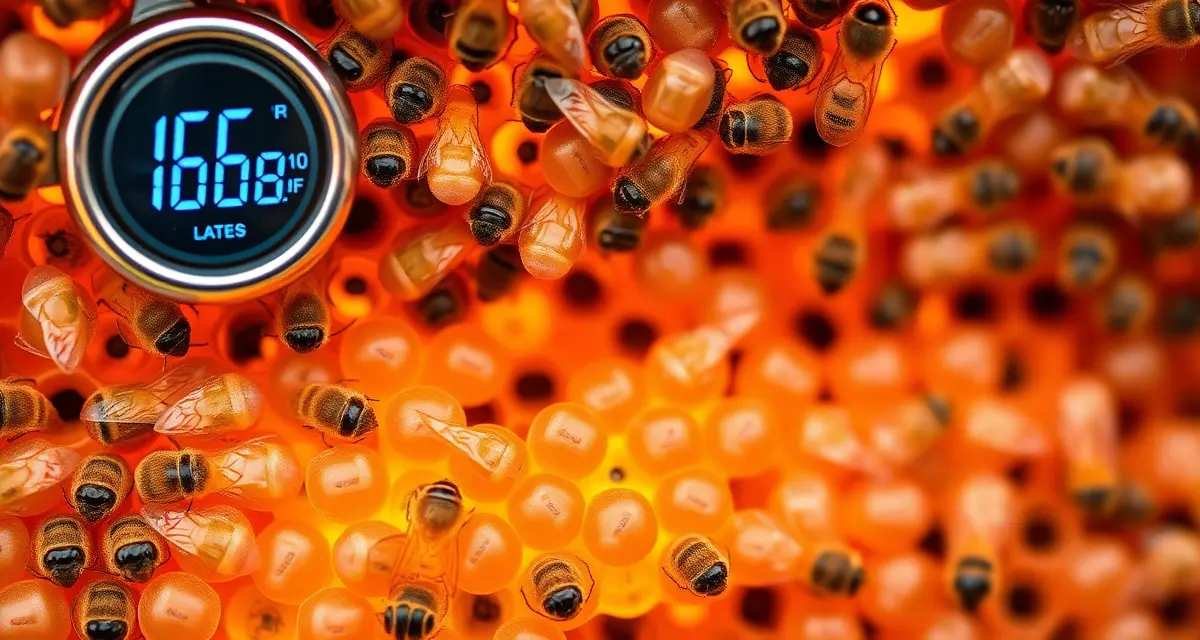
Varroa Heat Treatment: Thermosolar Hive and Other Thermal Methods
Thermal treatment kills varroa mites in capped brood by raising the hive temperature to 106-108°F. Varroa mites die at temperatures that honey bee pupae can survive. That narrow window is the entire basis of heat treatment: find the temperature that's lethal to mites but not to bees and maintain it long enough to kill effectively.
Thermal treatment at 107°F for 3 hours achieves 95%+ varroa kill efficacy in research studies without chemical residues. For beekeepers pursuing organic certification or seeking a completely residue-free option, thermal treatment is a genuinely useful tool, though its practical implementation has significant constraints.
TL;DR
- This guide covers key aspects of varroa heat treatment: thermosolar hive and other thermal me
- Mite monitoring should happen at minimum every 3-4 weeks during active season
- The 2% threshold in spring/summer and 1% in fall are standard action points based on HBHC guidelines
- Always run a pre-treatment and post-treatment mite count to calculate efficacy
- Treatment records including product name, EPA number, dates, and counts are required for state inspection compliance
- VarroaVault stores all monitoring and treatment data with automatic threshold comparison and state export formatting
The Temperature Window
Honey bee pupae can tolerate temperatures up to about 109-111°F for short periods. Varroa mites begin dying at around 106°F and are killed reliably at 107-108°F within 3 hours. Maintaining 107-108°F in the brood nest for 3 hours kills mites in capped brood without significant bee brood mortality.
This sounds more controllable than it is in practice. Hive temperature is not uniform. The brood nest center may reach 107°F while the edges are cooler. Queens may be damaged by elevated temperatures. The thermal mass of the hive, the external temperature, and the bee population density all affect how quickly and how evenly the target temperature is achieved.
Commercial thermal treatment systems are designed to solve these distribution problems. The Thermosolar Hive uses solar radiation directed into the hive through a glass top and controlled reflectors to achieve uniform heating. The Varrox Eddy system uses an electrical heating element. Both aim to maintain the target temperature across the entire brood area for the required duration.
Thermosolar Hive
The Thermosolar Hive is a purpose-built thermal treatment system that uses solar energy to heat the hive to varroa-lethal temperatures. The system requires:
- Full sun for several hours during the treatment
- A thermometer to monitor actual temperatures achieved
- Careful timing to avoid overheating
- Multiple treatment cycles during the active season
One of the key advantages of the Thermosolar is that it works with capped brood present. Since the temperature kills mites in brood cells, you don't need a broodless period. This makes it useful during the main brood season when other treatment options are limited.
The limitation is significant: you need full sun, appropriate outdoor temperatures (not too hot, or ambient conditions become limiting), and the specific equipment. For beekeepers in consistently sunny climates, it's a viable option. For beekeepers in cloudy northern regions with short treatment windows, solar-dependent treatment has obvious constraints.
Varrox Eddy and Electrical Thermal Systems
Electrical thermal systems like the Varrox Eddy don't depend on solar conditions. They use a controlled heating element to raise hive temperature. This makes them more predictable and usable in variable weather conditions.
The Varrox Eddy and similar systems are more common in Europe, where thermal treatment has been used longer and equipment suppliers are more established. In the US, these systems are available from specialty beekeeping suppliers but are not yet as mainstream as chemical treatments.
Practical Considerations for Thermal Treatment
Equipment cost: Both Thermosolar and electrical thermal systems represent a significant initial investment, ranging from a few hundred to several hundred dollars depending on the system. For hobbyists with a few hives, the cost per hive may not be justified compared to chemical treatments costing a few dollars per application.
Treatment time: A 3-hour treatment window is longer than most chemical applications. Planning a thermal treatment requires appropriate weather conditions and scheduling.
Temperature monitoring: You need a reliable in-hive thermometer to confirm you're achieving the target temperature and not overshooting. Undershooting means poor efficacy; overshooting risks queen damage and brood mortality.
treatment rotation: Even with thermal treatment, resistance management and treatment rotation principles apply. Thermal treatment is an excellent component of a rotation program alongside chemical options.
Logging Thermal Treatments in VarroaVault
VarroaVault's thermal treatment log captures the temperature reached during treatment, the duration maintained, and the scheduled post-treatment count date. VarroaVault also uses the treatment rotation planning data to include thermal treatment in your annual rotation assessment.
Logging temperature reached during thermal treatment is particularly important because it's the variable most likely to affect efficacy. A treatment that reached 105°F instead of 107°F may have partial efficacy. The [oxalic acid vaporization calculator](/oxalic-acid-vaporization-calculator) provides a useful comparison reference for other chemical-free treatment options alongside thermal methods.
Frequently Asked Questions
How does thermal varroa treatment work?
Thermal treatment raises the hive temperature to 106-108°F and maintains it for 3 hours. At this temperature, varroa mites die from heat stress while honey bee pupae survive. The treatment affects both phoretic mites on adult bees and mites inside capped brood cells, unlike oxalic acid which doesn't penetrate capped cells. Commercial systems (Thermosolar Hive, Varrox Eddy) control the temperature to maintain the mite-lethal but bee-safe range.
What temperature kills varroa mites?
Varroa mites begin dying at approximately 106°F. Reliable kill at this temperature requires 3+ hours of sustained heat. At 107-108°F, the treatment is both more reliable and faster. Above 110-111°F, honey bee pupae begin experiencing mortality, which defines the upper limit of the safe treatment window.
How do I log a thermal treatment in VarroaVault?
In your hive record, tap "Log Treatment" and select "Thermal Treatment" from the treatment type menu. Enter the system used (Thermosolar, Varrox Eddy, or other), the maximum temperature reached, the duration maintained at target temperature, and the date. VarroaVault schedules a post-treatment count reminder at 3-4 weeks and includes the thermal treatment in your colony's rotation history.
How do I know if my varroa treatment is working?
Run a mite count 2-4 weeks after the treatment ends and compare it to your pre-treatment count. The efficacy formula is: ((pre-count - post-count) / pre-count) x 100. A result above 90% indicates effective treatment. Results below 80% should trigger investigation for possible resistance, application error, or reinfestation. Log both counts in VarroaVault to track efficacy trends across treatment cycles.
How often should I check mite levels in my hives?
At minimum, once per month (every 3-4 weeks) during the active season. Increase to every 2 weeks when counts are near threshold or after a treatment to verify it worked. In fall, monitoring frequency matters most because the window to treat before winter bees are raised is narrow. VarroaVault's monitoring reminders can be set to your preferred interval for each apiary.
What records should I keep for varroa management?
Each record should include: date of count or treatment, hive identifier, monitoring method used, number of bees sampled, mites counted, infestation percentage, treatment product name and EPA registration number, dose applied, treatment start and end dates, and PHI end date. State apiarists typically expect this level of detail during inspections. VarroaVault captures all of these fields in a single log entry.
What is Varroa Heat Treatment: Thermosolar Hive and Other Thermal Methods?
Varroa heat treatment is a chemical-free mite control method that raises hive temperature to 106-108 degrees Fahrenheit for approximately 3 hours, killing varroa mites while honey bee pupae survive. The method exploits the fact that varroa mites have a lower thermal tolerance than developing bees. Commercial systems include the Thermosolar Hive, which uses solar radiation through a glass top, and the Varrox Eddy, which uses an electrical heating element. Research shows 95% or higher mite kill rates at 107 degrees Fahrenheit sustained for 3 hours, with no chemical residues left in wax or honey.
How much does Varroa Heat Treatment: Thermosolar Hive and Other Thermal Methods cost?
Thermal treatment systems represent a higher upfront investment than chemical treatments. Equipment ranges from a few hundred to several hundred dollars depending on the system. The Thermosolar Hive requires the specialized hive body itself, while the Varrox Eddy is a standalone heating unit. Compare this to chemical treatments costing a few dollars per application. However, thermal treatment has zero ongoing chemical costs, no resistance development risk, and leaves no residues. For hobbyists with fewer than 5 hives, the per-hive equipment cost may be harder to justify. For operations pursuing organic certification, the premium is often worthwhile.
How does Varroa Heat Treatment: Thermosolar Hive and Other Thermal Methods work?
The treatment raises the internal hive temperature to 107-108 degrees Fahrenheit and maintains it for 3 hours. At this temperature, varroa mites die from heat stress. Honey bee pupae can tolerate temperatures up to 109-111 degrees Fahrenheit for short periods, creating a narrow but effective treatment window. The Thermosolar Hive uses solar energy directed through glass panels and reflectors to heat uniformly. Electrical systems like the Varrox Eddy use controlled heating elements independent of weather conditions. Both require temperature monitoring with an in-hive thermometer to ensure the target range is maintained without overshooting into the zone that damages bee brood or queens.
What are the benefits of Varroa Heat Treatment: Thermosolar Hive and Other Thermal Methods?
Thermal treatment produces zero chemical residues in wax, honey, or propolis, making it ideal for organic and residue-free operations. Unlike oxalic acid, heat penetrates capped brood cells and kills mites during the reproductive phase, eliminating the need for a broodless period. There is no risk of mite resistance developing against a physical treatment method. Heat treatment can be used during the main brood season when other treatment options are limited by honey supers or temperature requirements. VarroaVault logs thermal treatment data including temperature reached and duration, building your treatment rotation history for state inspection compliance.
Who needs Varroa Heat Treatment: Thermosolar Hive and Other Thermal Methods?
Beekeepers pursuing organic certification or residue-free honey production benefit most from thermal treatment since it leaves absolutely no chemical traces. Keepers in areas where varroa has developed resistance to common chemical treatments gain an alternative that cannot be resisted. Hobbyists who prefer chemical-free management methods and are willing to invest in equipment and treatment time find thermal treatment aligns with their philosophy. Operations in sunny climates get the most value from Thermosolar systems specifically. Any beekeeper building a treatment rotation program benefits from adding thermal treatment as a non-chemical rotation option alongside oxalic acid, formic acid, or synthetic miticides.
Related Articles
Sources
- American Beekeeping Federation (ABF)
- USDA ARS Bee Research Laboratory
- Honey Bee Health Coalition
- Penn State Extension Apiculture Program
- Project Apis m.
Get Started with VarroaVault
The information in this guide is most useful when you have your own mite count data to apply it to. VarroaVault stores every count, flags threshold crossings automatically, and builds the treatment history you need for state inspections and effective management decisions. See pricing and free tools at varroavault.com.