Varroa Treatment Timing and the Brood Cycle: Why Days Matter
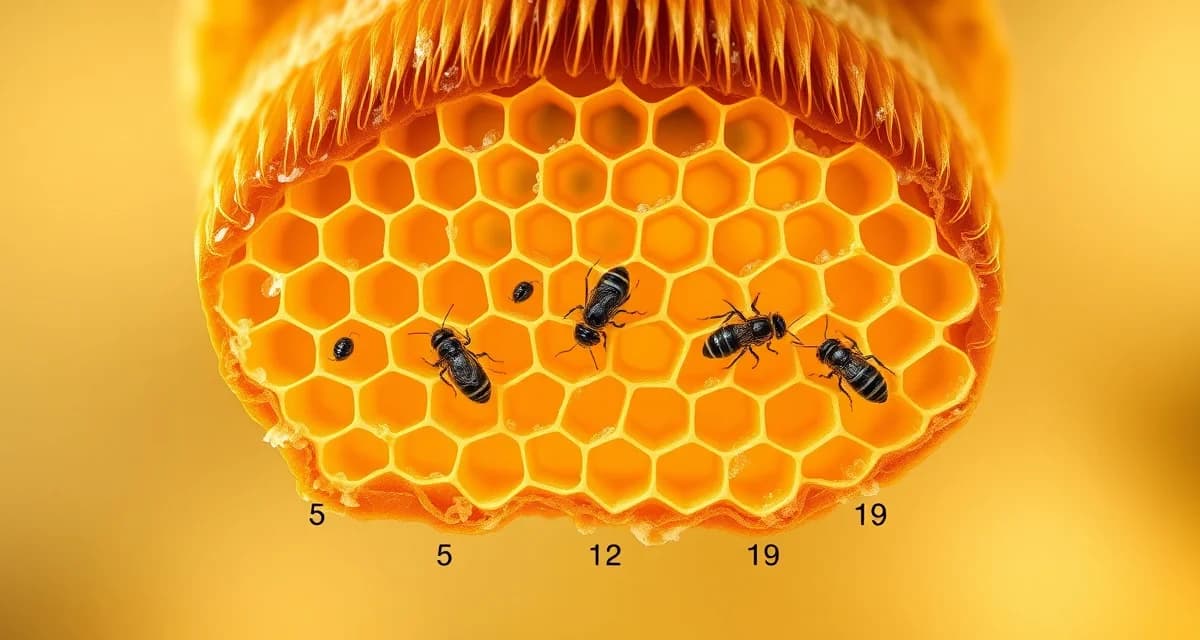
Applying OA vaporization on days 5, 12, and 19 after queen removal matches mite emergence from all capped cells. That precision isn't arbitrary -- it comes directly from the biology of the worker bee brood cycle and how varroa reproduces inside it.
Most beekeepers know that oxalic acid only kills phoretic mites (those riding on adult bees) and can't reach mites sealed inside capped brood. What's less well understood is how you can use that limitation strategically: if you time your treatments to the brood cycle, you can expose nearly all mites in repeated waves as they emerge from cells.
TL;DR
- Treatment decisions should always be triggered by a mite count result, not a fixed calendar date
- Different treatments have different temperature requirements, PHI restrictions, and brood penetration capabilities
- Always run a post-treatment count 2-4 weeks after treatment ends to calculate efficacy
- Efficacy below 80% warrants investigation -- possible resistance, application error, or reinfestation
- Rotate treatment chemistry to prevent resistance buildup across successive cycles
- VarroaVault logs treatment events, calculates efficacy, and flags when rotation is recommended
The 21-Day Brood Cycle Basics
Worker bee brood development takes approximately 21 days from egg to emergence:
- Days 1-3: Egg stage (uncapped)
- Days 4-8: Larval stage (open brood, still accessible but no mites reproducing yet)
- Days 9-21: Pupal stage (capped, where mite reproduction occurs)
Varroa mites enter cells just before capping (around day 8-9 of larval development) and seal themselves in with the brood. The female mite reproduces inside the capped cell, producing 1-2 viable offspring per reproductive cycle. The mites -- mother plus offspring -- emerge when the adult bee hatches around day 21.
The key insight: mites inside capped cells are completely protected from contact treatments. OA, whether dribbled or vaporized, cannot penetrate the wax cap. This is the core limitation that drives treatment timing strategy.
Why Extended OA Vaporization Protocols Work
The extended vaporization protocol (3 treatments at 5-7 day intervals) works because it matches the emergence timeline from capped cells. Here's the logic:
When you apply the first vaporization, you kill all phoretic mites visible on adult bees. But mites sealed in capped cells that were capped on days 1-12 are still protected.
Over the next 5-7 days, some of those mites complete development and emerge with their host bees. They're now phoretic -- and vulnerable to the second vaporization.
Another 5-7 days later, more mites emerge. The third vaporization catches them.
A standard series of 3 treatments at 5-day intervals covers approximately 15 days of brood emergence -- catching the vast majority of mites that were sealed in cells on the day of the first treatment.
This is why the brood cycle calculator in VarroaVault shows the optimal OA vaporization schedule relative to your last queen-seen date. If you know when the queen last laid, you know when capped brood will start emerging, and you can time your vaporization series to align with that emergence window.
Brood Break Timing: The Clean Slate Approach
The brood break approach to OA treatment takes the logic one step further. Instead of chasing mites through multiple vaporization treatments, you create a broodless period by temporarily removing or caging the queen. When the queen is absent for 22+ days, all existing brood emerges and there's no new brood capping. Every mite in the colony is phoretic. One OA dribble or single vaporization achieves near-100% efficacy.
The timing for maximum effectiveness:
- Identify or introduce a broodless period (natural or induced)
- Wait until all existing capped brood has emerged (minimum 21 days after last capping)
- Apply OA dribble or single vaporization
- All mites are exposed
Applying OA vaporization on days 5, 12, and 19 after queen removal represents a slightly different approach: it doesn't require waiting for all brood to emerge, but instead intercepts mites in waves as they emerge from remaining brood. This is faster -- you can complete the series in 19 days -- while still achieving high efficacy on the residual brood population.
Treatment Timing for Synthetic Acaricides
Synthetic acaricide strips (Apivar, Apistan) use a different mechanism. Rather than targeting mites directly on adult bees in short pulses, strips work by continuous slow release over 42-56 days. Bees contact the strip and pick up acaricide residue that transfers to mites during normal bee-to-bee contact.
The brood cycle is still relevant for strips, but in a different way. Strips work because they remain active long enough to expose mites through multiple brood emergence cycles. A mite that emerges from capped brood on week 3 of the treatment period is exposed to the same strip that was killing phoretic mites in week 1. The long treatment window is the mechanism that compensates for the lack of brood penetration.
For strips, timing is more about ensuring you're within the correct season window and removing strips before honey supers go on than about matching individual brood cycle events.
Formic Acid and Brood Penetration
Formic acid (MAQS and Formic Pro) is the one treatment that does penetrate capped brood cells. Formic acid vapor diffuses through the wax cap and reaches mites inside reproductive cells. This is why formic acid is particularly valuable for mid-season treatment when brood is always present -- it targets both phoretic mites and mites in the reproductive stage simultaneously.
The brood cycle is still relevant for formic acid timing in one respect: efficacy is higher when applied early in the capping period (when recently sealed cells are still gas-permeable) than when applied to fully developed capped cells. But the practical implication is minor -- the 7-10 day formic acid treatment covers enough of the capping and emergence timeline to achieve good efficacy regardless of exactly when you apply it.
Setting Up the Brood Cycle Calculator in VarroaVault
VarroaVault's [oxalic acid vaporization calculator](/oxalic-acid-vaporization-calculator) uses your last queen-seen date to calculate the optimal schedule for an extended vaporization series. Input the date you last observed the queen or confirmed active egg laying, and the calculator shows you:
- When existing capped brood will start emerging
- The optimal dates for a 3-treatment vaporization series
- The expected completion of brood emergence if you're managing a brood break
This removes the mental arithmetic from brood cycle timing and ensures your treatment schedule is biologically appropriate rather than based on a generic "every 5 days" rule.
Frequently Asked Questions
How does the brood cycle affect varroa treatment timing?
Varroa reproduces inside capped brood cells from day 9-21 of worker bee development, protected from contact treatments during this phase. OA and other contact treatments only kill phoretic mites on adult bees. This means timed repeated treatments -- applied in multiple applications across the emergence timeline -- are necessary to achieve high efficacy when brood is present. A single treatment catches current phoretic mites but misses all the mites sealed in cells on that day. Multiple treatments spaced 5-7 days apart catch successive waves of emerging mites.
What is the optimal timing for OA vaporization relative to the brood cycle?
For a brood-present colony, the standard extended protocol is 3 vaporizations at 5-day intervals. If you know when capping began (from a last-queen-seen date), you can time the first vaporization to when early-sealed cells start emerging, maximizing the proportion of mites exposed across the series. For a queen-removed broodless approach, applying vaporizations on days 5, 12, and 19 after queen removal catches mites as they emerge from residual brood before the colony is fully broodless.
Does VarroaVault calculate treatment timing based on the brood cycle?
Yes. The brood cycle calculator in VarroaVault takes your last queen-seen date and calculates the optimal vaporization schedule for your specific situation. For brood-present colonies, it generates dates for a 3-treatment series aligned with your brood emergence timeline. For brood-break protocols, it shows when to expect full broodlessness and when a single high-efficacy dribble or vaporization can be applied. The schedule exports as calendar reminders that appear in your VarroaVault treatment calendar.
How do I know if my varroa treatment is working?
Run a mite count 2-4 weeks after the treatment ends and compare it to your pre-treatment count. The efficacy formula is: ((pre-count - post-count) / pre-count) x 100. A result above 90% indicates effective treatment. Results below 80% should trigger investigation for possible resistance, application error, or reinfestation. Log both counts in VarroaVault to track efficacy trends across treatment cycles.
How often should I check mite levels in my hives?
At minimum, once per month (every 3-4 weeks) during the active season. Increase to every 2 weeks when counts are near threshold or after a treatment to verify it worked. In fall, monitoring frequency matters most because the window to treat before winter bees are raised is narrow. VarroaVault's monitoring reminders can be set to your preferred interval for each apiary.
What records should I keep for varroa management?
Each record should include: date of count or treatment, hive identifier, monitoring method used, number of bees sampled, mites counted, infestation percentage, treatment product name and EPA registration number, dose applied, treatment start and end dates, and PHI end date. State apiarists typically expect this level of detail during inspections. VarroaVault captures all of these fields in a single log entry.
What is Varroa Treatment Timing and the Brood Cycle: Why Days Matter?
Varroa Treatment Timing and the Brood Cycle: Why Days Matter is a practical guide explaining how to synchronize oxalic acid vaporization treatments with the 21-day worker bee brood cycle. Because oxalic acid only kills phoretic mites on adult bees—not mites sealed inside capped brood—strategic timing after queen removal (days 5, 12, and 19) lets you catch emerging mites in successive waves, dramatically improving overall treatment efficacy.
How much does Varroa Treatment Timing and the Brood Cycle: Why Days Matter cost?
The treatment timing strategy itself costs nothing beyond your existing oxalic acid supplies and vaporizer. However, effectiveness depends on accurate mite counts before and after treatment. VarroaVault offers tools to log treatment events, track brood cycle windows, calculate efficacy, and flag when chemistry rotation is recommended—helping you get more value from treatments you're already paying for.
How does Varroa Treatment Timing and the Brood Cycle: Why Days Matter work?
After removing the queen to halt new capped brood, you apply oxalic acid vapor on days 5, 12, and 19. Each application targets mites that have just emerged from cells along with phoretic mites on adult bees. By the third treatment, virtually all brood that was capped at the start has emerged, exposing mites that would otherwise be shielded. A follow-up mite count 2–4 weeks later confirms efficacy.
What are the benefits of Varroa Treatment Timing and the Brood Cycle: Why Days Matter?
Precision timing dramatically increases treatment efficacy compared to single or random applications. Synchronizing treatments to the brood cycle means fewer mites survive to reproduce, reducing reinfestation pressure on your colony. It also helps you use oxalic acid—a low-residue, bee-safe option—more effectively, potentially reducing the total number of treatments needed and lowering the risk of resistance developing over successive cycles.
Who needs Varroa Treatment Timing and the Brood Cycle: Why Days Matter?
Any beekeeper managing colonies with active varroa pressure benefits from understanding brood-cycle-based treatment timing—especially those who have seen poor results from single treatments or suspect reinfestation. It's particularly relevant for beekeepers preparing colonies for winter, managing apiaries with high mite loads, or trying to reduce chemical inputs while maintaining control. The approach suits both hobbyists and commercial operations using OA vaporization.
Related Articles
Sources
- American Beekeeping Federation (ABF)
- USDA ARS Bee Research Laboratory
- Honey Bee Health Coalition
- Penn State Extension Apiculture Program
- Project Apis m.
Get Started with VarroaVault
The information in this guide is most useful when you have your own mite count data to apply it to. VarroaVault stores every count, flags threshold crossings automatically, and builds the treatment history you need for state inspections and effective management decisions. See pricing and free tools at varroavault.com.