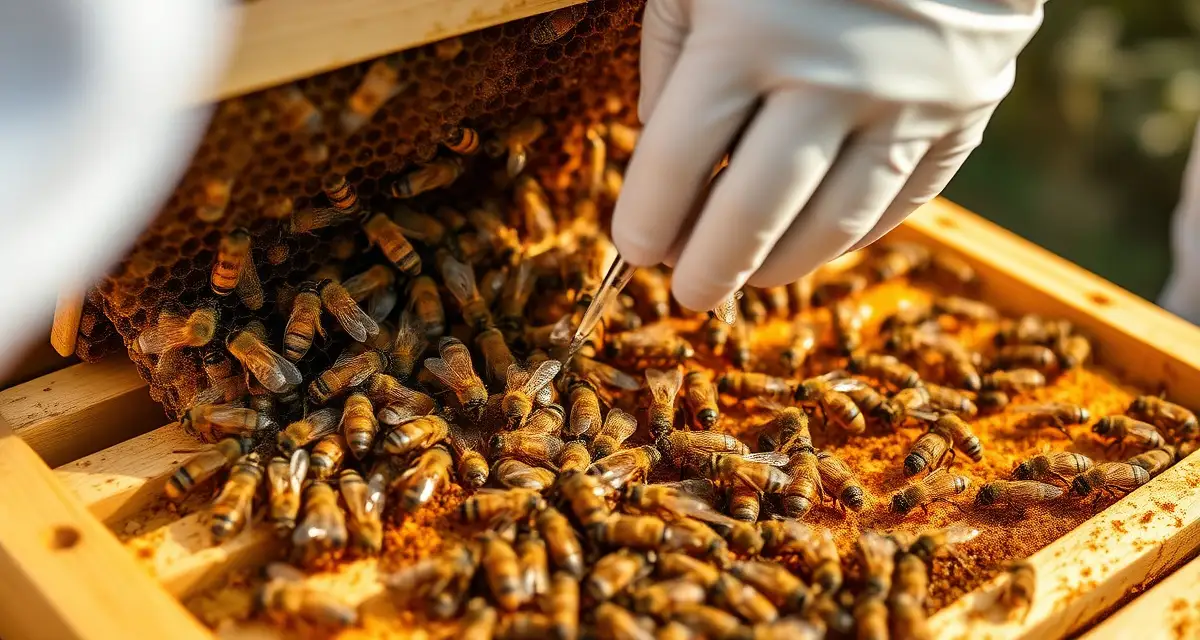
Varroa in Flow Hives: Treatment and PHI for Flow Hive Owners
Flow Hive owners face the same varroa pressures as every other beekeeper. The Flow Hive honey extraction system doesn't protect your bees from mites, and it introduces one specific complication that conventional hive owners don't have: the Flow super is always on. Because you can harvest honey through the side without opening the hive, the temptation to leave supers on through treatment periods is real. That's a PHI problem.
Flow Hive owners are more likely to harvest honey without PHI checks because the extraction process is so frictionless. Tap, drain, done. That convenience is great until your honey carries treatment residues that shouldn't be there.
TL;DR
- This guide covers key aspects of varroa in flow hives: treatment and phi for flow hive owners
- Mite monitoring should happen at minimum every 3-4 weeks during active season
- The 2% threshold in spring/summer and 1% in fall are standard action points based on HBHC guidelines
- Always run a pre-treatment and post-treatment mite count to calculate efficacy
- Treatment records including product name, EPA number, dates, and counts are required for state inspection compliance
- VarroaVault stores all monitoring and treatment data with automatic threshold comparison and state export formatting
Understanding PHI With a Flow Super
PHI (pre-harvest interval) is the required waiting period between applying a treatment and harvesting honey. It's a registered legal requirement for every licensed varroa treatment. Violating it means your honey is adulterated, even if it looks and tastes fine.
With a conventional hive, PHI compliance is physically prompted by the requirement to remove supers before treatment. You can't put Apivar strips in a hive with a honey super and not know there's a super present. With a Flow Hive, the super is integrated into the box. You can treat without removing it if you're not paying attention, or you can harvest before PHI clears without thinking about it.
Here's a quick reference on treatment PHI windows:
- Apivar (amitraz strips): 56-day PHI. Remove or do not harvest from Flow super for 56 days after application.
- MAQS/Formic Pro (formic acid): 0-day PHI. You can harvest the same day, but supers must be off during treatment application.
- Oxalic acid (dribble or vaporization): 0-day PHI. Treat without removing the super, harvest the same day if needed.
The 0-day PHI treatments are your most Flow-Hive-friendly options. OA in particular is safe to apply whether or not the super is in harvest position.
Setting Up PHI Tracking in VarroaVault
VarroaVault's Flow Hive profile adds an extra PHI confirmation step before honey extraction. When you log a treatment for a Flow Hive, the system sets the PHI clearance date and activates a warning on the hive's dashboard. If you go to log a harvest event and the PHI hasn't cleared, you see a warning flag.
This isn't foolproof because you can still turn the tap without logging in the app. But if you use VarroaVault consistently, the Flow Hive PHI check becomes part of your harvest workflow rather than an afterthought.
The pre-harvest interval tracker shows PHI clearance dates for every hive in your operation at a glance. You'll see which hives are clear for harvest and which ones still have days remaining on their PHI clock.
Monitoring Varroa in a Flow Hive
Monitoring is no different in a Flow Hive than in any other Langstroth-based system. The Flow Hive typically runs a standard Langstroth brood box beneath the Flow super box. Your monitoring happens in the brood box.
alcohol wash from the brood box: the best approach. Pull nurse bees from the brood-pollen frame interface. Sample 300 bees. Follow standard wash procedure. Calculate your infestation percentage and log it in VarroaVault.
You'll want to monitor at the same frequency as any other hive: monthly is a reasonable minimum, every 3-4 weeks during peak summer season.
Treatment Options Compatible With the Flow System
Oxalic acid (dribble or vaporization): Most compatible. Zero PHI means no harvest restriction. Apply in the brood box area. OA vapor or dribble applied to the brood cluster doesn't contaminate honey stored in the Flow frames above. Follow up with a post-treatment count at 3-4 weeks.
MAQS/Formic Pro: Zero PHI but must be applied with supers off. You'll need to close the honey gate and not harvest during the treatment period. After treatment ends (7 days for MAQS), you can harvest.
Apivar (amitraz): 56-day PHI. For Flow Hive owners who use Apivar, this means a 56-day no-harvest window. Plan treatments around your harvest calendar. VarroaVault calculates the clearance date when you log the treatment.
The oxalic acid treatment tracker records your OA applications, doses, and post-treatment count results in one place, keeping your treatment history organized across the full OA program.
Frequently Asked Questions
What varroa treatments are safe with a Flow super on?
oxalic acid dribble and vaporization have 0-day PHI and can be applied without removing the Flow super, though the treatment should be directed at the brood box where the bees cluster. MAQS and Formic Pro have 0-day PHI but require that you not harvest during the 7-day treatment period. Apivar has a 56-day PHI and should be treated as a full super-off situation for honey compliance purposes.
How do I track PHI with a Flow Hive?
Log every treatment in VarroaVault when you apply it. The system calculates your PHI clearance date automatically based on the product and application date. The Flow Hive profile adds a PHI confirmation prompt before you log a harvest event. Check the hive dashboard before opening the tap to confirm your PHI is clear.
Does VarroaVault support Flow Hive configurations?
Yes. Select "Flow Hive" when creating a hive profile. VarroaVault adds the PHI confirmation step to the harvest logging workflow, adjusts treatment notes for the integrated super configuration, and stores your count and treatment history with the same threshold alerts and seasonal guidance as any other Langstroth-based hive in your account.
How do I know if my varroa treatment is working?
Run a mite count 2-4 weeks after the treatment ends and compare it to your pre-treatment count. The efficacy formula is: ((pre-count - post-count) / pre-count) x 100. A result above 90% indicates effective treatment. Results below 80% should trigger investigation for possible resistance, application error, or reinfestation. Log both counts in VarroaVault to track efficacy trends across treatment cycles.
How often should I check mite levels in my hives?
At minimum, once per month (every 3-4 weeks) during the active season. Increase to every 2 weeks when counts are near threshold or after a treatment to verify it worked. In fall, monitoring frequency matters most because the window to treat before winter bees are raised is narrow. VarroaVault's monitoring reminders can be set to your preferred interval for each apiary.
What records should I keep for varroa management?
Each record should include: date of count or treatment, hive identifier, monitoring method used, number of bees sampled, mites counted, infestation percentage, treatment product name and EPA registration number, dose applied, treatment start and end dates, and PHI end date. State apiarists typically expect this level of detail during inspections. VarroaVault captures all of these fields in a single log entry.
What is Varroa in Flow Hives: Treatment and PHI for Flow Hive Owners?
Varroa in Flow Hives: Treatment and PHI for Flow Hive Owners is a practical guide addressing the unique varroa management challenges that come with the Flow Hive extraction system. Because Flow Hives allow honey harvesting without removing supers, owners face a heightened risk of ignoring pre-harvest interval (PHI) requirements during treatment periods. This guide covers mite monitoring schedules, treatment thresholds, PHI compliance, and record-keeping requirements specific to Flow Hive setups.
How much does Varroa in Flow Hives: Treatment and PHI for Flow Hive Owners cost?
The guide itself is free educational content provided by VarroaVault. However, VarroaVault's companion app — which stores your mite counts, treatment records, and PHI timelines, and exports data in state-inspection-ready formats — is a separate subscription product. The app automates the tracking work described in this guide, but the core information on treatment timing and PHI compliance is available at no cost.
How does Varroa in Flow Hives: Treatment and PHI for Flow Hive Owners work?
The guide walks Flow Hive owners through a structured mite management process: monitor every 3–4 weeks using alcohol wash or sugar roll, compare results against action thresholds (2% in spring/summer, 1% in fall), select an appropriate treatment, observe the full PHI before harvesting through your Flow tap, then run a post-treatment count to confirm efficacy. Each step is documented to meet state inspection requirements.
What are the benefits of Varroa in Flow Hives: Treatment and PHI for Flow Hive Owners?
The primary benefit is avoiding honey contamination. Flow Hive owners are statistically more likely to harvest during or immediately after treatment because the tap-and-drain process feels low-stakes. This guide enforces PHI discipline, protects your honey's integrity, keeps your colony alive through peak mite pressure, and ensures your treatment records are complete if a state inspector asks. It also helps you build a consistent monitoring cadence rather than reacting to visible collapse.
Who needs Varroa in Flow Hives: Treatment and PHI for Flow Hive Owners?
Any Flow Hive owner who treats their bees for varroa needs this guidance — which is effectively every beekeeper running Flow equipment in North America or Europe. Newer beekeepers drawn to Flow Hives for their convenience are particularly at risk of overlooking PHI requirements. Commercial or sideliner operators running multiple Flow units will also benefit from the record-keeping framework, which scales to any number of hives.
Sources
- American Beekeeping Federation (ABF)
- USDA ARS Bee Research Laboratory
- Honey Bee Health Coalition
- Penn State Extension Apiculture Program
- Project Apis m.
Get Started with VarroaVault
The information in this guide is most useful when you have your own mite count data to apply it to. VarroaVault stores every count, flags threshold crossings automatically, and builds the treatment history you need for state inspections and effective management decisions. See pricing and free tools at varroavault.com.