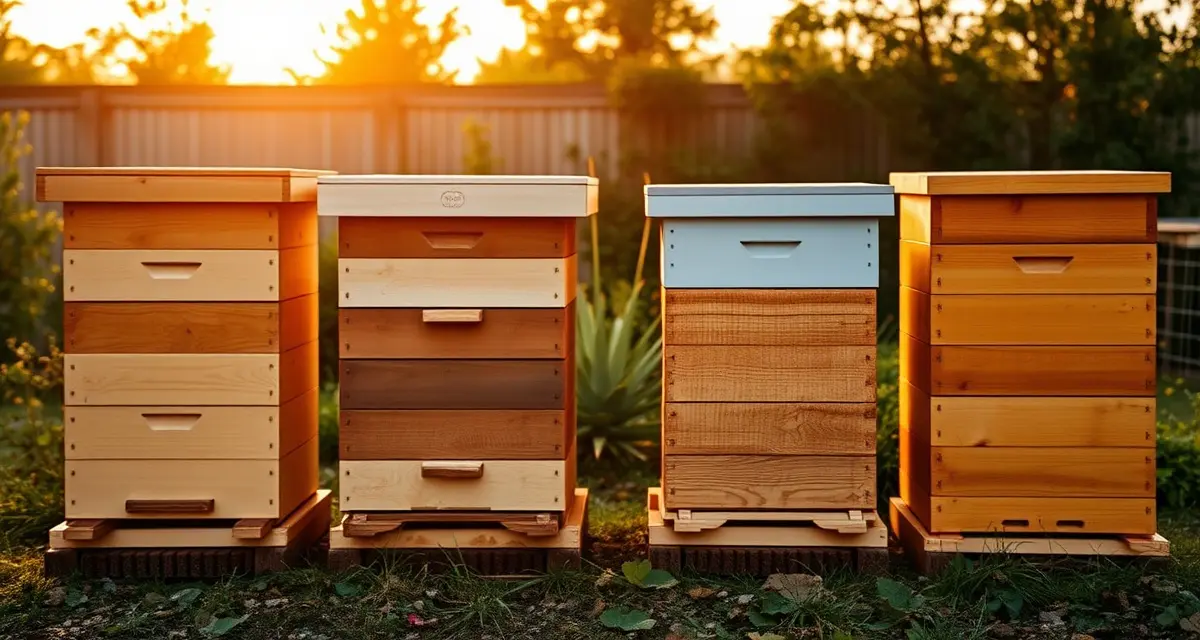
Varroa Treatment by Hive Type: Langstroth vs Top Bar vs Warré vs Flow Hive
OA vaporization in a Langstroth hive requires 1 gram per brood box. Warré hives require dose adjustment for their smaller box volume. The treatment is the same; the dose and application logistics are different. Every hive type has quirks that affect how you apply registered treatments.
The core varroa management approach is the same regardless of hive style: monitor regularly, treat at threshold, track efficacy. But the mechanics of how you apply treatments vary with the hive configuration.
TL;DR
- Treatment decisions should always be triggered by a mite count result, not a fixed calendar date
- Different treatments have different temperature requirements, PHI restrictions, and brood penetration capabilities
- Always run a post-treatment count 2-4 weeks after treatment ends to calculate efficacy
- Efficacy below 80% warrants investigation -- possible resistance, application error, or reinfestation
- Rotate treatment chemistry to prevent resistance buildup across successive cycles
- VarroaVault logs treatment events, calculates efficacy, and flags when rotation is recommended
Langstroth Hives
Langstroth hives are the default configuration that most treatment products are designed around. Dosing guidelines on labels are written for standard 8-frame or 10-frame Langstroth equipment.
OA Vaporization: 1 gram Api-Bioxal per brood box. Two deep brood boxes = 2 grams. One deep plus one medium = use judgment (1.5g is common, but confirm with the label). Introduce vaporizer through the front entrance with reducer installed.
OA Dribble: 5ml of 3.2% solution per seam of bees, up to 50ml total per colony. Count the seams of bees (spaces between frames where bees are clustered), apply 5ml per seam. Don't exceed 50ml regardless of colony size.
Apivar: Two strips per brood box, inserted between frames in the brood area. Two brood boxes = four strips total. Leave in for 42-56 days.
Formic Pro/MAQS: One pad for colonies covering fewer than 6 frames of bees; two pads for colonies covering 6+ frames. Place directly on top bars in the brood area.
Apiguard: Two doses of 50g each, 14 days apart. Place the tray on the top bars directly above the cluster.
Top Bar Hives
Top bar hives present specific challenges because there's no standard brood box unit to base doses on. You're working with a continuous horizontal brood area rather than stacked boxes.
OA Vaporization: Dose based on estimated bee population rather than box count. For a well-populated top bar hive with 10-15 occupied bars, 1-1.5 grams per treatment is typical. Seal the entrance and introduce vapor through a side access point or entrance. The continuous cavity makes vapor distribution generally good, but you need to seal it effectively.
OA Dribble: Apply along the top bar seams where bees are clustered. Count the bee-covered bars and apply 5ml per seam equivalent. Maximum 50ml total.
Apivar: Install strips in the brood area between occupied bars. Two strips is the standard starting point; use the colony size to judge whether one additional strip is warranted. Leave in for 42-56 days.
Formic Pro/MAQS: Can be used in top bar hives but requires care with placement. The hive must be warm enough (above 50°F) and the colony must be large enough. Place pads in the brood area. The elongated cavity can create uneven distribution; monitor for efficacy carefully.
Temperature limitations: Top bar hives tend to have less insulation than Langstroth stacks. Temperature-dependent treatments (formic acid, thymol) may see lower efficacy in exposed top bar hives in variable weather.
Warré Hives
Warré hives use smaller boxes than standard Langstroth equipment. A standard Warré box holds 8 bars and is roughly half the volume of a Langstroth deep. This affects dosing directly.
OA Vaporization: Because Warré boxes are smaller, the per-box dose is approximately 0.5-0.75 grams rather than the Langstroth 1 gram per box. A two-box Warré hive needs 1-1.5 grams total. Always seal the hive thoroughly; Warré hives have ventilation through the quilt box that needs to be blocked during vaporization.
OA Dribble: Apply per seam as with any hive type. Warré colonies in winter cluster use fewer bee seams than Langstroth equivalents; adjust accordingly.
Apivar: Two strips per hive is the standard for a populated Warré colony. Insert in the brood area between occupied bars. The smaller box size means strips may need positioning to maintain bee contact.
Formic acid: Use with caution. The smaller, more enclosed cavity of a Warré hive can concentrate formic vapor more than in a Langstroth, potentially causing more bee stress. Start with one pad and monitor carefully. Temperature compliance is especially important.
Access challenges: Warré philosophy emphasizes minimal disturbance, but varroa treatment requires inspection and active management. If you're keeping Warré hives, accept that regular mite counting and treatment are necessary regardless of management philosophy.
Flow Hive
The Flow Hive super is a honey harvesting modification. The brood box underneath is standard Langstroth equipment. Treat the brood box exactly as you would any Langstroth.
The critical point with Flow Hives is Flow super management during treatment.
OA Vaporization with Flow Super: Current Api-Bioxal label does not restrict use with honey supers (verify the current label). If you treat with the Flow super on, confirm the current label allows it and that the super contains no honey for harvest during treatment.
Formic Pro/MAQS with Flow Super: Both can be used with supers on per their labels. Follow the current label instructions. The Flow super does not change the treatment protocol.
Apivar with Flow Super: Apivar requires super removal. Remove the Flow super before installing strips. Reinstall after strip removal and the post-treatment waiting period per label.
Apiguard with Flow Super: Remove the Flow super during treatment. Apiguard requires supers to be off.
A common mistake with Flow Hive owners is treating the hive as somehow different from a Langstroth because of the super design. The brood box is standard Langstroth equipment. The Flow super is an add-on. Manage mites in the brood area the same way you would any Langstroth colony.
Setting Up Your Hive Type in VarroaVault
VarroaVault's hive type field adjusts dose calculator defaults for your configuration. When you select "Warré" as your hive type, the OA dribble dose calculator uses adjusted per-box volumes. When you select "Top Bar," the dose calculator prompts for bar count rather than box count.
The threshold alerts remain the same across hive types: 2% infestation is 2% regardless of what box style you're using. The mite percentage is a function of the bee sample and mite count, not the hive structure.
Frequently Asked Questions
How does varroa treatment differ for a top-bar hive?
Top bar hives don't have standard box units to base doses on, so dosing for OA vaporization and dribble relies on estimated bee population and bar count rather than box count. Vaporization requires careful entrance sealing because the continuous cavity has no frames to block vapor movement. Formic acid treatments can be used but require attention to placement in the elongated brood area. The monitoring and threshold approach is identical to Langstroth management.
Can I use the same treatment protocol for a Warré and a Langstroth?
You can use the same products, but the doses differ. Warré boxes are smaller than Langstroth boxes, so OA vaporization requires 0.5-0.75 grams per Warré box rather than 1 gram per Langstroth deep. The treatment timing, monitoring intervals, and threshold decisions are identical. The Warré management philosophy of minimal intervention does not apply to varroa; regular counting and treatment are necessary regardless of hive style.
Does VarroaVault adjust recommendations based on my hive type?
Yes. VarroaVault's hive type field adjusts dose calculator defaults for each configuration. Warré hive selection adjusts per-box OA dose calculations. Top bar selection prompts for bar count rather than box count. Threshold alerts and monitoring schedules are identical across hive types because mite infestation percentage is independent of hive structure.
How do I know if my varroa treatment is working?
Run a mite count 2-4 weeks after the treatment ends and compare it to your pre-treatment count. The efficacy formula is: ((pre-count - post-count) / pre-count) x 100. A result above 90% indicates effective treatment. Results below 80% should trigger investigation for possible resistance, application error, or reinfestation. Log both counts in VarroaVault to track efficacy trends across treatment cycles.
How often should I check mite levels in my hives?
At minimum, once per month (every 3-4 weeks) during the active season. Increase to every 2 weeks when counts are near threshold or after a treatment to verify it worked. In fall, monitoring frequency matters most because the window to treat before winter bees are raised is narrow. VarroaVault's monitoring reminders can be set to your preferred interval for each apiary.
What records should I keep for varroa management?
Each record should include: date of count or treatment, hive identifier, monitoring method used, number of bees sampled, mites counted, infestation percentage, treatment product name and EPA registration number, dose applied, treatment start and end dates, and PHI end date. State apiarists typically expect this level of detail during inspections. VarroaVault captures all of these fields in a single log entry.
What is Varroa Treatment by Hive Type: Langstroth vs Top Bar vs Warré vs Flow Hive?
Varroa Treatment by Hive Type is a practical guide covering how to apply registered varroa treatments across Langstroth, Top Bar, Warré, and Flow Hive configurations. While the core management strategy is identical for all hives — monitor mite levels, treat at threshold, verify efficacy — the mechanics differ. Box volume, hive access, and internal geometry affect dosing and application logistics. This guide helps beekeepers adapt standard treatment protocols to whichever hive style they use.
How much does Varroa Treatment by Hive Type: Langstroth vs Top Bar vs Warré vs Flow Hive cost?
Varroa treatment itself refers to registered chemical or organic treatments — oxalic acid, formic acid, amitraz strips — which vary in cost from a few dollars to $30+ per application depending on the product and colony count. The VarroaVault platform that supports this guide offers treatment logging and efficacy tracking tools. There is no single price for 'hive-type-specific' treatment; costs depend on the product chosen and the number of brood boxes being treated.
How does Varroa Treatment by Hive Type: Langstroth vs Top Bar vs Warré vs Flow Hive work?
Varroa treatment works by exposing mites to an active substance — such as oxalic acid vapor, formic acid vapour, or an acaricide strip — that kills mites on adult bees or in cells. Dosing is calibrated to hive volume: Langstroth boxes follow standard label rates, while smaller Warré boxes require adjusted doses. After treatment ends, a follow-up mite wash 2–4 weeks later confirms efficacy. Results below 80% mite reduction signal resistance, reinfestation, or application error.
What are the benefits of Varroa Treatment by Hive Type: Langstroth vs Top Bar vs Warré vs Flow Hive?
Understanding hive-type differences prevents underdosing and overdosing, both of which reduce outcomes or risk bee harm. Tailoring treatment logistics to your hive configuration improves mite kill rates, protects the colony through winter, and reduces the risk of resistance developing from repeated sub-lethal exposure. Tracking efficacy across hive types also helps you identify whether a specific configuration is consistently harder to treat, allowing you to adjust your management approach before colony losses occur.
Who needs Varroa Treatment by Hive Type: Langstroth vs Top Bar vs Warré vs Flow Hive?
Any beekeeper managing colonies in non-Langstroth hives — particularly Top Bar, Warré, or Flow Hive setups — needs this guidance, since most product labels are written assuming standard Langstroth dimensions. New beekeepers adopting alternative hive styles benefit most, but experienced beekeepers switching hive types or managing a mixed apiary also need to understand how application logistics change. Anyone seeing poor treatment efficacy despite correct product use should review whether their hive configuration is affecting dose delivery.
Related Articles
Sources
- American Beekeeping Federation (ABF)
- USDA ARS Bee Research Laboratory
- Honey Bee Health Coalition
- Penn State Extension Apiculture Program
- Project Apis m.
Get Started with VarroaVault
The information in this guide is most useful when you have your own mite count data to apply it to. VarroaVault stores every count, flags threshold crossings automatically, and builds the treatment history you need for state inspections and effective management decisions. See pricing and free tools at varroavault.com.