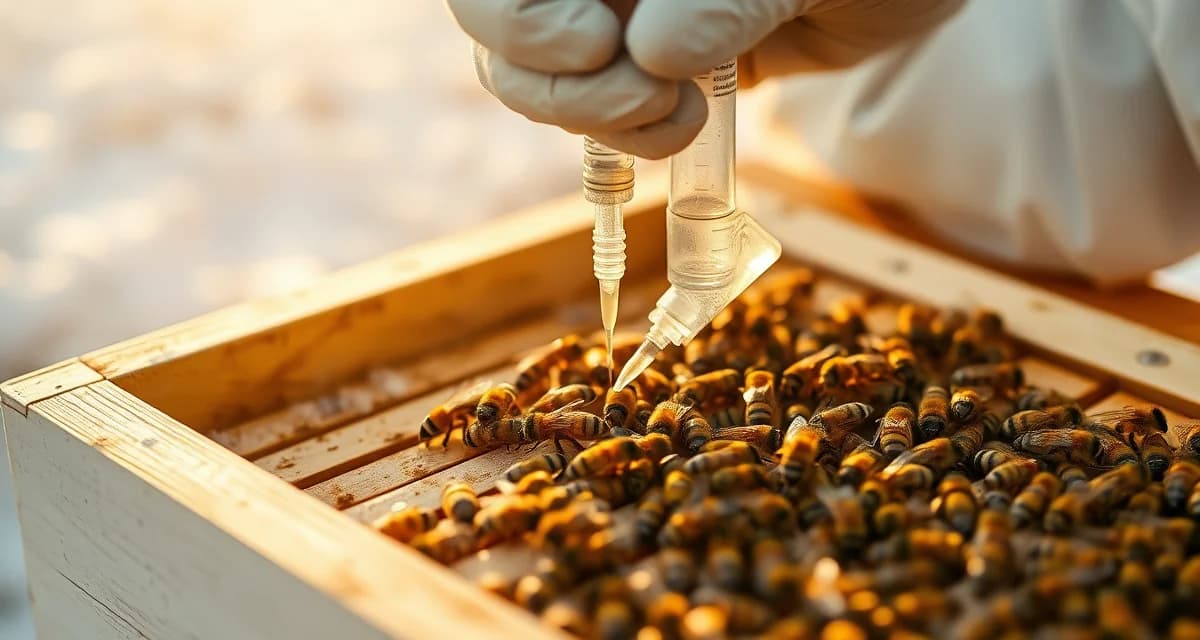
Varroa Treatment During a Broodless Period: Maximum OA Efficacy
A single oxalic acid dribble on a confirmed broodless colony achieves 97% efficacy. Compare that to 60% with capped brood present, and the difference becomes pretty compelling. The broodless period, whether naturally occurring or deliberately created, is the highest-leverage moment in your entire treatment calendar.
This is the one time where varroa mites have nowhere to hide. Every mite is either on an adult bee or it's not in the colony at all. Oxalic acid kills phoretic mites on contact. Result: near-complete mite elimination in a single application.
TL;DR
- This guide covers key aspects of varroa treatment during a broodless period: maximum oa effic
- Mite monitoring should happen at minimum every 3-4 weeks during active season
- The 2% threshold in spring/summer and 1% in fall are standard action points based on HBHC guidelines
- Always run a pre-treatment and post-treatment mite count to calculate efficacy
- Treatment records including product name, EPA number, dates, and counts are required for state inspection compliance
- VarroaVault stores all monitoring and treatment data with automatic threshold comparison and state export formatting
Why Broodless Treatment Works So Much Better
Oxalic acid is highly effective at killing mites on adult bees, but it cannot penetrate capped brood cells. The mites inside sealed cells are protected throughout their reproductive cycle: they enter the cell before capping, reproduce during the pupa's development, and emerge riding on the newly hatched bee.
In a normal colony with active brood rearing, the majority of the total mite population, typically 80-85%, is inside capped brood at any given time. An OA treatment only addresses the 15-20% that are phoretic. This is why OA dribble on a colony with brood achieves roughly 60% efficacy. You got the ones you could reach, but most of them were sheltered in brood cells.
During a broodless period, that 80-85% in capped cells drops to zero. Every mite is now phoretic. Every mite is reachable. Hence 97%.
Natural vs. Artificial Broodless Periods
Natural Broodless Periods
In cold-climate zones, natural winter broodlessness occurs when temperatures drop below the cluster formation threshold and the queen stops laying. This typically happens in November through January for zone 5, somewhat later for zone 6, and rarely or briefly for zone 7-8.
The challenge with natural broodless periods is confirming they're actually broodless. Beekeepers sometimes assume a cold-clustered colony is broodless, treat with OA, and get only 70-80% efficacy because the cluster still had some capped brood around the warm center.
For natural broodless treatment, wait for at least 2-3 weeks of cold weather with nighttime temperatures consistently below 50°F before assuming broodlessness. Then confirm.
Artificial Broodless Periods
Caging the queen for 25-28 days creates a broodless period that you control the timing of. All capped brood hatches out over those 25 days. On day 25-28, the colony is fully broodless, the queen is still caged and not yet laying, and you have a clean window for maximum-efficacy OA treatment.
This approach lets you time the broodless treatment to any point in the season, including summer, when mite populations are building fastest and a high-efficacy intervention has the most impact.
Confirming Broodlessness Before Treatment
This is the step most beekeepers skip, and it's the step that determines whether you get 97% or 65% efficacy.
Do not rely on calendar estimation alone. Open the hive and look.
Signs the colony is broodless:
- No capped worker brood anywhere in the brood nest
- No young larvae (eggs and very young larvae are fine, as they haven't been capped yet)
- All empty cells or cells with eggs only
Signs the colony still has brood:
- Any capped cells with the characteristic tan paper-colored cappings
- Cells that look slightly raised or domed (sealed pupae)
VarroaVault's broodless confirmation checklist ensures no capped brood is present before an OA dribble is logged. When you start a broodless OA treatment record, the platform requires you to confirm broodless status with the inspection date. This isn't bureaucratic overhead. It's the difference between a 97% treatment and a 60% one.
How to Do the OA Dribble During a Broodless Period
Equipment You Need
- 3.2% oxalic acid dihydrate solution (mix 1 gram OA powder per 1 oz of 1:1 sugar syrup, or purchase pre-mixed solution)
- 60mL syringe or squeeze applicator
- Protective gloves, goggles, and respirator (OA is corrosive)
- The hive's broodless status confirmed by inspection
Application Process
- Prepare your OA solution (pre-mixed commercial solutions are available and eliminate measurement errors)
- Open the hive and locate each seam between frames where bees are clustered
- Apply 5mL per seam of bees, up to 10 seams maximum (50mL total per colony)
- Close the hive
- Log the treatment in VarroaVault with the application date and confirmation of broodless status
The queen can remain caged or be released after treatment depending on your brood-break strategy. See the artificial brood break guide for queen caging specifics.
Post-Treatment Count
Count mites 5-7 days after a broodless OA dribble. You should see near-complete mite elimination. A post-treatment count at day 5-7 from this baseline lets VarroaVault calculate your efficacy automatically.
If efficacy comes in below 85%, investigate: did the colony actually have brood present despite your inspection? Was the OA solution concentration correct? Was enough solution applied to cover all bee seams?
OA Dribble vs. OA Vaporization for Broodless Colonies
Both methods achieve high efficacy during broodless periods. Dribble is simpler equipment-wise. Vaporization (using an OA vaporizer) distributes OA throughout the hive as a vapor and is sometimes preferred for larger colonies or when you want to minimize hive disturbance.
Use the oxalic acid dribble calculator to confirm the correct dose based on your colony size and seam count. For vaporization, the [oxalic acid vaporization calculator](/oxalic-acid-vaporization-calculator) handles dose and timing for multiple-application scenarios.
Frequently Asked Questions
How do I confirm my colony is broodless before OA treatment?
Open the hive and visually inspect every frame in the brood nest area. Look for capped brood: tan or brown paper-colored dome-topped cells. A truly broodless colony has no capped cells anywhere. Eggs and very young uncapped larvae (within 3 days of hatching) are acceptable because they won't be capped during the treatment period. Mites that are already in capped cells before you begin confirmation would have already begun reproducing, which is why true broodlessness (no currently capped brood) is the standard.
Can I artificially create a brood break for treatment?
Yes. Caging the queen for 25-28 days is the standard method. Remove the queen and place her in a queen cage with attendants and fondant for food. All currently capped brood hatches out during this period, leaving the colony fully broodless by day 25-28. At that point, apply OA dribble and then release the queen. Combining a 25-day queen cage with OA dribble can achieve near-100% mite kill in a single intervention. This technique is covered fully in the artificial brood break guide.
How does VarroaVault track broodless status?
VarroaVault's broodless OA treatment log requires a broodless confirmation field before the treatment entry can be completed. You log the inspection date, confirm no capped brood was observed, and the treatment record is marked as confirmed-broodless. This affects how efficacy is calculated and tracked in your hive history. The platform also suggests a follow-up count at 5-7 days post-treatment for broodless OA applications, reflecting the faster mite clearance compared to treatments applied with brood present.
How do I know if my varroa treatment is working?
Run a mite count 2-4 weeks after the treatment ends and compare it to your pre-treatment count. The efficacy formula is: ((pre-count - post-count) / pre-count) x 100. A result above 90% indicates effective treatment. Results below 80% should trigger investigation for possible resistance, application error, or reinfestation. Log both counts in VarroaVault to track efficacy trends across treatment cycles.
How often should I check mite levels in my hives?
At minimum, once per month (every 3-4 weeks) during the active season. Increase to every 2 weeks when counts are near threshold or after a treatment to verify it worked. In fall, monitoring frequency matters most because the window to treat before winter bees are raised is narrow. VarroaVault's monitoring reminders can be set to your preferred interval for each apiary.
What records should I keep for varroa management?
Each record should include: date of count or treatment, hive identifier, monitoring method used, number of bees sampled, mites counted, infestation percentage, treatment product name and EPA registration number, dose applied, treatment start and end dates, and PHI end date. State apiarists typically expect this level of detail during inspections. VarroaVault captures all of these fields in a single log entry.
What is Varroa Treatment During a Broodless Period: Maximum OA Efficacy?
Varroa treatment during a broodless period refers to applying oxalic acid (OA) to a honey bee colony when no capped brood is present. With mites unable to hide inside sealed cells, a single OA dribble can eliminate up to 97% of the varroa population. This makes it the most effective window in your entire treatment calendar, far outperforming treatments applied when brood is present.
How much does Varroa Treatment During a Broodless Period: Maximum OA Efficacy cost?
Oxalic acid itself is inexpensive, typically costing a few dollars per treatment. The real investment is in mite monitoring supplies and record-keeping. Tools like VarroaVault help manage monitoring data, threshold alerts, and state-compliant treatment records automatically, reducing the time and cost of manual tracking across multiple hives or apiaries.
How does Varroa Treatment During a Broodless Period: Maximum OA Efficacy work?
Oxalic acid kills phoretic varroa mites on contact when they are riding on adult bees. During a broodless period, 100% of mites are phoretic since there are no capped cells to shelter in. A dribble application delivers OA directly onto bees between frames, reaching virtually every mite in the colony with a single treatment.
What are the benefits of Varroa Treatment During a Broodless Period: Maximum OA Efficacy?
The primary benefit is near-complete mite elimination from a single application — up to 97% efficacy versus roughly 60% when capped brood is present. This reduces mite loads dramatically before the next brood cycle begins, protecting developing bees from infestation and viral transmission. Treating during this window also minimizes chemical exposure to brood and shortens the overall treatment duration.
Who needs Varroa Treatment During a Broodless Period: Maximum OA Efficacy?
Any beekeeper managing varroa mite pressure should prioritize broodless-period treatment, especially those in temperate climates where colonies go broodless naturally in winter. It is particularly valuable for beekeepers with high mite counts heading into fall, those following HBHC threshold guidelines (2% spring/summer, 1% fall), and anyone wanting maximum efficacy with minimum intervention and chemical exposure.
Sources
- American Beekeeping Federation (ABF)
- USDA ARS Bee Research Laboratory
- Honey Bee Health Coalition
- Penn State Extension Apiculture Program
- Project Apis m.
Get Started with VarroaVault
The information in this guide is most useful when you have your own mite count data to apply it to. VarroaVault stores every count, flags threshold crossings automatically, and builds the treatment history you need for state inspections and effective management decisions. See pricing and free tools at varroavault.com.