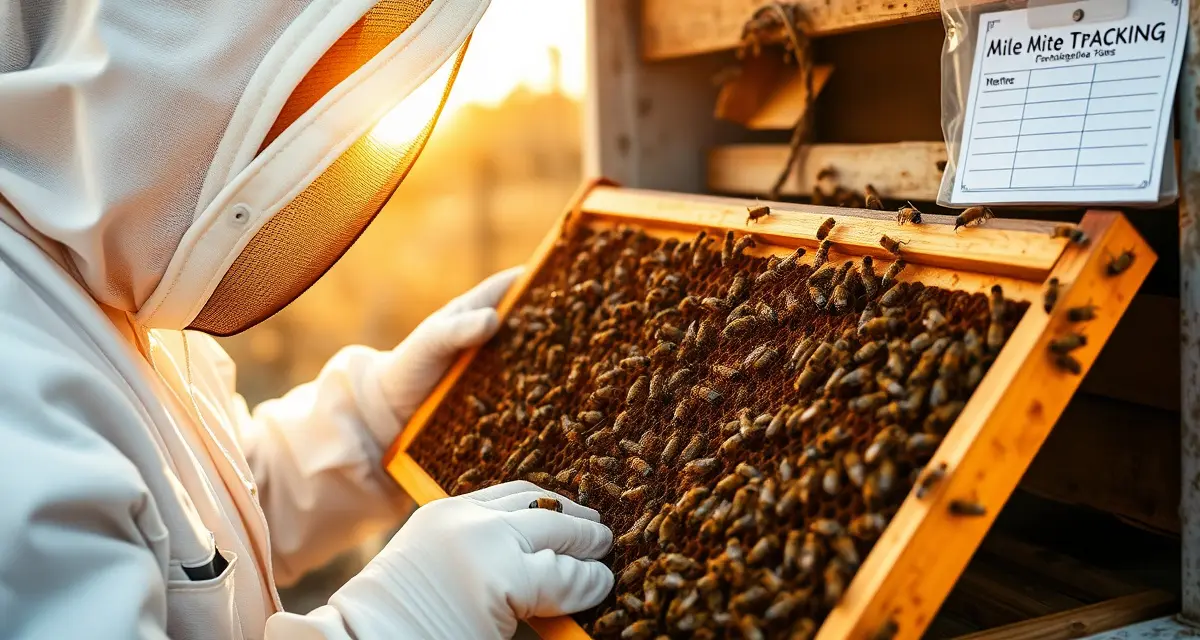
Spring Varroa Management: Your Complete Program for March Through June
Spring is when beekeepers make the decisions that determine whether their summer is profitable or painful. The mites overwintering in your cluster are about to explode in population as brood production ramps up. If you don't have a management program built for this window, you'll spend August doing emergency triage.
Here's how to build a spring varroa program that protects your honey crop and sets up colonies for the season.
TL;DR
- Spring mite counts can be deceptively low because small winter populations have not had time to grow yet
- Mite populations can double every 4-6 weeks during the spring buildup period
- The spring treatment decision should be based on a mite count, not on calendar date alone
- A spring count of 1% or above warrants treatment before the population grows into summer
- Formic acid and oxalic acid extended vaporization are the primary spring options that avoid PHI issues
- VarroaVault's spring monitoring reminders fire at the right time based on your region's buildup calendar
Why Spring Management Is Different
In late winter, your colony has minimal brood. Mite populations are relatively stable, there's limited brood for mites to reproduce in. As soon as the queen kicks into spring laying, that changes fast.
Mite populations can double every 4-6 weeks during active brood season. A colony that comes out of winter at 0.5% mite infestation can reach 2% by early May if left unmanaged. By the time your main nectar flow starts, it could be at 4%, high enough to visibly impact honey production and colony health.
The spring program has two goals:
- Know your starting mite load coming out of winter
- Treat before honey supers go on if you're at or approaching threshold
Step 1: First Spring Count (Late February to March)
Do your first count when bees are actively flying on a warm day and brood is present. You need nurse bees on the sample frame, which means you need active brood rearing.
Timing: When daytime temps are consistently above 50°F and you see significant forager activity.
Method: alcohol wash, 300 bees from the center brood frame.
Record: Date, hive ID, infestation rate.
What you're looking at:
- Under 1%: Good. Monitor again in 4-6 weeks.
- 1-2%: Watch closely. Count again in 3 weeks. Consider treating before supers go on.
- Above 2%: Treat now, before supers go on.
Step 2: Pre-Honey Flow Treatment Decision
Your treatment window before honey supers is one of the best opportunities of the year. Once supers are on:
If your spring count is at 2% or higher, treat before supers go on. This is worth delaying the super addition by a few weeks if needed.
Treatment options with no supers on:
- Apivar: 42-day strip treatment, start early enough to complete before peak flow
- MAQS / Formic Pro: 7-14 day treatment, works while brood is present, temperature window 50-85°F
- OA Extended Vaporization: 3-5 treatments, 5-7 days apart, if temps allow
Don't skip this window. A colony treated in April that goes into May's nectar flow at 0.3% will outproduce an untreated colony at 3% by a meaningful margin, and stay healthier through summer.
Step 3: During-Flow Monitoring
Once honey supers are on, your options narrow, but monitoring doesn't stop.
Count monthly during the nectar flow. You need to know what's happening so you can respond.
If mite load hits 2% during flow:
- MAQS or Formic Pro can go on with supers, consider this a treatment emergency
- Or plan for a post-flow treatment immediately after super removal, but only if you act the day supers come off
If load stays under 2% through flow, you're in good shape. Plan your post-flow fall treatment as part of normal scheduling.
Step 4: Swarm Season Complication
Swarming creates a temporary brood break in the parent colony. This has a counterintuitive effect on mite counts:
During the brood break, all mites are phoretic. An alcohol wash will show high counts. But the mite population has also stopped reproducing. It's a natural pause.
After a swarm, the new queen needs 3-4 weeks to establish. During this period, mite levels in the parent colony may hold steady or even drop slightly.
The swarm itself, however, carries mites. If you catch and keep a swarm, test it for mites within 2-3 weeks of introduction.
Step 5: May/June Re-Count
By late May or June, colonies are at or near peak population. Do a second count at this point.
This count gives you:
- A comparison against your March baseline (is the trend up, flat, or down?)
- A data point to plan your post-flow treatment timing
- Early warning if a colony is building faster-than-normal mite pressure
Colonies with significantly higher mite loads than others in the same yard warrant investigation, drone brood removal, reinfestation from a high-mite neighbor, or a missed treatment are common explanations.
Related Articles
FAQ
When should I start treating for varroa in spring?
Start your first count as soon as bees are actively flying and brood is present, typically late February to March depending on your region. Treat if you're at or above 2% mite infestation before honey supers go on. Early spring treatment protects the nectar-flow population and keeps the colony productive. Don't wait until you see visible signs of varroa damage.
Can I treat for varroa during honey flow?
Your options are limited with honey supers on. Apivar (amitraz) cannot be used. Formic acid (MAQS, Formic Pro) can be used with supers in place, check current label requirements. Organic acid options (OA) can also be considered for extended protocols. If your count exceeds 2% during flow, formic acid treatment is the most practical response.
How do I reduce varroa entering the season?
The best spring position comes from a strong fall program. Colonies that entered winter with mite loads below 1%, verified by a pre-winter treatment and post-treatment count, start spring with manageable mite pressure. If your spring counts are consistently high, look at whether your fall program is leaving mite loads too high before winter cluster formation.
How do I know if my varroa treatment is working?
Run a mite count 2-4 weeks after the treatment ends and compare it to your pre-treatment count. The efficacy formula is: ((pre-count - post-count) / pre-count) x 100. A result above 90% indicates effective treatment. Results below 80% should trigger investigation for possible resistance, application error, or reinfestation. Log both counts in VarroaVault to track efficacy trends across treatment cycles.
How often should I check mite levels in my hives?
At minimum, once per month (every 3-4 weeks) during the active season. Increase to every 2 weeks when counts are near threshold or after a treatment to verify it worked. In fall, monitoring frequency matters most because the window to treat before winter bees are raised is narrow. VarroaVault's monitoring reminders can be set to your preferred interval for each apiary.
What records should I keep for varroa management?
Each record should include: date of count or treatment, hive identifier, monitoring method used, number of bees sampled, mites counted, infestation percentage, treatment product name and EPA registration number, dose applied, treatment start and end dates, and PHI end date. State apiarists typically expect this level of detail during inspections. VarroaVault captures all of these fields in a single log entry.
What is Spring Varroa Management: Your Complete Program for March Through June?
Spring Varroa Management: Your Complete Program for March Through June is a comprehensive guide for beekeepers covering how to monitor and treat varroa mite infestations from early spring through early summer. It explains why spring mite counts can be deceptively low, how populations can double every 4-6 weeks during colony buildup, and which treatments—such as formic acid and oxalic acid extended vaporization—are appropriate for this window without affecting honey crop harvest timing.
How much does Spring Varroa Management: Your Complete Program for March Through June cost?
Spring Varroa Management: Your Complete Program for March Through June is available for free on VarroaVault. The article is part of VarroaVault's library of varroa management resources, which are designed to help beekeepers build effective seasonal treatment programs. VarroaVault also offers tools like spring monitoring reminders timed to your region's buildup calendar, helping you take action at the right moment rather than relying on calendar dates alone.
Sources
- American Beekeeping Federation (ABF)
- USDA ARS Bee Research Laboratory
- Honey Bee Health Coalition
- Penn State Extension Apiculture Program
- Project Apis m.
Spring Is When the Season Is Won or Lost
Count early. Treat if needed before supers go on. Monitor during flow. Plan your fall treatment before summer ends.
VarroaVault tracks your spring counts, calculates your threshold status, and sets treatment reminders timed to your nectar flow calendar. Start your free trial and build your spring program with data.
Get Started with VarroaVault
The information in this guide is most useful when you have your own mite count data to apply it to. VarroaVault stores every count, flags threshold crossings automatically, and builds the treatment history you need for state inspections and effective management decisions. See pricing and free tools at varroavault.com.