How robbing behavior spreads varroa mites between hives

TL;DR
- When bees rob a collapsing or weak colony, they pick up varroa mites and carry them home.
- Field research shows a single robbing event from a heavily infested source can push a recipient colony past the 2% treatment threshold within weeks.
- Stop it with entrance reducers, well-timed late-summer treatment, and monitoring every colony on the same schedule.
- Robbing is one of the most underappreciated ways varroa moves between managed hives.
What is robbing behavior and why does it matter for varroa?
Robbing is when honey bees from one colony break into another to steal honey and other stores. It happens most in late summer and fall, when nectar flows stop and food gets scarce. The robbers fight past the guard bees, grab whatever they can carry, and fly it home.
Here is where the mite problem starts. Varroa mites don't stay sealed inside brood cells. Phoretic mites, the ones riding adult bees between reproductive cycles, move from bee to bee easily. A robbing bee that spends time inside an infested hive picks up phoretic mites and carries them back to her own colony. She has no idea she's doing it.
The colony being robbed is usually already weak. Weak colonies tend to carry high mite loads because they've often crashed past the treatment threshold. So robbers walk into a heavily infested hive, collect mites alongside the honey, and spread them across the yard. It's one of the most efficient mite-delivery systems in nature, and most beekeepers don't see it happening until the damage is done.
How much varroa can robbing actually spread?
The numbers are sobering. Seeley and Smith, publishing in Apidologie in 2015, found that crowding colonies in an apiary raises their vulnerability to varroa, with infested colonies acting as mite reservoirs that seed neighboring hives [1]. Mite loads climbed in colonies near collapsing hives even when the beekeeper did nothing wrong.
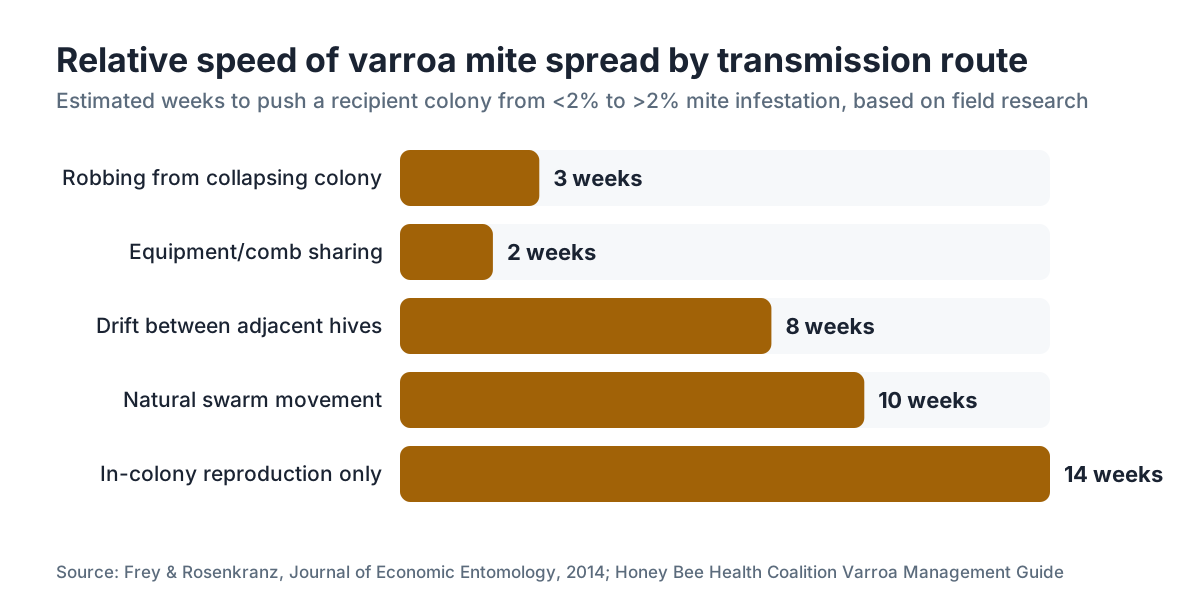
A field study by Frey and Rosenkranz (2014) in the Journal of Economic Entomology measured autumn mite invasion during robbing and drift. A single robbing event from a heavily infested source colony could push a recipient colony from below the 2% threshold to above it within a few weeks [2]. That is the gap between a healthy colony and one on the road to a winter collapse.
The practical lesson: treating your own hives is not enough if your neighbor's bees or your own untreated colonies are crashing. The mites come back. The Honey Bee Health Coalition's Varroa management guide names robbing and drift as primary horizontal transmission routes for the mite [3].
| Transmission route | Speed of spread | Beekeeper control |
|---|---|---|
| Robbing from collapsing colony | Fast (days to weeks) | Moderate (entrance management, timing) |
| Drift between adjacent hives | Moderate (weeks) | Low to moderate (hive spacing, visual cues) |
| Beekeeper equipment sharing | Fast (immediate) | High (freezing comb, awareness) |
| Package/nuc introduction | Immediate | High (test before introducing) |
| Natural swarm movement | Moderate | Low |
No single route causes more surprise colony losses than robbing from a nearby crash. The mite math is brutal. A colony dying with 15% infestation and 10,000 adult bees has roughly 1,500 phoretic mites available to hitch rides out the door.
How does a dying or collapsing hive trigger robbing?
A colony under heavy varroa pressure declines in a predictable order. The mite load climbs, virus levels rise (deformed wing virus is the usual culprit), the adult bee population crashes, and the survivors lose the numbers to defend the entrance. That loss of defense is the signal other bees pick up on [4].
Foragers from neighboring colonies smell the undefended stores and learn fast that this entrance is easy to breach. Robbing starts with scout bees probing the door, then escalates to a full frenzy within hours. By the time a beekeeper spots the swirling, fighting mass at the entrance, the looting has been going on long enough to matter.
The timing tracks dearth. In most of North America that means late July through September, though the window shifts by latitude and local forage. During a strong flow, bees have little reason to rob. Shut off the flow and every weak or stressed colony becomes a target.
A varroa-collapsed colony rarely gets robbed just once. The robbing runs for days as foragers from different colonies cycle through. Each wave picks up more mites. The dying colony isn't only losing honey. It's exporting its mite population to everyone in the neighborhood.
Which colonies are most at risk of being robbed and spreading mites?
Any colony that has lost defensive population is vulnerable. That includes colonies with high varroa loads (which suppress bee emergence), recently split hives that haven't rebuilt, nucs, packages in their first few weeks, and hives run by beekeepers who haven't treated.
Untreated feral colonies deserve special mention. Work from Seeley's lab at Cornell has documented that wild colonies in the northeastern US carry varroa loads that swing seasonally. Some survive through natural selection, but many collapse each year and turn into robbing targets [1]. If your apiary sits within a mile and a half of a known feral colony or abandoned equipment, that is a real mite source.
Sideliner and hobbyist beekeepers running multiple yards face compounding risk. A single neglected colony, yours or a neighbor's, can seed the whole yard. You can treat six hives perfectly and watch the seventh undo your work when it crashes during dearth while you're not looking.
The practical takeaway: monitor every colony on the same schedule. Don't let one fall behind.
How can you tell if robbing is happening at your hives?
Robbing looks chaotic. Normal forager traffic is orderly, bees landing and leaving with purpose. Robbing looks like a brawl: bees tumbling together at the entrance, biting each other's legs, bodies on the ground, a frantic cloud that doesn't settle. The robbed colony's guards get overwhelmed, and you can sometimes see them dragged or killed.
A few signs that separate robbing from a normal busy day:
- Bees entering carry nothing; robbers don't bring pollen
- Bees leaving look heavy and fly in a low, struggling arc
- Dead bees pile up at the entrance
- A quiet hive suddenly roars
- Bees chew at propolis or try to squeeze through gaps in the box
Robbing can also start quietly. A few scout bees probing the entrance is easy to miss. By the time it's obvious, it's already a problem. Check your weaker colonies more often during dearth, and watch entrance activity any time you're in the yard.
What can you do to stop robbing and prevent mite spread?
Entrance management is your first line of defense. During dearth, cut entrances to a width one or two bees can defend. A small colony can hold a 1-inch opening. It cannot hold a full bottom-board gap. Entrance reducers cost almost nothing and they work. Hardware-cloth robbing screens work even better because they force bees to approach from an angle, which hands defenders a real advantage [3].
Don't open hives during peak robbing conditions. A warm dearth afternoon with your boxes cracked open is an invitation. Keep inspections short, keep the colony closed except for what you need, and don't spill honey or leave burr comb near entrances.
Treat collapsing colonies immediately, or if they're beyond saving, pull them from the yard before they get robbed out. A dead-out sitting in the apiary is a mite sponge. Every bee that passes through carries mites home. Freeze combs from dead colonies for 48 hours to kill mites and wax moths, then store them sealed until you need them [4].
Coordinate with neighbors. This is hard advice to follow, but it matters. If the person a quarter mile away runs untreated colonies that collapse every fall, your mite problem has an address. The Honey Bee Health Coalition recommends synchronizing treatment across an apiary to cut mite immigration between managed hives [3].
To plan your treatment calendar around robbing season, the free tools at VarroaVault (varroavault.com) map treatment windows to dearth timing in your region.
Does hive placement and apiary design affect how much varroa spreads by robbing?
It does, more than most beekeepers realize. Hives packed tight raise drift (bees returning to the wrong hive) and make it easier for robbers to move between colonies. Spacing hives so entrances face different directions, and don't stare straight at each other, cuts both drift and robbing chances [5].
Visual cues matter. Bees navigate by sight. A row of identical white boxes on a flat board in an open field invites drift and mis-homing. Vary entrance colors, use different stands, stagger the positions, and angle entrances apart. This isn't folk wisdom. Extension apiculture programs at Penn State and the University of Florida both recommend entrance differentiation to reduce drift-driven mite transfer [5][6].
Apiary size matters too. More colonies in a small space means more chances for robbing chains to form. If you run more than six to eight colonies in one yard, split them into two groups at least 100 feet apart, ideally with a hedge or fence between them.
Should you treat a colony you suspect has been robbed by a mite-laden hive?
Yes, and soon. If you think your colony took heavy robbing from an infested source, don't wait for your next scheduled monitoring date. Wash at least 300 bees using the alcohol wash method the Honey Bee Health Coalition recommends, and get a count [3]. Mite levels can jump fast after robbing, because you're no longer dealing only with your colony's own reproduction. You're dealing with an imported adult mite population.
The alcohol wash is the most reliable field method available. Take about 300 bees from the brood area (nurse bees, not foragers), drop them in alcohol or soapy water, shake for 60 seconds, and count the mites released. A result above 2 mites per 100 bees (2%) means treatment is warranted [8].
For more on the mite itself, its life cycle, and why the brood-to-adult ratio drives treatment timing, the varroa mite overview on this site goes deeper into the biology.
Don't stall thinking the colony will fight it off. It won't. Every week you wait at high mite levels means more deformed wing virus in your brood and more bees emerging compromised.
How does robbing-driven varroa spread compare to drift?
Drift is when bees mistakenly return to the wrong hive. It happens constantly in yards with poor visual differentiation. Robbing is deliberate resource theft. Both move mites, but the dynamics differ.
Drift is slow, steady background transfer. A few bees drift into the wrong hive every day. If one carries a mite, that mite is now in a new colony. It's a low-level chronic leak that adds to mite pressure over time but rarely causes a sudden spike.
Robbing is acute. A single event from a heavily infested source can deliver dozens to hundreds of phoretic mites to the recipient colony in a matter of days. Frey and Rosenkranz found robbing-related mite invasion was faster and larger in number than drift over the same study period [2].
For management, drift is hard to prevent entirely; you can only reduce it. Robbing is something you can often stop with entrance work. Treating robbing as the higher-priority risk during dearth is the right call.
What role do feral and untreated colonies play in spreading varroa through robbing?
Feral colonies are a genuine wildcard. They live outside your management and often build mite loads that would collapse a managed hive. When they crash, they become robbing targets for any bees within foraging range (roughly a mile and a half, though bees have been recorded going further).
The data on feral colony mite loads varies. Some feral populations in regions where varroa has been present for decades show partial resistance traits and survive at mite levels that would kill standard commercial stock. Many do not. A collapsing feral colony in a hollow tree near your apiary in August is, in effect, a mite bomb.
There's not much you can do about truly feral colonies beyond knowing they exist and watching your counts closely during dearth. If you know of abandoned managed equipment nearby, reaching out to the previous owner or your local extension office is worth trying. Empty, untreated boxes sitting in a field that get reoccupied by a feral swarm are a recurring headache in many areas.
Treat your colonies as if mite immigration pressure from outside the apiary is constant. During dearth, it probably is.
How should a beekeeper's seasonal protocol account for robbing-driven mite spread?
Build your protocol around dearth timing. In most temperate North American climates, the main robbing risk runs from roughly late July through early October. Your late-summer treatment window, usually the most important treatment of the year because it protects the long-lived winter bees, overlaps almost exactly with peak robbing season.
The Honey Bee Health Coalition's Varroa management guide recommends treating before or at the start of dearth rather than after mite populations spike [3]. Treat in late July or early August (depending on your region) and you knock mites down before robbing season and before varroa gets its peak reproduction run on late-summer brood.
A practical seasonal checklist:
- Monitor all colonies monthly with an alcohol wash from April through October
- Treat any colony at or above 2% during the active season
- Reduce all entrances before your main dearth period starts
- Inspect colonies you haven't opened in more than three weeks; a collapsing colony during dearth is a liability
- Remove or destroy dead-outs promptly and never leave capped honey open to robbers
- Run a post-robbing-season mite wash in October to confirm levels before the winter cluster forms
VarroaVault's protocol-building tools match these timing recommendations to your climate zone and colony count.
For entrance reducers, robbing screens, and wash gear, check beekeeping supply companies when you stock up.
Frequently asked questions
Can robbing spread varroa from a dead hive to a live one?
Yes, this is one of the most common ways mites move between colonies. A dead or collapsing hive with capped honey pulls foragers from healthy colonies. Those foragers walk through mite-laden comb and debris, pick up phoretic mites, and carry them home. Remove or seal dead-outs immediately. Freezing the combs for 48 hours kills mites before you store or reuse the equipment.
How far can robbing bees carry varroa mites from an infested colony?
Honey bees forage up to about two miles from home, and robbing follows similar distances. In practice, robbing pressure runs highest within a quarter to half mile of an infested source, simply because forager traffic is densest there. You can't fully insulate your apiary from outside mite immigration, but entrance management and local coordination cut the risk a lot.
What's the best way to stop robbing once it has already started?
Act fast. Reduce the entrance to the smallest opening that still lets resident bees pass. A robbing screen works even better because it forces bees to approach from an angle and gives defenders the edge. Avoid opening the hive until robbing stops. Wet burlap or a robbing cloth draped over the entrance confuses and slows robbers. Don't spray the entrance with sugar syrup or honey water; that makes it worse.
Does feeding syrup cause robbing and therefore spread varroa?
It can. Spilled syrup, open feeders that non-resident bees can reach, and top feeders with poor seals all attract robbers. Use internal feeders (hive-top or division board) rather than open bowls during dearth. If you use entrance feeders, watch them closely. The link to varroa spread is indirect but real: feeding that triggers robbing turns your apiary into a mite exchange.
How quickly do mite levels rise after a robbing event?
It depends on how infested the source colony was and how many bees joined the robbing. Based on field research by Frey and Rosenkranz (2014), a recipient colony can go from below the 2% treatment threshold to above it within two to four weeks after a significant event involving a heavily infested source. Monitor within two weeks of any known robbing incident and be ready to treat promptly.
Should I treat a weak colony to reduce its mite load and prevent it from becoming a robbing source?
Yes, treating a struggling colony to lower its mite load is exactly right, and it helps the whole apiary more than that one colony. A treated weak colony that survives poses far less risk than an untreated one that crashes during dearth and turns into a robbing magnet. If the colony is too weak to treat safely (fewer than two frames of bees), combine it with a stronger colony after treatment.
Do entrance reducers actually work at stopping mite-spreading robbing?
They help meaningfully. A reduced entrance gives resident guard bees a perimeter they can defend. A full-width entrance in a weak colony is simply too wide to hold. Robbing screens work better still because they disorient incoming robbers. Neither method is perfect, and a truly overwhelming robbing event can breach both, but they cut the severity and duration of most attempts substantially.
Can varroa spread through beekeeping equipment and tools more than through robbing?
Yes. Combs, hive bodies, and frames moved between colonies transfer varroa directly. Drawn comb with capped brood is the riskiest, since varroa reproduces inside brood cells. Always inspect equipment before moving it between colonies. Freeze spare drawn comb for 48 hours before storage to kill any mites. Don't share frames between colonies with different mite histories without checking mite levels first.
How do I know if varroa I'm seeing came from robbing versus normal reproduction?
You can't tell by looking at the mites. You distinguish it by the rate of increase. If your count jumps sharply over two or three weeks during dearth with no matching change in brood area, immigration is a likely contributor. Steady slow increases during the brood season fit in-colony reproduction better. Either way, the threshold is the same: at or above 2%, treat.
Is it safe to use combs from a robbed-out dead hive in another colony?
Only after freezing the combs for at least 48 hours at 0°F (minus 18°C), which kills varroa mites, small hive beetle eggs, and wax moth larvae. After freezing, let combs return to room temperature, inspect for disease signs (particularly American foulbrood scale), and introduce only clean comb. Never use comb from a colony that showed any sign of AFB; freezing does not kill foulbrood spores.
Does the time of day affect robbing and mite transfer risk?
Robbing is most intense from late morning through mid-afternoon when forager activity peaks. Robbers stop at dusk when bees cluster. So the mite transfer window concentrates in daytime hours. If you need to do a vulnerable task, like installing a package or moving a weak nuc, early morning before peak flight is the lowest-risk time. Avoid leaving hives open during an afternoon dearth.
Do all bee species or subspecies rob equally, and does that affect varroa spread?
More defensive subspecies like Africanized honey bees are generally harder to rob successfully, which reduces their role as robbing victims. They can still be aggressors. Among European honey bee subspecies kept in North America, robbing tendency varies by genetics and colony strength more than by subspecies. For more on subspecies differences in managed bees, see the beekeeping species overview.
What is apiary-wide treatment synchronization and does it actually reduce varroa from robbing?
It means treating all colonies in your yard (and ideally coordinating with nearby beekeepers) at the same time, so no colony sits as a high-mite reservoir while others are treated and vulnerable to re-infestation. The Honey Bee Health Coalition recommends this. The logic holds: if every colony enters dearth with low mite loads, there is less mite pressure available to spread through robbing.
Sources
- Seeley TD, Smith ML. Crowding honeybee colonies in apiaries can increase their vulnerability to the deadly ectoparasite Varroa destructor. Apidologie, 2015: Robbing events from collapsing colonies seed neighboring hives with varroa mites; crowded apiaries intensify this transfer
- Frey E, Rosenkranz P. Autumn invasion rates of Varroa destructor into honey bee colonies and the resulting increase in mite populations. Journal of Economic Entomology, 2014: A single robbing event from a heavily infested source can push a recipient colony from below to above the 2% treatment threshold within weeks
- Honey Bee Health Coalition, Tools for Varroa Management Guide: Robbing and drift are primary horizontal transmission routes for varroa; 2% infestation threshold for treatment; apiary-wide treatment synchronization recommended
- USDA Agricultural Research Service, Varroa Mite Page: Colonies weakened by varroa lose defensive capacity and become robbing targets; deformed wing virus is the primary varroa-vectored pathogen
- Penn State Extension, Honey Bee Diseases and Pests: Entrance differentiation and hive spacing reduce drift-driven mite transfer between colonies in an apiary
- University of Florida IFAS Extension, Varroa Mites in Honey Bee Colonies: Varying entrance colors and hive positioning reduces drift; late summer is peak robbing and mite immigration season in Florida
- EPA, Pesticide Product and Label System (Apivar, Apiguard, MAQS): Registered varroa treatment products and their labeled application requirements for managed honey bee colonies
- Honey Bee Health Coalition, Varroa Management Guide, Alcohol Wash Protocol: Alcohol wash of 300 bees from the brood area is the recommended field monitoring method; 2 mites per 100 bees triggers a treatment recommendation
- University of Minnesota Bee Lab, Integrated Pest Management for Varroa: Timing late-summer treatment before dearth onset protects winter bees and reduces mite immigration vulnerability during robbing season
Last updated 2026-07-09