Drone congregation areas and how varroa spreads between apiaries
TL;DR
- Drones from mite-heavy hives fly to drone congregation areas (DCAs) and drop mites into host colonies miles away.
- Research shows drones travel up to 7 km to DCAs, and one drifting or accepted drone can carry several mites.
- This is a big reason your carefully treated hive gets reinfested from neighbors you've never met.
What is a drone congregation area and why does it matter for mite spread?
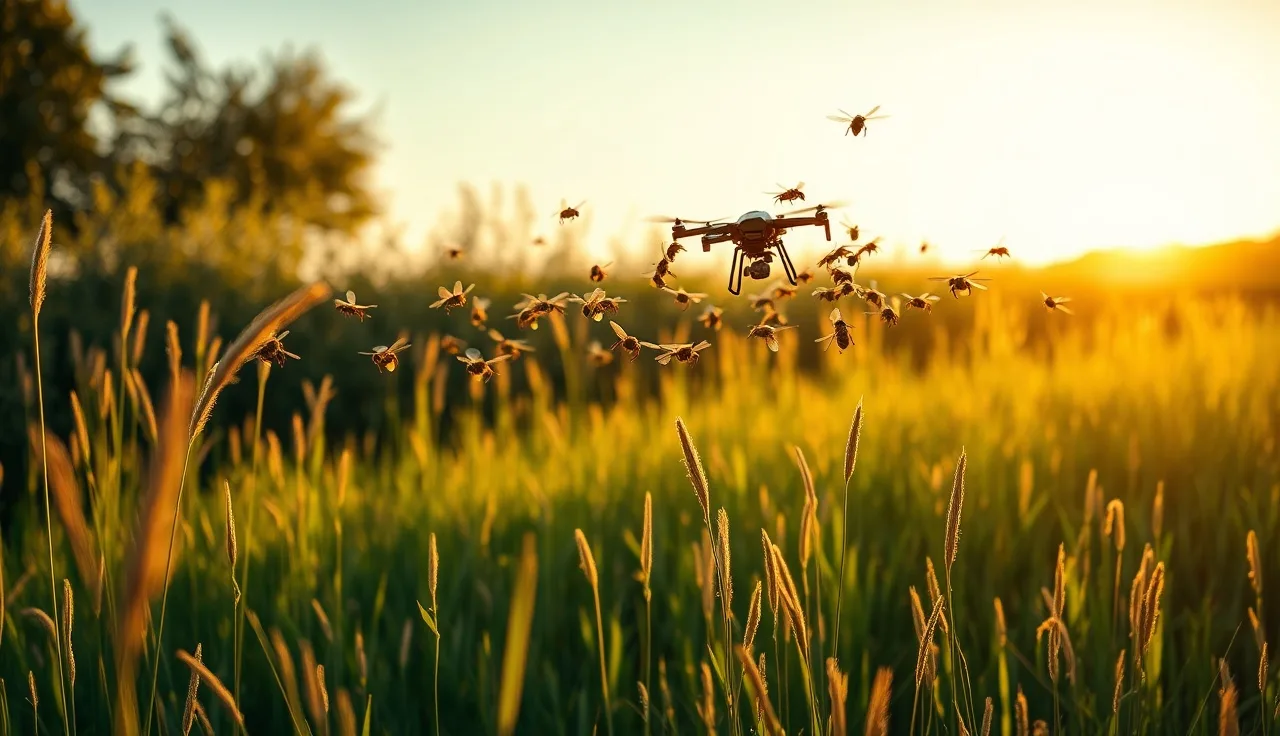
A drone congregation area (DCA) is a fixed zone in the landscape where hundreds to thousands of male honey bees gather in the air, usually 10 to 40 meters above open ground, waiting for virgin queens to fly through for mating. DCAs form in the same spots year after year, often near tree lines, ridgelines, or other visual features that give navigating drones a recognizable boundary [1].
Here's why that matters for varroa. Drones from every hive within flight range converge at one spot. A drone carrying phoretic varroa mites from an infested colony mixes freely with drones from colonies that may have almost no mites. When that drone gets accepted into a foreign colony after returning (or drifts into one before ever reaching the DCA), his hitchhiking mites go with him.
This pathway is documented, not hypothetical. It runs constantly during swarm season and peak drone production, late spring through midsummer. Treat your hives perfectly while your neighbors do nothing, and the DCA is one of the ways their mites become your problem.
How far do drones actually travel to reach a DCA?
Most drones fly 1 to 7 kilometers to reach a DCA, with the bulk of activity inside 2 to 5 km of the home apiary [2]. A 2005 study using microsatellite markers found drone flight distances to DCAs regularly topped 5 km in open agricultural country [2]. That radius covers a lot of ground and a lot of beekeepers.
For a hobbyist in a suburb, a 5 km circle around any single DCA can overlap dozens of managed hives plus an unknown number of feral colonies living in tree cavities, walls, and chimneys. You have no way to know the mite load of most of those colonies, and their drones all pass through the same aerial gathering point.
Drones also drift. Unlike workers, they show weak colony fidelity and get accepted readily by foreign colonies, even ones of different genetic lines. A drone that misreads its home entrance or just runs out of gas can walk into any open hive and be tolerated [3]. That acceptance is a direct mite-transfer event.
So treating your own yard down to zero mites does not mean zero risk. Reinfestation from DCA-mediated drone drift is why many extension programs now push coordinated area-wide management, especially for beekeepers within a few kilometers of each other [4].
How many mites can a single drone carry?
Phoretic varroa mites ride on adult bees, clinging to the soft tissue between abdominal plates. Drones carry mites just as workers do. Some studies report drones with two to five phoretic mites at once, though the average is one to two per infested drone [5].
That sounds small. But a strong colony makes thousands of drones per season, and DCA attendance from one hive runs into the tens to hundreds of drones on a single afternoon. If 10 percent of those drones carry even one mite each, the number of transfer chances at a busy DCA gets large fast.
Phoretic mites on drones are reproductively capable females. One mite introduced into a new colony can start a reproductive lineage within days, slipping into a capped cell during her first brood cycle in the new host. Early-season introductions during swarm season, when drone production and DCA activity both peak, load the gun for exponential mite growth across the rest of summer.
What does the research actually say about mite spread between apiaries?
The clearest published evidence comes from studies of varroa spread between managed and unmanaged colonies. A frequently cited 2001 paper by Fries and Camazine documented that reinfestation of treated apiaries from surrounding areas could account for mite load increases equal to 30 to 70 additional mites per day during peak robbing and drift seasons, though separating the drone contribution from robbing workers is hard [6].
The Honey Bee Health Coalition's Varroa Management Guide states that "reinfestation from other colonies through robbing, drifting, and absconding is one of the primary causes of mite level increases in treated colonies" [4]. Drone drift is a named pathway in that framework, right alongside robbing.
A more drone-specific line of evidence comes from genetic studies of DCA composition. Research published in Molecular Ecology showed that a single DCA routinely draws males from 30 to 240 distinct colonies [2]. That confirms DCAs are genuine mixing events for drone-associated parasites, even more than for queen genetics.
Nobody has a clean experimental number for the share of new infestations caused specifically by drone drift versus robbing. The honest answer: both are real, both are hard to separate in the field, and you should plan for both.
Is drone-mediated spread more of a problem in some landscapes than others?
Yes, and the pattern is what you'd expect. High colony density, whether from many hobbyists in one neighborhood or migratory apiaries parked near each other for pollination, means more drones sharing the same DCAs and more overlap between colony ranges [4].
Cities and suburbs are a special headache. Hive density can be high and mostly invisible. A single city block might hold four backyard beekeepers, a community garden apiary, and two feral colonies in building walls, and none of those operators necessarily know about the others. Feral colonies in particular often run extremely high mite loads because they get no treatment and resistance selection in most North American feral populations is incomplete [7].
Rural landscapes with widely spaced apiaries see lower drone mixing at any given DCA, simply because fewer colonies feed into it. Even there, though, a migratory operation can drop heavily infested colonies into an area where local beekeepers have worked toward low mite levels all season.
Forested and hilly terrain can break up DCA activity. Drones navigate by visual features, and complex topography may spawn several smaller DCAs instead of one big one, cutting the mixing among colonies split by ridgelines. This is mostly observational. The research on landscape effects on DCA size and composition is thinner than the literature on queen mating distances.
Does treating your hives in spring actually help if neighborhood mite pressure is high?
Treating in spring absolutely helps your colony survive the season, but it does not shut off reinfestation risk. Think of it as shrinking the problem, not solving it for good.
The Varroa Management Guide from the Honey Bee Health Coalition recommends monitoring mite levels every 30 days during the active season, precisely because reinfestation can reverse a good spring treatment in 6 to 8 weeks under high pressure [4]. A colony at a 1 percent wash load in May can sit at 3 percent or higher by July if it's parked in a landscape full of untreated colonies feeding local DCAs.
Some extension programs frame this as a community problem. Pennsylvania State University's extension apiculture materials note that beekeepers within a few kilometers of each other gain from coordinating treatment timing, because simultaneous treatment across an area sharply cuts the mite reservoir available to reinfest any single colony [8]. If you can find out who else keeps bees near you and actually talk about mite management, that conversation is worth real money.
To track where your own mite levels sit through a season of possible reinfestation, the free monitoring and protocol resources at VarroaVault help you set a steady 30-day check schedule and spot reinfestation patterns early.
Learn more about varroa mite biology and the full lifecycle to see why reinfestation windows are so predictable.
Can you reduce drone production to limit your contribution to DCA mite spread?
You can, though the payoff is partial. Some beekeepers use drone-comb trapping inside an integrated mite plan: insert a frame of large-cell drawn comb, let the queen fill it with drone brood, then pull and freeze the capped frame before emergence. Varroa infests drone brood at roughly 7 to 10 times the rate of worker brood, so removing capped drone comb yanks a disproportionate share of mites out of the reproductive cycle [4].
Drone trapping alone usually cuts mite loads by 30 to 50 percent in studies. That's meaningful, but it's not enough on its own [4]. You still need an acaricide or oxalic acid on a real schedule.
Cutting your drone output does reduce the mite-carrying drones you send to local DCAs. That's a genuine gift to your neighboring beekeepers. But their drones still hit the same DCAs, and you still get their visitors. The situation is lopsided: trimming your own drone production protects others more than it protects you.
For drone foundation and comb trapping frames, compare beekeeping supplies from established sellers before you commit to a trapping protocol.
How does robbing compare to drone drift as a mite transmission route?
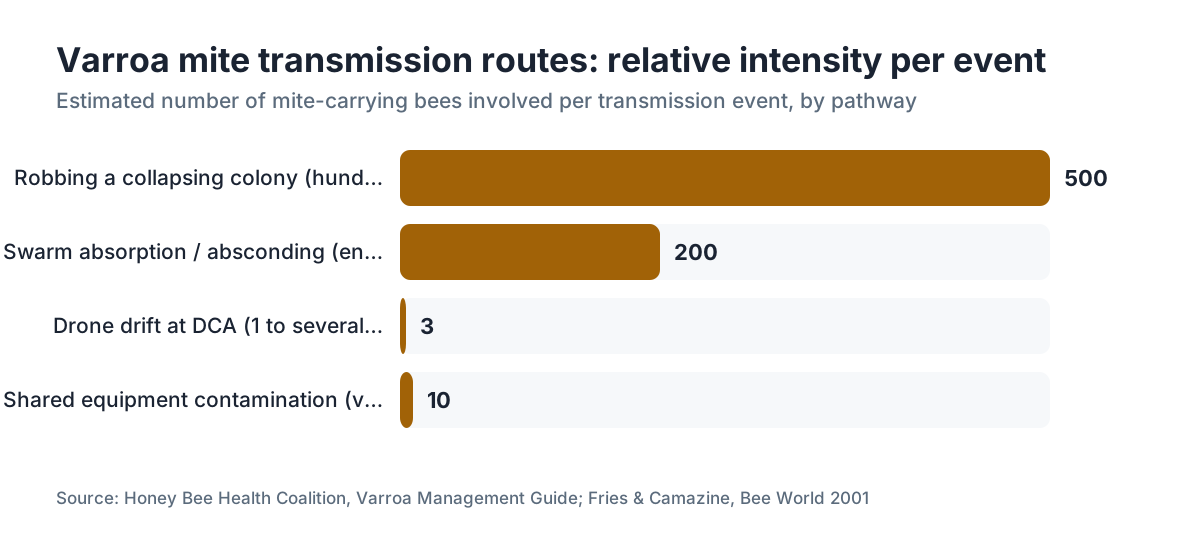
Robbing is the bigger mite event per incident. A robbing episode sends hundreds to thousands of worker bees from a collapsing or weakened colony into a stronger one, and workers carry phoretic mites just like drones. A dying colony at 20 percent mite load or higher, which means terminal decline, can dump a huge pulse of mite-carrying bees into the landscape over a few days [6].
| Transmission route | Bees involved per event | Mite load per bee (typical range) | Seasonality |
|---|---|---|---|
| Drone drift at DCA | 1-several | 1-5 mites | Spring-midsummer |
| Robbing a weak colony | Hundreds-thousands | 1-3 mites | Late summer-fall |
| Absconding/swarm absorption | Entire swarm | Colony average | Spring |
| Beekeeper equipment sharing | Variable | Variable | Year-round |
Drone drift runs continuously through the drone-rearing season at lower intensity per event but across many more events. Robbing is episodic and high-intensity. Both are real, and both point to the same response: monitor often, treat on thresholds instead of a calendar, and knock down mite loads before the late-season robbing window opens.
Fall is when robbing-driven spread peaks, which is also why treating in August, before the winter bee generation is raised, matters so much. You protect your own winter bees and you cut the mite load available to reinfest neighbors through fall robbing.
What about feral colonies and swarms as mite sources near DCAs?
Feral honey bee colonies in North America tend to carry higher varroa loads than managed colonies in the same area, because they get no treatment. Work by Seeley and colleagues on a wild survivor population documents that unmanaged colonies without hygienic or suppressed mite reproduction (SMR) behavior usually crash under varroa within a couple of years [7].
The DCA angle: as long as those feral colonies survive, they feed drones into the same congregation areas managed colonies use. A feral colony in a tree cavity 2 km from your yard is invisible to you and still sending mite-carrying drones to the same DCA as your hives every afternoon during swarm season.
Swarms from feral colonies are a direct introduction event too. A swarm that moves into your equipment or a bait hive brings its whole adult population, mites and all. Catching a feral swarm and installing it is common practice, but it's also a moment to plan a mite wash within 30 days and be ready to treat.
For how honey bee species and genetics shape mite susceptibility, the overview at beekeeping species is worth reading if stock selection is part of your mite plan.
What practical steps actually reduce DCA-mediated varroa reinfestation?
You can't stop drones from visiting DCAs. That behavior is hardwired. What you can do is drive down mite loads in your own colonies, so your drones carry fewer mites when they visit, and so incoming drones with mites land in a colony whose baseline is low enough that the reinfestation doesn't push you over threshold fast.
Here's what actually moves the needle, in order of impact:
Monitor every 30 days with an alcohol wash or sugar roll. The threshold most extension programs recommend for action is 2 mites per 100 bees (2 percent wash load) during the brood-rearing season [8]. Some programs use 3 percent as a fall trigger. The exact number matters less than the habit of measuring.
Treat when you hit threshold, not on a fixed date. Calendar-only treatment misses colonies that spike from reinfestation, and it can mean treating hives that don't need it yet, adding chemical stress for nothing.
Cut mite load before swarm season. A colony that enters April low contributes fewer mites to DCAs during the peak drone window.
Talk to neighboring beekeepers. It's awkward and not everyone bites, but coordinated treatment inside a 3 to 5 km radius has real population-level effects. The Honey Bee Health Coalition's Varroa Management Guide has a short, non-preachy explanation of the neighborhood mite pool concept you can hand to a reluctant neighbor [4].
Think about your apiary placement relative to known feral colony sites. You can't control it perfectly, but awareness helps you decide how aggressive your monitoring schedule needs to be.
VarroaVault has free protocol templates built around these monitoring intervals. Use them to keep a running mite log that shows whether your reinfestation rate is climbing across seasons, which often signals a change in the surrounding colony density.
Are there any treatment strategies specifically designed to address drone-spread reinfestation?
No treatment on the market targets drone drift as a mechanism. Every registered varroa treatment in the United States, including oxalic acid (OA) products, formic acid (Mite-Away Quick Strips, Formic Pro), and synthetic miticides (Apivar, Apistan, Apiguard), works by killing mites on adult bees and, in some cases, during the capped brood stage [9].
What you can do is time treatments to hit the brood breaks after swarming or during intentional broodless periods, which sharply raises efficacy for products that don't penetrate cappings well. Oxalic acid by dribble or vaporization runs close to 95 percent efficacy against phoretic mites in broodless conditions [9], so a mid-summer treatment during a split-induced brood break can knock down even a reinfestation-driven spike quickly.
Some beekeepers use a summer oxalic acid vaporization as a rescue treatment when monitoring shows an unexpected mite jump that smells like reinfestation. This is legal in the United States under the EPA label as long as it's not applied to honey supers holding comb meant for human consumption [9].
The EPA's OA product labels set application rates and restrictions exactly. Always read the current label. Extension guidance from Penn State and the University of Minnesota lines up with those labels and is worth bookmarking [8][10].
Frequently asked questions
Can varroa mites survive the flight from one apiary to another on a drone?
Yes. Phoretic varroa mites grip the bee tightly between abdominal plates and feed on fat body tissue, so they survive several days on an adult bee. Drone flights to DCAs and back take an hour or two at most. Survival over that span isn't in question. The mite simply holds on and enters the new colony when the drone is accepted at a foreign hive entrance.
How do I know if my mite problem is coming from outside versus my own colony?
You can't know for sure without genetic tagging of mites, which isn't practical for most beekeepers. The useful signal is a mite load that rises faster than the colony's own brood cycle can explain. If you treat to near-zero and see 2 to 3 percent within 4 to 6 weeks, reinfestation from neighbors or feral colonies is likely. Consistent monitoring data across seasons helps you spot the pattern.
What distance between apiaries is safe from DCA-mediated mite spread?
There's no truly safe distance given drone flight ranges of 5 to 7 km. Spacing your hives farther from other apiaries lowers the odds of drone mixing at any given DCA, but managed honey bees in most temperate landscapes are too densely spread to erase overlap. Isolation helps less than consistent monitoring and treatment of every colony in the area.
Do queen bees carry varroa mites to new colonies during mating flights?
Rarely if ever. Virgin queens leave the hive only for mating flights and return quickly. Phoretic mites prefer worker and drone bees as hosts and aren't typically found on virgin queens. Mite risk from mating flights is negligible next to drone drift and robbing. Queens brought in from outside apiaries are a separate issue: the brood arriving in package bees or with attendants can introduce mites.
Should I stop raising drones to reduce varroa spread in my neighborhood?
Completely suppressing drone production isn't practical or wise. Drones are needed for queen mating, and a colony without them isn't a healthy colony. Drone-brood trapping, where you add drone comb, let the queen fill it, then remove and freeze the capped frame before emergence, is a reasonable contribution to mite reduction in your colony and trims your local DCA mite contribution at the margins.
How many colonies within 5 km of my hives is too many for reinfestation to be a serious risk?
There's no clean threshold number in the literature. Reinfestation risk climbs with both colony density and the average mite load in the surrounding population. One heavily infested colony 1 km away can beat ten well-managed colonies 3 km away. Average mite load matters more than the raw count of nearby hives. That's why coordinating treatment timing with local beekeepers does more than trying to count colonies.
Does africanized honey bee genetics affect varroa spread through DCAs?
Africanized bees show somewhat higher grooming behavior that can lower varroa loads relative to European bees in some conditions, though they aren't mite-immune. Their more defensive behavior at hive entrances may reduce acceptance of foreign drones, which could limit drone-mediated transfer into their colonies. But they still attend DCAs and contribute drones to the pool. For more on their biology, see the africanized honey bee overview.
Can I treat with oxalic acid in summer to fight reinfestation without harming my queen?
Oxalic acid vaporization in summer can be done without harming the queen if you apply it correctly under the current EPA label. The label doesn't restrict summer use, only use when honey supers meant for human consumption are present. EPA classifies oxalic acid as low-risk to adult bees at labeled rates. In a high-reinfestation situation mid-season, a vaporization during a natural brood break or after making a split is one of your better options.
What is the Honey Bee Health Coalition's recommendation on neighborhood mite management?
The Honey Bee Health Coalition's Varroa Management Guide names reinfestation from neighboring colonies as a primary reason treated hives see mite rebounds. Its guidance recommends monitoring every 30 days, treating at the 2 percent threshold, and encouraging area-wide beekeeper coordination. The guide is free and updated periodically. It's one of the clearest public summaries of the neighborhood mite pool concept for hobbyist beekeepers.
Do drones from one colony preferentially visit specific DCAs, or do they spread across many?
Research suggests individual drones tend to return to the same DCA on successive flights, so each colony has a fairly consistent DCA it feeds, based on its location relative to landscape features. A single colony's range can overlap several DCAs, though, and drones at any given DCA come from dozens to hundreds of distinct colonies within the surrounding kilometers.
Does the season matter for when DCA-mediated mite spread is worst?
Yes. DCA activity and drone production peak in late spring through midsummer, right with swarm season. That's when the most drones are in the air and DCA mixing events are most frequent. Robbing-driven spread peaks in late summer and fall. Both windows are dangerous for different reasons, which is why extension programs recommend treating in spring before drone season and again in August before winter bees are raised.
Is there any benefit to placing my hives near water or away from flight corridors to reduce mite exposure?
Not meaningfully. Drone navigation to DCAs runs on visual features like tree lines and ridges, not water or common worker foraging corridors. Shifting your hive orientation slightly won't reliably redirect which DCA your drones attend. The practical move is managing your own colonies' mite loads hard, so incoming mites from other colonies don't stack on top of a high baseline.
Sources
- Engel et al., Apidologie: Drone congregation area formation and site fidelity in honey bees: DCAs form at fixed landscape locations recognizable by visual features and are reused across years by drones navigating from surrounding colonies
- Kraus et al., Molecular Ecology 2005: Drone flight distances and DCA composition via microsatellite markers: A single DCA routinely draws males from 30 to 240 distinct colonies; drone flight distances to DCAs regularly exceeded 5 km
- Pfeiffer & Crailsheim, Apidologie: Drifting of honeybees: Drones show much weaker colony fidelity than workers and are accepted readily into foreign colonies, making them a direct mite-transfer vector
- Honey Bee Health Coalition, Varroa Management Guide (latest edition): Reinfestation from other colonies through robbing, drifting, and absconding is one of the primary causes of mite level increases in treated colonies; drone trapping reduces mite loads by 30-50 percent; area-wide coordinated management recommended
- De Jong et al., Experimental and Applied Acarology: Phoretic mite loads on honey bee drones: Drones can carry two to five phoretic varroa mites simultaneously; average is typically one to two per infested drone
- Fries & Camazine, Bee World 2001: Implications of horizontal and vertical pathogen transmission for honey bee epidemiology: Mite reinfestation of treated apiaries from surrounding areas can account for mite load increases equivalent to 30 to 70 additional mites per day during peak robbing and drift seasons
- Seeley et al., PLOS ONE: A survivor population of wild colonies living in the Arnot Forest, Cornell University: Unmanaged feral colonies typically collapse within 1 to 2 years of varroa infestation unless they exhibit hygienic or SMR behavior; selection for resistance in most North American feral populations is incomplete
- Penn State Extension, Varroa Mite Management in Honey Bee Colonies: The threshold most extension programs recommend for intervention is 2 mites per 100 bees (2 percent wash load) during the brood-rearing season; coordinated treatment within a 3-5 km radius has population-level mite reduction effects
- U.S. EPA, Oxalic Acid Product Registration and Label Requirements: Oxalic acid by dribble or vaporization has close to 95 percent efficacy against phoretic mites in broodless conditions; not to be applied to honey supers with comb intended for human consumption; low-risk to adult bees at labeled rates
- University of Minnesota Extension, Varroa Mite Management: Monitoring every 30 days and treating at threshold is recommended; formic acid and oxalic acid products are listed as approved treatment options aligned with EPA labels
Last updated 2026-07-09