Drone brood removal for varroa management: pros and cons
TL;DR
- Varroa mites pile into drone cells at roughly 8 to 10 times the rate of worker cells.
- Cut out and freeze capped drone comb before the drones emerge, and you take those mites with it, dropping the mite load by 30 to 50% per cycle.
- Treat it as a supplement to chemical control, never a cure.
- Miss the removal window and it backfires.
What is drone brood removal and how does it control varroa?
Varroa destructor reproduces inside capped brood cells. The mite slips into a cell just before capping, waits for the pupa to develop enough to feed on, then lays eggs. Her offspring mate inside the cell, and the foundress plus one or two mated daughters ride out on the emerging bee.
Drone brood pulls in reproducing varroa far harder than worker brood does. Study after study shows mites enter drone cells at roughly 8 to 10 times the rate they enter worker cells [1]. Part of it is chemical, since drone larvae give off a different blend of brood pheromones. Part of it is developmental. Drones stay capped about 14 to 15 days versus 12 for workers, and that extra time lets more mite daughters mature and mate [2].
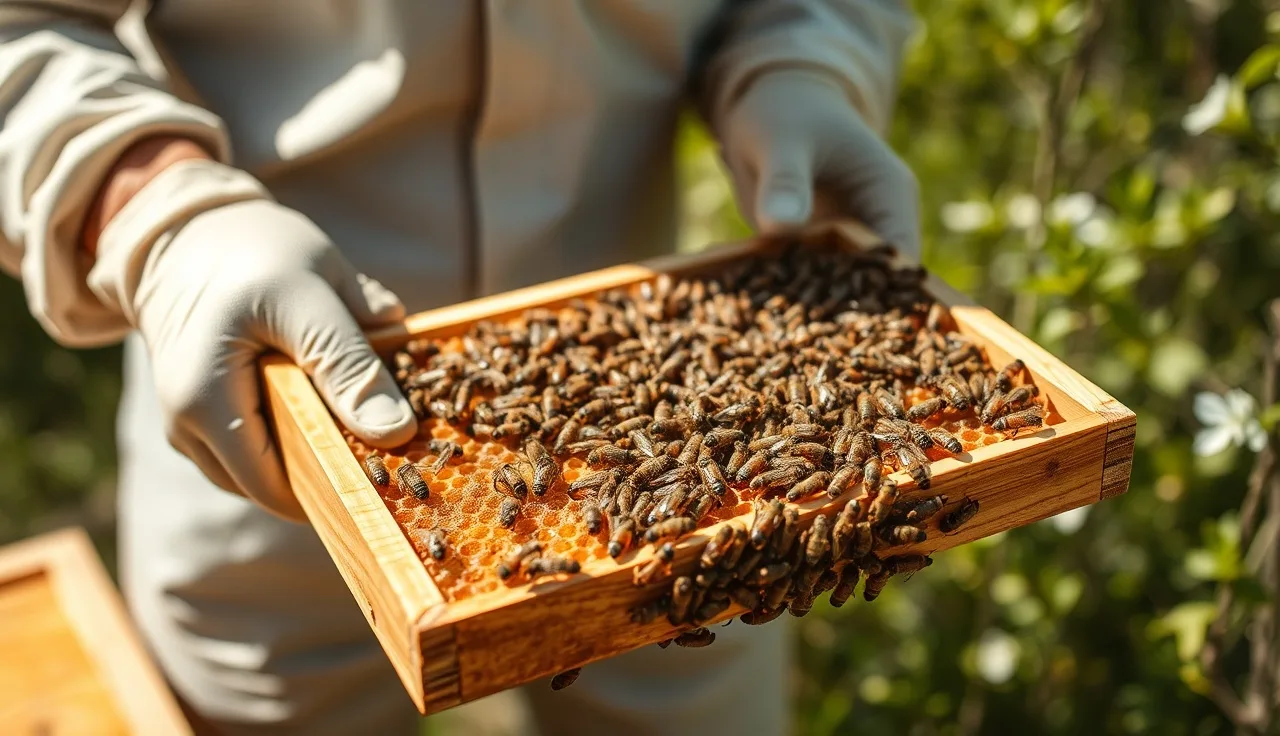
Drone brood removal turns that preference into a trap. You give the colony a frame of drawn drone comb or a plastic drone-cell insert. The queen lays drone eggs there by choice. Nurse bees raise the larvae. Mites pile in as capping begins. You pull the frame just before the drones would emerge, freeze it, and the mites die. Then you thaw, uncap, and feed the frozen comb back to the bees as protein, or scrape it and reuse the foundation.
One clean cycle removes whatever mites chose to breed in that comb. Mites aren't spread evenly across a hive, so the real-world reduction swings, but controlled trials and the Honey Bee Health Coalition's Varroa Management Guide put it at roughly 30 to 50% per trapping cycle when you run the technique consistently [3].
For the biology behind every decision here, see the fuller varroa mite breakdown on this site.
How do you actually do it step by step?
The mechanics are simple. Get a frame fitted with drone-cell foundation or a commercial plastic drone insert. Green plastic inserts from most beekeeping supply companies run $3 to $6 each and last many seasons [4].
Place the frame in the brood nest, one or two frames in from a side. The queen usually finds it within a few days and starts laying. Mark the calendar the moment you see eggs or fresh larvae. Drone eggs hatch around day 3. Cells get capped around day 10. The pupa matures and emerges around day 24 from egg-laying.
Your removal window is days 19 to 21 from egg-laying, roughly 8 to 10 days after capping. Pull the frame while the cells are still capped but before any drone chews his way out. Slide it into a plastic bag and freeze it for at least 24 hours. That kills the mites, the drone pupae, and any small hive beetles that snuck in.
Thaw the frame. Two ways to finish. Scrape off all the capped brood and return the empty drawn comb right away, or uncap the cells and lay the frame on the inner cover so the bees clean out the pupae as protein. Both work. The drawn comb goes straight back into the brood nest so the whole thing repeats.
For steady pressure through spring and early summer, keep two drone frames cycling on opposite schedules. One sits in the freezer while the other works the hive.
What does the research say about how effective it really is?
Honest answer: the data is decent, not spectacular, and the effect size rides almost entirely on your timing.
A German modeling study by Calis and colleagues (1999) estimated that continuous drone brood trapping could hold mite population growth down by about 30 to 40% versus untreated colonies across a season [5]. A field study by Delaplane and colleagues in the Journal of Apicultural Research found that repeated drone comb removal cut mite infestation rates by a statistically real margin, but mite populations still climbed past treatment thresholds without a chemical follow-up [9].
The Honey Bee Health Coalition's Varroa Management Guide calls drone brood removal "an effective non-chemical method that can suppress varroa reproduction," then says plainly it "should be used in combination with other management methods" instead of on its own [3]. That's the cleanest summary of where the consensus sits.
Why doesn't it do more? Three reasons. Only mites that chose drone cells get removed, so anything sitting phoretically on adult bees or breeding in worker cells survives. Miss the window and drones emerge before you pull the frame, so the trapped mites walk right back out. And in a booming colony full of natural drone comb, your one artificial frame catches only a slice of total drone reproduction.
The science lands here: drone brood removal works, cuts mite load by a real amount, and buys time. It does not replace oxalic acid, formic acid, or other registered treatments once mite counts run high.
What are the real advantages of drone brood removal?
No chemical residue. That's the big one. Oxalic acid, thymol, amitraz, and formic acid all leave traces in wax, honey, or both under the wrong conditions. Drone brood removal puts nothing foreign into the hive at all [6]. Producing comb honey or keeping a hive fully chemical-free? This fits.
It costs almost nothing. A reusable drone insert runs under $6. No label to read, no temperature window, no gear beyond your usual veil and gloves.
It works during a honey flow. Most chemical treatments are off-limits with supers on, because residues can drift into the crop. Drone brood removal has no such rule. Trap mites from spring through late summer without pausing honey production.
Bees don't get stressed by it. Thymol in the heat, oxalic acid at high doses, and some synthetic miticides can cause queen loss, brood death, or odd behavior when applied wrong. Pulling a drone frame and freezing it does nothing to the rest of the colony.
It hands you monitoring data. When you pull the capped frame, uncap a row of 100 cells and count foundress mites. That gives you a rough infestation read and a direction of travel, no separate alcohol wash or sticky board needed.
It teaches timing. Tracking capping dates and pulling frames on schedule builds the attentive habit that heads off most other colony problems too.
What are the real disadvantages and limitations?
Labor is the drawback nobody talks about enough. You have to check the hive often, mark the date each batch gets capped, and pull the frame inside a narrow window. Miss it by two or three days and the drones emerge, the mites escape, and the cycle is wasted. Run 30 or more colonies and doing this on every hive is a real grind.
Seasonal limits. It only works while the colony is raising drones, which in most temperate climates means roughly April through August. Late summer and fall are exactly when mite loads spike toward the danger zone, and that's when drone production is winding down. You get the least drone comb right when you need the most mite reduction.
It does not clear the mites. Even done perfectly, it takes only the reproducing fraction that picked drone cells. The phoretic mites riding adult bees, which can run high in summer, stay put. If your load already sits above 2 to 3 mites per 100 bees on an alcohol wash, drone brood removal alone won't pull it down fast enough to save the colony [3].
Colonies may compensate. Some research suggests that stripping drone brood can, in certain cases, push the colony to rear more drones as replacement, partly cancelling your effort. The evidence is mixed, but worth knowing.
There's an ethical piece worth sitting with. You're killing hundreds to thousands of developing drones per cycle. That's bees dying. Against saving the colony it's a clear trade, but it isn't nothing.
And natural drone comb doesn't help you. Mites entering drone comb built in a super or along the edge of a brood frame stay trapped in the hive because you can't cut and freeze that comb on schedule. The method only works clean with a dedicated removable drone frame.
How does drone brood removal compare to chemical treatments?
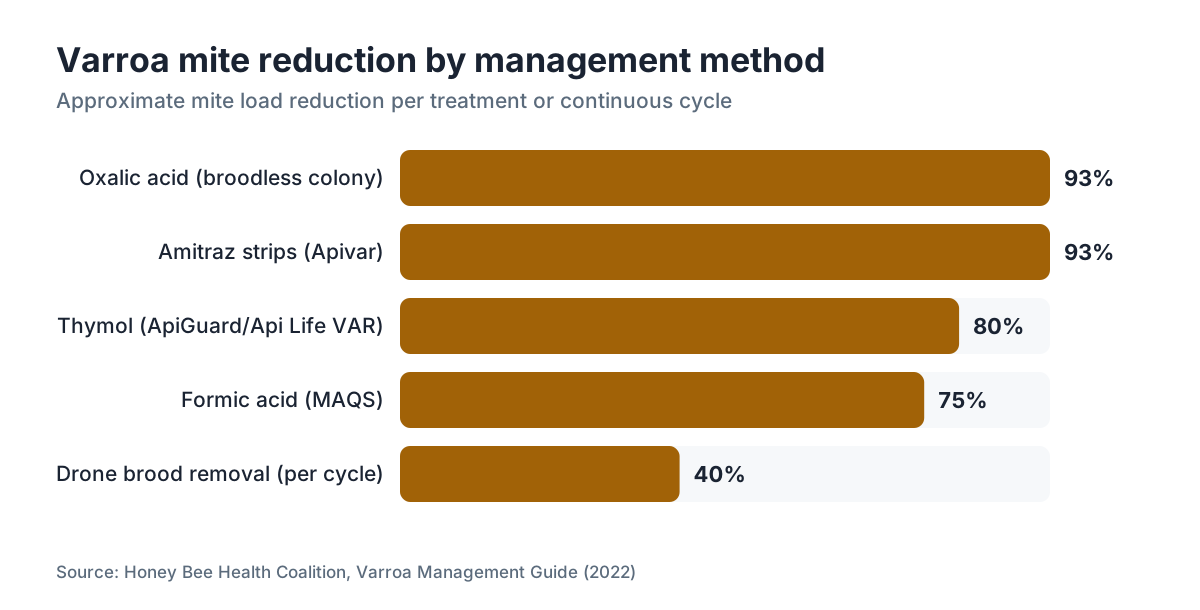
Here's a direct comparison across the main options. Numbers come from the Honey Bee Health Coalition's Varroa Management Guide and EPA-registered product labels [3][6].
| Method | Mite reduction per treatment | Chemical residue | Works during honey flow | Approx. cost per hive/season | Temperature constraints |
|---|---|---|---|---|---|
| Drone brood removal | 30 to 50% per cycle (cumulative with repeats) | None | Yes | Under $10 (reusable frame) | None |
| Oxalic acid (dribble/vaporization) | 90 to 95% when broodless | Minimal (degrades in wax) | No (supers off) | $1 to $3 per treatment | Below 50°F ideal for dribble; 50 to 85°F for vapor |
| Formic acid (Mite-Away Quick Strips) | 60 to 90% | Degrades; minimal residue | Limited (some labels allow 1 super) | $8 to $15 per treatment | 50 to 85°F |
| Thymol (ApiGuard, Api Life VAR) | 70 to 90% | Minimal | No (supers off) | $6 to $12 per treatment | 59 to 105°F |
| Amitraz strips (Apivar) | 90 to 97% | Yes, wax contamination documented | No (supers off) | $4 to $8 per strip, 2 strips/hive | 50 to 85°F |
Drone brood removal's number looks small against oxalic acid's 90 to 95%, but the comparison isn't fair. Oxalic acid gets applied once or twice a season. Drone brood removal runs all season long. Plenty of beekeepers pair them: run drone frames through spring and summer to hold the load down, then hit hard with oxalic acid in a broodless fall treatment. That combo works well.
What I'd actually do: use drone brood removal for active suppression April through July, run a mite wash every 3 to 4 weeks, and treat chemically the moment the count crosses 2%. Don't bet the colony on mechanical removal alone.
When in the season should you use drone brood removal?
Start the moment the colony begins raising drones in spring. Across most of the U.S. that's March or April in the South and May in the North. Get the drone frame in before the first big nectar flow if you can. Early spring is when mite numbers are still low and suppression comes easiest. Hold the load down through spring and you enter summer, varroa's fastest breeding stretch, with a head start.
Keep cycling drone frames through June and July. Colonies are at peak strength and raising the most drone brood, so the trap is at its most attractive and each cycle catches the most mites.
By August, dial back your expectations. Drone production falls off. Worker brood shrinks as the colony shifts toward winter bees. The queen lays fewer eggs. Your drone frame may sit half filled or get ignored. August and September are when you run a proper mite wash, read your numbers honestly, and decide on chemical treatment [3].
Winter shuts the method down entirely. No brood in the cluster means no drone comb to trap. An oxalic acid dribble or vaporization on a broodless winter colony is your tool then, not mechanical removal.
One timing note that trips people up. Place the drone frame too late in a cycle, after the queen has already laid worker eggs heavily in it, and you may find the frame full of worker brood instead. Bees don't always cooperate. Check placement and acceptance inside the first week.
Can drone brood removal work as a standalone treatment?
Technically yes, in a narrow set of conditions. If your starting load is very low (well under 1% on a wash), you run only one or two hives, you're obsessive about frame timing, and you're in a temperate climate with a long drone-rearing season, you might hold mite numbers below the danger line through mechanical removal alone. A few beekeepers say they pull this off.
In practice, the answer is almost certainly no for most hobbyists and sideliners. The 30 to 50% reduction per cycle is real but not enough to outrun varroa's breeding rate once the colony is big and the mites are climbing. Varroa populations in untreated colonies can double in as few as 4 to 6 weeks under good brood conditions [2]. Drone brood removal shaves that growth but rarely reverses it once you're above 2%.
The Honey Bee Health Coalition is blunt: no single method holds the line alone, and integrated varroa management that pairs monitoring with multiple treatments gives the best results [3].
If you're set against all chemical treatment, drone brood removal plus brood breaks (pulling the queen briefly to force a broodless stretch) and steady monitoring gives you the strongest chemical-free shot. Go in clear-eyed. That road takes more work, more monitoring, and accepts more colony risk than an integrated program that includes registered treatments.
What equipment do you need and where do you get it?
The only dedicated gear is the drone foundation or plastic drone insert frame. Standard green plastic drone inserts drop into a standard Langstroth deep or medium frame. Nearly every major supplier carries them for $3 to $6. A full frame pre-assembled with drone foundation runs $5 to $10.
Beyond that: a permanent marker for dating frames, a freezer with a few cubic feet free (a small chest freezer works well across multiple hives), and your usual hive tool and gear. That's the whole list. No applicators, no chemical shelf life to track, no protective equipment past what you already own.
Already tracking mite counts? Log each frame's placement, capping, and removal date in the same record. That data over a full season tells you whether the technique is actually moving your counts, which matters far more than any single cycle.
VarroaVault's free protocol tools let you log drone frame cycles right alongside your alcohol wash results, so you can watch the actual trend line across every hive.
On a budget? Ask whether your local extension service or beekeeping club runs group buys on drone inserts. Some beekeeping supply companies also discount quantities of 10 or more.
What mistakes do beekeepers most often make with this method?
Missing the removal window. The most common mistake, and the most expensive. If drones hatch before you freeze the frame, the mites scatter into the colony and you've done nothing except raise a batch of drones. Set a calendar reminder the day capping starts. Write the target removal date on the frame with a paint marker. Don't trust memory.
Using it as a substitute for monitoring. Some beekeepers pull drone frames and figure their varroa work is done. They quit doing alcohol washes. Mite counts climb quietly in the worker brood. Run a wash every 3 to 4 weeks no matter what else you're doing.
Starting too late. Beekeepers who get curious about this in July are already behind. By the time the frame gets accepted and the first cycle finishes, summer's nearly over and the load may already be high. Start in early spring.
Running only one frame. A single drone frame leaves a gap between cycles while you wait for the next batch to cap. Two frames on a staggered schedule keep the pressure continuous.
Expecting the same result in every colony. A strong colony raising natural drone comb all over the hive spreads its drone-rearing across many spots, well beyond your trap frame. Your one insert may grab only a small share. Colonies like that need combined approaches.
Wrong location. A drone frame parked on the outer edge, away from the brood nest, sees less queen traffic and fills with nectar instead of brood. Put it in the brood nest, one frame from the side.
Is drone brood removal right for your operation?
It comes down to your goals, your time, and your colony count.
Run 1 to 5 hives and want fewer chemical inputs without losing effectiveness? Drone brood removal is worth doing. It's free in practice, folds into normal inspections, and hands you extra monitoring data off the frame itself. Pair it with quarterly alcohol washes and a fall oxalic acid treatment and you've got a solid program.
Run 20 to 50 colonies as a sideliner? The labor math tightens. Each drone frame eats 5 to 10 minutes of attention per cycle across visits. Across 30 hives with two frames each, that stacks up fast. Many sideliners use drone brood removal on their strongest, most productive hives and lean on chemical treatments for the whole operation.
Organic or treatment-free? Drone brood removal is one of your main tools, alongside brood breaks and hygienic stock selection. Go in clear-eyed: you'll likely lose more colonies over time than a beekeeper using registered treatments, and the research backs that up. It's a choice you can make, but make it knowing the odds.
For most hobbyists, the honest call is this. Use drone brood removal because it's free, safe, and educational, but don't let it hand you false confidence. Keep doing your mite washes. Know your threshold. Treat when the numbers say treat. VarroaVault's free varroa tracking tools help you spot each of those moments across your hives.
Frequently asked questions
How many mites does one drone brood removal cycle actually remove?
It varies with colony size and how many mites picked drone cells, but controlled data points to 30 to 50% of the mite population per trapping cycle. A single well-timed pull from a medium-strength colony might take out several hundred mites. The effect compounds across cycles through the season, which is why consistent cycling beats any one pull.
How often should I replace the drone frame during the season?
Every 21 to 24 days during active drone-rearing season, roughly April through July in temperate climates. That interval tracks the drone development cycle from egg to emergence. Many beekeepers run two frames on a staggered 10 to 12 day offset, so one is always in the brood nest while the other sits in the freezer, keeping the trapping pressure continuous.
Does freezing the drone comb damage the foundation for reuse?
No. Plastic drone inserts and wax drone foundation both handle repeated freeze-thaw cycles without structural damage. Thaw completely before returning the frame to the hive. If you used wax foundation, check for cracks after several seasons. Plastic inserts are essentially reusable forever. Many beekeepers report using the same inserts for 5 to 10 years.
Will drone brood removal hurt my colony's drone population?
Yes, on purpose. A colony naturally raises several hundred to several thousand drones in spring and summer. Repeatedly removing drone brood does cut the number of mature drones in and around the hive. In a single-hive setup this barely matters for local queen mating. In an apiary with multiple colonies, the other hives keep local drone genetics diverse.
Can I use drone brood removal with supers on during a honey flow?
Yes, and that's one of its real advantages over most chemical treatments. Because you apply no chemical, there's no residue concern for honey in the supers. Run drone frames continuously through spring and summer flows without pulling supers or waiting for a harvest before you treat.
What mite count threshold should trigger a switch from drone removal to chemical treatment?
The Honey Bee Health Coalition recommends treating when an alcohol wash exceeds 2 mites per 100 bees (2%) during brood-rearing season. At that level, drone brood removal alone is too slow to reverse the trend before virus-related damage sets in. Use drone removal as suppression below that threshold, not a rescue above it.
How do I count mites on a drone frame to estimate infestation levels?
After freezing and thawing, uncap 100 drone cells with a cappings scratcher or fork. Count the cells holding at least one adult mite (the foundress). Divide by 100 for your infestation rate. Drone cell infestation runs 6 to 10 times higher than worker cell rates, so this number does not compare directly to an alcohol wash percentage.
Does drone brood removal work against varroa in Africanized honey bee colonies?
The biology holds: varroa prefers drone cells at similar rates in Africanized colonies. But Africanized bees show stronger hygienic behavior and some natural varroa resistance, so the added benefit of drone removal may be smaller. Safe handling with Africanized colonies adds practical complexity. See the africanized honey bee overview for more on working with these colonies.
Can I use a honey super frame for drone brood removal instead of a dedicated insert?
Not reliably. Honey super frames have shallower cells and a different cell geometry. The queen won't lay drone eggs there by choice. You need true drone-size cells, either a plastic drone insert or drone-cell foundation in a standard brood frame. The wrong cell size defeats the method.
Is drone brood removal approved or recommended by extension services?
Yes. Multiple university extension apiculture programs, including Penn State Extension and the University of Minnesota Bee Lab, list drone brood removal as a recognized mechanical control in their integrated pest management protocols. It's not a registered pesticide, so it carries no EPA label, but it's an accepted, researched technique for varroa suppression.
What happens if I forget to remove the frame and the drones emerge?
The mites inside those cells ride out with the drones or move onto the nurse bees tending them. They rejoin the mite population and breed in the next available brood cells. You've lost that cycle. The frame is now empty drawn comb. Put it back, mark the new start date, and don't miss the next window.
Does drone brood removal have any effect on varroa-associated viruses like deformed wing virus?
Indirectly, yes. Drone brood removal lowers total mite load, and fewer mites mean lower viral transmission across the colony. Deformed wing virus (DWV) spreads mainly through mites during feeding, so fewer mites equals less viral pressure. The benefit tracks how much mite load the technique actually removes, which in practice is partial, not complete.
Sources
- Rosenkranz et al., Apidologie (2010), Varroa biology and control review: Varroa mites enter drone cells at roughly 8 to 10 times the rate they enter worker cells due to drone larval pheromones and extended capping period
- University of Minnesota Bee Lab, Varroa mite biology: Drone pupae are capped for approximately 14 to 15 days vs 12 days for worker pupae, giving varroa more reproductive time; mite populations can double in 4 to 6 weeks under good brood conditions
- Honey Bee Health Coalition, Varroa Management Guide (2022): Drone brood removal is an effective non-chemical method that can suppress varroa reproduction and should be used in combination with other management methods; 2% threshold for treatment trigger
- Penn State Extension, Varroa mite management for beekeepers: Plastic drone inserts are available from beekeeping suppliers for $3 to 6 and are reusable across many seasons
- Calis et al., Experimental and Applied Acarology (1999), Drone brood trapping model: Continuous drone brood trapping modeled to reduce mite population growth by approximately 30 to 40% compared to untreated colonies over a season
- EPA, Pesticides: registered miticides for honey bees (Apivar, MAQS, Api-Bioxal labels): Oxalic acid, formic acid, thymol, and amitraz (Apivar) product labels include restrictions against use with honey supers and specify temperature windows; residue data cited from label documents
- University of California Agriculture and Natural Resources, Honey bee pest management: Drone brood removal listed as mechanical integrated pest management method for varroa suppression
- USDA Agricultural Research Service, Varroa destructor management: Integrated varroa management combining mechanical and chemical methods recommended; no single method sufficient alone
- Delaplane et al., Journal of Apicultural Research (1996), Drone brood removal field study: Repeated drone comb removal reduced mite infestation rates statistically but did not prevent mite populations from exceeding treatment thresholds without supplemental chemical treatment
- NC State Extension, Varroa mite integrated pest management: Drone brood trapping frame placement, timing, and cycling intervals described as key factors in technique effectiveness
Last updated 2026-07-09