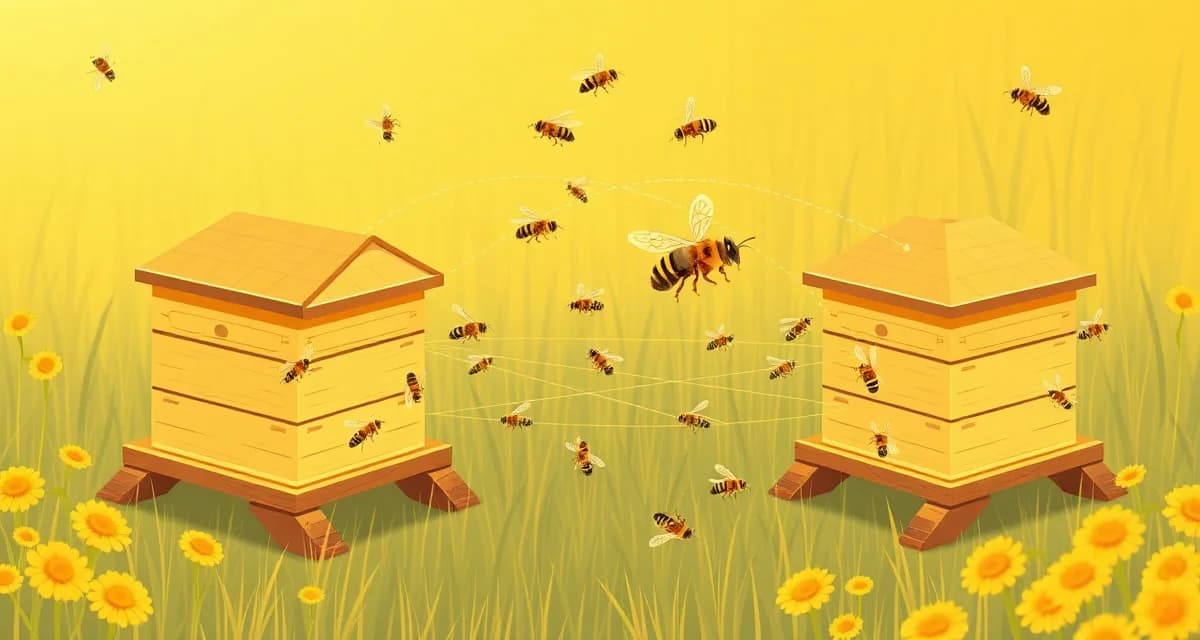
How Varroa Spreads Between Apiaries: Vectors and Prevention
Apiaries within 1.5 miles of high-mite operations can receive reinfestation within 2 weeks of a completed treatment. This is one of the most frustrating realities of varroa management: you treat correctly, achieve good efficacy, and then watch counts rebuild from external sources. Understanding the spread vectors doesn't eliminate reinfestation, but it changes how you monitor for it and how you assess post-treatment results.
TL;DR
- This guide covers key aspects of how varroa spreads between apiaries: vectors and prevention
- Mite monitoring should happen at minimum every 3-4 weeks during active season
- The 2% threshold in spring/summer and 1% in fall are standard action points based on HBHC guidelines
- Always run a pre-treatment and post-treatment mite count to calculate efficacy
- Treatment records including product name, EPA number, dates, and counts are required for state inspection compliance
- VarroaVault stores all monitoring and treatment data with automatic threshold comparison and state export formatting
The Four Main Spread Vectors
Drifting Bees
Honey bees don't always return to their home hive. Foragers, drones, and returning bees in high-traffic areas regularly land at neighboring hives. If those bees are carrying phoretic mites, they carry mites into the new hive.
Drifting is worst:
- In apiaries where hives are lined up in rows facing the same direction (returning foragers overshoot or undershoot and enter the wrong hive)
- In wind conditions that push bees off course
- In high-density apiary situations where many hives occupy a small area
Mitigation: Arranging hives in irregular patterns rather than straight rows, with hives facing different directions, reduces drift. Using visual markers (different colors, shapes on hive fronts) helps bees identify their home hive. These measures reduce but don't eliminate drift.
Robbing
Robbing is the most efficient varroa transmission mechanism. When a weak, collapsing, or mite-compromised colony is robbed by healthy neighboring colonies, robbing bees pick up mites from the robbed colony and carry them home. A high-mite collapsing colony can transfer hundreds of mites to each robbing colony during a robbing event.
Robbing is worst:
- During nectar dearth (late summer, especially August-September)
- When a colony collapses or is left open after removal
- Near weakened colonies that can't defend their entrance
Robbing from a collapsing high-mite colony is the primary mechanism behind the "September spike" in mite counts. Beekeepers often see inexplicably high September counts in colonies that tested fine in July. Robbing from a neighbor is the usual explanation.
Mitigation: Reduce entrances of weak colonies during dearth. Remove dead colonies promptly and seal any remaining honey (freezing frames kills mites that might survive in the comb and be robbed). Treat or remove obviously mite-compromised colonies rather than leaving them to collapse and infect neighbors.
Swarms
Swarms carry whatever mite load was in the parent colony. A swarm from a high-mite colony delivers a significant mite population into a new location. If a swarm from a failing colony establishes in a tree near your apiary, it becomes a reinfestation source as it grows and eventually produces robbers.
Wild populations and ferally-living swarms are also reservoirs. In areas with dense urban beekeeping, feral colonies in walls and trees can carry high mite loads and serve as permanent reinfestation sources.
Mitigation: Limit swarm production through proactive splitting and queen management. If you capture swarms, count them immediately before introducing to your apiary.
Beekeeper Movement of Equipment
Frames of brood, combs, and equipment moved between hives or apiaries can carry mites. Moving a frame of capped brood with mites in the cells transfers those mites directly. Moving a drawn comb from a high-mite hive to a low-mite hive without inspection transfers any mites remaining in the comb.
This vector is entirely under beekeeper control and entirely preventable.
Mitigation: Count mites on any colony before accepting frames from another operation. Don't move capped brood between apiaries without verification of the source colony's mite status. Log all inter-apiary equipment movement in your records.
How Reinfestation Rate Affects Treatment Strategy
Understanding reinfestation pressure changes how you interpret post-treatment results and how often you count.
High reinfestation risk (within 1.5 miles of other operations, urban area, known high-mite neighbors): Even a perfect treatment achieving 95% efficacy can see counts rebuild to threshold within 6-8 weeks. In this situation, monthly counting is insufficient during peak season. Count every 3 weeks from July through September. Plan for a second treatment cycle if counts rebuild above threshold before October.
Moderate reinfestation risk (2-4 miles from other operations): Post-treatment counts rebuild more slowly. Monthly monitoring during the active season is usually adequate, with additional counts in August-September.
Low reinfestation risk (isolated apiaries, 5+ miles from other known operations): Post-treatment counts rebuild slowly. Once treated below threshold, you may remain below threshold for 2-3 months. Monthly monitoring is adequate.
Tracking Reinfestation Risk in VarroaVault
VarroaVault's reinfestation risk map overlay shows nearby beekeeping operations registered in state apiary databases, when available. This gives you a visual sense of the apiary density around each of your locations.
For each apiary, VarroaVault allows you to set a reinfestation risk level (high, medium, low). This setting adjusts the recommended monitoring interval for that apiary and influences the threshold alert timing. A high-reinfestation-risk apiary gets 3-week monitoring reminders from July-September; a low-risk apiary stays on the monthly schedule.
When you log post-treatment counts, VarroaVault's trend analysis flags when counts are rebuilding faster than expected for the season and your location. Faster-than-expected rebuilding is a signal to investigate reinfestation sources.
Frequently Asked Questions
What are the main ways varroa spreads between apiaries?
The four main spread vectors are drifting bees (foragers that enter the wrong hive carry phoretic mites), robbing (healthy colonies robbing mite-compromised collapsing colonies acquire large numbers of mites in a single event), swarms (which carry the parent colony's mite load to a new location), and beekeeper equipment movement (combs, frames, and equipment moved between hives or apiaries can transfer mites). Robbing during late-summer dearth is the most efficient single transmission event.
How far can varroa spread through bee drifting?
Bees drift most frequently between adjacent hives in the same apiary. Foraging range extends up to 3 miles in good forage conditions, meaning a bee from one operation can physically reach another operation within 3 miles. However, meaningful mite transfer through drift is most significant between hives within the same apiary or those within 0.5 miles. Robbing is a more significant inter-apiary transmission mechanism than routine drifting at longer distances.
Does VarroaVault track reinfestation risk from nearby operations?
VarroaVault offers a reinfestation risk overlay showing nearby beekeeping operations from state apiary registration data where available. Each apiary in your account can be assigned a reinfestation risk level (high, medium, low) that adjusts the recommended monitoring interval for that location. High-risk apiaries get more frequent count reminders during peak season. Faster-than-expected count rebuilding after a successful treatment is flagged in the trend analysis as a potential reinfestation signal.
How do I know if my varroa treatment is working?
Run a mite count 2-4 weeks after the treatment ends and compare it to your pre-treatment count. The efficacy formula is: ((pre-count - post-count) / pre-count) x 100. A result above 90% indicates effective treatment. Results below 80% should trigger investigation for possible resistance, application error, or reinfestation. Log both counts in VarroaVault to track efficacy trends across treatment cycles.
How often should I check mite levels in my hives?
At minimum, once per month (every 3-4 weeks) during the active season. Increase to every 2 weeks when counts are near threshold or after a treatment to verify it worked. In fall, monitoring frequency matters most because the window to treat before winter bees are raised is narrow. VarroaVault's monitoring reminders can be set to your preferred interval for each apiary.
What records should I keep for varroa management?
Each record should include: date of count or treatment, hive identifier, monitoring method used, number of bees sampled, mites counted, infestation percentage, treatment product name and EPA registration number, dose applied, treatment start and end dates, and PHI end date. State apiarists typically expect this level of detail during inspections. VarroaVault captures all of these fields in a single log entry.
What is How Varroa Spreads Between Apiaries: Vectors and Prevention?
This article explains the mechanisms by which varroa mites spread between bee colonies and apiaries, covering the four primary transmission vectors: drifting bees, robbing behavior, swarms, and beekeeping equipment and practices. It provides actionable guidance on post-treatment monitoring, reinfestation timelines, and how proximity to high-mite operations affects your colony's mite load. The guide is part of VarroaVault's educational content designed to help beekeepers make sense of why mite counts rebound even after effective treatment.
How much does How Varroa Spreads Between Apiaries: Vectors and Prevention cost?
The article is free to read on VarroaVault. VarroaVault's monitoring and record-keeping tools are available via a paid subscription, which handles mite count logging, automatic threshold comparisons against HBHC guidelines, treatment records with EPA numbers, and state-compliant inspection export formatting. There is no cost to access this educational guide itself — it exists to help beekeepers understand reinfestation dynamics regardless of whether they use the platform.
How does How Varroa Spreads Between Apiaries: Vectors and Prevention work?
Varroa spread works through several biological and behavioral vectors. Drifting bees — foragers and drones that land at the wrong hive — carry mites across apiary boundaries. Robbing bees from collapsing high-mite colonies introduce large mite loads rapidly. Swarms carry the mother colony's mite burden to new locations. Beekeepers also inadvertently move mites through shared equipment and comb transfers. Apiaries within 1.5 miles of a high-mite operation can see reinfestation within two weeks of completing treatment.
What are the benefits of How Varroa Spreads Between Apiaries: Vectors and Prevention?
Understanding spread vectors helps beekeepers interpret post-treatment mite counts accurately, distinguishing between treatment failure and external reinfestation. It supports smarter monitoring schedules — every 3-4 weeks during active season — and sets realistic expectations after treatment. Recognizing reinfestation risk encourages earlier intervention before counts breach the 2% spring/summer or 1% fall action thresholds. It also highlights the value of coordinated treatment timing with neighboring beekeepers to reduce the regional mite pressure affecting all local apiaries.
Who needs How Varroa Spreads Between Apiaries: Vectors and Prevention?
Any beekeeper who treats for varroa and then watches counts climb back up needs this information. It is especially relevant for those keeping hives in populated areas, near other apiaries, or within 1.5 miles of untreated or poorly managed colonies. New beekeepers who assume a successful treatment means long-term control will benefit most. It is also essential reading for those preparing hives for state inspection, where treatment efficacy records and post-treatment counts are part of compliance documentation.
Related Articles
- Off-Season Varroa Monitoring: What to Do Between October and March
- Varroa Mite Prevention: Can You Stop Mites Before They Arrive?
- Varroa Management for Isolated Apiaries: Low Reinfestation Risk Strategies
- Varroa Mite Treatment Software for Apiaries of All Sizes
Sources
- American Beekeeping Federation (ABF)
- USDA ARS Bee Research Laboratory
- Honey Bee Health Coalition
- Penn State Extension Apiculture Program
- Project Apis m.
Get Started with VarroaVault
The information in this guide is most useful when you have your own mite count data to apply it to. VarroaVault stores every count, flags threshold crossings automatically, and builds the treatment history you need for state inspections and effective management decisions. See pricing and free tools at varroavault.com.