Varroa Mite Treatment Software for Apiaries of All Sizes
VarroaVault users managing 5 hives save an average of 2 hours per month. Those managing 200 hives save an average of 8 hours per week. That range captures something important about VarroaVault: it scales with your operation, and the value it delivers scales proportionally.
Whether you're a backyard beekeeper with 3 hives trying to survive your first winter, a serious hobbyist with 20 colonies managing toward honey production, or a commercial operator with 500 hives and state inspection requirements, the core problem VarroaVault solves is the same: varroa management without a system produces worse outcomes than varroa management with one.
TL;DR
- Treatment decisions should always be triggered by a mite count result, not a fixed calendar date
- Different treatments have different temperature requirements, PHI restrictions, and brood penetration capabilities
- Always run a post-treatment count 2-4 weeks after treatment ends to calculate efficacy
- Efficacy below 80% warrants investigation -- possible resistance, application error, or reinfestation
- Rotate treatment chemistry to prevent resistance buildup across successive cycles
- VarroaVault logs treatment events, calculates efficacy, and flags when rotation is recommended
The Core Problem VarroaVault Solves
Varroa management fails for predictable reasons: missed treatment windows, skipped monitoring events, undetected treatment failures, incomplete records, and decisions made without adequate data. These failures happen at every scale -- they just have different consequences.
At 5 hives, a missed fall window might cost you one colony in a bad winter. At 200 hives, a systematic missed window or undetected resistance trend can mean 40+ colony losses. The biology of failure is the same; the economics scale with hive count.
VarroaVault addresses these failures systematically:
- Monitoring reminders so you don't miss count events
- Threshold alerts so you know when to act and when to wait
- Treatment planner so you make the right product choice for your conditions
- PHI tracking so honey is always harvestable when you need it
- Post-treatment count reminders so you verify efficacy every time
- Trend visualization so you see patterns before they become crises
- Compliance export so inspection preparation takes minutes, not hours
Scale-by-Scale: How VarroaVault Changes at Different Hive Counts
1-5 Hives: The Foundation
For a new or small-apiary beekeeper, VarroaVault provides the structure that prevents the two most common first-year failures: not knowing when to test, and not knowing what to do with the results.
The first-season onboarding creates your monitoring calendar from your installation date and location. Reminders fire at the right times without you tracking dates. When your first count comes back, the results screen tells you what the number means in the current season and what your options are.
For 1-5 hives, VarroaVault is less about efficiency than about replacing the missing knowledge that causes first-year beekeepers to lose colonies they didn't know they were losing.
Key features at this scale: First-season monitoring calendar, threshold alerts, treatment planner, PHI tracker, mobile app for in-apiary logging.
5-15 Hives: Consistency
At 5-15 hives, the individual attention approach still works but the mental load grows. You have enough hives that tracking everything in your head is unreliable, and the stakes are high enough that colony losses represent real money.
VarroaVault at this scale adds the trend tracking that lets you identify outlier colonies -- the chronic high-mite hives that need either requeening or more aggressive management. It also adds the annual summary report that helps you review the previous season and plan the next one.
Key features at this scale: All basic features plus individual hive trend graphs, annual summary report, treatment rotation tracking.
15-50 Hives: Systems
Between 15 and 50 hives, individual hive tracking becomes important for identifying outliers, and batch treatment planning becomes necessary for efficiency. This is the scale where paper records and memory start failing reliably and a structured digital system becomes genuinely necessary rather than just convenient.
VarroaVault Professional's batch logging, multi-apiary support, and PHI tracking per location handle the complexity that emerges at this scale without requiring you to build a custom spreadsheet system.
Key features at this scale: Batch treatment and count logging, multi-apiary management with per-location calendars, crew access for up to 5 users, state inspection compliance export.
50-200 Hives: Professional Operations
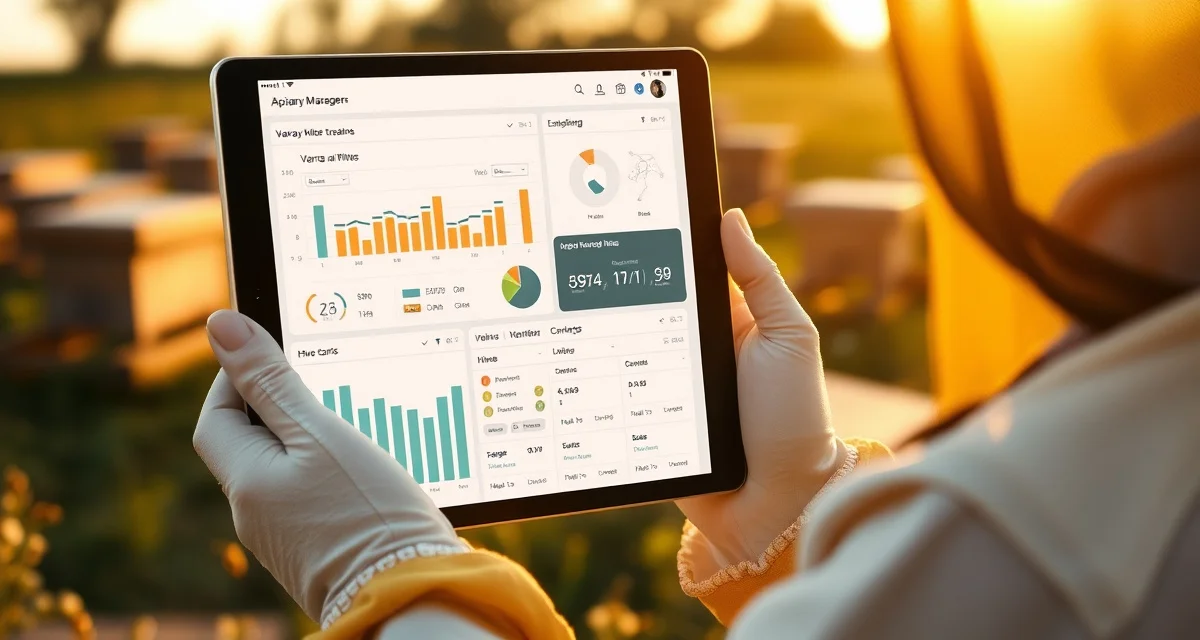
Operations at 50-200 hives typically have multiple apiaries at different locations, possibly staff doing some of the apiary work, and state inspection exposure that requires organized records. The scale comparison table in VarroaVault's marketing page shows exactly what changes in the app interface between a 5-hive and 500-hive operation.
At this scale, the efficiency savings become dramatic. Batch logging reduces the record-keeping portion of a treatment day from 45 minutes of individual entries to 5 minutes of batch entry. Compliance exports that took half a day of paper organization take 10 minutes. Representative sampling tools reduce the count workload while maintaining statistical validity.
Key features at this scale: All Professional features, plus representative sampling tools, sentinel hive designation, resistance trend reporting, full compliance export for 27 states.
200+ Hives: Commercial
Commercial-scale operations have all the complexity of smaller operations at higher stakes, plus additional compliance requirements for pollination contracts and licensing. VarroaVault Professional handles unlimited hive counts without performance degradation.
The key advantage at commercial scale isn't any individual feature -- it's having all your records in one place, accessible to all crew members, structured in a way that satisfies regulatory requirements without manual reformatting.
Key features at this scale: Crew access with individual user accounts, pollination placement mode with PHI compliance per contract, representative sampling with apiary-level statistical summaries, bulk compliance export across all apiaries simultaneously.
Pricing and Plans
VarroaVault Hobby: $29/month or $290/year
- Up to 10 hives
- 1 apiary location
- All basic monitoring and treatment features
- Mobile app
- Annual summary report
VarroaVault Professional: $59/month or $590/year
- Unlimited hives
- Unlimited apiary locations
- Batch logging
- Crew access (up to 5 users)
- State inspection compliance export (27 states)
- Representative sampling tools
- Sentinel hive designation
- Resistance trend reporting
- Pollination placement mode
Both plans include a 14-day free trial with full Professional plan access. The varroavault pricing page has the complete feature comparison and FAQ.
Trying Before You Commit
The 14-day free trial is the best way to understand how VarroaVault works for your specific operation. During the trial:
- Set up all your hives with their current records
- Log your most recent count and see the threshold interpretation
- Run through the treatment planner for your current conditions
- Generate a mock compliance export to see what your inspection records would look like
Most beekeepers who complete the onboarding milestones during the trial find the platform pays for itself in the first prevented loss. Those who don't complete onboarding often don't see the value -- which is why the 6-milestone onboarding guide is the most important thing to do in your first 14 days.
Frequently Asked Questions
What is the best varroa treatment software for small apiaries?
VarroaVault's Hobby plan is designed for operations up to 10 hives and covers all the core management functions: monitoring reminders, threshold alerts, treatment selection, PHI tracking, and post-treatment count verification. For new beekeepers, the first-season onboarding creates a monitoring calendar from your installation date, and threshold alerts tell you what your count results mean in context. For experienced small-apiary beekeepers, the trend visualization and annual summary features provide the pattern recognition that paper records don't support.
Does VarroaVault scale from a hobby apiary to a commercial operation?
Yes. The core monitoring and treatment features are the same at every scale. The difference between Hobby and Professional plans is the operational features that become necessary as scale grows: batch logging, multi-apiary management, crew access, compliance export, representative sampling, and sentinel hive designation. There's no re-setup required when you upgrade from Hobby to Professional -- your existing records carry forward and the additional features activate immediately.
What is the price difference between VarroaVault plans?
The Hobby plan is $29/month ($290/year) for up to 10 hives at one location. The Professional plan is $59/month ($590/year) for unlimited hives and locations. Both plans include a 14-day free trial with full Professional access. The $300/year difference is typically justified at 15+ hives where the batch logging efficiency alone saves more time than the cost difference. For operations with state inspection compliance requirements or multiple locations, Professional is the right starting plan regardless of hive count.
How do I know if my varroa treatment is working?
Run a mite count 2-4 weeks after the treatment ends and compare it to your pre-treatment count. The efficacy formula is: ((pre-count - post-count) / pre-count) x 100. A result above 90% indicates effective treatment. Results below 80% should trigger investigation for possible resistance, application error, or reinfestation. Log both counts in VarroaVault to track efficacy trends across treatment cycles.
How often should I check mite levels in my hives?
At minimum, once per month (every 3-4 weeks) during the active season. Increase to every 2 weeks when counts are near threshold or after a treatment to verify it worked. In fall, monitoring frequency matters most because the window to treat before winter bees are raised is narrow. VarroaVault's monitoring reminders can be set to your preferred interval for each apiary.
What records should I keep for varroa management?
Each record should include: date of count or treatment, hive identifier, monitoring method used, number of bees sampled, mites counted, infestation percentage, treatment product name and EPA registration number, dose applied, treatment start and end dates, and PHI end date. State apiarists typically expect this level of detail during inspections. VarroaVault captures all of these fields in a single log entry.
What is Varroa Mite Treatment Software for Apiaries of All Sizes?
VarroaVault is apiary management software designed to help beekeepers of all scales track and optimize varroa mite treatment. It logs mite counts, records treatment events, calculates post-treatment efficacy, and flags when chemistry rotation is recommended. Rather than relying on calendar-based guesswork, VarroaVault ties every treatment decision to actual mite count data, giving beekeepers a systematic approach that produces measurably better colony survival outcomes across operations ranging from 3 hives to 500.
How much does Varroa Mite Treatment Software for Apiaries of All Sizes cost?
VarroaVault offers tiered pricing to match different operation sizes, from backyard beekeepers to commercial apiaries. Hobby-scale users managing a handful of hives can access core mite tracking and treatment logging features at a low monthly cost, while larger operations unlock advanced tools like compliance reporting and resistance flagging. The time savings alone—up to 8 hours per week for 200-hive operations—typically offset the subscription cost within the first month of use.
How does Varroa Mite Treatment Software for Apiaries of All Sizes work?
VarroaVault works by centralizing your mite count data and treatment history in one place. You log alcohol wash or sugar roll results, and the software tracks infestation trends over time. When you apply a treatment, VarroaVault records the product, date, and conditions, then prompts a follow-up count 2–4 weeks post-treatment to calculate efficacy. If efficacy drops below 80%, the platform flags it for investigation. It also monitors your treatment rotation history to help prevent resistance buildup.
What are the benefits of Varroa Mite Treatment Software for Apiaries of All Sizes?
VarroaVault replaces scattered notebooks and spreadsheets with a structured system that actively improves your treatment decisions. Key benefits include data-driven treatment timing based on actual mite counts, automatic efficacy calculations after each treatment cycle, resistance rotation alerts, and documentation ready for state inspection requirements. Backyard beekeepers save roughly 2 hours per month; commercial operators managing 200 hives report saving 8 hours per week—time previously spent on manual recordkeeping and trying to reconstruct treatment histories from memory.
Who needs Varroa Mite Treatment Software for Apiaries of All Sizes?
Any beekeeper who treats for varroa can benefit from VarroaVault, but it's especially valuable for three groups: beginners navigating their first winter who need guidance on treatment thresholds and timing; serious hobbyists managing 10–50 colonies where tracking multiple hive histories manually becomes error-prone; and commercial or sideliner operators who face state inspection requirements and need reliable, auditable treatment records. If varroa management is currently driven by calendar dates rather than mite counts, VarroaVault is built for you.
Sources
- American Beekeeping Federation (ABF)
- USDA ARS Bee Research Laboratory
- Honey Bee Health Coalition
- Penn State Extension Apiculture Program
- Project Apis m.
Get Started with VarroaVault
The information in this guide is most useful when you have your own mite count data to apply it to. VarroaVault stores every count, flags threshold crossings automatically, and builds the treatment history you need for state inspections and effective management decisions. See pricing and free tools at varroavault.com.