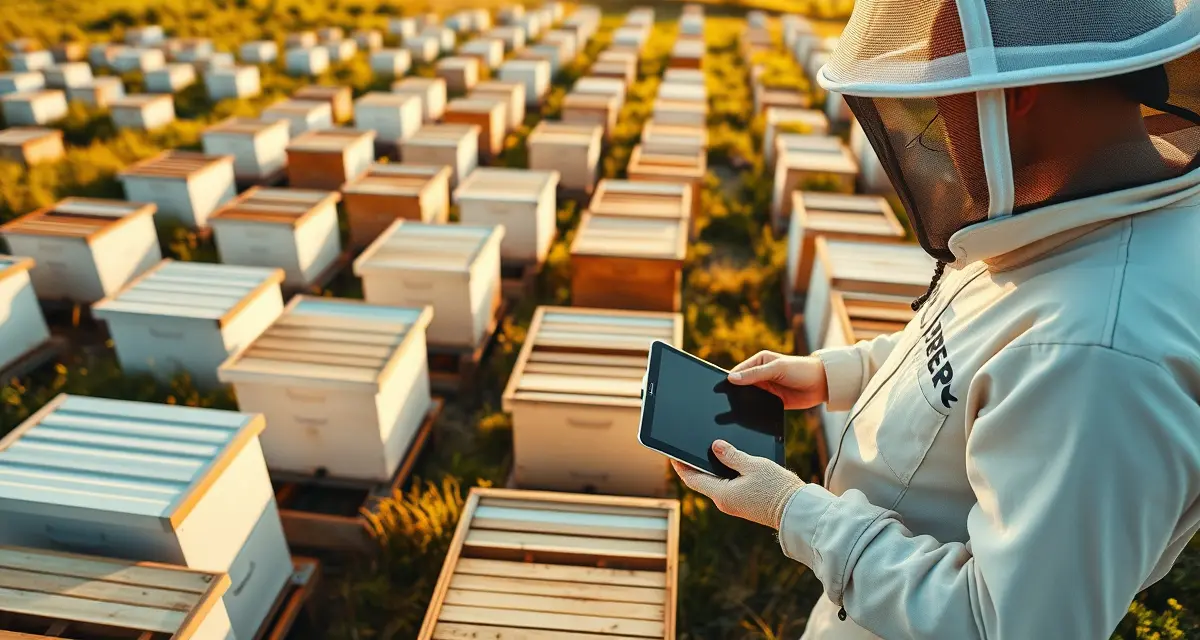
Commercial Beekeeper Operations Guide: Managing 100+ Hives
Running 100 hives is a different job than running 10. The beekeeping is the same, but the operations are completely different. And it's the operations part, the scheduling, the record-keeping, the crew coordination, the compliance, that breaks most commercial operations or keeps them from scaling further.
Commercial operations with standardized treatment workflows report 35% lower labor cost per hive. That's not from working faster. It's from working in systems. This guide covers what those systems look like at 100, 300, and 500 hives.
TL;DR
- Commercial operations managing 50+ hives cannot rely on per-hive manual records without significant time investment
- Treatment efficacy must be tracked across yards, not just individual hives, to detect resistance patterns
- USDA APHIS and state apiarists increasingly request documented treatment protocols for commercial inspections
- PHI compliance across multiple apiaries and multiple treatments requires a systematic tracking system
- VarroaVault's commercial tier supports multi-yard management with yard-level reporting and bulk data entry
- Generating a treatment history report for all apiaries takes under 60 seconds in VarroaVault
The Problem With Scaling Paper-Based Systems
At 20 hives, a notebook works. You can remember which hive got what treatment, more or less. You can track your mite counts by memory plus a few scribbled numbers.
At 100 hives, that breaks down. You've got multiple apiaries, possibly multiple employees, and dozens of treatments to track at different times with different PHI deadlines. At 300 hives, a paper system isn't just inefficient. It's a liability. You're one state inspection away from discovering that half your treatment records are incomplete.
The move to standardized, digital workflows is the single biggest operational upgrade most scaling commercial operations can make. It's not about technology for its own sake. It's about being able to answer basic questions: When did hive 47 at the north apiary last get treated? What's the PHI deadline on that Apivar strip? Which apiaries have colonies above threshold right now?
Staffing and Crew Coordination for Treatment Days
Commercial treatment days are logistical operations. You're moving through apiaries with a crew, working against time, and trying to log data that you'll need months later for compliance.
Planning Bulk Treatment Days
Effective bulk treatment days require:
- A pre-treatment mite count sweep (at least a sample across each apiary)
- Treatment product ordered and on-hand before the day starts
- A clear apiary route that minimizes driving time
- Crew assignments with specific roles (one person treating, one logging)
- A single data entry point so records don't get duplicated or lost
Workflow templates in VarroaVault let you pre-load a treatment event for all hives in an apiary simultaneously. Instead of logging 50 individual treatment events in the field, you bulk-apply the treatment record and flag any exceptions (missed hives, queenless colonies, hives too weak to treat). That alone can cut post-treatment data entry time by 60-70% for large apiaries.
Crew Assignments and Accountability
With employees in the field, you need to know who did what. For compliance purposes, some state regulations require a named applicator on treatment records. For internal accountability, you need to know if a crew member skipped a hive or applied the wrong dose.
Set up employee accounts in your management system with individual login credentials. Each logged treatment entry should carry the employee's name. When an inspector asks about the September Apivar application at your south apiary, you can show them the log with the applicator name, timestamp, and hive list in under a minute.
Post-Treatment Data Entry
One of the biggest time sinks in commercial operations is field data entry. Crews get back from a treatment day and spend an hour entering data, or worse, they hand you a paper sheet to enter yourself, and it sits on your desk for a week.
Mobile app entry from the apiary is the solution, but it requires the app to be fast enough to use in the field. The VarroaVault bulk logging feature handles this. You tap through a hive list confirming treatment for each one, with exceptions flagged by swipe rather than a new data entry screen.
Treatment Scheduling Across Hundreds of Hives
The treatment calendar for a 300-hive operation is not one calendar. It's 10 or 15 mini-calendars, one per apiary, that may be on slightly different schedules depending on their honey flow timing, mite pressure, and access.
Staggering Treatment Windows
You can't treat 300 hives on the same day. And some treatment products have a 4-6 week application period anyway (like Apivar strips). Stagger your apiary schedules by 1-2 weeks so treatment days are distributed across the season rather than clustered.
This also protects against product shortages. If you're ordering Apivar for 300 hives, you want that order to arrive before you need it. Staggered treatment dates give you more flexibility if delivery is delayed.
PHI Management Across Multiple Apiaries
This is where commercial operations are most exposed. You've got 10 apiaries, each with different last-treatment dates, and you're planning a honey harvest rotation through them. Getting PHI wrong on even one apiary's harvest creates contaminated honey and potentially a regulatory problem.
The multi-apiary management software approach is the only practical way to manage this at scale. You need a dashboard that shows you, for every apiary, the last treatment date, the product used, the PHI, and the earliest safe harvest date. That has to update automatically when you log a new treatment.
Manual tracking of PHI across 15 apiaries is how commercial honey gets pulled from the market. Don't do it on paper.
Record Keeping and Regulatory Compliance at Scale
Commercial operations face higher regulatory scrutiny than hobbyists. In most states, you're required to register your apiaries, maintain treatment records, and make them available for inspection. At commercial scale, an inspector can show up at any time and ask for records across your entire operation.
What Records You Need
State requirements vary, but a complete treatment record for commercial operations should include:
- Apiary location and registration number
- Hive identifier (number, tag, or GPS location)
- Treatment product name and EPA registration number
- Active ingredient
- Application date
- Application method and dose
- Name of applicator
- Pre-treatment mite count (increasingly required)
- Post-treatment mite count and date
That's a lot of fields per treatment event. Multiply by 300 hives, multiple treatment cycles per year, and you're looking at thousands of individual records. Digital logging is the only way to maintain this without a full-time records manager.
State Inspection Readiness
When an inspector calls, you need to produce records quickly and in a format they can read. The best commercial operations can export a full apiary treatment history as a PDF in under two minutes, organized by location and date.
Set up your commercial beekeeper management software so that export is one button press. Know exactly what the inspector is going to ask for before they ask. In most states, that's: "Show me your last 12 months of treatment records for apiary X." If that takes you 30 seconds instead of 30 minutes, you're in a different operational category.
Organic Certification Records
If you're operating certified organic apiaries alongside conventional ones, the record-keeping requirements are even stricter. Every input needs to be documented: treatment products, feed supplements, hive materials. Your certifier will ask for records going back 3 years, and gaps will delay or revoke your certification.
Keep organic and conventional apiaries on completely separate record tracks, even if you're managing both in the same software. The audit trail needs to be clean.
Comparison Table: Commercial Operation Management at Different Scales
| Scale | Key Challenge | Recommended Approach |
|---|---|---|
| 100-150 hives | Moving from paper; crew consistency | Digital logging, standardized per-apiary workflows |
| 150-300 hives | PHI management across apiaries; compliance | Dashboard PHI tracking, bulk treatment logging |
| 300-500 hives | Crew accountability; multi-state operations | Named applicator logging, multi-state inspection export |
| 500+ hives | Analytics; labor cost per hive | Treatment efficacy tracking, cost-per-hive reporting |
Logistics: Managing Multi-Apiary Operations
Multi-apiary management at commercial scale is a routing and timing problem as much as a beekeeping problem.
GPS Mapping of Apiary Locations
Your crew needs to find your apiaries. Your records need to show where treatments were applied. Inspectors want to know where your registered apiaries are. GPS coordinates on every apiary in your management system solve all three.
The GPS hive mapping feature in VarroaVault tags each apiary with a precise location. Crew members can navigate directly from the app. You can share apiary locations with a new employee without printing a map. Inspectors get exact coordinates rather than a hand-drawn map to a remote location.
Mite Pressure Monitoring Across Apiaries
Some of your apiaries will consistently run higher mite pressure than others. This might be due to proximity to untreated feral colonies, high surrounding colony density, or just the local bee population. Without consistent data from every location, you'll miss the pattern.
A dashboard that shows you current mite infestation rates across all apiaries, sorted by pressure, lets you prioritize which sites need treatment first. This is the difference between running an apiary on a schedule and running it on data.
Related Articles
- Backyard Beekeeper Varroa Program: A Simple 4-Step Plan for 1-5 Hives
- First-Year Beekeeper Varroa Guide: What You Need to Know in Year One
FAQ
How do commercial beekeepers schedule varroa treatments across hundreds of hives?
Effective commercial treatment scheduling involves staggering apiary treatment days across a 2-3 week window rather than treating everything at once. Each apiary gets a treatment date based on its specific honey flow schedule, mite pressure data, and last treatment date. Digital management software makes this practical by displaying the treatment calendar for all apiaries in one view, auto-calculating PHI deadlines, and sending treatment reminders. Without a centralized calendar, treatment windows get missed and PHI deadlines get violated.
What compliance records do commercial operations need?
Commercial beekeepers need treatment records that include the hive or apiary identifier, treatment product name and EPA registration number, active ingredient, application date, dose or application method, applicant name, and pre/post-treatment mite counts. Most states require records to be kept for 2-3 years and available for inspection on demand. Some states are moving toward digital submission requirements. Commercial operations should also maintain apiary registration records, PHI compliance documentation, and for organic operations, full input logs.
How does VarroaVault scale for a 500-hive operation?
VarroaVault's Professional and Commercial plans support unlimited hives across multiple apiaries. Bulk treatment logging applies a treatment event to an entire apiary in a single step, with individual exceptions flagged separately. Named applicator fields meet state compliance requirements for identified treatment applicators. Dashboard views show mite pressure and PHI status across all locations simultaneously. State-specific record exports are formatted for inspectors in each state where you operate. The per-hive cost for a 300-hive operation running on VarroaVault averages approximately $0.19 per hive per month, less than a single wasted treatment.
How do I know if my varroa treatment is working?
Run a mite count 2-4 weeks after the treatment ends and compare it to your pre-treatment count. The efficacy formula is: ((pre-count - post-count) / pre-count) x 100. A result above 90% indicates effective treatment. Results below 80% should trigger investigation for possible resistance, application error, or reinfestation. Log both counts in VarroaVault to track efficacy trends across treatment cycles.
How often should I check mite levels in my hives?
At minimum, once per month (every 3-4 weeks) during the active season. Increase to every 2 weeks when counts are near threshold or after a treatment to verify it worked. In fall, monitoring frequency matters most because the window to treat before winter bees are raised is narrow. VarroaVault's monitoring reminders can be set to your preferred interval for each apiary.
What records should I keep for varroa management?
Each record should include: date of count or treatment, hive identifier, monitoring method used, number of bees sampled, mites counted, infestation percentage, treatment product name and EPA registration number, dose applied, treatment start and end dates, and PHI end date. State apiarists typically expect this level of detail during inspections. VarroaVault captures all of these fields in a single log entry.
What is Commercial Beekeeper Operations Guide: Managing 100+ Hives?
Commercial Beekeeper Operations Guide: Managing 100+ Hives is a comprehensive operational resource for professional beekeepers running large-scale apiaries. It covers the systems, workflows, and tools needed to manage hive treatment scheduling, crew coordination, record-keeping, and regulatory compliance across 100 to 500+ hives. The guide emphasizes yard-level varroa management, PHI compliance tracking, and how standardized treatment workflows can reduce labor costs by up to 35% per hive.
How much does Commercial Beekeeper Operations Guide: Managing 100+ Hives cost?
The Commercial Beekeeper Operations Guide: Managing 100+ Hives is free to read on VarroaVault. The operational systems and workflows described in the guide are supported by VarroaVault's commercial tier subscription, which enables multi-yard management, bulk data entry, yard-level reporting, and treatment history exports. Pricing for VarroaVault's commercial tier is available on the VarroaVault website.
Sources
- American Beekeeping Federation (ABF)
- USDA ARS Bee Research Laboratory
- Honey Bee Health Coalition
- Penn State Extension Apiculture Program
- Project Apis m.
Building Operational Systems That Scale
The operational challenge of commercial beekeeping isn't the beekeeping. It's the systems around it. Treatment scheduling, crew coordination, PHI compliance, regulatory records, and mite data management all need to run smoothly across dozens of locations with multiple people involved.
The commercial operations that scale well are the ones that build systems early. They don't wait until they're at 400 hives to figure out how to log 400 hive treatment records. They build the workflow at 100 hives and expand it.
Standardize your treatment day process. Build a PHI tracking dashboard. Require named applicator logging. Export records before you need them. At 500 hives, the operations are still the same. You've just got a system that handles the complexity without dropping anything.
Get Started with VarroaVault
Commercial beekeeping operations need a varroa management system that scales across yards, generates compliance-ready reports, and flags resistance before it costs you colonies. VarroaVault was built for exactly this kind of multi-apiary operation. Start your free trial at varroavault.com and see how it fits your operation.