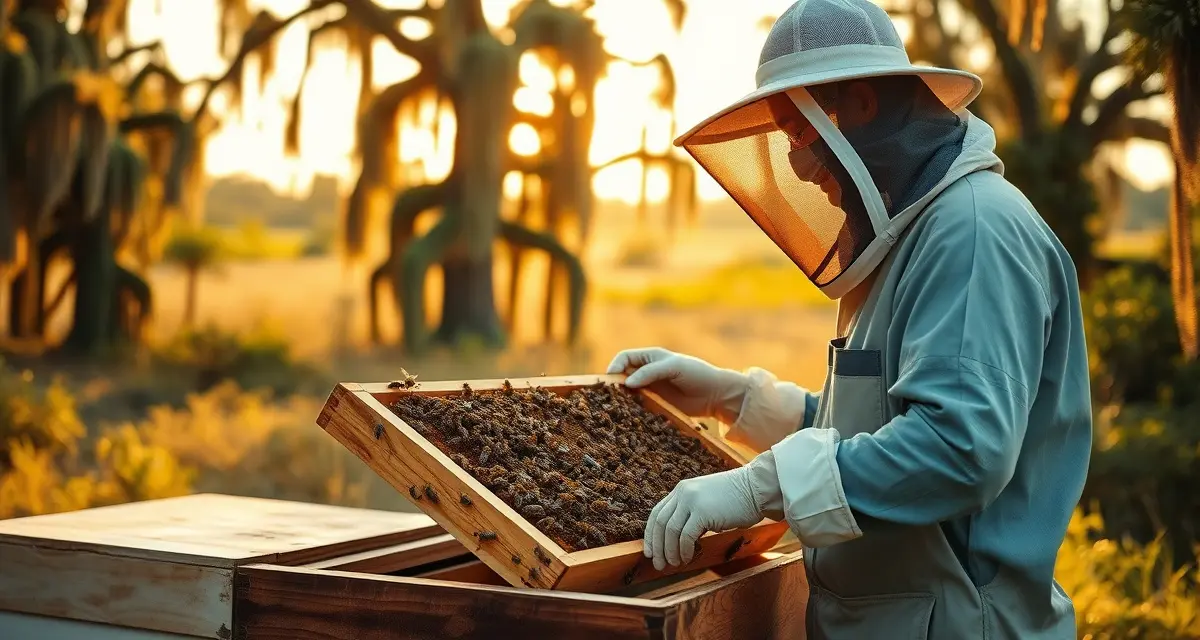
Varroa Management in South Carolina: Piedmont and Coastal Timing
South Carolina Lowcountry beekeepers may go broodless six weeks later than their Upstate counterparts. That's not a small difference. Six weeks is the difference between a well-timed fall treatment and a late one that leaves your winter bees developing under mite pressure.
Varroa management South Carolina beekeepers need to do well isn't about following a national calendar. It's about understanding that the Upstate foothills and the Lowcountry coast behave like separate beekeeping zones, and managing accordingly.
TL;DR
- This guide covers key aspects of varroa management in south carolina: piedmont and coastal ti
- Mite monitoring should happen at minimum every 3-4 weeks during active season
- The 2% threshold in spring/summer and 1% in fall are standard action points based on HBHC guidelines
- Always run a pre-treatment and post-treatment mite count to calculate efficacy
- Treatment records including product name, EPA number, dates, and counts are required for state inspection compliance
- VarroaVault stores all monitoring and treatment data with automatic threshold comparison and state export formatting
Why South Carolina's Climate Creates a Split Management Reality
Generic apps give South Carolina beekeepers the same calendar as North Carolina, ignoring the zone 8 conditions in the Lowcountry that make coastal SC management fundamentally different from interior management. This is a notable problem because treatment timing errors compound. A late fall treatment doesn't just mean a few extra mites. It means those mites infected the bees that were supposed to carry your colony to spring.
South Carolina spans USDA hardiness zones 7a in the Blue Ridge foothills up through zone 9a in the coastal areas near Beaufort and Hilton Head. That range represents meaningfully different brood cycle timing, different broodless window timing, and different treatment option availability through the year.
Upstate South Carolina: Blue Ridge Foothills Timing
The Upstate, Greenville, Spartanburg, Anderson, Oconee, behaves more like western North Carolina than it does like Charleston. You get a real winter. Colonies often reach a true broodless state in December or January, giving you a high-efficacy OA dribble window without the extended vaporization protocol that year-round brood requires.
Fall treatment timing for Upstate SC: Target August through mid-September. The broodless window will arrive by November or December. Don't wait for it to treat, your goal is low mite loads heading into broodlessness, not treatment during it.
Spring timing: First count of the year in March. The Upstate spring comes earlier than the mountain counties of NC but later than the Midlands. Use your first post-winter count to determine if treatment is needed before build-up accelerates.
Lowcountry South Carolina: Coastal Zone Timing
The Lowcountry, Charleston, Beaufort, Bluffton, Hilton Head, runs warm through the year. True broodlessness may not arrive until late January or February, and in mild years some colonies rear brood continuously. This changes your varroa management calculus in several important ways.
Fall treatment for Lowcountry SC: October rather than September, with monitoring through November to catch colonies that don't reach broodlessness until winter. A single fall OA dribble is less reliable here because the broodless window is narrower and later.
Year-round monitoring: Lowcountry beekeepers who treat in the fall and put their mite counts away until spring often find colonies in trouble by January. Six-week monitoring intervals through winter are appropriate in the Lowcountry.
Extended vaporization protocols: Where broodlessness is uncertain or brief, OA vaporization repeated at 5-day intervals across 3 treatments is more reliable than a single dribble application.
South Carolina Varroa Treatment Options
Oxalic Acid
OA dribble achieves near-100% efficacy on confirmed broodless colonies, when you can confirm broodlessness. Lowcountry beekeepers should verify colony status before using the dribble method. OA vaporization using an extended protocol works when brood is present.
Formic Acid (MAQS/Formic Pro)
Effective against mites in capped brood, but South Carolina's summer heat creates temperature windows that restrict safe application across much of the state from June through September. Spring and fall windows exist, but the heat index needs to be checked before application.
Amitraz (Apivar)
A reliable option through the summer when formic acid heat restrictions apply. The 56-day strip duration requires advance planning against your flow calendar.
Thymol (ApiLife Var, Apiguard)
Requires minimum 60°F temperatures. Spring and fall applications work in most of SC; summer applications in the Lowcountry exceed thymol's comfort zone.
Fall Varroa Treatment Timing in South Carolina
The single most important thing you can do for your South Carolina colonies is get your fall treatment right. For Upstate beekeepers, that means August. For Lowcountry beekeepers, it means October, but with close monitoring through November. For both, it means confirming your broodless timing before choosing your OA method.
Review the varroa treatment timing guide to build your complete SC treatment calendar.
Related Articles
FAQ
When should South Carolina beekeepers do fall varroa treatment?
Upstate SC beekeepers should target August through mid-September. Lowcountry beekeepers have a later broodless window and can extend into October, but should not delay past that without monitoring data suggesting otherwise. The goal in both cases is protecting the winter bee cohort that develops in October and November.
What varroa treatments work in South Carolina winters?
OA dribble works well in SC winters during confirmed broodless periods, which occur reliably in the Upstate but may be brief or late in the Lowcountry. OA vaporization extended protocols work for colonies where broodlessness is uncertain. Apivar can be applied in fall and removed before winter with proper timing.
How does South Carolina's climate affect varroa population timing?
South Carolina's warmer climate, especially in the Lowcountry, means varroa populations have more reproductive time through the year. A colony that enters November with 2% mites in the Lowcountry may not reach its broodless period until January, allowing the mite population to continue building through what northern beekeepers would consider the "safe" winter period.
How do I know if my varroa treatment is working?
Run a mite count 2-4 weeks after the treatment ends and compare it to your pre-treatment count. The efficacy formula is: ((pre-count - post-count) / pre-count) x 100. A result above 90% indicates effective treatment. Results below 80% should trigger investigation for possible resistance, application error, or reinfestation. Log both counts in VarroaVault to track efficacy trends across treatment cycles.
How often should I check mite levels in my hives?
At minimum, once per month (every 3-4 weeks) during the active season. Increase to every 2 weeks when counts are near threshold or after a treatment to verify it worked. In fall, monitoring frequency matters most because the window to treat before winter bees are raised is narrow. VarroaVault's monitoring reminders can be set to your preferred interval for each apiary.
What records should I keep for varroa management?
Each record should include: date of count or treatment, hive identifier, monitoring method used, number of bees sampled, mites counted, infestation percentage, treatment product name and EPA registration number, dose applied, treatment start and end dates, and PHI end date. State apiarists typically expect this level of detail during inspections. VarroaVault captures all of these fields in a single log entry.
What is Varroa Management in South Carolina: Piedmont and Coastal Timing?
Varroa Management in South Carolina: Piedmont and Coastal Timing is a regional beekeeping guide that addresses how South Carolina's two distinct climate zones—the Upstate Piedmont and the Lowcountry coast—require different mite treatment schedules. Because Lowcountry colonies may go broodless up to six weeks later than Upstate hives, a single statewide calendar leads to mistimed treatments. The guide covers monitoring thresholds, treatment timing, efficacy tracking, and state inspection record requirements specific to South Carolina beekeepers.
How much does Varroa Management in South Carolina: Piedmont and Coastal Timing cost?
VarroaVault, the beekeeping management software referenced throughout this article, offers subscription plans designed to be accessible for hobbyist and commercial beekeepers alike. Pricing covers features like automated mite threshold alerts, treatment record storage with EPA compliance formatting, and state inspection export tools relevant to South Carolina regulations. For current pricing tiers and any regional promotions, visit VarroaVault.com directly—plans are structured so beekeepers managing a few hives or a large operation can find an appropriate option.
Sources
- American Beekeeping Federation (ABF)
- USDA ARS Bee Research Laboratory
- Honey Bee Health Coalition
- Penn State Extension Apiculture Program
- Project Apis m.
Build Your South Carolina Varroa Program
South Carolina's climate is an asset for beekeeping and a challenge for varroa management. The split between Upstate and Lowcountry timing is real and matters. Build your program around your actual location, not a generic statewide calendar.
Get Started with VarroaVault
The information in this guide is most useful when you have your own mite count data to apply it to. VarroaVault stores every count, flags threshold crossings automatically, and builds the treatment history you need for state inspections and effective management decisions. See pricing and free tools at varroavault.com.