What is a beehive? Parts, types, and how colonies live
TL;DR
- A beehive is any structure, natural or man-made, where a honey bee colony builds comb, raises brood, and stores honey.
- Modern beekeepers mostly use Langstroth hives (stacked boxes with removable frames), though top bar and Warre hives exist too.
- A basic starter Langstroth setup runs about $150 to $350 before bees, per university extension estimates.
What exactly is a beehive?
A beehive is the physical structure that a honey bee colony calls home, whether that's a hollow tree, a wall cavity, or a wooden box built by a beekeeper. Inside, bees build wax comb in vertical sheets, using it to raise brood (eggs, larvae, pupae), store honey, and pack away pollen. The word "hive" technically refers to the man-made housing, while "colony" refers to the bees themselves, but almost everyone uses the words interchangeably in casual conversation.
Wild colonies have nested in hollow trees for as long as bees and trees have coexisted, and cavity volume matters more than people think. Research on wild-living colonies found they favor nest cavities around 40 liters in volume, with a strong preference for entrances near the bottom of the cavity and openings facing south [1]. That's roughly the volume of two deep Langstroth boxes stacked together, which is not a coincidence. Beekeepers who design hives too large or too small from that range often see weaker buildup or worse winter survival.
A managed beehive today is really a piece of modular furniture for an insect colony. It has to do three jobs: protect bees from weather and predators, let the beekeeper inspect and manage the colony, and hold removable comb so honey can be harvested without destroying the nest. Every hive design on the market is a different set of tradeoffs among those three goals.
What are the main parts of a beehive?
A standard Langstroth beehive, the design used by the large majority of beekeepers in the United States, is built from a stack of interchangeable parts. From the ground up, a typical setup includes a bottom board, one or two deep brood boxes, one or more medium honey supers, an inner cover, and an outer cover. Inside each box hang 8 to 10 removable frames, each holding a sheet of foundation or empty comb that bees draw out with wax.
The bottom board can be solid or screened; screened bottom boards help with ventilation and let varroa mites that groom off bees fall through and die below the hive, which is one small, passive piece of mite management. The brood boxes (deeps) are where the queen lays eggs and where the colony overwinters on stored honey. Honey supers sit above a queen excluder (a screen with slots too narrow for the larger queen to pass) so the beekeeper can harvest supers without pulling brood comb.
Here's a rough breakdown of what each part does:
| Part | Function |
|---|---|
| Bottom board | Floor and entrance; solid or screened for ventilation and mite drop |
| Deep brood box | Houses queen, eggs, larvae, and winter honey stores |
| Queen excluder | Keeps queen out of honey supers |
| Medium super | Extra box for surplus honey storage |
| Frames and foundation | Removable structure bees draw comb onto |
| Inner cover | Insulating layer, creates air space, has an oval hole for ventilation/feeding |
| Outer cover | Weatherproof roof, usually metal-clad wood or aluminum |
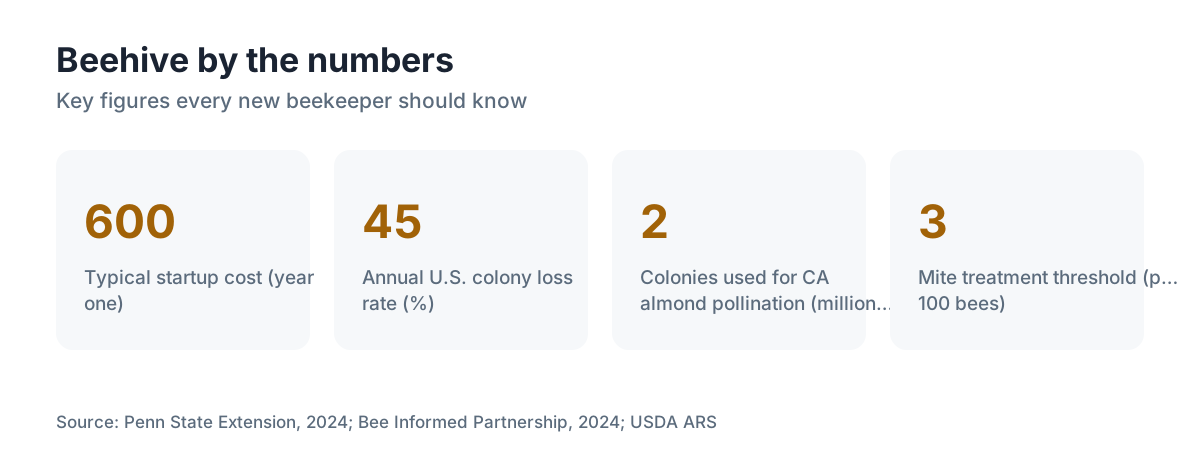
Penn State Extension notes that a complete two-deep Langstroth hive with frames, before bees, typically costs beginners somewhere between $150 and $350 depending on whether they buy assembled equipment or unassembled kits [2]. Add a veil, gloves, smoker, and hive tool, and most new beekeepers spend closer to $400 to $600 for a full first-year startup.
What's the difference between a Langstroth hive, a top bar hive, and a Warre hive?
The Langstroth hive, patented by Lorenzo Langstroth in 1852, is built around the discovery of "bee space," a gap of roughly 6 to 9 millimeters (about 1/4 to 3/8 inch) that bees leave open rather than filling with comb or propolis. Langstroth's design uses that spacing to keep frames removable without bees gluing everything together, which is why it became the dominant commercial design worldwide.
A top bar hive is a horizontal trough (often shaped like an upside-down trapezoid) where bees hang comb from bars laid across the top rather than building comb inside a wooden frame. There's no foundation and often no queen excluder. Top bar hives are cheaper to build, lighter to inspect one bar at a time, and popular with hobbyists who want a lower-intervention, more natural-comb style of beekeeping. The tradeoff: comb is fragile, can't go through a mechanical extractor, and colonies in top bar hives are harder to combine or requeen using standard commercial stock timing.
The Warre hive, designed by French monk Emile Warre in the 1920s, is a vertical stacked box hive like a Langstroth but with narrower top bars instead of full frames, and boxes are added underneath (nadired) rather than on top. It's meant to mimic a more "bees-first" cavity shape and requires less frequent, less invasive inspection, though that also means less precise mite monitoring, which matters a lot given how much winter loss ties back to varroa.
Most extension programs, including Cornell's, still recommend Langstroth equipment for beginners specifically because replacement parts, queens, and package bees are bred and sold to fit that standard, and because frame-based inspection makes varroa monitoring (mite washes, sticky boards) far more practical [3].
How is a beehive different from a beehive frame, a nuc, and a package?
These terms get mixed up constantly by new beekeepers, so it's worth being precise. A beehive is the whole box structure. A frame is the single removable rectangle of wood (or plastic) inside the hive that holds one sheet of comb. A nuc (nucleus colony) is a small, temporary hive, usually 4 or 5 frames, sold as a started mini-colony with a laying queen, brood, and workers, meant to be transferred into a full-size hive. A package is loose bees (2 to 3 pounds, roughly 10,000 to 12,000 workers) plus a caged queen, sold with no comb at all, shipped in a screened box.
Beginners buying their first colony usually choose between a nuc and a package. Nucs establish faster because they already have drawn comb and brood, but cost more (commonly $150 to $220 depending on region and year). Packages are cheaper (often $120 to $180) but take longer to build up since bees have to draw all new comb from scratch. Either way, they go into the beehive structure itself, they aren't a substitute for one.
How do bees actually live and organize inside a beehive?
Inside a healthy beehive, a single colony functions as one biological unit, sometimes called a superorganism, with somewhere between 20,000 and 60,000 individual bees depending on season. There's one queen, whose only job is laying eggs (up to 1,500 to 2,000 per day at peak spring buildup), a few hundred to a couple thousand male drones whose only job is mating, and tens of thousands of female worker bees who do everything else: nursing brood, building comb, foraging, guarding, and regulating hive temperature.
Workers keep the brood nest at a tight 93 to 96°F (34 to 36°C) regardless of outside conditions, fanning wings to cool it in summer and clustering tightly, vibrating flight muscles to generate heat, in winter. That thermal regulation is why cavity size and insulation matter so much; a beehive that's too drafty or oversized forces the colony to spend more of its limited winter honey stores just staying warm.
Comb inside the hive is organized in a predictable pattern beekeepers learn to read: brood in the center-lower area, a band of pollen just above and around the brood, and honey stored in the upper corners and outer frames. That layout, sometimes called the "laying pattern," is one of the fastest visual health checks a beekeeper can do during an inspection.
What is a beehive's role in honey and food production, and what are "beehive meals"?
A single healthy colony can produce anywhere from 20 to 80+ pounds of surplus honey a year depending on region, forage, and weather, according to USDA honey production data collected annually across major producing states [4]. But the beehive's value goes well past honey. Bees in a hive also produce beeswax, propolis (a resin-based sealant bees use to fill gaps and disinfect the nest), and royal jelly, and their pollination work underpins roughly one-third of the food crops consumers eat, per widely cited USDA and university pollination research.
That broader food connection is where the term "beehive meals" usually shows up online: it's not an official agricultural term, but a way of describing meals or dishes built around ingredients that depend on honey bee pollination, honey as a sweetener, or dishes served at farm-to-table and apiary-adjacent restaurants that lean into a hive theme. If you see "beehive meals" marketed somewhere, it's almost always a branding or menu concept, not a beekeeping term with a technical definition, so don't confuse it with anything happening inside the actual hive structure.
What is real and worth knowing: honey bees are responsible for pollinating a huge share of the almonds, apples, blueberries, and cucumbers grown commercially in the U.S., and commercial beehives are trucked across states specifically for pollination contracts, most famously California's almond bloom each February, which requires roughly 2 million colonies, close to most of the managed hives in the country, shipped in over a few weeks [5].
How much does a beehive cost, and what's the real total startup cost?
Sticker price on hive components is only part of the beekeeping ledger. Here's a realistic first-year breakdown based on typical Langstroth setups, cross-checked against Penn State and University of Georgia extension estimates [2][6]:
| Item | Typical cost range |
|---|---|
| Hive body kit (2 deeps, 1-2 supers, frames, covers) | $150 to $350 |
| Bees (package or nuc) | $120 to $220 |
| Protective gear (veil, jacket, gloves) | $60 to $150 |
| Smoker and hive tool | $30 to $60 |
| Feeder | $10 to $25 |
| Varroa monitoring/treatment supplies | $30 to $80/year |
All told, most new beekeepers spend $400 to $800 to get one hive running its first year, and treatments plus replacement equipment add ongoing annual cost after that. Buying unassembled/unpainted equipment and assembling it yourself is the single biggest way to cut cost; extension programs generally estimate 20 to 30 percent savings over pre-assembled kits.
Where should you place a beehive, and does hive placement matter?
Yes, placement matters a lot, and it's one of the cheapest ways to set a colony up for success. Extension guidance generally recommends facing hive entrances southeast or south, so morning sun hits the entrance early and encourages bees to start foraging sooner in the day [3][6]. Hives should sit on a stand elevated at least a few inches off the ground, both to reduce dampness and to make small hive beetle and ant access harder.
A good site has partial afternoon shade in hot climates (to reduce overheating and bearding), a windbreak if possible, and is not directly in a low spot where cold air and moisture pool overnight. Keep hives at least 10 to 15 feet from property lines or walkways where people or pets pass often, and check local ordinances; many municipalities cap hive counts per lot or require setback distances, and some require registration with the state apiary program.
Access for the beekeeper matters too. You'll be lifting boxes that weigh 40 to 90 pounds when full of honey, so a site you can reach with a wheelbarrow or cart, not one requiring you to carry full supers 100 yards through brush, saves your back literally and figuratively.
How often should you inspect a beehive, and what are you looking for?
Most extension programs recommend inspecting an active colony every 7 to 14 days during spring and summer, tapering to monthly or less in fall, and only doing quick external checks in winter to avoid losing heat from the cluster [3]. Each inspection should answer a short checklist: Is the queen present or is there fresh, worker-sized brood (evidence she's there even if you don't spot her)? Is the brood pattern solid and consistent, or spotty and scattered? Is there enough stored honey and pollen? Are there signs of pests, mites, or disease?
Varroa destructor is the single biggest threat facing managed colonies in the beehive today, and the Honey Bee Health Coalition's Tools for Varroa Management guide recommends checking mite levels using an alcohol wash or sugar roll at least monthly during active season, treating when infestation crosses about 2 to 3 mites per 100 bees (2-3%) in most seasons, with lower thresholds recommended heading into fall [7]. That's not a one-time treatment decision, it's an ongoing monitoring habit, and it's the area where most first-year colony losses actually originate, more than weather or starvation.
If you want a structured way to track mite counts and treatment timing across a season rather than guessing, Varroa Vault's free tools build a simple protocol around exactly this kind of monitoring calendar, so inspections turn into a repeatable system instead of a one-off gut check.
What threats does a beehive face, and how do you protect one?
Varroa mites are the top killer of managed colonies in the U.S. by a wide margin; USDA-funded national surveys run by the Bee Informed Partnership have recorded annual colony loss rates commonly in the 40 to 50 percent range over the past decade, with varroa consistently cited by beekeepers as the leading suspected cause [8]. Beyond mites, hives face small hive beetles, wax moths, American foulbrood (a reportable bacterial brood disease in most states), nosema, and simple starvation, especially in late winter when stores run out before spring forage starts.
The EPA registers and labels all chemical varroa treatments used in U.S. hives, including formic acid (Formic Pro), oxalic acid, and amitraz-based products (Apivar), and label directions are legally binding, not suggestions; using an unregistered substance or off-label dose in a beehive is a violation of federal pesticide law [9]. Always read the specific product label for temperature restrictions (formic acid products, for instance, have minimum and maximum daytime temperature windows) and honey super timing before treating.
Non-chemical protections matter too: screened bottom boards, reducing entrances during robbing season, requeening with mite-resistant stock (like VSH or Russian lines), and making sure colonies go into winter with enough stored honey (commonly 60 to 90 pounds in northern climates, per extension recommendations) all reduce loss risk without a single treatment cycle.
Can you build your own beehive, and is it worth it?
Yes, and a lot of hobbyists do, especially for Langstroth deeps, supers, and stands, which are simple box joinery projects well documented by university extension plans (Cornell, Ohio State, and others publish free downloadable hive box plans). Building from raw lumber can cut material cost by roughly 30 to 50 percent versus buying assembled kits, though it costs you time and requires basic table saw or router work to cut box joints and frame rests accurately.
What's harder to DIY well: frames with precise bee space tolerances, and foundation. Get bee space wrong by even a few millimeters and bees will glue frames together with propolis or build burr comb connecting them, which turns every inspection into a destructive, bee-killing mess. Most experienced beekeepers recommend buying frames and foundation new, even if you build the boxes yourself, because the tolerances genuinely matter for a hive that has to come apart cleanly every two weeks.
How is a real beehive different from things called "beehive" in games, trails, or design (Minecraft, Acadia, hairstyles)?
The word "beehive" gets borrowed a lot outside beekeeping, and it's worth being clear these aren't the same thing. In Minecraft, a "beehive" is a craftable in-game block that houses bee mobs and lets players collect honey and honeycomb items; it's inspired by real hives but is a simplified game mechanic, not a beekeeping reference (see beehive in Minecraft for that use specifically).
The Beehive Trail in Acadia National Park, Maine, is a granite cliff hiking trail named for the rock formation's rounded, hive-like shape, not for any actual bee colony living there; it's one of the park's most popular (and exposed, iron-rung-assisted) short hikes (details at Beehive Trail Acadia). And the "beehive hairstyle," a tall, teased updo popularized in the early 1960s, is named for its rounded, tapered shape resembling a skep hive, nothing more.
If you searched "beehive" hoping for any of those, this article is about the actual beekeeping structure; the internal links above will get you to the right page fast.
What kind of bees actually live in a beehive, and does species matter?
In the U.S. and most of the world's managed beekeeping, the answer is almost always the Western honey bee, Apis mellifera, in one of several commercial subspecies or hybrid stocks: Italian, Carniolan, Russian, and VSH (Varroa Sensitive Hygiene) lines are the most common choices sold by queen breeders. These aren't different species, they're regional genetic lines bred for traits like gentleness, overwintering ability, swarm tendency, or mite resistance.
Other bee species get called "hive" bees loosely but behave very differently. Bumblebees, for instance, form small annual colonies (usually under 400 individuals) that die off each fall except for a single overwintering queen, and they're mostly kept in small commercial boxes for greenhouse pollination rather than backyard beekeeping (see bumblebee beekeeping for how that differs). Stingless bees, mason bees, and other native species are sometimes kept in small nest boxes too, but calling those structures a "beehive" in the traditional Langstroth sense is a stretch; the term really belongs to Apis mellifera colonies. If species selection and stock differences interest you, beekeeping species covers the tradeoffs in more depth.
Frequently asked questions
What is inside a beehive?
Inside a managed beehive you'll find wax comb built on removable frames, holding brood (eggs, larvae, pupae) in the center, a ring of stored pollen around the brood, and honey stored in outer and upper frames. The colony itself, one queen, workers, and seasonal drones, occupies and maintains that comb, keeping the brood area near 93 to 96°F year-round.
How many bees live in one beehive?
A healthy colony ranges from around 10,000 to 15,000 bees in late winter up to 40,000 to 60,000 at peak summer population, depending on queen quality, forage, and season. Population naturally contracts each fall and winter, then rebuilds each spring as the queen resumes heavy egg laying.
How much honey does a beehive produce per year?
USDA production data and extension estimates put typical surplus honey yield at roughly 20 to 80+ pounds per colony per year, depending heavily on regional forage, weather, and colony health. Strong colonies in good nectar-flow regions can occasionally exceed 100 pounds, while a struggling or new colony may produce none its first season.
What is the difference between a beehive and a hive frame?
A beehive is the entire box structure (boxes, covers, bottom board). A frame is one removable rectangular piece inside the hive that holds a single sheet of comb. A Langstroth deep box typically holds 8 to 10 frames side by side.
How much does it cost to start a beehive?
Most beginners spend $400 to $800 total for their first year, covering hive equipment ($150-$350), bees ($120-$220), protective gear and tools ($90-$210), and basic varroa monitoring supplies, based on Penn State and University of Georgia extension cost estimates.
What is the best type of beehive for beginners?
Most university extension programs, including Cornell's beekeeping program, recommend Langstroth hives for beginners because parts, queens, and packages are standardized to fit them, and frame-based design makes mite monitoring and inspections far easier than top bar or Warre alternatives.
Can you keep a beehive in your backyard legally?
Often yes, but rules vary heavily by city and county; many municipalities cap the number of hives per lot, require setback distances from property lines, or mandate registration with a state apiary inspector program. Always check local zoning and your state department of agriculture before installing a hive.
How often do you need to check on a beehive?
Extension guidance generally recommends inspections every 7 to 14 days during active spring and summer months, tapering to monthly in fall, and minimal, brief external checks in winter to avoid disrupting the cluster's heat retention.
What is the biggest threat to a beehive today?
Varroa destructor mites are the leading cause of managed colony loss in the U.S. National surveys from the Bee Informed Partnership have recorded annual loss rates commonly between 40 and 50 percent over the past decade, with beekeepers consistently naming varroa as the top suspected cause.
What does "beehive meals" mean?
It's not a standard beekeeping term. It typically refers to food or menu concepts built around honey, pollinator-dependent produce, or hive-themed branding at farms and restaurants, not anything that happens inside an actual bee colony's structure.
Is a beehive the same as a bee nest or nuc?
No. A beehive is the permanent man-made structure. A nuc (nucleus colony) is a small, temporary starter colony, usually 4 to 5 frames, sold to establish a new hive. A wild bee "nest" refers to any natural cavity bees occupy, like a hollow tree, without human-built housing.
Do beehives need to be painted or insulated?
Exterior paint isn't required biologically but extends wood lifespan significantly and is standard practice; light colors help reduce summer overheating. Insulation matters most in cold climates, where extension programs in northern states often recommend wind breaks, insulated inner covers, or hive wraps to help colonies conserve winter stores.
How heavy is a full beehive box?
A full deep Langstroth box with drawn comb and honey commonly weighs 60 to 90 pounds, while a full medium super runs closer to 40 to 50 pounds. Weight is one reason many beekeepers prefer all-medium equipment as they age, since it's easier to lift consistently.
Sources
- Seeley, T.D., Cornell University research on wild honey bee nest site selection: Wild-living colonies favor nest cavities around 40 liters with bottom entrances facing south
- Penn State Extension, Beekeeping Basics: Startup Langstroth hive equipment typically costs $150-$350 before bees
- Cornell University College of Agriculture and Life Sciences, Beekeeping program: Langstroth equipment recommended for beginners; inspection frequency guidance
- USDA National Agricultural Statistics Service, Honey report: Annual honey production data by state and per-colony yield ranges
- USDA Agricultural Research Service, Pollination and almond bloom: Roughly 2 million colonies transported for California almond pollination annually
- University of Georgia Extension, Beekeeping for beginners: Hive placement guidance and startup cost estimates
- Honey Bee Health Coalition, Tools for Varroa Management guide: Recommended mite sampling methods and treatment threshold of 2-3 mites per 100 bees
- U.S. Environmental Protection Agency, Pesticide product labels for varroa control: Chemical varroa treatments are federally registered and label directions are legally binding
Last updated 2026-07-09