Beekeeping Software for Missouri Beekeepers: Midwest Crossroads Varroa Tracking
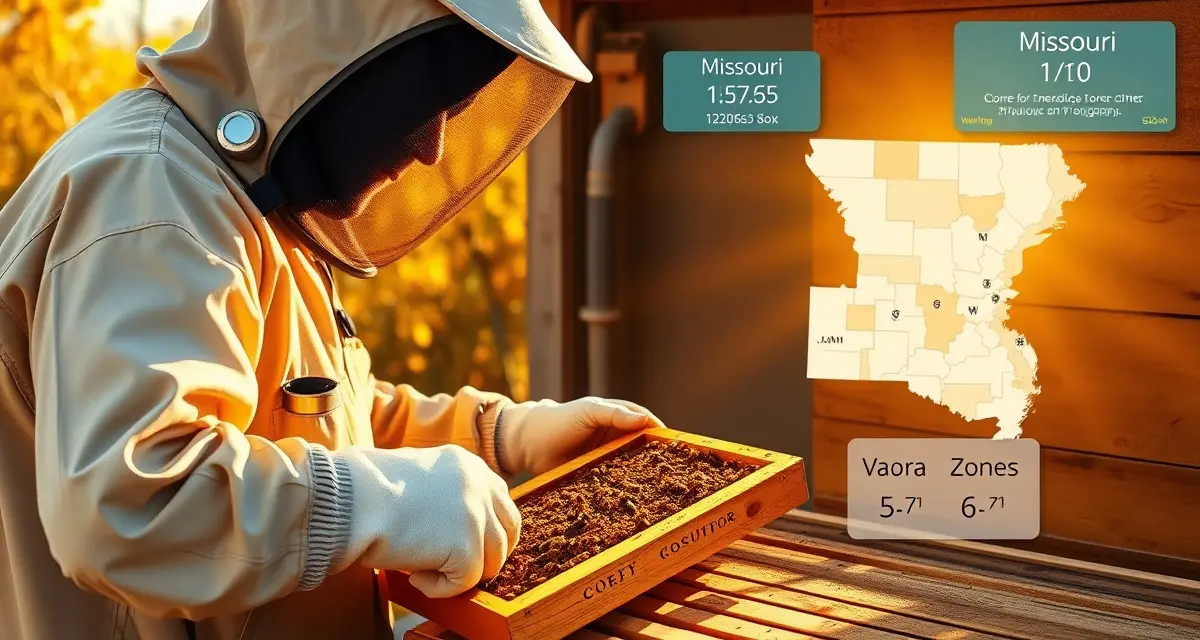
Missouri sits at a genuine climate crossroads. The far northwestern corner of the state is zone 5, with cold winters and a clear broodless period. The Bootheel in the southeast is zone 7, with mild winters and a much shorter broodless window. Missouri has over 5,000 registered beekeepers spread across that entire range, which means there is no single treatment calendar that fits everyone in the state.
VarroaVault's Missouri climate zone selector adjusts your fall treatment window alerts from zone 5 to zone 7, so the reminders you get are actually calibrated to where your bees live.
TL;DR
- Missouri's climate means bridges northern and southern climate zones, with reliable broodless periods in the northern part of the state
- Both spring and fall nectar flows require phi planning
- All EPA-registered varroa treatments are available in Missouri; check with your state apiarist for local restrictions
- Monthly mite monitoring (every 30 days) is recommended year-round to catch pressure spikes early
- PHI management is important around Missouri's nectar flows to avoid contaminating honey
- VarroaVault exports treatment records formatted for Missouri state inspection requirements
Missouri's Climate Variation and What It Means for Timing
The climate difference across Missouri isn't trivial. A beekeeper near Kansas City (zone 5-6) and a beekeeper in the Bootheel near Sikeston (zone 7) are looking at a treatment deadline difference of three to five weeks in the fall.
Zone 5 (northwest Missouri): Behaves much like Kansas or Iowa. Cold winters mean colonies go reliably broodless by November. The fall treatment deadline for winter bee protection is August. A broodless OA treatment in November achieves high efficacy.
Zone 6 (central Missouri, including Jefferson City and Columbia): The most common Missouri climate. Fall treatment deadline is late August to early September. Broodless OA window opens in late October or early November.
Zone 7 (Bootheel and far southeast): Milder winters extend brood rearing into December in some years. This delays your broodless OA window and requires more vigilance through late fall. The treatment behavior here is closer to Arkansas or western Tennessee.
The Fall Treatment Deadline for Missouri Beekeepers
Regardless of your zone, the biological driver is the same: winter bees are raised in August and early September. Colonies that miss a late July or August treatment will enter winter with bees born under high mite pressure. Those bees have shorter lifespans, weaker immunity, and reduced protein stores.
Missouri colonies entering fall with mite loads above 2% face significantly elevated winter loss risk. The earlier you treat in zone 5, the later you can push in zone 7, but no Missouri beekeeper benefits from waiting until October to make the first fall treatment decision.
VarroaVault sends your fall treatment countdown alert based on your specific Missouri climate zone. When the countdown reaches four weeks, you get a notification, giving you time to plan, buy product if needed, and schedule your treatment day.
Missouri's Honey Flows and PHI Compliance
Missouri has productive spring flows from fruit trees, clover, and tulip poplar in the central and eastern parts of the state. Summer wildflower flows continue into July. Fall goldenrod arrives just as your treatment window opens, which creates the classic fall timing conflict.
VarroaVault tracks your PHI clearance dates automatically. If you log a treatment in July and goldenrod starts in August, the app shows whether your PHI has cleared before you add supers. If it hasn't, you get a warning flag when you mark the flow period active.
For more on managing PHI during honey flows, see our fall treatment window guide, which covers the timing logic in detail.
Missouri MDA Records
Missouri's Department of Agriculture (MDA) requires registered beekeepers to maintain treatment records available for inspection. VarroaVault generates MDA-formatted records that capture all required fields: treatment product, application date, dose, colony identification, and beekeeper registration number.
For a full overview of what different states require, see our state inspection requirements for treated hives guide.
Frequently Asked Questions
When is the fall treatment deadline for Missouri beekeepers?
It depends on your zone. Zone 5 beekeepers in northwest Missouri should complete their primary fall treatment by early August to protect winter bees. Zone 6 beekeepers have until late August or early September. Zone 7 beekeepers in the Bootheel can push into September but should not wait until October. VarroaVault's zone selector calibrates your alert timing to your specific location.
What records does Missouri MDA require?
MDA requires documentation of treatments applied to registered colonies, including the product name, application date, amount applied, colony or apiary identification, and the beekeeper's registration number. Records must be available for inspection. VarroaVault captures all required fields automatically and exports them on demand.
Does VarroaVault handle Missouri's climate variation?
Yes. When you set up your VarroaVault account and enter your Missouri location, you select your USDA climate zone. The treatment calendar and alert timing adjust accordingly, from zone 5 in the northwest to zone 7 in the southeast. Each apiary you manage can be assigned its own zone if you operate across multiple regions of the state.
Is VarroaVault available to beekeepers in Missouri?
Yes. VarroaVault is available to beekeepers across all 50 states including Missouri. The app supports state-specific PHI calendars, monitoring reminders calibrated to your region's nectar flow and temperature patterns, and export formats suitable for Missouri apiary inspection requirements.
What records does the Missouri state apiarist expect during an apiary inspection?
While requirements vary and you should confirm with your state apiarist, most states expect treatment records that include the product name, EPA registration number, application dates, hive identifiers, and applicant name. Beekeepers in Missouri should also be prepared to document mite count results from the monitoring periods before and after each treatment. VarroaVault's export function generates this information in a formatted PDF.
Does VarroaVault support tracking multiple apiaries in Missouri?
Yes. VarroaVault supports unlimited apiary locations within a single account. Each apiary can have its own set of hives with individual treatment and mite count records. For Missouri beekeepers managing multiple yards across different counties or climate zones, yard-level reporting allows you to compare mite pressure and treatment efficacy between locations.
What is Beekeeping Software for Missouri Beekeepers: Midwest Crossroads Varroa Tracking?
VarroaVault's Beekeeping Software for Missouri Beekeepers is a varroa mite tracking and treatment management tool designed specifically for Missouri's unique climate diversity. Because Missouri spans USDA hardiness zones 5 through 7, the software includes a climate zone selector that calibrates fall treatment window alerts to your specific location. It also exports treatment records formatted for Missouri state inspection requirements, making compliance straightforward for the state's 5,000-plus registered beekeepers.
How much does Beekeeping Software for Missouri Beekeepers: Midwest Crossroads Varroa Tracking cost?
VarroaVault offers tiered pricing with a free entry-level option for hobbyist beekeepers and paid plans for those managing multiple hives or requiring advanced reporting features. Exact pricing details are available on the VarroaVault website. Given that it replaces manual spreadsheets and reduces costly treatment errors tied to mistimed PHI windows, most beekeepers find the tool pays for itself quickly in avoided honey contamination losses and healthier colony outcomes.
How does Beekeeping Software for Missouri Beekeepers: Midwest Crossroads Varroa Tracking work?
VarroaVault works by having you select your Missouri climate zone at setup, which then tailors your mite monitoring reminders and treatment window alerts accordingly. You log monthly mite wash or alcohol wash counts directly in the app. The software tracks those counts over time, flags pressure spikes, calculates pre-harvest intervals for all EPA-registered varroa treatments, and generates inspection-ready records. Alerts sync around Missouri's spring and fall nectar flows to help you plan PHI-compliant treatment timing.
What are the benefits of Beekeeping Software for Missouri Beekeepers: Midwest Crossroads Varroa Tracking?
The core benefit is location-specific guidance in a state where a single treatment calendar cannot serve everyone. A beekeeper in the Bootheel faces a much shorter broodless window than one in northwestern Missouri, and generic advice fails both. VarroaVault adjusts reminders to match your actual zone, reduces the risk of honey contamination through PHI tracking, supports monthly monitoring intervals year-round, and simplifies record-keeping for state inspections — all in one place rather than across notebooks and spreadsheets.
Who needs Beekeeping Software for Missouri Beekeepers: Midwest Crossroads Varroa Tracking?
Missouri beekeepers of any scale benefit, but the software is especially valuable for those managing hives across multiple climate zones within the state, commercial operations with strict PHI compliance needs, and newer beekeepers who need structured guidance on when to test and treat. Hobbyists who want to move beyond guesswork and paper logs will also find it useful. If you keep bees anywhere in Missouri and want mite pressure data tied to your specific local conditions, this tool is built for you.
Related Articles
Sources
- American Beekeeping Federation (ABF)
- USDA ARS Bee Research Laboratory
- Honey Bee Health Coalition
- Penn State Extension Apiculture Program
- Project Apis m.
Get Started with VarroaVault
Missouri beekeepers face specific varroa management challenges that generic beekeeping apps are not designed around. VarroaVault handles monitoring reminders, PHI tracking, treatment efficacy scoring, and state inspection export in a single tool built specifically for varroa management. See pricing and free tools at varroavault.com.