Bumblebee beekeeping: what it is and how to start
TL;DR
- Bumblebee beekeeping means raising a single bumblebee queen and her colony, usually in a small box, for pollination or observation rather than honey.
- It costs roughly $50 to $300 to start, colonies last one season only, and there's no honey harvest.
- Commercial bumblebee colonies (mostly Bombus impatiens) are sold for greenhouse and crop pollination across North America and Europe.
What is bumblebee beekeeping?
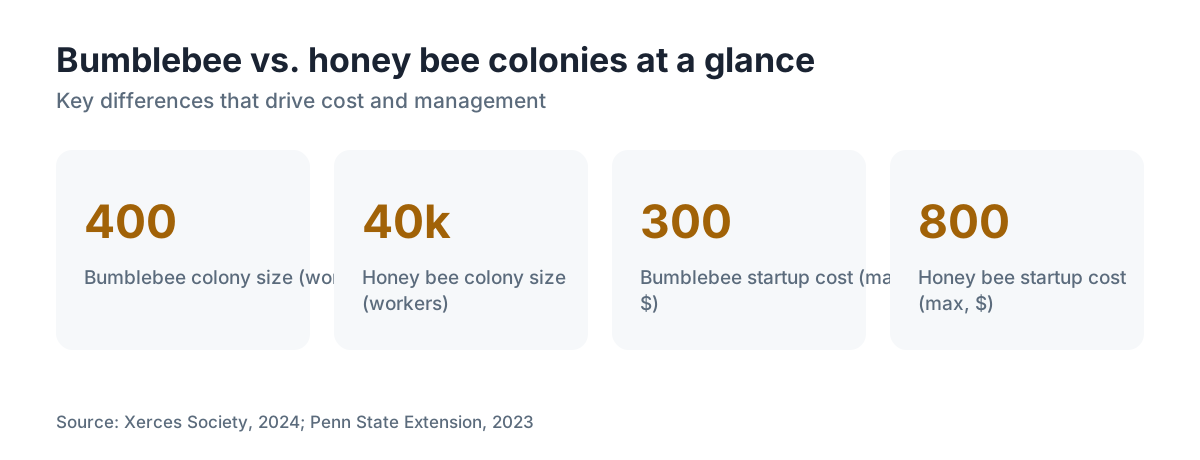
Bumblebee beekeeping is the practice of housing and managing a bumblebee colony, usually a single mated queen and her offspring, in an artificial nest box instead of a wild burrow. It's a different animal from honey bee beekeeping in almost every practical sense. You're not managing a perennial superorganism with 40,000 workers and a honey harvest. You're managing a small annual colony that might top out at 50 to 400 workers, depending on species, and that dies out completely every fall except for the new queens it produced.
Most people who do this fall into three camps: commercial pollination operations, home gardeners who want better tomato and pepper yields, and hobbyists who just find bumblebees fascinating to watch. The commercial side is real business. Companies rear Bombus impatiens (the common eastern bumblebee) and Bombus terrestris (the buff-tailed bumblebee in Europe) by the hundreds of thousands of colonies a year for greenhouse tomato pollination, because bumblebees do something honey bees mostly won't: buzz pollination, where the bee grabs the flower and vibrates her flight muscles to shake pollen loose. Tomatoes, peppers, and blueberries need or strongly benefit from that behavior [1].
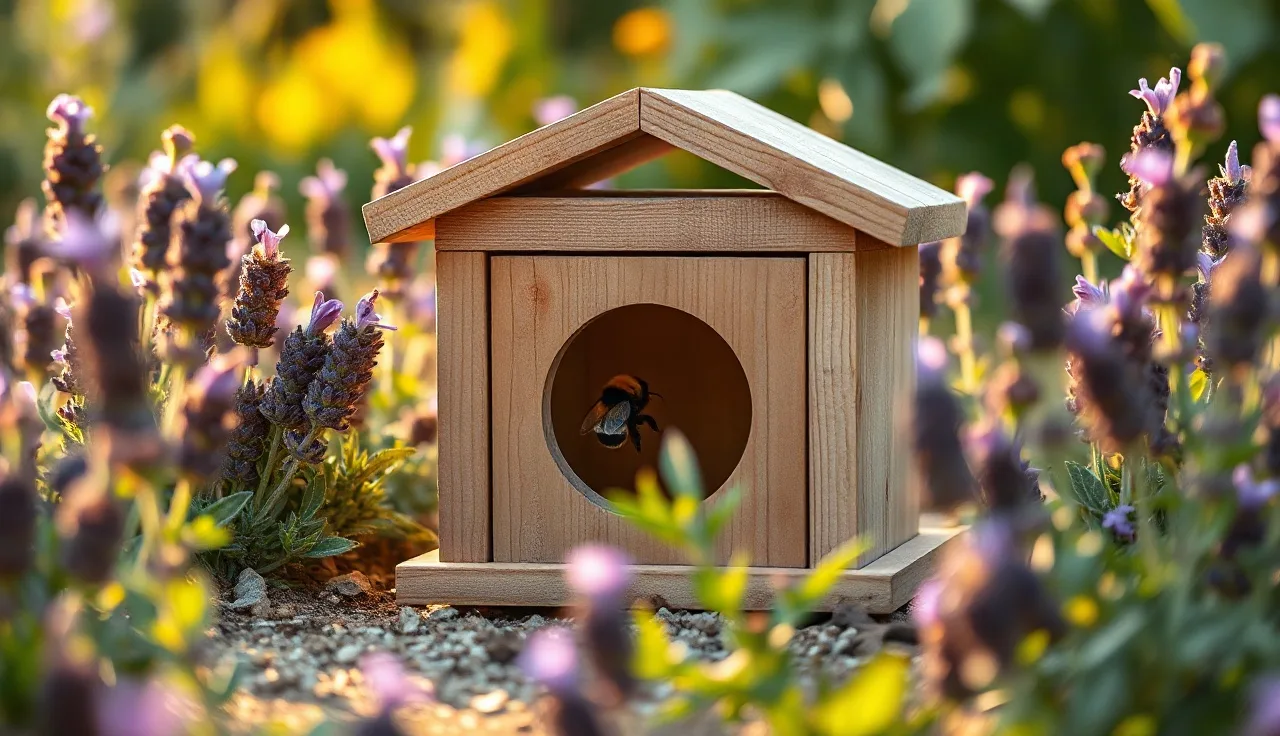
Hobbyist bumblebee keeping is smaller and less standardized. There's no national registry of backyard bumblebee keepers the way there is for honey bee colonies in some states. Most of what people call "bumblebee beekeeping" at home is really nest box provisioning: you build or buy a small box, hope a wild queen moves in, and then you just watch. That's a legitimate and useful hobby, but it's closer to birdhouse keeping than to the intensive, hands-on management that defines honey bee beekeeping.
If you came here from beekeeping or honey bee research expecting the same playbook, know upfront that varroa mites, the parasite that dominates honey bee management, are not a bumblebee problem. Bumblebees have their own pest and disease list (more on that below), and it's shorter and less studied.
How is bumblebee beekeeping different from honey bee beekeeping?
The core difference is colony biology. A honey bee colony is perennial: it overwinters as a full cluster, stores honey to survive months without forage, and can live for years under good management. A bumblebee colony is annual. A single mated queen survives the winter alone, underground or in leaf litter, and starts a new nest from scratch every spring. By fall, the whole colony including the old queen dies off, except for the new queens she raised, who mate and go into diapause to repeat the cycle [2].
That single fact changes everything about the hobby. There's no overwintering management to learn. There's no honey harvest, because bumblebees store only small amounts of nectar in wax pots for a few days of buffer, not gallons for winter. There's no need for a smoker, an extractor, or a mite treatment calendar. A bumblebee colony started in April is functionally over by September or October.
Here's a side-by-side on the practical differences:
| Factor | Honey bee (Apis mellifera) | Bumblebee (Bombus spp.) |
|---|---|---|
| Colony lifespan | Years (perennial) | One season (annual) |
| Colony size | 15,000 to 60,000 | 50 to 400 (up to ~1,500 for B. terrestris in commercial rearing) |
| Honey harvest | Yes, main product for many keepers | No meaningful harvest |
| Main threat | Varroa destructor mite | Nosema bombi, tracheal mites, some pathogen spillover from managed bees [3] |
| Winter survival | Cluster overwinters as a colony | Only mated queens overwinter, solo |
| Startup cost | $300 to $800 for one hive setup (equipment, bees) [4] | $50 to $300 for a nest box or purchased colony |
| Legal/registration | Many states require hive registration | Rarely regulated at hobbyist scale |
| Pollination style | General foraging | Buzz pollination for tomatoes, peppers, blueberries [1] |
One more thing worth knowing: honey bees are, strictly speaking, not native to North America. They were brought over by European colonists in the 1600s. Bumblebees, on the other hand, include roughly 46 native species in the US and Canada, several of which (like the rusty patched bumblebee, Bombus affinis) are federally listed as endangered [5]. That means part of the appeal of bumblebee-focused hobbies is genuinely about native pollinator conservation, not agriculture.
How much does bumblebee beekeeping cost?
Expect somewhere between $50 and $300 to get started, depending on whether you build your own nest box or buy a commercial colony. This is far cheaper than honey bee beekeeping, where a single hive setup with a package of bees commonly runs $300 to $800 in the first year once you count the box, frames, protective gear, and the bees themselves [4].
A DIY bumblebee nest box costs almost nothing if you use scrap wood: a simple underground or ground-level box with a tunnel entrance, some upholsterer's cotton or dried grass for nesting material, and a waterproof lid. Extension programs like the Xerces Society publish free nest box plans for exactly this reason [6]. Total cost: often under $20 if you already have basic tools and lumber.
Commercial bumblebee colonies are a different price point. Companies that rear Bombus impatiens for greenhouse and market-garden pollination sell small hobbyist or research colonies, typically in the $50 to $150 range for a starter quad or single colony, with commercial greenhouse-scale colonies priced higher and sold in bulk to growers. Because most of that market is business-to-business, listed retail prices for individual hobbyists are inconsistent and change season to season, so treat any specific number as a rough range rather than a fixed price.
Ongoing costs are close to zero. You don't buy syrup for winter feeding, you don't buy mite treatments, and you don't need an extractor, a smoker, or a bee suit. The one thing a serious bumblebee hobbyist might spend money on is a magnifying loupe or a bee-friendly camera setup for observation, and maybe supplemental pollen or sugar syrup during a wet spring when foraging is poor.
Compare that to ongoing honey bee costs: a beekeeper managing varroa properly typically spends $30 to $80 per hive per year on mite treatments and monitoring alone, not counting winter feed, replacement queens, and equipment repairs. If cost is your main driver for getting into pollinator keeping, bumblebees are the cheaper hobby by a wide margin, but you also get no honey and no colony that persists past one season.
How do you start bumblebee beekeeping?
Start by deciding whether you want to attract wild queens to a nest box or purchase an established commercial colony. Both are legitimate paths, and they lead to very different experiences.
For the wild-nest-box route: build or buy a small box roughly 8 to 12 inches on a side, situated at or below ground level in a quiet, sheltered spot. Bumblebee queens naturally look for abandoned rodent burrows, so a box with some dried grass, moss, or upholsterer's cotton mimics that. Place it out in early spring, roughly February through April depending on your climate, when overwintered queens are searching for nest sites. Occupancy rates are honestly low. University and Xerces Society research on artificial bumblebee nest boxes consistently finds occupancy in the range of a few percent up to maybe 20 to 30 percent under good conditions, and many boxes simply never get used in a given year [6]. Don't take low uptake personally; it's the norm, not a sign you did something wrong.
For the purchased-colony route: order a commercial Bombus impatiens colony (in North America) from a supplier that sells to hobbyists and greenhouse growers. These arrive as a small enclosed box with an active queen and workers, ready to place in a garden, greenhouse, or screened porch. You open a feeding port, and the colony forages on its own within a day or two if weather allows. This is closer to buying a package of honey bees than to birdwatching.
Either way, once you have a colony, management is mostly hands-off:
- Site it somewhere with partial sun, wind protection, and reasonably close to blooming flowers.
- Provide a sugar syrup source only if you bought a commercial colony (most kits include an internal feeder for the first week or two).
- Avoid opening or disturbing the nest. Bumblebees are far less defensive than honey bees but repeated disturbance stresses the colony.
- Watch entrance activity daily if you want data: worker traffic, pollen loads on returning foragers, and drone or new-queen emergence in late summer are the milestones to note.
- Let the colony finish its cycle. In fall, workers and the old queen die off naturally. New queens mate and dig in for winter diapause. There's nothing to "put away" the way you'd winterize a honey bee hive.
If you're coming to this from honey bee keeping and already use a beehive for Apis mellifera, resist the urge to apply the same protocols. There's no need for a varroa treatment plan, no need for supering, and no need for a queen excluder. Bumblebee colonies just don't work that way.
Do you need a license or permit to keep bumblebees?
In most of the US and Canada, hobbyist bumblebee keeping (nest boxes or a small purchased colony) doesn't require a permit, but rules vary by state, province, and especially by species. The clearest regulatory line is around moving live bumblebees across state or international borders and around species that are federally protected.
The US Fish and Wildlife Service lists the rusty patched bumblebee (Bombus affinis) as endangered under the Endangered Species Act, and it is illegal to "take" (harm, harass, capture, or kill) that species without a permit [5]. You're not likely to accidentally order a rusty patched bumblebee colony (commercial suppliers rear B. impatiens, not endangered species), but if you're doing wild nest-box work in the upper Midwest or Northeast where B. affinis still persists, know what it looks like and leave any suspected sighting alone.
Some states also regulate the interstate movement of commercially reared Bombus terrestris and Bombus impatiens because of concerns about pathogen spillover into wild bumblebee populations. Washington State, Oregon, and California have had restrictions or extra scrutiny on imported bumblebee colonies for exactly this reason, tied to research showing managed bumblebee colonies can carry and spread pathogens like Nosema bombi and deformed wing virus to wild bees [3]. If you're ordering a commercial colony, check your state's department of agriculture or apiary program before you buy, not after.
Honey bee beekeeping, by contrast, is registered in many states as a matter of course (often through the state apiarist's office), specifically because Apis mellifera colonies are inspected for pests like varroa and diseases like American foulbrood that threaten the broader beekeeping industry. Bumblebees don't carry the same regulatory weight in most jurisdictions, mainly because there's no commercial honey industry riding on their health, but that's slowly changing as pollinator conservation policy catches up to the pollination industry's scale.
What do bumblebees need to survive and thrive?
Bumblebee colonies need a dry, insulated nest cavity, a steady pollen and nectar source within a few hundred meters, and minimal disturbance. Get those three right and a colony will largely take care of itself for the season.
Forage is the single biggest limiting factor for wild and hobbyist colonies. Bumblebees forage up to roughly 1 to 2 kilometers from the nest depending on species, but colony success drops sharply if that radius doesn't include real diversity in blooming plants across the whole season, and not a big spring flush alone. Extension pollinator programs consistently recommend planting for continuous bloom from early spring through fall, prioritizing native perennials, because bumblebee queens need forage the moment they emerge from diapause, often before most garden annuals are even planted [7].
Nest site conditions matter almost as much. Most North American bumblebee species prefer abandoned rodent burrows, thick grass tussocks, or similar insulated, dry cavities at or just below ground level. A few species, notably Bombus impatiens, will also nest above ground in compost piles, wall cavities, or bird boxes. If you're building a nest box, drainage is not optional: a flooded box is a dead colony.
Disease and pest pressure on bumblebees is real but understudied compared to honey bees. Nosema bombi (a gut parasite), tracheal mites, and several RNA viruses shared with honey bees (deformed wing virus, black queen cell virus) can move between managed and wild bee populations where foraging ranges overlap [3]. Unlike honey bee beekeepers, hobbyist bumblebee keepers have no approved miticide or antibiotic treatments to reach for. If a colony fails, the honest answer is usually to let it go and try again next season, not to medicate it.
Pesticide exposure is the other big one. Bumblebees are more sensitive to some neonicotinoid insecticides than honey bees in certain exposure studies, and because their colonies are so much smaller, losing a handful of foragers to a pesticide event can crash a colony that would barely dent a 40,000-bee honey bee hive. The EPA's pollinator protection labeling requirements for certain insecticide products specifically call out bee-attractive crops and application timing to reduce this risk [8]. If you keep bumblebees near agricultural land, know your neighbors' spray schedules.
What is the best bumblebee species for beekeeping?
For North American hobbyists and commercial growers, Bombus impatiens (the common eastern bumblebee) is the standard choice, because it's the only species reared and sold commercially at scale in the US and Canada. It tolerates handling, establishes readily in artificial hives, and its range covers most of the eastern half of the continent plus expanding use further west and south in greenhouses.
In Europe, Bombus terrestris (the buff-tailed bumblebee) fills the same commercial role and is reared by the hundreds of thousands of colonies annually for greenhouse tomato pollination, an industry that essentially started in the Netherlands in the late 1980s and reshaped commercial tomato growing worldwide [1].
If you're doing wild nest-box work instead of buying a commercial colony, you don't get to choose the species. Whichever queen finds your box and likes it is your colony. Common wild box occupants in North America include Bombus impatiens, Bombus bimaculatus, and Bombus griseocollis, depending on your region. This is part of the appeal for conservation-minded hobbyists: you're providing habitat for whatever's locally native, not importing a managed species.
One caution worth repeating from the regulatory section above: never release a commercially purchased Bombus terrestris or Bombus impatiens colony outside its native range. Bombus terrestris, native to Europe, has become an invasive pest in parts of South America and Japan after escapes from commercial greenhouse pollination, competing with and spreading disease to native bumblebee species [3]. Commercial suppliers are generally careful about this, but it's the kind of mistake a hobbyist ordering online without checking origin restrictions could make.
Can you harvest honey from bumblebees?
No, not in any meaningful sense. Bumblebees make and store only small amounts of nectar, enough to feed the colony for a few rainy days, in wax pots inside the nest. A whole bumblebee colony might store a tablespoon or two of nectar at any given time, compared to the 40 to 60 pounds of surplus honey a single strong honey bee hive can produce and store for winter in a good season [4].
This is the single biggest reason bumblebee beekeeping stays a niche hobby rather than a commercial honey industry. There's simply no product to sell beyond the pollination service itself, which is exactly why the entire commercial bumblebee industry is built around greenhouse and open-field pollination contracts, not honey sales.
If honey production is your goal, bumblebee keeping isn't the hobby for you; you want honey bees and a proper beehive setup instead. If pollination performance, native species conservation, or simply watching an annual colony cycle from queen to new queens is the draw, bumblebees deliver something honey bees can't.
What problems do bumblebee colonies run into?
The most common colony-ending problems are queen loss, poor forage, wax moth or other pest invasion, and simple weather bad luck. None of these have a treatment protocol the way varroa mites do in honey bees; management is almost entirely preventive.
Queen loss is the big one because a bumblebee colony has exactly one queen and no ability to raise a replacement mid-season the way honey bees can raise emergency queens from young larvae in many cases. If the founding queen dies early, before she's produced enough workers, the colony usually fails outright. This is one reason wild nest box occupancy numbers stay low and unpredictable: even a successfully colonized box can go quiet a few weeks later if the queen is lost to a bird, a spider, or bad weather during a foraging trip.
Poor forage during the colony's early buildup (roughly the first 4 to 6 weeks after the queen starts the nest) is a common, quiet killer. Unlike an established honey bee colony with stored reserves, a young bumblebee nest has almost no buffer. A stretch of cold, wet weather that keeps the queen from foraging for even a few days can end the colony before it produces its first workers.
Wax moths, ants, and small hive beetles can invade an unattended or poorly sited bumblebee box the same way they trouble weak honey bee colonies, though the research base here is much thinner than for Apis mellifera pests. If you're running a nest box, keeping it dry, off the ground where ants are a problem, and checked periodically (without disturbing an active nest) helps.
The honest bottom line, backed by how the Xerces Society and university extension programs frame bumblebee conservation work: expect a real chance of failure with any single nest box or wild colony attempt, and treat success as a bonus rather than the baseline [6]. That's a very different mindset from honey bee keeping, where a colony loss is treated as a management failure to diagnose and fix. If you want that kind of intensive, controllable, protocol-driven hobby, honey bees (and yes, a working varroa management plan, since that's the dominant threat there) are the better fit. VarroaVault's free tools are built for exactly that honey bee side of the equation, tracking mite counts and treatment timing, not for bumblebee management, where the tools and the threats are simply different.
Is bumblebee beekeeping worth it for pollination?
Yes, especially for greenhouse tomatoes, peppers, and certain berry crops where buzz pollination beats what honey bees typically provide. Bumblebees vibrate their flight muscles at a frequency that shakes pollen loose from flowers with poricidal anthers (anthers that release pollen through small pores rather than slits), a technique called buzz pollination or sonication. Tomato flowers are the classic example, and greenhouse tomato growers switched almost universally to commercial bumblebee colonies starting in the late 1980s and early 1990s because it eliminated the labor cost of hand-pollinating every flower with a vibrating wand [1].
For home gardeners, the pollination benefit is real but smaller in scale. If you grow tomatoes, peppers, eggplant, or blueberries in a garden or small greenhouse, having wild bumblebees around (or a small purchased colony) can measurably improve fruit set on those specific crops compared to relying on wind or honey bees alone, since honey bees don't buzz pollinate. For general garden pollination across many different flower shapes, honey bees, native solitary bees, and bumblebees all contribute, and no single hobby beats simply planting more diverse, continuously blooming flowers.
If your goal is crop yield specifically, a purchased commercial colony sited near your tomato or pepper patch in spring is a defensible, relatively cheap investment ($50 to $150 or so for a small colony). If your goal is broader pollinator conservation or just enjoying watching bees, a nest box and pollinator-friendly plantings cost less and support native species directly, even if the occupancy odds are modest [6].
Frequently asked questions
What is beekeeping?
Beekeeping is the practice of managing bee colonies, most often honey bees (Apis mellifera), in artificial hives for honey, pollination, or conservation. It includes hive setup, pest and disease management (varroa mites are the top threat for honey bees), seasonal feeding, and harvesting. Bumblebee beekeeping is a smaller, distinct practice: managing single-queen, one-season Bombus colonies for pollination, with no honey harvest and far less intensive management.
How much is beekeeping?
Honey bee beekeeping typically costs $300 to $800 to start one hive (box, frames, protective gear, and a package of bees), plus $30 to $80 per year per hive for ongoing mite treatment and monitoring [4]. Bumblebee beekeeping is much cheaper: $50 to $300 to start, using a DIY nest box (near $0 if you have scrap wood) or a purchased commercial colony, with little to no ongoing cost.
How do you start beekeeping (bumblebees specifically)?
Either place a nest box (a small, insulated, ground-level box with dried grass or cotton bedding) outside in early spring and hope a wild mated queen moves in, or buy a commercial Bombus impatiens colony from a supplier and set it in a sheltered, partly sunny spot near flowering plants. After that, management is mostly hands-off: minimal disturbance, occasional syrup feeding for purchased colonies, and letting the annual cycle finish itself by fall.
Do bumblebees make honey you can harvest?
No. Bumblebees store only a tablespoon or two of nectar in wax pots as a short-term buffer, not surplus honey for winter. A strong honey bee hive can store 40 to 60 pounds of harvestable honey in a season [4]; bumblebee colonies never approach that because the whole colony, except new queens, dies off every fall anyway.
How long does a bumblebee colony live?
One season. A mated queen starts the nest in spring, raises workers through summer, and the colony produces new queens and males by late summer. By fall, the founding queen and all workers die off naturally, and only the newly mated queens survive winter alone in diapause to start the cycle again next spring [2].
Do I need a license to keep bumblebees?
Usually not for a hobbyist nest box or a small purchased colony, but check your state's department of agriculture, especially if you're importing a commercial colony across state lines. Federally protected species like the rusty patched bumblebee (Bombus affinis) cannot legally be captured or disturbed without a permit under the Endangered Species Act [5].
What's the difference between bumblebee and honey bee keeping?
Honey bee colonies are perennial, huge (15,000 to 60,000 bees), produce harvestable honey, and face varroa mites as the top threat. Bumblebee colonies are annual, small (50 to 400 bees typically), produce no meaningful honey, and face different, less-studied threats like Nosema bombi. Bumblebee keeping needs far less equipment and no mite treatment protocol.
Why don't bumblebees get varroa mites?
Varroa destructor is a specialist parasite that co-evolved with Asian honey bees and jumped to Apis mellifera; it isn't adapted to parasitize bumblebees. Bumblebees have their own pest and pathogen list instead, including Nosema bombi, tracheal mites, and some viruses (like deformed wing virus) that can spill over from managed honey bee and commercial bumblebee populations into wild bees [3].
Can I buy a bumblebee colony online?
Yes, commercial suppliers sell small Bombus impatiens colonies (in North America) for hobbyist gardens, research, and greenhouse pollination, generally in the range of $50 to $150 for a starter colony. Always confirm the species is native to your region and check your state's rules on importing live bumblebee colonies before ordering, since some states restrict this to prevent disease spread to wild bees [3].
Are bumblebees endangered?
Some species are. The rusty patched bumblebee (Bombus affinis) is listed as endangered under the US Endangered Species Act, and several other North American bumblebee species have seen significant range and population declines tied to habitat loss, pesticide exposure, and disease [5]. Common commercial species like Bombus impatiens are not endangered.
What do bumblebees eat and need to survive?
Bumblebees need nectar (for energy) and pollen (for protein, especially to feed larvae), foraged from flowering plants within roughly 1 to 2 kilometers of the nest depending on species. Continuous bloom from early spring through fall matters more than any single flush, since queens need forage the moment they emerge from winter diapause [7].
Is bumblebee beekeeping legal in my backyard?
In most of the US and Canada, small-scale bumblebee nest boxes or purchased colonies are legal in residential backyards without a permit, similar to installing a birdhouse. Some homeowners associations or local ordinances restrict beekeeping broadly, so check local rules, and always verify state-level import restrictions if buying a commercial colony rather than attracting wild queens.
Sources
- USDA Agricultural Research Service, pollination and bumblebee research overview: Bumblebees perform buzz pollination important for tomatoes, peppers, and blueberries, and commercial rearing supports greenhouse pollination
- Xerces Society, bumble bee life cycle information: Bumblebee colonies are annual; only mated queens overwinter while the rest of the colony dies off in fall
- USDA Forest Service / USFWS pollinator pathogen spillover research: Managed bumblebee colonies can carry and spread pathogens like Nosema bombi and viruses to wild bumblebee populations
- Penn State Extension, beekeeping cost and honey yield guidance: Starting honey bee beekeeping costs roughly $300-$800 and strong hives can store 40-60 lbs of surplus honey
- U.S. Fish and Wildlife Service, rusty patched bumble bee species page: The rusty patched bumblebee is listed as endangered under the Endangered Species Act and protected from take without a permit
- Xerces Society, bumble bee nest box and habitat guidance: Artificial bumblebee nest box occupancy rates are typically low, and free nest box building plans are published for hobbyists
- University extension pollinator habitat guidance (e.g., UMN Bee Lab): Continuous season-long bloom, especially early spring forage, is critical for bumblebee queen establishment
- U.S. Environmental Protection Agency, pollinator protection labeling for pesticides: EPA requires pollinator protection labeling on certain insecticides to reduce bee exposure risk
- USDA National Agricultural Statistics Service, honey production reports: Context for typical honey bee colony honey yields used in cost/output comparison
Last updated 2026-07-09