Chemical-free varroa mite treatment: every real option explained
TL;DR
- Chemical-free varroa management covers organic acids (oxalic acid, formic acid), thymol products, and mechanical methods like brood breaks and drone comb removal.
- None use synthetic pesticides.
- Oxalic acid vaporization during a broodless period reliably drops mite loads below the 2% infestation mark that most extension programs set as the point where colonies get into real trouble.
What does 'chemical-free' actually mean for varroa treatment?
Here is where a lot of beekeepers get tripped up. 'Chemical-free' in the varroa world almost always means 'no synthetic miticides,' not literally zero chemistry. Oxalic acid is a chemical. Formic acid is a chemical. Thymol is a chemical derived from thyme oil. Every one of them kills mites through a biochemical mechanism. What makes them 'natural' or 'organic' is that they either occur in nature or they break down fast and do not build up in wax.
The EPA registers these substances separately from synthetic acaricides like fluvalinate (Apistan) or coumaphos (CheckMite+), and the USDA National Organic Program allows them in certified-organic honey production. [9] That regulatory line is the practical meaning behind 'chemical-free treatment' for most hobbyist and sideliner beekeepers.
Mechanical methods (drone comb removal, brood breaks, queen caging) use no chemistry at all and also qualify, though they rarely do the job alone at high mite loads.
So the working definition here: any mite management that uses no synthetic pesticides and leaves no lasting residue in comb or honey. That covers organic acids, thymol, and physical strategies. It leaves out Apistan, CheckMite+, and amitraz (Apivar), even though Apivar works well and plenty of people use it.
How do you know when treatment is actually needed?
You treat based on mite load, not calendar date and not a hunch. The Honey Bee Health Coalition's 'Tools for Varroa Management' guide puts the treatment threshold at 2% infestation (roughly 2 mites per 100 bees on an alcohol wash) during brood-rearing season, and again at 2% in late summer before the winter bee population is set. [2] Some extension programs use 3% during summer. The University of Minnesota Bee Lab has cited a 2-3% action range depending on the season. [3]
The two reliable sampling methods are the alcohol wash and the sugar roll. The alcohol wash is more accurate. Sugar rolls tend to undercount by 25-40% according to Honey Bee Health Coalition data. [2] For an alcohol wash you scoop about 300 bees (roughly half a cup) from the brood nest, shake them in 70% isopropyl alcohol, and count the mites that drop out.
Nobody has great longitudinal data on exactly how fast a colony crashes once it crosses 3%. What we do know is this: colonies above 3% in August face sharply higher overwinter mortality, per the Honey Bee Health Coalition. [2] That early-fall window is the single most consequential treatment timing for surviving winter.
Want a free tool for tracking counts and deciding when to treat? VarroaVault has a mite-load calculator and a seasonal protocol tracker built around these same thresholds.
For background on the mite itself, including its life cycle and why capped brood makes treatment hard, see our full varroa mite guide.
Does oxalic acid work, and when should you use it?
Oxalic acid is the chemical-free treatment I'd hand a friend starting out, and it's the one most recommended for hobbyist situations. It is EPA-registered, USDA-NOP compliant, and cheap. A 35-gram packet of Api-Bioxal (the only EPA-registered oxalic acid product as of 2025) runs about $3-5 at most suppliers and treats one colony once by vaporization.
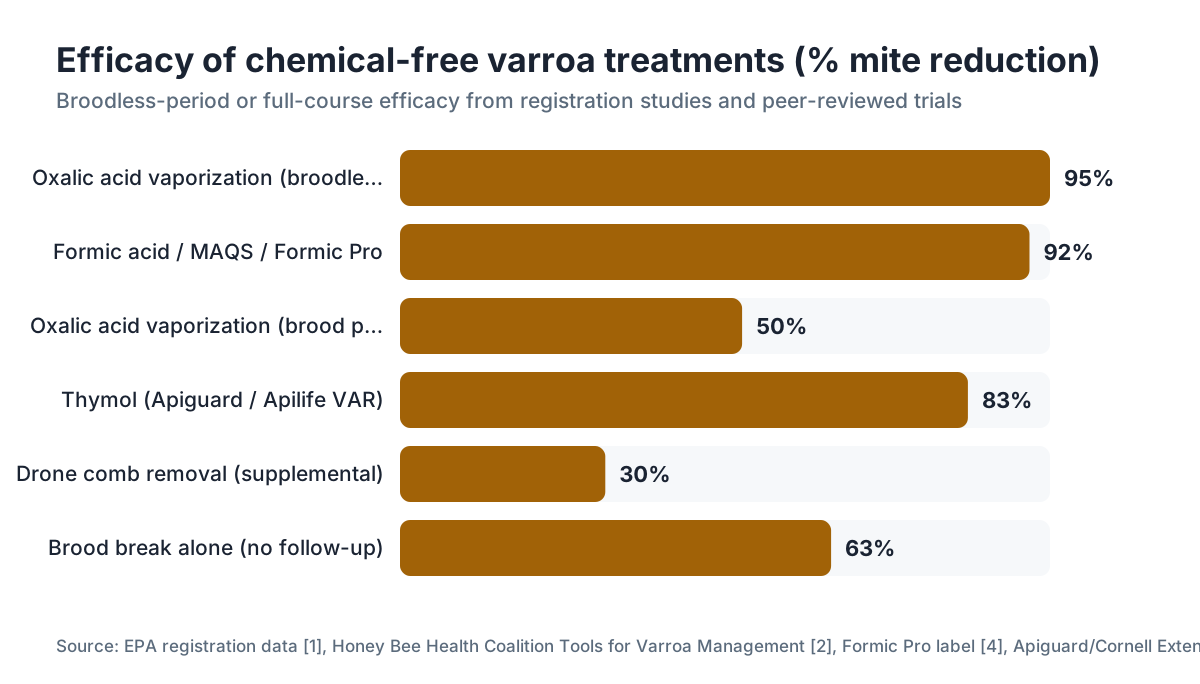
It has one big limitation. Oxalic acid only touches mites riding on adult bees. It does not get into capped brood cells. So a single treatment during a natural or induced broodless period gives you the cleanest kill. Studies cited in the EPA oxalic acid registration show 90-97% efficacy by vaporization during a broodless period. [1] During active brood rearing, one treatment kills only the 25-30% of mites that happen to be on adult bees that day.
Three application methods exist:
| Method | Brood present? | Efficacy vs. phoretic mites | Notes |
|---|---|---|---|
| Vaporization (OAV) | Yes or no | ~90-97% (broodless), ~40-60% per treatment (with brood) [1] | Requires vaporizer ($30-150), bees stay in hive |
| Dribble / trickle | No brood only | ~90%+ (broodless) | No extra equipment, wets bees, some stress |
| Extended-release (oxalic acid shop towel / sponge) | Yes | ~70-90% over weeks [3] | Off-label DIY method; Api-Bioxal is registered only for vaporization and dribble |
Vaporization is where most beekeepers with more than a hive or two land. It's faster, it stresses the bees less than dribbling, and it works in cold weather. The EPA label for Api-Bioxal allows up to three vaporization treatments per year. [1]
For winter in northern climates, a single OAV treatment in December or January, when the colony is naturally broodless, is one of the best things you can do for spring population. Temperatures down to about 20°F (-7°C) are workable because you never open the hive.
How effective is formic acid for varroa, and what are the risks?
Formic acid is the one chemical-free treatment that gets into capped brood cells and kills mites along with the adult-bee population. That makes it uniquely handy when mite loads are high and a brood break is not practical. [4]
The registered US products are Mite-Away Quick Strips (MAQS) and Formic Pro. Both use gel or pad systems that slowly release formic acid vapor inside the hive. MAQS is a 7-day treatment. Formic Pro runs as a 14-day single-strip or 10-day double-strip application.
Efficacy from the Formic Pro label and supporting studies lands at 86-97% mite kill in full-colony trials, including mites under capped brood. [4] For a brood-present scenario where oxalic acid alone would fall flat, that's a strong number.
The catch is temperature. Formic acid is only recommended between 50°F and 85°F (10-29°C). Above 85°F you get real risk of queen loss and brood death from vapor buildup. The MAQS label warns of increased queen loss risk at high temperatures, and some beekeepers report queen loss around 5-10% even under normal conditions. [4] I would not apply MAQS during a heat wave. Full stop.
The vapor also has a sharp odor that can knock down foraging for a day or two. Bees usually get back to normal quickly, but expect them to look agitated while it's working.
Cost runs roughly $20-30 for a two-colony pack of either product. That's more per treatment than OAV, but it's less labor if you're managing brood-present colonies in spring or fall.
What is thymol and which products contain it?
Thymol is a compound found in thyme essential oil. It kills varroa through vapor and direct contact, and it's on the USDA-NOP allowed list. The registered US products are Apilife VAR and Apiguard. [5]
Apilife VAR is a vermiculite tablet holding thymol plus smaller amounts of eucalyptol, menthol, and camphor. Apiguard is a thymol gel in a slow-release tray. Both release thymol vapor inside the hive over several weeks.
The main drawback runs opposite to formic acid: thymol needs heat. These products want temperatures consistently above 59-65°F (15-18°C) to vaporize enough to matter. Below that they barely work. Above 95°F you can see brood damage and queen problems. That pins thymol to late spring and early fall in most US climates. [5]
Efficacy studies show about 74-93% mite reduction over a full course, lower than the best oxalic acid or formic acid figures. [5] Thymol earns its place in regions with the right temperatures where beekeepers want a slow-release, low-fuss approach. A full Apiguard treatment costs about $5-10 per colony.
One practical note. Thymol can taint honey if supers are on during treatment. Pull the supers first. Both product labels say so.
Can mechanical methods like brood breaks and drone comb removal actually control varroa?
Mechanical methods drop mite loads a real amount, but leaning on them alone is a bet most colonies eventually lose unless you're running strongly mite-resistant stock.
A brood break is what it sounds like. You interrupt egg-laying, either by pulling the queen for 3-4 weeks or by caging her. Varroa can only reproduce inside capped brood, so a broodless stretch starves them of nursery sites. Once all capped brood emerges, nearly every mite is out on adult bees, and a single OAV treatment gets far more of them. A brood break by itself (no follow-up treatment) cuts mite loads 50-75% in studies, but the reduction is partial and foraging brings mites back fairly fast. [6]
Drone comb removal exploits the fact that varroa go for drone brood at roughly 8-10 times the rate of worker brood. [6] You add a frame of drone-sized foundation, let the queen fill it, wait until it's capped, then freeze or remove the frame before emergence. Each cycle pulls out an outsized chunk of the mite population. Run consistently through spring and summer build-up, it slows mite growth. It won't stop growth once reproduction rates climb. Think of it as buying time, not solving the problem.
Some queen-rearing operations create permanent brood breaks by accident when they requeen. If you requeen every year with hygienic or VSH (Varroa Sensitive Hygiene) stock anyway, you get a partial brood break as a bonus.
None of these mechanical methods alone carries a managed colony through most North American conditions. Use them as part of a layered plan alongside organic acid treatments.
Do mite-resistant bee genetics actually reduce the need for treatment?
Yes, a lot, though 'treatment-free' is not the same as 'treatment-never-needed.' Bee breeding for mite resistance is a real research area, and the results look good.
VSH (Varroa Sensitive Hygiene) bees find and pull mite-infested pupae out of capped cells, breaking varroa reproduction. Colonies bred for high VSH expression can hold mite populations below the treatment threshold with far less intervention. The Louisiana State University AgCenter has documented VSH colonies keeping infestation below 1% through the season in replicated trials. [7]
Hygienic behavior is related but broader: these bees detect and remove diseased or parasitized brood. Minnesota Hygienic and similar stock lower mite reproduction rates but usually don't erase the need to treat in high-pressure areas.
Russian honey bees, developed and maintained by the USDA ARS lab in Baton Rouge, show measurable grooming and lower mite reproduction. The USDA reports Russian bees in test apiaries held lower mite levels than Italian controls under the same conditions, though they can run more defensive and manage differently. [8]
The honest read on genetics: source queens or packages from verified VSH or hygienic stock and you'll treat less often, and treatment will hit harder when you do. But unless you control mating, your queens drift toward less-resistant genetics within a few generations. Most hobbyists still need to monitor and treat. Genetics is not a replacement for mite management. It's the thing that makes everything else work better.
What is the best treatment schedule for a full year without synthetic chemicals?
There's no single universal schedule, because timing rides on your climate, your colony's brood cycle, and your mite counts. But this framework holds up across most temperate US climates, and it's built on the Honey Bee Health Coalition's seasonal guidance. [2]
Spring (April-May): Sample as soon as two frames of brood show up. If mite load is above 2%, treat with formic acid (MAQS or Formic Pro) while temperatures sit in range. Don't wait. A spring mite explosion during rapid build-up is the second most damaging event behind fall neglect.
Summer (June-July): Add drone comb removal if mite loads are moderate (1-2%). Sample monthly. Cross 2% in midsummer and your best options are a formic acid treatment or a brood break plus OAV. Thymol works here if it's not too hot.
Late summer / early fall (August-September): The most important window of the year. Winter bees, the long-lived ones that carry the colony to spring, are being raised now. Mites feeding on these bees do serious damage and cut their lifespan short. The Honey Bee Health Coalition applies the same threshold: treat at or before 2% in late summer. [2] Formic acid or OAV with a brood break both work.
Winter (December-January): In areas with a true broodless stretch (temperatures consistently below 50°F for several weeks), one OAV treatment is high-efficacy, low-stress, and fast. This is the easiest big win in the whole year.
For tracking counts and scheduling reminders, the protocol tools at VarroaVault are free and built around this seasonal framework.
Your beekeeping supplies kit needs at least a basic vaporizer and a stash of Api-Bioxal to run this schedule reliably.
Can you treat for varroa while honey supers are on?
One of the most common practical questions, and the answer depends entirely on which treatment you pick.
Oxalic acid vaporization: the EPA label for Api-Bioxal states it may be used with honey supers present. [1] Residue studies show negligible oxalic acid buildup in honey above the levels that already occur naturally when it's used as directed.
Formic acid (MAQS, Formic Pro): the label allows super-on use but strongly recommends pulling supers in hot weather because of increased risk to brood and queen. There's also a possible flavor hit on honey made during treatment. Most experienced beekeepers pull supers during formic acid treatment.
Thymol (Apiguard, Apilife VAR): remove all supers first. Both labels require it. Thymol at treatment strength taints honey flavor.
The practical upshot: if you have to treat during a honey flow, OAV is the cleanest option for honey contamination.
How do chemical-free treatments compare in cost, efficacy, and ease?
Here's an honest side-by-side of the main options. Prices are approximate 2025 retail and vary by supplier.
| Treatment | Approx. cost per colony | Efficacy (broodless) | Efficacy (brood present) | Temperature window | Brood safe? |
|---|---|---|---|---|---|
| Oxalic acid vaporization | $3-8 | 90-97% [1] | 40-60% per treatment | Wide (works in winter) | Yes |
| Oxalic acid dribble | $2-5 | 90%+ [1] | Not recommended | Above freezing preferred | Yes (no brood) |
| Formic acid (MAQS/Formic Pro) | $10-15 | 86-97% [4] | 86-97% [4] | 50-85°F | Risk of loss |
| Thymol (Apiguard/Apilife VAR) | $5-10 | 74-93% [5] | 74-93% [5] | 59-95°F | Yes |
| Brood break + OAV | $3-8 for OAV | 95%+ combined [2] | N/A by design | Wide | N/A |
| Drone comb removal | Near zero | Partial reduction [6] | Partial reduction [6] | Any | Yes |
One hive, limited budget? Buy a vaporizer once and run Api-Bioxal. The vaporizer pays for itself the first season and you own the most versatile, reliable non-synthetic tool out there. Managing 20-plus colonies and need to treat with brood present in fall? I'd reach for Formic Pro and watch the temperature closely.
Are there any fully treatment-free approaches that actually work at scale?
Truly treatment-free beekeeping (no organic acids, no thymol, no mechanical work beyond normal management) is practiced by a small number of beekeepers, mostly with selected mite-resistant stock in low-density apiary settings. The evidence that it works reliably at scale is thin.
The honest version: several people, including Kirk Webster in Vermont and some German small-cell experimenters, have kept colonies alive without mite treatment for years by combining hard selection, local adaptation, small-cell foundation, and brood interruption from frequent swarming. Replicating those results widely has not been documented well in peer-reviewed literature, and beekeepers who go treatment-free without the genetic foundation often take heavy losses.
The Honey Bee Health Coalition is clear that untreated colonies with high mite loads act as a mite reservoir that raises infestation pressure on neighboring beekeepers. [2] There's a community-responsibility angle here that purely treatment-free advocates sometimes skip past.
For most hobbyists, the realistic minimal-intervention plan is: source VSH or hygienic queens, use drone comb removal as a summer tool, monitor monthly, and treat with oxalic acid or formic acid when you cross the threshold. That is as close to treatment-free as the evidence supports without accepting serious colony death.
What are the biggest mistakes beekeepers make with chemical-free varroa management?
The most common one is treating without sampling first, so you never learn whether the treatment worked or whether it was even needed. The second is treating once and calling it done for the year.
Waiting too long in late summer is probably the single most costly mistake. Beekeepers who skip August and September sampling routinely lose colonies that looked fine in July. Mite populations can roughly double every month during the main brood-rearing season, so a 1.5% count in July can hit 3-4% by mid-August. [10]
Using the wrong method for the conditions is a real problem too. Applying thymol during a hot August week, or dribbling during a heavy flow when bees are primed to rob, does more harm than good.
Ignoring reinfestation. A successful treatment brings your mite load down for a while, but if you're in an area thick with other colonies (or feral swarms), drift and robbing pull mites right back in. Sampling four weeks after treatment to confirm loads stayed low is not optional. It's part of the protocol.
And over-relying on drone comb removal or brood breaks without follow-up treatments. These buy time and improve treatment efficacy. They are not standalone solutions in most managed colonies.
Frequently asked questions
What is the most effective chemical-free varroa treatment for a beginner?
Oxalic acid vaporization with Api-Bioxal is the most beginner-friendly option. It needs a one-time vaporizer purchase ($30-150), works at low temperatures, takes about five minutes per colony, and hits 90-97% mite kill during a broodless period. Pair it with monthly alcohol wash monitoring and you have a solid foundation. It is EPA-registered and USDA-NOP compliant.
Can I use oxalic acid when there is brood in the hive?
You can, but a single treatment kills only the 25-40% of mites out on adult bees at that moment. Mites inside capped cells survive. The Honey Bee Health Coalition recommends repeated vaporizations (up to three treatments 5-7 days apart) during brood-present periods to catch mites as they emerge, or a brood break followed by a single treatment for more complete control.
Is oxalic acid safe for bees and honey?
Yes. Oxalic acid occurs naturally in many plants and in honey itself. The EPA registration for Api-Bioxal allows use with honey supers present because residue studies show negligible accumulation above background levels. Bee mortality from correctly applied OAV is minimal. Don't exceed the labeled dose or frequency, and always wear eye protection when vaporizing.
How often should I test for varroa mites throughout the year?
Monthly alcohol wash sampling during brood-rearing season is the standard recommendation from the Honey Bee Health Coalition. Pay special attention to late summer (August-September) when the winter bee population is being raised. A colony above 2% infestation at that time faces sharply higher overwinter mortality. At minimum, sample in early spring, midsummer, and late summer.
Does formic acid kill mites under capped brood?
Yes. Formic acid vapor penetrates capped brood cells, making it the only widely available organic-approved treatment that kills varroa reproducing inside cells. Mite-Away Quick Strips and Formic Pro show 86-97% efficacy including brood-phase mites. The trade-off is strict temperature requirements (50-85°F) and a real risk of queen loss at higher temperatures.
What temperature do I need for oxalic acid vaporization to work?
OAV doesn't depend on ambient temperature the way thymol does. The vaporizer heats oxalic acid to sublimation temperature no matter what it's doing outside. You can treat in winter at temperatures as low as 20°F (-7°C) as long as the colony is clustered and alive. That makes it uniquely useful for winter broodless treatments in northern climates.
Can drone comb removal alone keep varroa under control?
Unlikely in most managed colonies. Drone comb removal exploits varroa's preference for drone brood (roughly 8-10 times the infestation rate of worker brood) and can slow mite population growth. But it can't stop growth entirely, and reinfestation from neighboring colonies undercuts it over time. Use it as a supplemental tool alongside organic acid treatments.
How do I do a brood break to treat varroa without chemicals?
Remove or cage the laying queen for 21-24 days (one full worker brood cycle). Once all capped brood emerges, nearly all mites are on adult bees and a single OAV treatment reaches maximum efficacy. You can also split the colony, leaving queenless halves broodless while the old queen keeps laying in a separate hive. A brood break followed by OAV is one of the highest-efficacy chemical-free protocols available.
Are thymol products like Apiguard approved for organic honey production?
Yes. Thymol is on the USDA National Organic Program's approved materials list for certified organic apiaries. Apiguard and Apilife VAR both get used in organic operations. Remove honey supers before treatment because thymol at treatment strength can taint honey flavor, even though it's considered safe at low residue levels.
What mite infestation level requires immediate treatment?
The Honey Bee Health Coalition recommends treating at 2% infestation (2 mites per 100 bees on an alcohol wash) during brood-rearing season, and especially in late summer before winter bees are raised. Some extension programs use 3% in summer. Above 3% at any point in the active season, treat promptly. Colonies above that level face serious brood damage and overwinter mortality.
Do resistant bee genetics like VSH actually reduce varroa treatment frequency?
Yes, meaningfully. LSU AgCenter research documented VSH colonies holding mite loads below 1% through the season with minimal intervention. USDA-maintained Russian bee lines also show lower mite reproduction rates. The catch: unless you have isolated mating, later generations drift toward less-resistant genetics. Resistant stock cuts how often you treat and makes treatments more effective, but rarely erases the need to monitor.
Can chemical-free varroa treatments be used on package bees or new installations?
Yes, with timing adjustments. A new package stays broodless for the first week or two after installation while the queen begins laying, which is a brief window for effective OAV treatment if mite loads warrant it. Check the package for mites on arrival with an alcohol wash. Treating a heavily mite-loaded package early keeps the mite population from exploding during the colony's initial build-up.
Is it possible to treat for varroa while honey supers are on the hive?
Only oxalic acid vaporization is labeled for use with supers on; the EPA registration for Api-Bioxal explicitly permits it. Formic acid products allow super-on use but most experienced beekeepers pull supers during treatment to protect honey quality and reduce risk of brood damage. Thymol products (Apiguard, Apilife VAR) require super removal; both labels state this clearly.
How long after a chemical-free treatment should I retest mite levels?
Test 3-4 weeks after finishing treatment to confirm loads dropped below the threshold and to check for reinfestation. A successful OAV treatment during a broodless period should drop counts to near zero. If you treated with brood present, the post-treatment count tells you whether mites from emerged brood are pushing levels back up and whether a follow-up treatment is needed.
Sources
- EPA, Api-Bioxal (Oxalic Acid) Registration and Label: EPA-registered oxalic acid vaporization achieves 90-97% mite kill during broodless periods; up to three treatments per year permitted; labeled for use with honey supers present
- Honey Bee Health Coalition, Tools for Varroa Management Guide (6th ed.): 2% infestation threshold (2 mites per 100 bees) recommended as treatment action threshold during brood-rearing season and late summer; alcohol wash more accurate than sugar roll (sugar roll undercounts by 25-40%); colonies above 3% in August face sharply elevated overwinter mortality
- University of Minnesota Extension, Bee Lab, Varroa Management: 2-3% mite infestation used as action threshold range depending on time of year; oxalic acid extended-release methods under evaluation
- Formic Pro Product Label (NOD Apiary Products), EPA Registration No. 83219-3: Formic Pro achieves 86-97% mite reduction including brood-phase mites in full-colony trials; use restricted to 50-85°F temperature range; MAQS label warns of increased queen loss risk at high temperatures
- Apiguard Product Label (Vita Europe) and Cornell University College of Agriculture and Life Sciences, Thymol-based Varroa Treatments: Thymol products (Apiguard, Apilife VAR) achieve approximately 74-93% mite reduction over full treatment course; require consistent temperatures 59-95°F; honey supers must be removed before treatment
- Penn State Extension, Varroa Mite Management in Honey Bee Colonies: Varroa preferentially infests drone brood at 8-10 times the rate of worker brood; brood break alone reduces mite loads 50-75% but is incomplete without follow-up treatment
- Louisiana State University AgCenter, VSH Bee Breeding Program: VSH colonies in replicated trials maintained mite infestation rates below 1% through the season with minimal intervention
- USDA ARS Honey Bee Breeding, Genetics and Physiology Research, Baton Rouge, Russian Honey Bee Program: Russian honey bees maintained lower mite levels than Italian control colonies in USDA test apiaries; show measurable grooming behavior and lower mite reproduction rates
- USDA National Organic Program, Allowed and Prohibited Substances List: Oxalic acid, formic acid, and thymol are on the USDA NOP approved materials list for use in certified-organic honey production
- University of Florida IFAS Extension, Varroa Mite Control in Honey Bee Colonies: Mite populations can approximately double monthly during active brood-rearing season; a 1.5% mite load in July can reach 3-4% by mid-August under favorable conditions
Last updated 2026-07-09