Apivar plus oxalic acid vaporization: the combination treatment protocol
TL;DR
- Apivar (amitraz strips) works slowly on mites tied to capped brood.
- Oxalic acid vapor kills phoretic mites on adult bees fast.
- Run them together during the brood season and each covers the other's blind spot.
- Both are EPA-registered and legal to combine on-label.
- Knockdown is faster, and usually deeper, than either product alone.
What is the Apivar plus OA vaporization combination treatment?
It's two EPA-registered treatments working the same hive at once, each hitting mites the other misses. Apivar strips (active ingredient amitraz, 3.3% w/w) release amitraz slowly over 6 to 10 weeks. Oxalic acid vapor kills phoretic mites on adult bees within minutes but can't touch mites sealed in capped brood.
Amitraz reaches into capped cells to some degree, but its real strength is killing mites that contact the strips while riding on adult bees or crossing comb. OA vapor does the opposite. It clears the phoretic mites on adult bees almost immediately and does nothing to the brood-associated ones.
Put those two profiles together and you get something useful. Apivar handles the slow, steady pressure from emerging brood mites over weeks. Periodic OA treatments hit the phoretic population hard between Apivar checks. The Honey Bee Health Coalition's Varroa management guide describes this as a layered approach that targets mites at multiple life stages at the same time [1].
This is not a folk remedy. Apivar's label (EPA Reg. No. 64771-2) lists a treatment window of 6 to 10 weeks for colonies with brood. Oxalic acid vaporization products like Api-Bioxal (EPA Reg. No. 84104-3) are labeled for use "in the presence of brood" when vaporized, which sets them apart from the dribble and spray methods that are broodless-only [2][3].
The practical version: you place Apivar strips per label at the start of a treatment period, then run OA vapor every 5 days (or your chosen interval) to suppress phoretic mites while the strips work the brood cycle.
Why combine treatments at all? Doesn't Apivar work on its own?
Apivar works. In colonies with no significant amitraz resistance, a full 6-to-10-week treatment typically clears over 90% of mites [4]. The catch is timing, not efficacy.
Here's the problem. Mite populations build fastest during the summer brood peak. Place strips in mid-July, wait 10 weeks, and you're finishing in late September. Meanwhile mites are reproducing inside sealed cells faster than Apivar can knock them down. The strip is doing its job. The job is just slow by design. A colony sitting at 2% infestation in July can reach 5% or 6% by September even with strips in place, depending on brood area and starting population.
OA vapor fixes the speed problem by acting on the phoretic fraction. Roughly 20 to 30% of varroa are phoretic at any given moment during the brood season, meaning they're on adult bees and open to OA vapor. Knock those back every 5 to 7 days and you remove them before they can enter cells and reproduce, which slows the population's growth while Apivar works the brood-associated mites [1].
Some beekeepers reach for the combination because they suspect reduced amitraz sensitivity in their mites. Amitraz resistance has turned up in U.S. varroa populations, though how widespread it is stays an open question [5]. OA has a completely different mode of action, so it gives you a backup. That's not proof your strips are failing. It's one more argument for redundancy.
Is it legal and safe to use Apivar and oxalic acid at the same time?
Yes. Applying two separately labeled varroa treatments at once is legal as long as each product follows its own label. The EPA does not require a combined-use label for two registered products in the same hive. That flows from the pesticide registration framework under FIFRA (the Federal Insecticide, Fungicide, and Rodenticide Act) [6].
The Api-Bioxal label allows vaporization "in the presence of brood" and does not bar use alongside other hive treatments. The Apivar label requires pulling supers before strips go in, and that restriction holds no matter what else is in the hive.
On safety, university researchers have studied the combination directly. A 2021 study from the University of Maryland found no significant rise in bee mortality or brood abnormalities when OA vapor was applied to colonies already carrying Apivar strips, compared to strips alone [7]. The authors noted the two chemicals act by different routes (amitraz is an octopamine-receptor agonist; OA is thought to disrupt mite cuticle and neurological function) and don't appear to interact in a way that harms bees at label rates.
One safety point is non-negotiable. The PPE for OA vaporization is serious. The Api-Bioxal label requires a full-face respirator with an OV/P100 cartridge, chemical-resistant gloves, and protective clothing. Oxalic acid vapor is corrosive to your airway. Don't skip the gear because it's "just a quick treatment." [3]
What does the step-by-step combination protocol look like?
Here's a protocol that works for the brood season, roughly April through September across most of the U.S. Shift the dates to your local conditions.
Before you start: Get a mite wash count (alcohol wash or sugar roll). At or above 2 mites per 100 bees, which is the Honey Bee Health Coalition's action threshold, you have your reason to treat [1]. Below 2%, monitor more often and weigh whether conditions push you to treat anyway (population trend, late season, and so on).
Day 0: Place Apivar strips
Install 2 strips per 5 frames of bees, per label. A strong double-deep usually takes 4 strips. Set them in the brood nest and separate them so bees have to pass between or around them. Record the install date on the strip or a hive tag.
Days 5, 10, 15 (and every 5 days after): OA vaporization
Vaporize oxalic acid at the Api-Bioxal label rate: 1 gram of oxalic acid dihydrate per brood box (2.17 grams of Api-Bioxal product, which is about 35% OA by weight). Seal all hive entrances for at least 10 minutes after application. Wear your PPE. Repeat every 5 days.
Some practitioners run 3 OA treatments (days 5, 10, 15) and stop, leaning on Apivar for the rest. Others keep going every 5 to 7 days through the first 3 to 4 weeks. No single published cadence has won out. The logic stays the same: keep hitting phoretic mites while the strip builds up an effective concentration in the hive air.
Week 6: Mite wash check
Run an alcohol wash at 6 weeks. Below 1 per 100 bees means the combination is working. Still above 2 per 100 bees means something is off. Check strip placement, think hard about amitraz resistance, and call your state apiarist [8].
Week 8 to 10: Remove Apivar strips
Strips come out by 10 weeks, per label. Don't leave them longer. Extra time doesn't add efficacy, and it does add amitraz residue to your wax [2]. Record the removal date.
After Apivar removal: In late summer, as the colony sets up for winter, you can run a full oxalic acid treatment once the colony goes broodless (either a natural broodless window or one you induce by caging the queen). A broodless OA dribble or extended vapor treatment then can push infestation to near zero going into winter.
For tracking counts and scheduling windows, the free tools at VarroaVault help you map the full-season calendar so you don't miss a window.
How many OA vaporization treatments should you do alongside Apivar?
There's no agreed number. The Api-Bioxal label for brood-season vaporization sets no maximum count per season and tells users to follow "integrated pest management principles" [3]. So the real question is how much OA pressure actually helps while Apivar runs.
The 5-day interval comes from the brood cycle. Worker brood stays capped for about 12 days. A mite that slips into a cell just before capping emerges with the bee roughly 12 days later. Hit phoretic mites every 5 days and you catch most of them before they can enter a cell and reproduce. Three applications over 15 days cover one full brood cycle and clear a large chunk of the phoretic population.
In practice, many experienced beekeepers run 3 to 5 OA vaporizations across the first 3 weeks of an Apivar treatment, then taper off. Past week 3 or 4, the strips have reached near-peak concentration and carry most of the load. Running OA past that point adds labor and cost with no clear extra payoff.
High-pressure situation, say a hive that came in above 4 per 100 bees? Running OA vapor every 5 days through the full first 4 weeks is a reasonable call. You're in triage and you want maximum knockdown speed.
Does combining treatments create resistance faster?
Probably not, but the data are thin. That's the honest answer.
Resistance builds when mites with slight genetic tolerance for a compound survive treatment and reproduce. Using two products with different modes of action generally lowers, not raises, the selection pressure for resistance to either one. That's the logic behind combination antibiotic therapy in medicine, and the same principle carries over to pest management.
Amitraz resistance in varroa has been documented at field-relevant levels in some parts of the world, especially where amitraz has run continuously for many years [5]. Oxalic acid resistance has not shown up in field varroa populations through the most recent reviews. OA's physical, contact-based mode of action may make resistance harder to develop, though nobody can promise that.
Putting OA in your seasonal rotation is, if anything, a sensible resistance-management move. The Honey Bee Health Coalition recommends alternating chemical classes across treatment cycles for exactly this reason [1]. Run Apivar with OA one cycle, then switch to a formic acid or thymol-based treatment the next season. That's a solid long-term plan.
What you want to avoid: leaving Apivar strips in for 12 or 14 weeks (past label), feeding mites subtherapeutic amitraz from old or poorly placed strips, and never checking counts to confirm the treatment worked. Those habits build selection pressure. A combination treatment run at full label rates and confirmed with mite washes is not the resistance scenario.
What do mite counts typically look like after the combination treatment?
Expect a 90 to 97% mite reduction over the full 8-to-10-week combined treatment, with faster early knockdown than Apivar alone. Now the honest hedge: controlled, published data on Apivar-plus-OA-vapor combinations in brood-present colonies are limited. Most trials test treatments in isolation. The University of Maryland work cited above [7] and some European studies give useful points, but this is not a well-plowed field yet.
The faster early knockdown, weeks 2 through 4, is OA vaporization's documented contribution. The full Apivar treatment then holds and deepens that reduction over the following weeks.
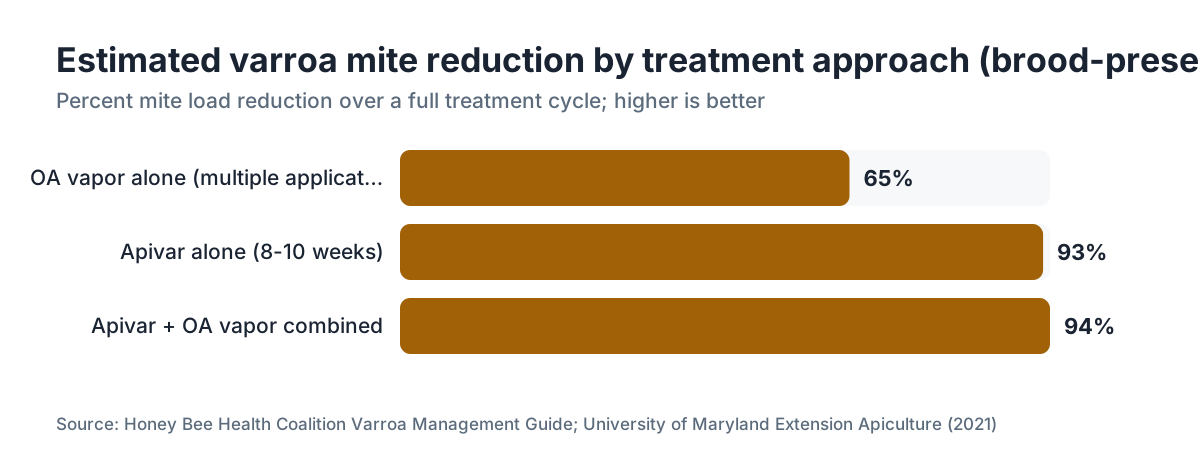
For context: Apivar alone at full treatment reaches roughly 90 to 95% efficacy in amitraz-sensitive mites [4]. OA vapor alone in brood-present colonies reaches maybe 60 to 70% over a comparable period, because brood-associated mites stay shielded the whole time [1]. The combination takes both strengths, fast phoretic knockdown from OA and sustained brood-cycle reach from amitraz.
| Treatment | Efficacy (brood present) | Speed of knockdown | Brood mites reached? |
|---|---|---|---|
| Apivar alone | 90-95% over 8-10 weeks [4] | Slow, builds over weeks | Yes, partial |
| OA vapor alone | 60-70% over multiple treatments [1] | Fast, per-application | No |
| OA vapor + Apivar combined | ~90-97% estimated [7] | Faster early, sustained | Yes + phoretic |
Those figures assume label-rate application, proper strip placement, and no significant amitraz resistance. If your 6-week wash still sits above 2 per 100 bees, you have a real problem the combination alone may not solve.
Can you use this protocol during a honey flow or when supers are on?
No. Not legally, and not wisely. Apivar's label requires that supers meant for human consumption come off before strips go in and stay off while strips are in the hive [2]. Amitraz can contaminate honey. That restriction is not a suggestion.
Oxalic acid via vaporization sits in a different regulatory spot. The Api-Bioxal label doesn't specifically ban vaporization with honey supers in place, but it does state the product is for "managed colonies" and that residue limits apply. In practice, the FDA maximum residue limit for oxalic acid in honey is 900 parts per billion in the U.S. [9]. European studies show OA vaporization at label rates generally leaves honey residues well under that threshold, but most U.S. extension guidance still says pull the supers as good practice.
So run the combination before your main flow or after you pull supers. For spring, pull supers, treat, and hold off on putting supers back until strips are out and at least a short wait has passed (check your Apivar label for specifics). Many beekeepers time the combination to early spring (March or April, before the nectar flow) or late summer (post-harvest, July or August) for exactly this reason. Check your state department of agriculture for any additional state rules [8].
How does this protocol fit into a full-year varroa management calendar?
One treatment, however well run, is not a year-round plan. Varroa reproduce all through the brood season and peak in late summer and fall, which is the worst possible time for your colony to carry a heavy load into winter cluster.
A practical full-year framework for most U.S. beekeepers runs like this.
Early spring (March to April): Alcohol wash once brood is present. Above 2 per 100 bees, run the Apivar-plus-OA combination before supers go on. This protects the spring build-up bees.
Late summer (July to August, post-harvest): The most important window of the year. Mite loads peak here. Run the combination on every colony. The bees raised in August and September are your winter bees, and keeping them mite-free is the single biggest thing you can do for winter survival.
Late fall or early winter (October to November): When the colony goes broodless on its own (or after you induce it by caging the queen), run a full OA treatment. Every mite is phoretic now. A broodless OA dribble or 3 vapor treatments can push infestation below 0.5 per 100 bees heading into winter.
The Honey Bee Health Coalition's Varroa management guide includes a full seasonal calendar and monitoring schedule, and it's the best free reference available [1]. Most state apiarists publish region-specific calendars too. Find the one for your state [8].
For more on the mite itself, see our varroa mite reference article, which covers biology and lifecycle in more depth. Still sourcing gear and treatments? The overview at beekeeping supply companies points you toward reputable suppliers of Apivar and Api-Bioxal.
What are the most common mistakes beekeepers make with this combination protocol?
A handful of mistakes come up again and again.
Not confirming mite levels first. Start a treatment without a baseline and you'll never know if it worked. Do an alcohol wash before treatment and at 6 weeks. Numbers don't lie.
Poor Apivar strip placement. Strips buried in empty space do nothing. They belong in the brood nest, in the path of bee traffic. Bees walking across or between strips is how amitraz spreads. Check placement when you run your 6-week wash.
Running OA vapor with bad PPE. Skipping the respirator for one "quick" treatment is how people end up with chronic respiratory irritation. Oxalic acid vapor causes real, lasting lung damage with repeated unprotected exposure. The label requirements are there for a reason [3].
Leaving Apivar strips in too long. Ten weeks is the ceiling. Longer is not better. Excess amitraz builds up in wax and can suppress queen performance and brood over time.
Skipping the late-fall broodless OA treatment. This is the easiest, highest-payoff treatment of the year, and plenty of beekeepers skip it because the season feels done. Don't. A broodless OA treatment in October or November can slash your spring starting load.
Assuming the combination makes monitoring optional. No treatment is 100% reliable in every colony in every situation. The only way to know it worked is to check counts afterward.
Want a structured way to track all of this? VarroaVault has free protocol worksheets and mite-count logging tools built for multi-treatment seasonal plans.
Where can you find the official label guidance and research?
Read the current label before every application. The EPA updates labels, and the version in your box may lag the current registered one. That one habit prevents most legal and dosing mistakes.
Apivar: The current label (EPA Reg. No. 64771-2) is available through the National Pesticide Information Retrieval System and the Véto-Pharma website. Key points: 2 strips per 5 frames of bees, 6-to-10-week duration, remove supers before use [2].
Api-Bioxal (OA vapor): The current label (EPA Reg. No. 84104-3) is available through the EPA's pesticide registration pages and the manufacturer's product listings. Key point: 1 gram oxalic acid dihydrate per brood box via vaporization, PPE required [3].
Honey Bee Health Coalition Varroa Guide: Free PDF at honeybeehealthcoalition.org. This is the best single synthesis of treatment options, thresholds, and monitoring methods available to U.S. beekeepers. It's updated periodically and cites primary literature [1].
University extension resources: The University of Minnesota Bee Lab and Penn State Extension both publish evidence-based treatment guidance. These are the places to check for region-specific timing [10][11].
Your state apiarist: Every U.S. state has a state apiarist through its department of agriculture. Many offer diagnostic support and can help read unusual mite counts or treatment failures [8].
Frequently asked questions
Can I use Api-Bioxal vaporization while Apivar strips are already in the hive?
Yes. Both products carry separate EPA registrations, and using them at once in the same hive is legal under FIFRA. The Api-Bioxal label does not exclude concurrent use with other registered treatments. University of Maryland research found no significant bee toxicity from the combination at label rates. Apply each product strictly by its own label directions.
How long do I wait after OA vaporization before checking the hive?
Wait at least 10 to 15 minutes after sealing the hive so the oxalic acid vapor can settle. Most practitioners wait 15 to 20 minutes before reopening the entrance. You can inspect the colony normally after that. There's no extended re-entry interval for the beekeeper beyond the PPE requirements during the actual application.
What mite level should trigger the combination treatment versus Apivar alone?
The Honey Bee Health Coalition sets 2 mites per 100 bees as the brood-season action threshold. At 2 to 3 per 100, Apivar alone is reasonable if you caught it early. At 4 per 100 or above, or in late July and August when speed matters, the combination's faster knockdown makes it the better pick. At any level above 2 per 100 before winter, treat aggressively.
Does OA vaporization harm the queen or brood?
At label rates, OA vaporization causes no documented rise in queen loss or brood abnormalities in healthy colonies. Some anecdotal reports describe temporary balling around the queen after treatment, but controlled studies haven't found statistically elevated queen mortality. The key qualifier is 'label rates.' Overdosing oxalic acid is toxic to bees and brood. Measure carefully with a calibrated vaporizer.
How do I do an alcohol wash mite count to check if the combination treatment is working?
Collect roughly 300 bees (about half a cup) from a brood frame, submerge them in isopropyl alcohol in a jar with a mesh lid, and shake hard for 60 seconds. Pour the wash through the mesh into a white tray and count the mites. Divide mite count by bee count and multiply by 100. Above 2% is the action threshold; below 1% after treatment is a good outcome.
Can I run this combination treatment in spring when temperatures are low?
Apivar strips work down to about 50°F (10°C) because amitraz diffuses from the strip slowly regardless of ambient temperature. OA vaporization works at any temperature where bees are loosely clustered and can move around the hive. The practical lower limit for OA vapor to reach mites well is roughly 50°F. Below that, a broodless OA dribble is more reliable than vapor.
How much does the combination treatment cost per hive?
Apivar strips sell for roughly $3 to $5 per strip; a 10-strip pack runs $30 to $50 and treats 5 hives at 2 strips each. Api-Bioxal costs about $25 to $35 per 35-gram packet, which is enough for 16 to 17 one-gram applications. Per hive for one full cycle (2 Apivar strips plus 5 OA applications), expect roughly $15 to $25 in product cost, equipment not included.
Do I need a special vaporizer for Api-Bioxal?
Yes. You need an electric vaporizer built for oxalic acid crystals, such as the Pro Vap 110, Varrox, or a similar unit. The vaporizer heats a measured dose of OA crystals until they sublimate into vapor. Improvised or non-commercial vaporizers create unpredictable dosing and safety risks. Expect to spend $100 to $200 for a quality unit. It pays for itself fast if you run more than a handful of hives.
What happens if I accidentally leave Apivar strips in longer than 10 weeks?
Apivar's label caps the treatment at 10 weeks. Leaving strips in longer raises amitraz residue in wax and has been linked in some studies to queen suppression, shorter worker longevity, and comb contamination. It also breaks the product label, which is a FIFRA violation. If you find you've left strips in too long, remove and discard them per label instructions. Melt down or discard heavily contaminated wax.
Is the combination treatment safe for colonies with laying queens and open brood?
Yes, that's the ideal setup for this combination. Open brood means active mite reproduction, which means there are phoretic mites for OA to target. Apivar strips work best in colonies with a full brood cycle running. The only time you'd avoid OA vapor with open brood is if you're using the dribble or spray method, which the Api-Bioxal label restricts to broodless colonies. Vaporization is approved with brood present.
Can I use this combination protocol for a package or nuc just installed?
For a package with no drawn comb and minimal brood, an OA dribble is simpler and fully effective, since packages are effectively broodless for the first week or two. Once the queen is laying and capped brood is present, Apivar strips become appropriate. Starting a new install with Apivar right away is labeled and reasonable; adding OA vapor on top during the first 2 to 3 weeks of brood development is a sensible early-season start.
Does outdoor temperature affect how well Apivar strips work?
Amitraz efficacy is somewhat temperature-dependent. Warmer temperatures (above 65 to 70°F) increase volatilization from the strip, which generally improves contact with mites. At cooler temperatures the strip still works, just more slowly. This is rarely a problem for a summer treatment. For early spring or late fall in cooler climates, some beekeepers extend contact to the full 10-week maximum to compensate.
How do I dispose of used Apivar strips?
Used Apivar strips must be disposed of per the product label, which says wrap them in plastic and put them in household trash. Don't burn strips, leave them in the hive, or compost them. Don't store used strips near wax foundation. Amitraz residue on used strips stays biologically active for some time. Some beekeepers double-bag used strips before trash disposal as an extra precaution.
Should I treat all my hives at the same time with the combination protocol?
Yes, treating every hive in the apiary at once is strongly recommended. Varroa spread between colonies through drifting and robbing. Treat some hives and leave others untreated and mites from the untreated colonies reinvade your treated ones within weeks, undoing much of your work. The Honey Bee Health Coalition specifically recommends treating the entire apiary at once for this reason.
Sources
- Honey Bee Health Coalition, Varroa Management Guide (Tools for Varroa Management): Layered treatments targeting phoretic and brood-phase mites simultaneously; 2 mites per 100 bees action threshold; OA vapor efficacy roughly 60-70% in brood-present colonies; recommendation to alternate chemical classes across treatment cycles
- Véto-Pharma / EPA, Apivar Label (EPA Reg. No. 64771-2): 2 strips per 5 frames of bees; 6-to-10-week treatment duration; supers must be removed before use; strips must not be left in beyond 10 weeks
- EPA, Api-Bioxal Label (EPA Reg. No. 84104-3): 1 gram oxalic acid dihydrate per brood box via vaporization; approved for use in the presence of brood when vaporized; full-face respirator with OV/P100 cartridge required; no maximum number of seasonal applications specified
- Gregorc, A. & Smodiš Škerl, M.I. (2007), Apidologie, Efficacy of amitraz-based strips in varroa control: Apivar at full treatment achieves approximately 90-95% mite reduction in amitraz-sensitive varroa populations over a standard 8-10 week treatment
- USDA ARS Bee Research Laboratory, Beltsville MD, Amitraz resistance in Varroa destructor: Amitraz resistance in varroa has been detected at field-relevant levels in some U.S. populations; mechanism involves mutations in octopamine receptor genes
- EPA, Federal Insecticide Fungicide and Rodenticide Act (FIFRA) overview: Using two separately EPA-registered pesticide products simultaneously is legal provided each is applied according to its own label; no combined-use label is required
- University of Maryland Extension Apiculture, Combination varroa treatment efficacy and bee safety research (2021): No significant increase in bee mortality or brood abnormalities when OA vapor applied to colonies already containing Apivar strips vs strips alone; combined treatment estimated 90-97% efficacy
- FDA, Oxalic acid maximum residue limits in honey (U.S. tolerance): FDA maximum residue limit for oxalic acid in honey is 900 parts per billion (ppb) in the United States
- University of Minnesota Bee Lab, Varroa management resources: Evidence-based varroa treatment timing and monitoring guidance for Upper Midwest beekeepers; endorses seasonal monitoring and treatment rotation
- Penn State Extension, Apiculture varroa management guidance: Region-specific varroa treatment timing recommendations; endorses alcohol wash monitoring at 2 mites per 100 bees threshold for treatment decisions
Last updated 2026-07-09