free shipping queen bees for sale: what to actually check
TL;DR
- "Free shipping" on queen or package bees almost always means the shipping cost got folded into the sticker price, not eliminated.
- What actually matters: overnight vs 2-day transit, USPS Priority Mail restrictions on live bees, regional breeder proximity, and ordering early enough to get a spring slot.
- Expect $35 to $55 per mated queen and $125 to $180 per 3-lb package before any shipping is added.
is free shipping on queen bees actually free?
No. Nobody ships a box of live insects across state lines for nothing. When a queen breeder or package supplier advertises free shipping, the carrier cost has been rolled into the per-queen or per-package price, or it's a threshold promotion (spend over some dollar amount, shipping waived). Live queen bees ship almost exclusively through USPS Priority Mail Express, because the U.S. Postal Service is the only major carrier with a formal policy for shipping live queen and package bees domestically, and that service alone runs $30 to $70+ depending on distance and box weight before any markup [1].
So when you see "free shipping queen honey bees for sale," read it as "shipping is baked into the price, and we've priced it to look competitive." That's marketing language, not a scam. The real question is whether the total delivered cost and the survival odds are good. A queen that dies in transit because a breeder used a cheap shipper to hit a "free shipping" promise is not a deal at any price.
Compare total cost, not the shipping line item. A queen priced at $45 with $15 shipping tacked on and a queen priced at $58 with "free shipping" are the same transaction. Ask the seller directly which carrier and service level they use. If they won't say, that's a red flag.
how much do queen bees and package bees actually cost in the united states?
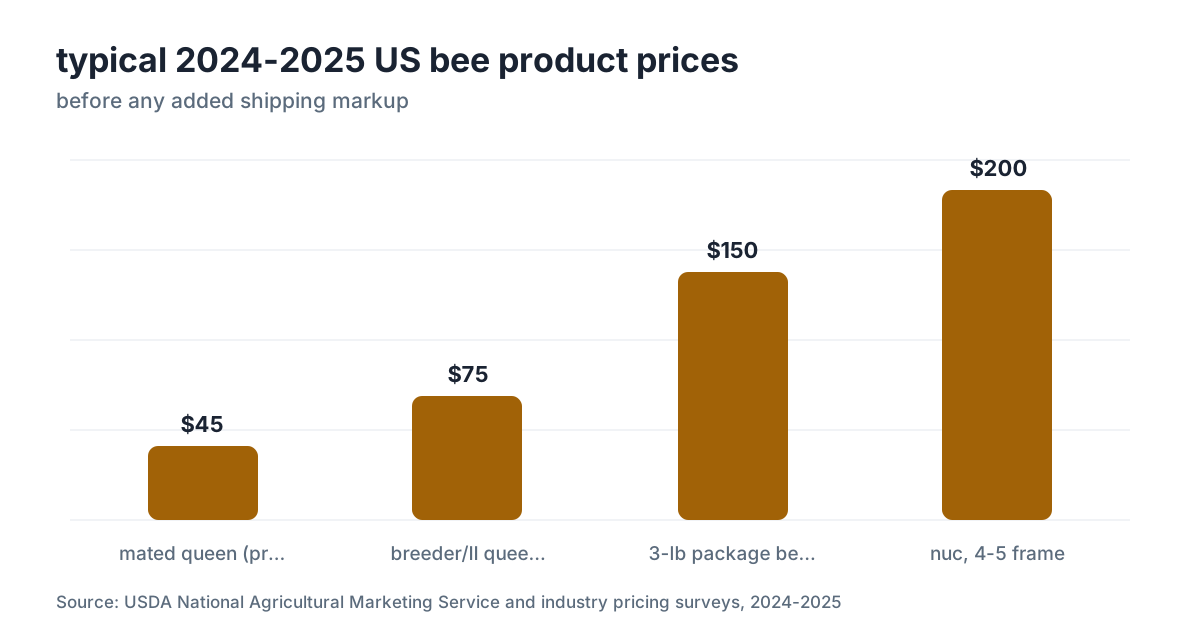
Mated queen prices in 2024 to 2025 typically run $35 to $55 for standard production queens (Italian, Carniolan, mutt stock), with breeder queens and instrumentally inseminated stock running $75 to $250 or more depending on the genetics program. Package bees (bees in a screened box with a caged queen, no comb) run roughly $125 to $180 for a standard 3-lb package as of recent seasons, though prices have climbed with almond pollination demand and fuel costs pulling on regional supply [2].
Nucs (small starter colonies on 4-5 frames of drawn comb with a laying queen) cost more, typically $150 to $250, because you're buying established comb, brood, and workers, and not a queen alone in a shaker box of bees. Nucs also ship worse over long distances (they're heavier, need ventilation, and the comb can shift), so most nuc sales are regional pickup only.
| Product | Typical 2024-2025 price range | Shipping method |
|---|---|---|
| Mated queen (production stock) | $35-$55 | USPS Priority Mail Express |
| Breeder/II queen | $75-$250+ | USPS Priority Mail Express, sometimes courier |
| 3-lb package bees | $125-$180 | USPS, regional truck delivery, or local pickup |
| Nuc (4-5 frame) | $150-$250 | Local pickup or short-haul delivery only |
These ranges move year to year with almond pollination contracts (California almond pollination alone uses roughly 2.4 to 2.5 million colonies each February, which pulls heavily on national bee supply and pushes spring prices up) [3]. Order early. Popular breeders sell out their spring queen slots by February or March for April/May delivery.
how do queen bees survive being shipped through the mail?
Queens ship in small wooden or plastic cages (a "queen cage") with attendant worker bees and a candy plug for food, packed inside a ventilated shipping box, usually with several other queen cages banded together. USPS requires that live bee shipments move via Priority Mail Express specifically because it guarantees overnight or 1-2 day delivery in most of the continental US, and the Postal Service publishes specific packaging and labeling requirements for live queen bees under its Domestic Mail Manual [1].
Survival rates for queens shipped this way are generally good when breeders ship early in the week (avoiding weekend transit delays where a box sits in a facility for an extra day) and when weather isn't extreme. Reputable breeders won't ship in temperatures below about 40°F or above 95°F at either origin or destination, because queens and attendants can die from cold chill or heat stress in transit. Ask your supplier what their weather cutoff policy is.
Package bees (the larger 3-lb box of loose workers plus a queen) are more fragile in shipping because they need airflow and can overheat or starve faster than a small queen cage. Many package suppliers restrict shipping to certain days (Monday/Tuesday only) so the box never sits over a weekend, and some won't ship packages by mail at all, using regional trucking or local pickup networks (a "bee bus" or club-organized pickup) instead.
what states can you legally ship queen bees to?
All 50 states allow queen bee shipment, but many require a health certificate or apiary inspection certificate from the state of origin, and a handful (California, for instance) have specific import rules tied to pest and disease prevention, particularly around small hive beetle and Africanized bee genetics in southern-origin stock. Check your state's department of agriculture apiary program before ordering from an out-of-state breeder, especially if you're in a state with active inspection programs like Florida, Georgia, or California, all major queen and package production states [4].
Most interstate queen sales include a health certificate automatically, since breeders in major production states (Georgia, California, Hawaii, Texas) are already inspected regularly and used to generating that paperwork for USPS live-animal shipping compliance. If you're buying locally within your own state, this usually isn't an issue at all.
Hawaii is a special case. It has some of the strictest import rules in the country because it remains free of varroa mites on some islands, and the state Department of Agriculture regulates live bee imports closely to keep it that way [5]. If you're shipping bees to Hawaii, expect extra paperwork and inspection requirements regardless of what the mainland seller advertises.
when is the best time of year to order queen bees or packages?
Order in December through February for April through June delivery in most of the continental US.
Southern breeders (Georgia, California, Texas, Hawaii) start producing queens earliest, often by March, because their climate allows year-round or near-year-round mating flights. Northern beekeepers typically wait for southern-bred queens and packages to arrive in spring rather than trying to raise queens locally before their own nectar flow starts.
Popular breeders sell out spring slots months in advance. If you want a specific delivery week in April, you often need to place your order by January. Late-ordering beekeepers get pushed to May or June delivery, which is fine for requeening an existing colony but late for starting a new package colony ahead of the main nectar flow in most regions.
Fall queen sales exist too, mostly for requeening colonies with failing or aging queens before winter. Fall availability is generally smaller and more regional since most large-scale queen rearing operations wind down production by late summer as day length and forage drop off.
what's the difference between buying a queen bee vs a package of bees?
A queen alone gets you one mated, laying queen in a small cage with a few attendant workers, meant to replace a failing queen in an existing colony or to head up a nuc you're building from your own resources (frames of brood, bees you've split off another hive). A package gets you roughly 3 pounds of loose worker bees (around 10,000-12,000 bees) plus a caged queen, with no comb, meant to start an entirely new colony from scratch on foundation or drawn comb you provide.
If you already have a hive and just need to fix a queen problem (poor laying pattern, queen died, colony went queenless), you buy a queen only, for $35 to $55. If you're starting beekeeping from zero or replacing a colony that died out completely, you buy a package (or a nuc, if you want a head start with drawn comb and brood already going).
Packages need more work upfront: you're essentially dumping a box of bees into an empty hive and hoping they draw comb, accept the queen, and build up before the nectar flow ends. Nucs are more expensive but faster to establish since the comb and brood are already there. For a first-time beekeeper, many extension programs (Penn State, University of Georgia, and others) suggest packages or nucs over feral swarm capture specifically because you get known-source, often mite-tested stock [6].
how do you check if a queen bee seller is reputable?
Look for a few concrete things: state apiary registration or health certificate practices, clear shipping-day policies (do they ship Monday-Wednesday only to avoid weekend transit deaths), a stated queen replacement or guarantee policy for dead-on-arrival queens, and reviews or referrals from local beekeeping clubs or state beekeeper associations. Most legitimate breeders will replace a queen that arrives dead at no charge if you notify them within 24 to 48 hours, but the exact window varies by seller, so ask before you buy, not after something goes wrong.
Check whether the seller tests or selects for varroa-resistant traits (VSH, or Varroa Sensitive Hygiene, is the most established selectively-bred trait, developed originally through USDA research) [7]. Buying VSH or hygienic stock doesn't mean you can skip mite monitoring and treatment, but it does mean you're starting with genetics that give you a head start on mite pressure.
Ask your state or regional beekeeping association for breeder recommendations. Most states have an active beekeepers association, and many maintain informal or formal lists of known, inspected queen producers. The honey bee queens for sale breakdown covers specific breeder evaluation criteria in more depth if you want a longer checklist before you commit to an order.
do free-shipping deals affect queen or package bee quality?
Not directly, but the pricing structure behind a "free shipping" promotion can indirectly affect quality if a seller is cutting corners on packaging or carrier choice to make the free-shipping math work. A breeder covering shipping cost out of a thin margin has more incentive to use the cheapest available option, which sometimes means slower transit or less protective packaging.
The honest way to evaluate this is to ask what carrier and service level is used regardless of what the price page says. USPS Priority Mail Express overnight or 1-2 day delivery is the standard for live bees nationally [1]. If a seller is using regular Priority Mail (2-3 day, no guarantee) to save money, that's worth knowing before you order, because a package or queen cage sitting in transit an extra day raises die-off risk meaningfully, especially in summer heat or winter cold snaps.
Good breeders build shipping cost transparently into their pricing and are upfront about which service they use. Vague "free shipping, ships fast!" language without specifics is a mild yellow flag, not a dealbreaker, but worth a follow-up question before you commit money to a spring order.
what should you do with a new queen or package the day it arrives?
Get the box out of direct sun and extreme temperature immediately, then follow the specific installation method for whichever product you bought. For a mailed queen cage, most beekeepers do a slow-release install: remove the cork on the candy end, let the colony chew through the candy over 2-4 days to release her gradually, which lets worker bees get used to her pheromone before direct contact. For a package, you typically shake or pour the bees into a prepared hive body, hang the caged queen between frames (candy-plug method, same slow release), and feed sugar syrup for the first 1-2 weeks while they establish.
Don't inspect a newly installed package or requeened colony for at least 5-7 days. Opening the hive too early risks the colony balling and killing an unaccepted queen, especially in package installs where the whole colony is new to her scent. Most state extension apiculture programs, including Penn State and University of Florida, publish step-by-step installation guides worth reading before your bees arrive, not after [6].
Start varroa monitoring within the first month, even on a brand-new package or nuc. Mites can hitchhike in on package bees or drift in from nearby colonies almost immediately, and waiting until fall to check mite loads on a new colony is one of the most common first-year mistakes. A sugar roll or alcohol wash done at 30 days post-install gives you a real baseline instead of a guess.
how does honey bees for sale in the united states vary by region?
Package and queen production is concentrated in a handful of southern and western states because of climate: Georgia, California, Texas, Florida, and Hawaii dominate national supply, with smaller regional producers scattered through the Midwest and Northeast that mostly serve local buyers directly. If you're in the Northeast or upper Midwest, your queens and packages are very likely coming from a southern breeder shipped north, which is normal and generally fine, though it does mean your bees are adapting to a new climate in their first season.
Some beekeepers specifically seek out "northern-raised" or "locally overwintered" queens on the theory that queens surviving a real winter and producing well in your specific climate carry better regional adaptation. This is a real consideration.
But it's not a guarantee. A well-bred southern queen with good genetics (mite resistance, gentle temperament, strong laying pattern) can still outperform a poorly selected local queen. Genetics and selection pressure matter more than geography alone, though regional adaptation is a legitimate tiebreaker when everything else is equal.
If you want more detail on which companies operate at what scale and how to compare them side by side, the honey bee supply companies united states overview breaks down major national suppliers versus smaller regional queen breeders.
how does buying a new queen or package fit into varroa management?
Every new queen, package, or nuc you bring in is a fresh mite-monitoring starting point, not a mite-free guarantee. Even VSH or hygienic stock can arrive with some mite load, and any bees you add near existing colonies can pick up mites through drift and robbing within weeks. The Honey Bee Health Coalition's Tools for Varroa Management guide recommends monitoring mite levels using an alcohol wash or sugar roll at least monthly during active season, starting as soon as a colony is established enough to sample without excessive damage to a small population [8].
A lot of first-year colony losses get blamed on "bad queens" or "bad genetics" when the real cause is a mite load that built up unchecked over the first summer and crashed the colony by fall. Buying disease-resistant genetics helps at the margin, but it does not replace an actual monitoring and treatment schedule.
If you want a free structured way to track mite counts and treatment timing across a season without building a spreadsheet from scratch, VarroaVault publishes free varroa monitoring and treatment-planning tools built around Honey Bee Health Coalition thresholds, useful whether your colony started from a $40 mailed queen or a nuc you built yourself.
what mistakes do first-time buyers make when ordering queen or package bees?
The most common mistake is ordering too late in the season and getting pushed to a June or July delivery slot, which gives a new colony far less time to build up comb, brood, and stores before winter. Order by January or February for the best spring delivery windows from most major breeders.
Second most common: not asking about the dead-on-arrival policy before ordering, then being surprised when a queen arrives dead or barely alive and the seller's replacement window has already passed. Read the guarantee terms before you pay, not after a box arrives quiet and still.
Third: installing a package or requeening a hive and then opening it up three days later out of anxiety. This is understandable but it's one of the most common causes of queen rejection and balling. Give it a week.
Fourth: assuming "free shipping" or a low headline price means low total cost. Always add up the full delivered price, ask what carrier and service level is used, and compare that total against other sellers rather than comparing sticker prices with different shipping structures baked in differently.
Frequently asked questions
is free shipping on queen bees actually available or a marketing term?
It's marketing language. Live bee shipping via USPS Priority Mail Express typically costs $30 to $70+ depending on distance and weight, and that cost gets built into the queen or package price rather than truly waived. Compare total delivered cost across sellers instead of trusting the phrase "free shipping" on its own.
how much does a queen honey bee cost in the united states?
Standard mated production queens run $35 to $55 as of recent seasons. Breeder queens or instrumentally inseminated stock with documented genetics run $75 to $250 or more. Prices shift year to year with almond pollination demand, fuel costs, and regional supply, so check current pricing from a few breeders before committing.
can you ship live queen bees through the mail legally in the us?
Yes. USPS allows domestic shipment of live queen bees via Priority Mail Express under specific packaging and labeling rules in its Domestic Mail Manual. This is the standard method nationwide; regular carriers like UPS and FedEx generally don't handle live bee shipments the same way.
how long can a queen bee survive in a shipping box?
Queens typically ship with attendant worker bees and a candy plug for food, and most survive comfortably for the 1-2 day transit window USPS Priority Mail Express targets. Survival drops if boxes sit over a weekend, face extreme heat or cold, or get delayed beyond about 3 days in transit.
what's the difference between a queen bee, a package, and a nuc?
A queen alone (mated, caged) replaces a failing queen in an existing colony, costing $35-$55. A package (3 lbs of loose workers plus a caged queen, no comb) starts a new colony from scratch for $125-$180. A nuc (4-5 frames with drawn comb, brood, and a laying queen) costs $150-$250 and establishes faster since comb is already built.
what states have special rules for importing queen bees?
Most states require a health or apiary inspection certificate for interstate queen shipments, easily provided by breeders in major production states like Georgia, California, Texas, and Florida. Hawaii has the strictest rules nationally, since some islands remain varroa-free and the state Department of Agriculture regulates imports tightly to preserve that status.
when should you order queen bees or packages for spring delivery?
Order in December through February for April through June delivery in most of the continental US. Southern breeders start producing earliest due to climate. Popular breeders sell out spring slots months ahead, so late ordering (March or later) often means getting pushed to May or June delivery instead.
how do you install a new queen or package of bees?
For a mailed queen, remove the candy-plug cork and let the colony release her slowly over 2-4 days rather than releasing her directly. For a package, shake the bees into a prepared hive, hang the caged queen using the same slow-release method, and feed sugar syrup for the first 1-2 weeks while the colony establishes.
how soon can you inspect a hive after installing a package or new queen?
Wait at least 5-7 days before opening the hive. Checking too early risks disturbing an unaccepted queen and can trigger balling, where worker bees cluster around and kill her. Patience in the first week matters more than confirming acceptance immediately.
do queen bees come with any health or mite guarantees?
Most reputable sellers guarantee live arrival and will replace a queen that arrives dead if you report it within 24-48 hours, but exact terms vary by seller. No seller can guarantee zero mite load on arrival; even mite-resistant (VSH) genetics require ongoing monitoring, not a one-time health promise.
why do queen and package bee prices go up every year?
California almond pollination uses roughly 2.4 to 2.5 million colonies each February, pulling heavily on national bee supply and labor right before spring queen and package season. Combined with fuel, labor, and winter colony loss rates, this steadily pushes up per-unit pricing for both queens and packages year over year.
should beginners buy a package, a nuc, or an existing queen?
Most extension programs suggest packages or nucs for beginners over capturing feral swarms, since you get known-source stock, often tested for mites and temperament. Nucs establish faster (drawn comb, existing brood) but cost more. Packages are cheaper but slower to build up. A queen alone only makes sense if you already have a colony needing requeening.
Sources
- USPS Postal Explorer, Domestic Mail Manual (live animal/queen bee mailing standards): USPS Priority Mail Express is the standard method for domestic live queen bee shipping under specific packaging rules
- USDA National Agricultural Statistics Service, Honey and bee industry reports: General source for package bee and queen pricing trend context in recent seasons
- USDA Agricultural Marketing Service, California almond pollination reporting: California almond pollination uses roughly 2.4 to 2.5 million honey bee colonies annually each February
- National Agricultural Law Center, state apiary and bee import law summaries: Most states require apiary inspection or health certificates for interstate queen and package bee shipment
- Hawaii Department of Agriculture, Plant Industry Division apiary program: Hawaii maintains some of the strictest live bee import regulations in the US to protect varroa-free island status
- Penn State Extension, beekeeping and package installation guidance: Recommended package and nuc installation practices, including delayed hive inspection after installation
- USDA Agricultural Research Service, Varroa Sensitive Hygiene (VSH) bee breeding program: VSH is a selectively bred trait developed through USDA research for varroa mite resistance
- Honey Bee Health Coalition, Tools for Varroa Management guide: Recommended monthly alcohol wash or sugar roll monitoring during active season as part of varroa management
Last updated 2026-07-09