Honey bees: how they make honey and why it matters
TL;DR
- Honey bees make honey by collecting flower nectar, adding enzymes that break down its sugars, then fanning it with their wings until moisture drops from around 70% to roughly 17-18%.
- That concentrated, enzyme-treated syrup resists spoilage indefinitely and feeds the colony through winter.
- Only honey bees (genus Apis) make true honey in quantity; bumble bees and most other bees don't.
What is a honey bee, exactly?
A honey bee is any member of the genus Apis, a group of seven to twelve recognized species (taxonomists argue about the exact count) native to Europe, Africa, and Asia. The one most people picture, and the one kept in boxes across the US, is Apis mellifera, the Western honey bee. It's not native to North America at all. European colonists brought it over in the early 1600s, and it has since gone feral and spread across the continent [1].
Honey bees are eusocial insects, meaning they live in colonies with overlapping generations, cooperative brood care, and a reproductive division of labor. A colony has one queen (the only fully fertile female), tens of thousands of sterile female workers, and a few hundred to a few thousand males called drones, depending on season. A strong summer colony can hold 40,000 to 60,000 workers [2].
That colony structure is the whole reason honey exists. A single bee can't survive a Northern winter alone. A colony can, but only if it has stockpiled enough concentrated, shelf-stable food to run the cluster for four to six months with zero foraging. Honey is that stockpile. For background on colony structure and equipment, see our overview of the honey bee and the beehive itself.
Why do bees make honey?
Bees make honey to survive winter and dearth periods when flowers aren't blooming. Nectar itself is roughly 80% water and ferments or molds within days. Honey, at 17-18% moisture, is essentially non-perishable, so a colony converts thousands of pounds of dilute, short-lived nectar into a few dozen pounds of dense fuel it can live on for months [3].
A colony needs 40 to 90 pounds of stored honey to survive an average winter in a temperate climate, depending on region, cluster size, and how long the broodless period runs [4]. That's the number beekeepers actually manage toward. Leave a hive with less than that going into October in the Upper Midwest and there's a real chance it starves in February, not from cold, but from running out of fuel to generate cold-surviving heat.
This is also why honey production is really a side effect of survival biology, not a service bees provide to us. Beekeepers just harvest the surplus above what the colony needs to overwinter. Take too much and you've created a starvation risk. Good beekeepers weigh hives or heft them by hand in fall specifically to check this.
How do bees make honey, step by step?
The process runs through four stages: foraging, enzymatic conversion, moisture reduction, and capping.
A forager bee visits flowers and sucks nectar into a special storage organ called the honey stomach (technically the crop), which is separate from her digestive stomach. She can carry roughly 40 to 100 percent of her own body weight in nectar, but typically returns with something like 40 mg per trip [5]. While the nectar sits in the crop, an enzyme called invertase (also called sucrase) starts breaking sucrose down into glucose and fructose, the two simple sugars that make up most of finished honey.
Back at the hive, the forager doesn't store the nectar herself. She passes it, mouth to mouth, to a house bee through a process called trophallaxis. That house bee holds the droplet on her tongue, exposed to air, for several minutes, then passes it to another bee. This repeated passing keeps adding invertase and starts the moisture loss. Eventually the nectar goes into an open wax cell.
From there, worker bees fan it with their wings, driving air across the open cells to evaporate water. Nectar starts around 70-80% water; finished honey needs to reach about 17-18% water content before bees cap the cell with a thin wax lid [3][6]. This moisture threshold matters enormously: honey above roughly 19% water content is prone to fermentation by osmophilic yeasts, so bees are precise about it, and beekeepers use a refractometer to check the same threshold before extracting.
Once capped, the honey is essentially finished. It stores at that low moisture, high sugar concentration (honey is roughly 38% fructose, 31% glucose, 17% water, and small amounts of other sugars, minerals, and enzymes) indefinitely under proper conditions. Archaeologists have found edible honey in Egyptian tombs thousands of years old, which sounds like folklore but is a real, frequently cited claim tied to honey's low water activity and acidic pH (typically 3.2 to 4.5) inhibiting microbial growth [3].
Do all bees make honey?
No. Only honey bees (genus Apis) make honey in the quantity and stable form we recognize as "honey." There are over 20,000 described bee species worldwide, and the overwhelming majority, including all solitary bees like mason bees and leafcutter bees, store no surplus food at all. A female solitary bee provisions a single brood cell with a pollen-nectar mass for her offspring and never lives to see it become adults. No colony, no surplus, no honey [7].
Stingless bees (tribe Meliponini), found in tropical regions, do produce a honey-like substance, sometimes called "pot-honey." It's real honey by chemistry but usually higher in moisture and more tart than Apis honey, and it's stored in small wax-resin pots rather than comb cells. Meliponiculture (stingless beekeeping) is a real, growing practice in Mexico, Brazil, and parts of Southeast Asia, but production per colony is much lower than Apis mellifera.
So the honest answer to "do all bees make honey" is no, and it's not close. It's a small minority of a very large group.
Do bumble bees make honey?
Bumble bees make a small amount of nectar-based food, but it isn't honey in any commercial or practical sense, and they don't store a winter surplus the way honey bees do. Bumble bee colonies are annual: only mated queens survive winter, hibernating alone underground, while the entire worker colony dies off in fall [8].
Because the colony doesn't need to survive winter as a group, there's no evolutionary pressure to build up months of concentrated, capped food stores. Bumble bees do store small amounts of nectar in wax "honey pots" near the nest entrance, mostly as a short-term buffer for a few days of bad weather, not a seasonal reserve. That stored nectar is thinner, wetter, and far less processed than true honey, and colonies are small (usually 50 to 400 bees at peak, compared to tens of thousands for a honey bee hive) [8][9].
So you'll sometimes see "do bumble bees make honey" answered with a flat yes online. That's misleading. They make and store a nectar-based food in tiny quantities for their own short-term use. It's not harvested, it's not shelf-stable in the way honey bee honey is, and nobody sells jarred bumble bee honey at a farmers market. If you want to compare the two insects side by side, see our beekeeping species breakdown and our page on bumblebee beekeeping.
What's actually in honey, chemically?
Finished honey is roughly 80-85% sugar and 15-17% water, with the sugar fraction dominated by fructose (about 38%) and glucose (about 31%), plus smaller amounts of maltose, sucrose, and other oligosaccharides [3]. That's the USDA-referenced composition used in most food science literature.
The rest is trace minerals, organic acids (mostly gluconic acid, a byproduct of the enzyme glucose oxidase acting on glucose), amino acids, and enzymes bees add during processing, chiefly invertase and glucose oxidase. Glucose oxidase produces small amounts of hydrogen peroxide in diluted honey, which is part of why honey has mild antimicrobial properties and has been studied for topical wound care, though the FDA has not approved honey as a drug for wound treatment and it should never be given to infants under 12 months due to botulism spore risk [10].
Color and flavor vary hugely by nectar source. Basswood honey is light and mild; buckwheat honey is dark, almost molasses-like; tupelo honey resists crystallizing because of its unusually high fructose-to-glucose ratio. None of this is added by bees on purpose. It's just whatever nectar chemistry was in the flowers that season.
How much honey does a hive actually produce?
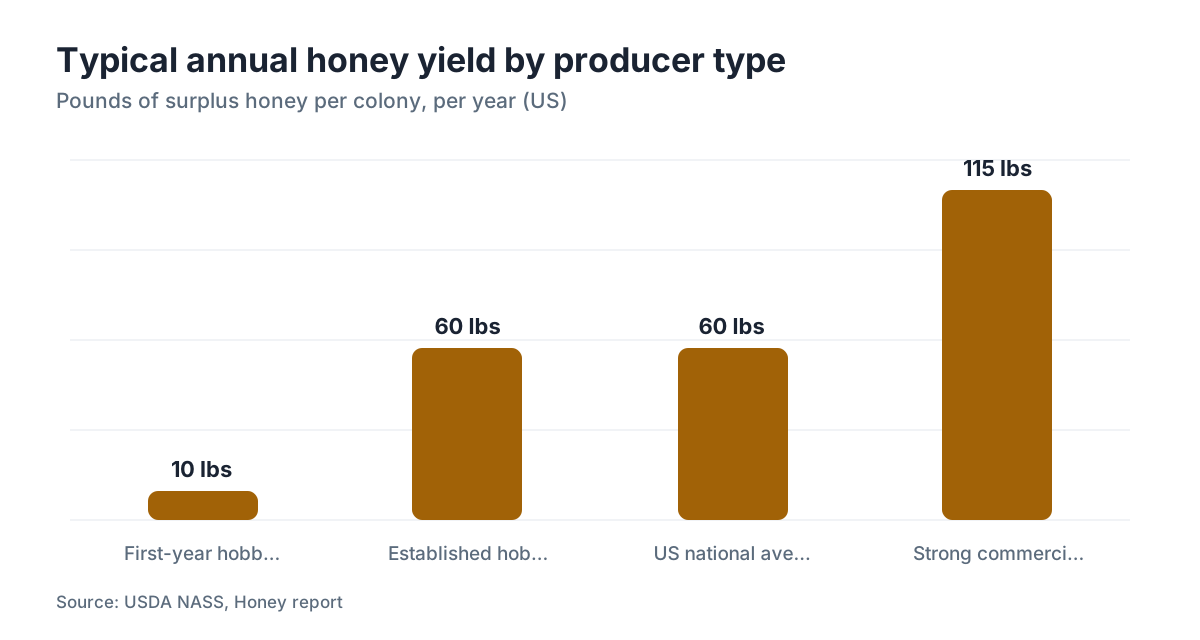
US average honey yield runs around 55 to 65 pounds per colony per year, though this swings enormously by region, weather, and management. USDA NASS honey reports track this nationally every year, and yields by state can range from under 30 pounds to well over 100 pounds per colony depending on the season [11].
Here's a rough comparison of typical annual output, useful for setting expectations if you're new to keeping bees:
| Producer | Typical annual surplus honey (lbs/colony) |
|---|---|
| First-year hobbyist hive (new colony, building comb) | 0 to 20 |
| Established hobbyist hive, decent flow | 40 to 80 |
| US national average (all colonies, USDA) | ~55 to 65 |
| Strong commercial operation, good year | 80 to 150+ |
A first-year colony often produces little to no harvestable surplus because it's spending most of its energy building comb and building population, not stockpiling extra. Beekeepers who pull honey off a brand-new package colony in year one are usually taking food the bees need, which is a common rookie mistake.
How does varroa mite pressure affect honey production?
Varroa destructor is the single biggest driver of colony loss in managed honey bee populations in the US, and heavy mite loads directly cut honey yield because sick, virus-loaded colonies have fewer healthy foragers and often collapse before or during the nectar flow. National surveys run by the Bee Informed Partnership have repeatedly found annual colony loss rates in the 40-50% range for US beekeepers, with varroa named as a top cited stressor [12].
The Honey Bee Health Coalition's Tools for Varroa Management guide recommends beekeepers monitor mite levels using an alcohol wash or sugar roll at least four times a year (spring, early summer, late summer, and fall) and treat when mite loads exceed roughly 2-3 mites per 100 bees, though the actionable threshold shifts with season and colony strength [13]. Waiting until you see visible deformed-wing virus symptoms means you've already waited too long; by then mite levels are usually well past the point where a single treatment fixes things.
This is the exact gap that pushed us to build the free protocol tools at VarroaVault: a season-by-season varroa monitoring and treatment planner so beekeepers aren't guessing at thresholds or treatment timing from memory. It's free, and it's built around the same monitoring cadence the Coalition recommends.
For equipment and setup questions that come before you're even worried about mites, check out beekeeping supplies and, if you're sourcing bees, honey bee queens for sale.
How do beekeepers harvest honey without hurting the colony?
Beekeepers harvest only the surplus above what the colony needs to survive to the next nectar flow, typically leaving 40 to 90+ pounds depending on climate and season length [4]. Extension apiculture programs, including Penn State and University of Georgia, generally advise beekeepers to do a fall inventory (weighing or hefting each hive) before deciding whether any more honey can safely be pulled.
Mechanically, harvest means removing frames of capped honey, slicing off the thin wax cappings with a heated knife or capping scratcher, then spinning the frames in a centrifugal extractor so honey flies out by force and drains through a strainer into a bucket. Bees get the empty, drawn comb back, which saves them the enormous energy cost of building new wax from scratch (it takes roughly 6-8 pounds of honey consumed to produce 1 pound of wax, a widely cited extension estimate).
Timing matters as much as method. Pulling honey too early means unripe, high-moisture nectar that will ferment in the bottle. Pulling too late in fall risks taking food the cluster needs for winter. Most temperate-region beekeepers harvest once or twice per season, after the main spring/summer flow and sometimes again after a fall flow, depending on region and forage.
What's the difference between nectar, honey, and honeydew honey?
Nectar is a dilute (roughly 20-80% sugar depending on plant species) sugary liquid plants produce specifically to attract pollinators; it's the raw material, not the finished product. Honey is nectar (or occasionally other sugary secretions) that bees have enzymatically converted and dehydrated down to about 17-18% moisture and sealed in wax [3][6].
Honeydew honey is a less common variant made not from flower nectar but from honeydew, the sugary excretion of aphids and other sap-sucking insects feeding on trees. Bees collect this liquid, process it the same way, and produce a darker, mineral-rich honey (common in parts of Germany's Black Forest and other conifer forest regions) that's prized in some markets and essentially unknown in most of the US. Chemically it's still honey, just from a different raw input.
How long does it take a colony to make a jar of honey?
There's no single clean answer because it depends on colony strength, forage density, and weather, but the oft-cited estimate is that it takes roughly 2 million flower visits to produce 1 pound of honey, and a hive's combined foragers may fly a total distance equivalent to multiple trips around the Earth to do it (this figure traces back to older USDA/extension bee biology fact sheets and is repeated across most university apiculture programs) [2][5].
At the individual level, one worker bee produces only about 1/12 of a teaspoon of honey in her entire foraging lifetime (roughly 4-6 weeks as a forager, out of a 5-6 week total adult lifespan in summer). That's the number that tends to reframe how people think about a jar of honey: it's not one bee's work, it's the cumulative output of tens of thousands of workers over weeks.
Why does honey crystallize, and does that mean it's gone bad?
Honey crystallizes because glucose, one of its two main sugars, has limited solubility in water and slowly precipitates out as tiny crystals over time, especially in cooler storage (roughly 50-59°F speeds crystallization the most) [3]. This is a normal physical process, not spoilage or contamination.
Honey with a higher glucose-to-fructose ratio (like clover or canola honey) crystallizes fast, sometimes within weeks. Honey with more fructose relative to glucose (tupelo honey is the classic example) can stay liquid for a year or more. Crystallized honey is still fully safe to eat; it just has a grainy texture. Warming the jar gently in a water bath (not boiling, not microwaved hot enough to damage enzymes and flavor) redissolves the crystals.
How does the queen relate to honey production?
The queen doesn't forage or make honey herself; her only job is laying eggs, up to about 1,500-2,000 per day at peak spring buildup [2]. But she drives honey production indirectly and completely: colony population, which determines forager numbers, which determines nectar intake, traces straight back to how well she's laying.
A failing or poorly-mated queen produces a shrinking, patchy brood pattern, which means fewer future foragers, which means less honey down the line, often 4-6 weeks after the problem starts (since it takes about 21 days for a worker to develop from egg to emergence, plus another 2-3 weeks before she becomes a forager). This lag is exactly why beekeepers check queen performance regularly rather than waiting to notice a honey shortfall; by the time yield drops, the cause happened over a month earlier. If you're evaluating queen sources or need a replacement, see free shipping queen honey bees for sale United States and general background on the beekeeper role in colony management.
Frequently asked questions
How do bees make honey?
Foragers collect flower nectar in a crop (special storage stomach), where the enzyme invertase starts converting sucrose into glucose and fructose. Back at the hive, bees pass the nectar mouth-to-mouth, adding more enzymes, then fan it with their wings in open comb cells until moisture drops from about 70% to 17-18%. Bees then cap the cell with wax to finish and preserve it.
Why do bees make honey?
Bees make honey to survive winter and dearth periods when no flowers are blooming. Fresh nectar is about 80% water and spoils in days; concentrated honey at 17-18% moisture doesn't spoil and can fuel a cluster of 10,000-30,000 bees for four to six months with zero foraging, which nectar alone could never do.
Do all bees make honey?
No. Of over 20,000 known bee species worldwide, only the seven to twelve species in genus Apis (honey bees) produce true, storable honey in quantity. Solitary bees like mason bees provision single brood cells and never build a colony surplus. Stingless bees make a related but chemically different, wetter honey in small amounts.
Do bumble bees make honey?
Bumble bees make and store a small amount of thin, unripened nectar in wax pots, but it's a short-term buffer, not true honey, and colonies (annual, dying off each fall) never build the months-long reserve honey bees do. It's not harvested or sold and isn't chemically finished the way capped honey bee honey is.
How much honey does one hive produce per year?
US colonies average roughly 55-65 pounds of surplus honey per year according to USDA NASS honey reports, though this ranges from under 30 pounds in poor years or regions to over 100 pounds in strong flows. First-year colonies often produce little to no harvestable surplus since they're busy building comb and population.
How long does it take bees to make honey?
There's no fixed number of days; it depends on nectar flow strength and colony size. The often-cited estimate is that a colony needs roughly 2 million flower visits to make one pound of finished honey, drawing on the combined foraging of thousands of workers over the length of a nectar flow, typically several weeks.
Why does honey never spoil?
Honey's low moisture (17-18%), high sugar concentration, acidic pH (roughly 3.2-4.5), and trace hydrogen peroxide from the enzyme glucose oxidase together create an environment hostile to bacteria and most fungi. Properly capped and stored honey has been found still edible in ancient tombs, a claim widely cited in food science literature on honey's stability.
What's the difference between honey and honeydew honey?
Regular honey comes from flower nectar. Honeydew honey comes from honeydew, a sugary liquid excreted by aphids and other sap-feeding insects on trees, which bees collect and process the same way. Honeydew honey is darker, higher in minerals, and more common in parts of Europe than in the US.
Can honey ferment or go bad if not capped properly?
Yes. If bees store nectar or honey above roughly 19% moisture and it isn't capped and fully ripened, wild yeasts already present in honey can multiply and ferment the sugars, producing off flavors and gas. This is one reason beekeepers use a refractometer to check moisture before extracting and bottling.
Why is varroa mite control connected to honey production?
Varroa destructor spreads viruses and weakens colonies, cutting the number of healthy foragers available during a nectar flow. Heavy infestations can collapse a colony before or during peak honey season. The Honey Bee Health Coalition recommends monitoring mite levels via alcohol wash at least four times yearly and treating at set thresholds to protect both colony survival and honey yield.
Is it true one bee only makes a tiny amount of honey in its life?
Yes. A single worker bee produces roughly 1/12 of a teaspoon of honey across her entire lifetime as a forager, which typically lasts only 4-6 weeks. A jar of honey represents the combined work of tens of thousands of bees over an entire nectar flow, not any one bee's individual output.
Do honey bees make honey from anything besides flower nectar?
Mostly flower nectar, but honey bees will also collect honeydew from aphid-infested trees, producing honeydew honey, and in dearth conditions may rob weaker hives or collect other available sugar sources. Beekeepers sometimes feed sugar syrup, which bees process similarly, but that processed syrup isn't legally or nutritionally identical to true floral honey.
How much honey does a colony need to survive winter?
Most temperate-region extension guidance puts the number at 40 to 90 pounds of stored honey, depending on climate, colony size, and length of the broodless period. Beekeepers in colder regions like the Upper Midwest or New England typically aim for the higher end of that range and check hive weight in fall before deciding how much surplus to harvest.
Sources
- USDA Agricultural Research Service, Honey Bee Health and Pollinator Research: European honey bees (Apis mellifera) were introduced to North America by colonists in the early 1600s and are not native
- Penn State Extension, Honey Bee Biology: Colony size, queen egg-laying rate (up to 1,500-2,000 eggs/day), and colony population figures
- National Honey Board, Honey composition and characteristics: Honey moisture content (17-18%), sugar composition (fructose/glucose percentages), and non-spoiling properties
- University of Georgia Extension, Bee Health: Winter honey store requirements for temperate colonies and fall hive weight checks
- University of Georgia Extension / Extension apiculture fact sheets on foraging: Nectar load per foraging trip and the '2 million flower visits per pound of honey' estimate
- USDA, honey grading and moisture standards: Moisture content thresholds relevant to honey grading and fermentation risk
- USDA Forest Service, Pollinator of the Month: bee diversity: There are over 20,000 described bee species worldwide, most of them solitary and non-honey-producing
- USDA Forest Service, Bumble bee biology and life cycle: Bumble bee colonies are annual, only mated queens overwinter, and colonies store only small short-term nectar reserves
- Xerces Society, Bumble Bee Biology: Typical bumble bee colony sizes of roughly 50-400 workers at peak
- FDA, Food Safety for Moms to Be / infant botulism guidance: Honey should not be given to infants under 12 months due to botulism spore risk
- USDA National Agricultural Statistics Service, Honey report: US average annual honey yield per colony (roughly 55-65 lbs) and state-level variation
- Bee Informed Partnership, Annual Colony Loss Survey: US annual managed colony loss rates have run in the 40-50% range in recent survey years
- Honey Bee Health Coalition, Tools for Varroa Management: Recommended alcohol wash monitoring cadence (at least four times per year) and mite treatment threshold guidance
Last updated 2026-07-09