honey bee queens for sale: what to know before you buy
TL;DR
- Mated honey bee queens for sale typically run $30 to $45 from commercial breeders, $45 to $60 for VSH or Saskatraz genetics, and $500 to $1,200+ for select breeder queens used to raise your own.
- Buy from a source that tests for varroa resistance traits, ships in cool weather, and guarantees live arrival.
- Confirm mating quality (solid brood pattern) before you trust her.
What does a honey bee queen actually cost, and why the range is so wide
A standard mated queen from a commercial queen producer runs $30 to $45 as of the 2024-2025 seasons, though prices climbed after years of high winter losses pushed demand up faster than breeders could scale [1]. Queens bred for varroa sensitive hygiene (VSH) or marked as Saskatraz, Pol-line, or similar resistance-tested stock usually cost $45 to $65. Breeder queens, the ones commercial operations use to graft hundreds of daughter queens from, run anywhere from $500 to $1,200 or more because you're paying for verified genetics, not a mated female off the shelf.
The cheap end of the market (sub-$25 queens, often local sideliners selling extras) can be a fine deal if you know the seller and can inspect the mother colony. The risk isn't the price. It's that you have no data on her mating, her mite resistance, or her temperament history.
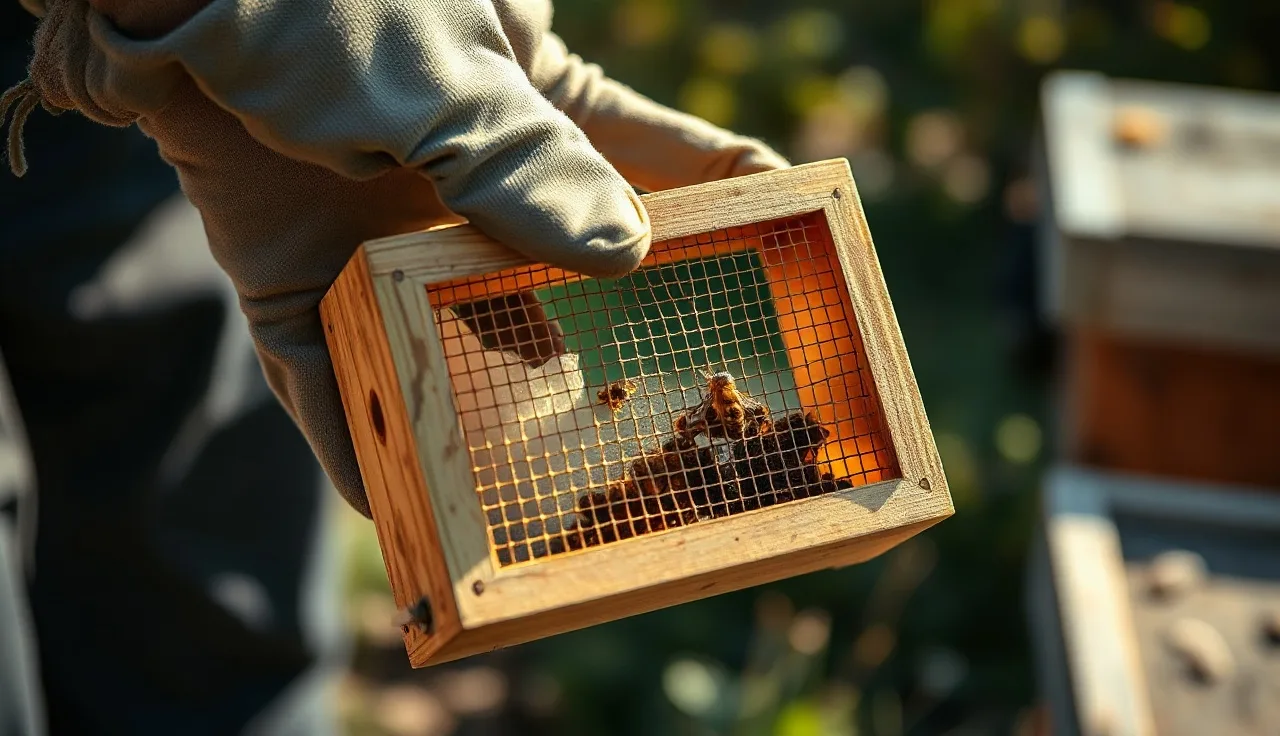
Shipping adds $10 to $25 depending on method (USPS Priority Mail, overnight courier, or local pickup) and queens are almost always sold with 3 to 8 attendant worker bees in a small cage, not as a full package.
If you're also outfitting a new hive, queens are usually the smallest line item. Full beekeeping supplies like boxes, frames, and a suit will run you several hundred dollars before you ever buy bees.
Where can I buy honey bee queens for sale, and how do I pick a source
You've got four real options: regional queen breeders (mostly in the South and California, since they need early spring mating weather), local sideliner beekeepers who raise a surplus, university or extension-affiliated breeding programs, and national mail-order suppliers. Each has tradeoffs.
Regional breeders in California, Georgia, Hawaii, and parts of the Gulf Coast supply most of the U.S. market because they can mate queens in February and March when the rest of the country is still frozen [2]. Buying direct from these operations, or through a supplier who sources from them, usually gets you the freshest queens and the clearest genetic paperwork.
Local sideliners are worth seeking out if you want bees already adapted to your regional climate and forage. You lose some selection (you get what they have that week) but gain reduced shipping stress and a seller you can actually call.
University programs, like those tied to state apiculture extensions, sometimes sell or distribute regionally-tested stock, though supply is limited and seasonal.
For honey bee supply companies and queen sources across the country, see our list of honey bee supply companies in the United States. If shipping cost or live-arrival guarantees matter most to you, check which suppliers offer free shipping on queen honey bees for sale in the United States, since shipping stress is one of the top causes of a queen arriving dead or rejected.
What's the difference between a queen bee, a nuc, and a package
A queen alone is just the queen and a handful of attendants in a small cage, meant to requeen an existing colony or head a nuc you're building yourself. A nucleus colony (nuc) is a mini working hive, usually 4 or 5 frames, with a laying queen, brood in multiple stages, food stores, and enough workers to function immediately. A package is 2 to 3 pounds of loose bees (roughly 7,000 to 10,000 workers) with a caged queen, no comb, no brood.
If you already have a queenless colony or a colony with a failing queen, you only need the queen. If you're starting from zero, a nuc gets you a working colony faster (often 2 to 4 weeks ahead of a package) because the brood is already going and the workers already know each other. Packages are cheaper upfront ($130 to $180 typically) but the colony has to build comb and raise its first brood cycle before it's really established.
Worth noting: package bees usually ship with a queen that isn't from that colony, and colonies sometimes reject or supersede her within the first few weeks, which is one more reason to check on a new package at day 7 to 10.
How do I know if a queen for sale is actually good quality
Ask for three things before you buy: mating verification, source apiary health records, and a live arrival guarantee. A reputable breeder can tell you where the queen was mated (open mating in a saturated drone zone, or instrumentally inseminated) and roughly what stock the drones came from.
Once she arrives, don't judge her by looks. Judge her by what she produces. A well-mated queen lays a tight, solid brood pattern, mostly worker cells with few skips, within 2 to 3 weeks of release and acceptance. A spotty, scattered pattern with lots of empty cells inside a ring of capped brood usually means poor mating (drone shortage, bad weather during mating flights) or she's failing already.
Check for:
- Solid brood pattern by week 3
- Roughly 1:1 ratio of eggs to larvae to capped brood as the cycle establishes
- Calm behavior on the comb (not universal, but wild defensiveness is a flag)
- No sign of drone-laying pattern (raised, bullet-shaped cappings scattered irregularly) which signals she's not mated at all or has run out of sperm
The Honey Bee Health Coalition's queen health guidance recommends evaluating a new queen's laying pattern before assuming she's failed, since it can take a few weeks post-introduction for a pattern to normalize [3].
How do I introduce a new queen to a hive without her getting killed
This is where most queen purchases go wrong, not in the buying.
Worker bees don't automatically accept a new queen, especially in a colony that already thinks it has one or recently lost one and started building emergency queen cells.
Standard method: leave her in the shipping cage, candy plug intact, and hang the cage between two frames in the brood area for 3 to 5 days before releasing her directly. The candy plug lets workers slowly chew through and get used to her pheromone over a few days rather than confronting her immediately. Direct release (popping her straight onto the comb) works with packages that have no existing queen or brood to defend, but it's a much riskier move in an established queenless colony.
Before introducing, confirm the colony is actually queenless. If you see open queen cells or the colony is still queenright, they will very likely kill the new queen regardless of introduction method. Ohio State University's bee lab and most extension apiculture programs recommend waiting 24 to 48 hours after removing a failing or dead queen before introducing a replacement, giving the colony time to register her absence [4].
Check the cage again on day 3. If workers are calmly walking over the cage and feeding her through the mesh, she's likely accepted. If they're balled up aggressively biting at the cage, wait longer before releasing, or consider a slower push-in cage method.
Why do beekeepers even need to replace a queen bee
Queens fail for a lot of reasons and it's normal, not a sign you did something wrong. A queen's productive lifespan runs 1 to 3 years typically, though commercial operations often requeen annually or every other year specifically because performance drops noticeably after year one [5].
Common reasons to buy a replacement:
- Old or failing queen with a spotty, declining brood pattern
- Queen lost during an inspection, swarm, or supersedure gone wrong
- Winter loss where the colony survived but the queen didn't
- Deliberate requeening with mite-resistant genetics as part of an integrated pest management plan
- Aggressive colony you want to requeen with calmer stock
That last point matters more than people think. Queen genetics drive a huge amount of colony-level varroa resistance. VSH queens, bred and selected for workers that detect and remove mite-infested brood, are one of the few interventions that reduces mite pressure without a single treatment application [6]. If you're building a long-term IPM plan, requeening with resistant stock is one of the cheapest, most durable levers you have, arguably more cost-effective over 3 years than repeated miticide purchases.
What are VSH, Saskatraz, and survivor stock queens, and are they worth the extra cost
VSH (Varroa Sensitive Hygiene) is a specific, USDA-researched trait where worker bees detect mite-infested brood cells and uncap or remove them before the mite can reproduce fully. It was developed through selective breeding programs at the USDA Bee Research Laboratory and is now propagated by multiple commercial queen breeders under license or through their own VSH-selected lines [7].
Saskatraz is a trademarked line developed in Saskatchewan, Canada, selected for a combination of mite resistance, honey production, and overwintering ability in cold climates. Pol-line is a similar commercial VSH-derived line out of the USDA program.
"Survivor stock" is a looser term, usually meaning queens raised from colonies that survived at least one winter without miticide treatment in a given region. It's not a certified trait like VSH, more a claim about lineage, so ask the seller directly what evidence backs it up (treatment records, colony survival data over multiple years).
Is the $15 to $30 premium worth it? If you're losing colonies to varroa every winter despite decent treatment timing, yes, it's one of the better dollars you can spend, because resistant genetics stack with your treatment schedule rather than replacing it. Nobody claims VSH queens eliminate the need to monitor and treat. Purdue University's apiculture extension and most current research frame resistant stock as a complement to, not a substitute for, an active mite management program [8].
When is the best time of year to buy queen bees
Spring (April through June in most of the U.S.) is peak queen season because that's when breeders in the South and West have reliable mating weather and demand from new beekeepers and commercial splits is highest. This is also when queens are freshest and supply is deepest, but it's the hardest time to get a specific order filled fast since everyone wants queens at once.
Late summer (August) is the second window, good for requeening colonies before they build winter bees, since colonies headed by a young, vigorous queen going into fall generally overwinter better.
Avoid buying queens in the dead of summer heat if you're in a hot climate; shipping stress and cage die-off go up when temperatures during transit exceed roughly 95°F for extended periods. Similarly, avoid ordering for delivery during hard freezes, since queens shipped in unheated mail can die in cold cargo holds even in an insulated cage. Most breeders won't ship outside safe temperature windows, and reputable sellers will tell you their cutoff dates rather than take your order and risk a dead-on-arrival queen.
How long does a queen bee live, and how do I know when to replace her
In a managed colony, queens typically produce well for 1 to 2 years, with some lasting 3, though egg-laying rate and pheromone strength usually decline noticeably by year two [5]. In the wild or in a completely unmanaged colony, a queen might live up to 5 years, but that's rare and not really the relevant number for anyone managing hives for honey or pollination.
Signs it's time to replace her:
- Spotty brood pattern that doesn't improve over a full cycle
- Increasing drone-only brood (she's run out of stored sperm)
- Colony population declining despite adequate forage and no disease
- Increased defensiveness that started after a supersedure attempt
- She's simply old (year 2 or 3) and you're proactively requeening before she fails during a critical nectar flow
Many commercial beekeepers requeen every single year regardless of how she's performing, purely because a young queen means better brood production and, per some research, somewhat better mite resistance behavior in the colony overall. That's a business decision more than a strict biological necessity for a hobbyist running two or three hives.
Can I raise my own queens instead of buying them
Yes, and a lot of experienced beekeepers eventually do, mostly to save money at scale or to select for traits they've observed in their own strongest colonies. Basic queen rearing uses grafting (moving young larvae into artificial queen cups) or simpler no-graft methods like the Miller or Hopkins method, where you trigger a queenless colony's own instinct to raise emergency queen cells from larvae you've selected.
The catch is mating. Even if you raise a beautiful queen cell, she still needs to fly out and mate with 12 to 20 drones from other colonies in the area over several flights, typically within her first 2 weeks of life [9]. If your area doesn't have a strong drone population from your own resistant stock, she may mate with whatever drones are around, including from untreated, mite-loaded colonies, and you lose the genetic benefit you were trying to select for.
For a hobbyist with 1 to 5 hives, buying queens from a tested breeder is usually more reliable and, honestly, not much more expensive once you count your own time. Queen rearing becomes worth it once you're running 10+ colonies or want tighter control over your apiary's genetics long term.
What's a fair price comparison across queen types
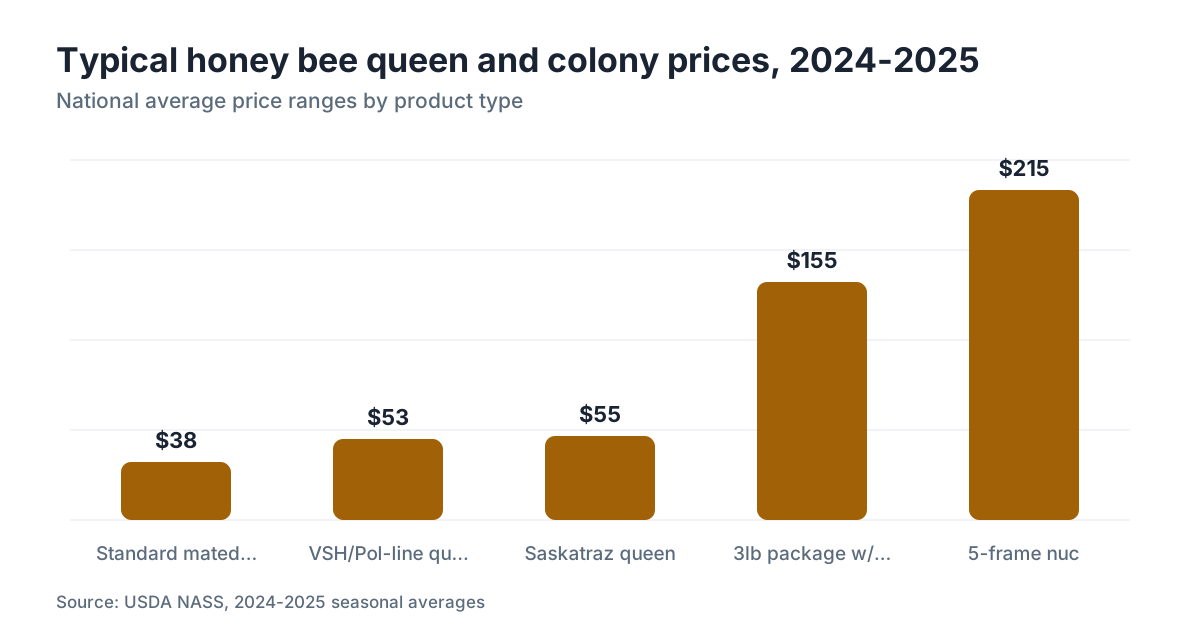
Here's a rough breakdown of what you'll actually pay across the market as of the 2024-2025 seasons. These are national averages; regional breeders, shipping distance, and order volume all shift the number.
| Queen type | Typical price | Notes |
|---|---|---|
| Standard mated queen (Italian, Carniolan) | $30-$45 | Most common, widely available spring through summer |
| VSH / Pol-line queen | $45-$60 | Mite-resistance selected, USDA-derived genetics |
| Saskatraz queen | $45-$65 | Cold-hardy, mite-tolerant commercial line |
| Marked and clipped queen | +$5-$10 | Easier to find during inspections |
| Breeder queen (for grafting) | $500-$1,200+ | Verified elite genetics, used to raise many daughters |
| Nuc (5-frame, with laying queen) | $180-$250 | Full working colony, not a lone queen |
| Package (3 lb with caged queen) | $130-$180 | No comb or brood, slower to establish |
Shipping typically adds $10 to $25 for queens alone, more for nucs and packages due to weight and live-animal handling requirements.
How does buying a queen fit into a varroa management plan
Requeening is one tool in a larger toolbox, not a replacement for monitoring and treatment. The Honey Bee Health Coalition's Varroa Management Guide lays out integrated pest management as a combination of mite monitoring (alcohol wash or sugar roll, every 4 to 6 weeks during active season), treatment thresholds, and genetic selection working together [10]. A resistant queen lowers your baseline mite growth rate; she doesn't zero it out.
Practically, that means: buy the VSH or Saskatraz queen if it fits your budget, but still do an alcohol wash before and after any treatment, still track your mite counts across the season, and still have a treatment plan ready if counts cross your threshold (commonly cited as 2 to 3 mites per 100 bees in an alcohol wash during active season, lower in fall) [10].
If you want a structured way to track counts, treatment timing, and requeening decisions across a season without guessing, VarroaVault's free protocol tools are built for exactly that, mapping your monitoring schedule against your regional treatment windows so a genetics investment like a resistant queen actually shows up in your numbers instead of getting lost in a season of inconsistent tracking.
For background on the biology driving all of this, see our guides on the honey bee and on beekeeping species differences that affect mite resistance and regional suitability.
What should a beginner know before ordering their first queen
Order early. Spring queens sell out fast, especially from well-regarded breeders, and waiting until your colony is already queenless in June to start looking can leave you scrambling.
Buy from a source with a live arrival guarantee. Most reputable sellers will refund or replace a queen that arrives dead, but you typically have to report it within 24 hours with a photo, so check the policy before you order, not after.
Don't judge success in the first 48 hours. New queens often get bounced around in transit and can look sluggish on arrival. Give her the standard 3 to 5 day caged introduction, check for calm acceptance behavior, then confirm laying at week 2 to 3 before you decide anything went wrong.
If this is your very first colony rather than a requeening, consider starting with a nuc instead of a lone queen or a package. It's more forgiving for a beginner because the colony is already a functioning unit, and it removes one whole layer of introduction risk. Read up on general hive setup through our beehive and beekeeper guides before your bees arrive, and make sure your woodenware and protective gear are ready before the shipping box shows up, since a queen or nuc sitting around in its shipping container for days while you assemble equipment is its own kind of risk.
Frequently asked questions
How much does a honey bee queen cost?
Standard mated queens run $30 to $45. VSH, Pol-line, or Saskatraz queens selected for mite resistance run $45 to $65. Breeder queens used to raise your own daughters cost $500 to $1,200 or more. Add $10 to $25 for shipping. Prices shift regionally and rise slightly during peak spring demand from April through June.
Where can I buy honey bee queens for sale online?
Regional commercial breeders in California, Georgia, Hawaii, and the Gulf Coast supply most mail-order queens because they have early mating season weather. National suppliers aggregate from these breeders. Local sideliner beekeepers also sell surplus queens, often with less selection but better regional adaptation and no shipping stress.
What's the difference between a queen bee and a nuc?
A queen alone is just her and a few attendants in a small cage, meant to requeen an existing colony. A nuc is a 4 or 5 frame mini colony with a laying queen, brood, food, and workers, ready to function immediately. Nucs cost more ($180-$250) but establish 2 to 4 weeks faster than a package.
How do I introduce a new queen without the colony killing her?
Leave her in the shipping cage with the candy plug intact, hung between two brood frames, for 3 to 5 days before direct release. This lets workers adjust to her pheromone gradually. Confirm the colony is actually queenless first; if queen cells are present or a queen is already laying, they'll likely kill the newcomer regardless of method.
How long does a queen bee live?
Managed queens typically produce well for 1 to 2 years, sometimes 3, with egg-laying rate and pheromone strength declining after year one. Unmanaged queens can live up to 5 years in rare cases. Many commercial beekeepers requeen annually regardless of performance to keep colonies at peak productivity.
What is a VSH queen and is it worth the extra money?
VSH (Varroa Sensitive Hygiene) queens produce workers that detect and remove mite-infested brood before mites fully reproduce, a trait developed through USDA breeding research. They cost $15 to $30 more than standard queens. Worth it if you're fighting recurring mite pressure, but they complement, not replace, regular monitoring and treatment.
When is the best time to buy a queen bee?
Spring, April through June, is peak season with the freshest supply and best mating weather from Southern breeders. Late summer, especially August, is a good second window for requeening before winter bee production starts. Avoid ordering during extreme heat or hard freezes, since shipping stress kills queens in transit.
Can I just requeen instead of buying a whole new package?
Yes, if your existing colony has workers, brood, and food but a failing or dead queen, buying just a mated queen ($30-$65) to requeen is far cheaper than a full package ($130-$180) or nuc ($180-$250). Requeening only works if the colony's population and resources are otherwise healthy.
How do I know if a queen I bought is actually well mated?
Check her brood pattern 2 to 3 weeks after introduction. A well-mated queen produces a tight, solid pattern of mostly worker brood with few empty cells. A spotty pattern, excess drone brood, or a scattered raised capping pattern signals poor mating or early failure, and you should plan to replace her.
What's the difference between a package of bees and a queen bee alone?
A queen alone is just her in a small cage with a few attendants, used to requeen a colony that already exists. A package is 2 to 3 pounds of loose worker bees (7,000-10,000 bees) plus a caged queen, with no comb or brood, meant to start a colony from scratch. Packages cost $130 to $180.
Do queen bees come with a live arrival guarantee?
Most reputable breeders and suppliers offer one, but policies vary. Typically you must report a dead-on-arrival queen within 24 hours, often with a photo, to get a refund or replacement. Always check this policy before ordering, since queens are live animals shipped through the mail and some loss is normal industry-wide.
Should I raise my own queens instead of buying them?
For 1 to 5 hives, buying tested queens is usually more reliable and not much pricier once you count your time. Queen rearing becomes worthwhile past 10 or so colonies, or if you want tight control over local genetics, but mating quality depends on drone populations you often can't fully control.
How does queen genetics affect varroa mite management?
Queens bred for VSH or similar traits produce colonies where workers detect and remove mite-infested brood, lowering the mite population growth rate over a season. This reduces treatment frequency needed but doesn't eliminate the need for monitoring and treatment, per Honey Bee Health Coalition IPM guidance.
Sources
- USDA National Agricultural Statistics Service, Honey Bee Colonies report: Queen prices and colony loss trends driving demand
- University of Georgia Extension, Honey Bee Program: Southern states supply most U.S. mail-order queens due to early mating weather
- Honey Bee Health Coalition, queen health resources: Guidance on evaluating a new queen's brood pattern before assuming failure
- Ohio State University Bee Lab: Recommended wait time before introducing a replacement queen
- Penn State Extension, apiculture program: Queen productive lifespan of 1 to 3 years with commercial requeening practices
- USDA Agricultural Research Service, Bee Research Laboratory: VSH trait development and mechanism for varroa resistance
- Purdue University Extension, apiculture resources: Resistant stock as a complement to, not substitute for, active mite management
- Purdue University Extension, apiculture resources: Framing of genetic resistance within overall IPM approach
- North Carolina State University Extension, apiculture program: Queen mating flight behavior, number of drones, and timing within first two weeks
- Honey Bee Health Coalition, Tools for Varroa Management Guide: Mite monitoring thresholds and integrated pest management framework
Last updated 2026-07-09