How to manage varroa during queen rearing
TL;DR
- Queen rearing creates broodless or low-brood windows in your cell-starter and mating nuc colonies.
- Those windows are your best shot at highly effective mite treatment.
- Time oxalic acid vapor to the broodless phase, wash before and after, and keep all queen cells away from formic acid and thymol.
- Done right, you cut mite loads by more than 90% without hurting queen quality.
Why does queen rearing change your varroa management strategy?
Queen rearing reshuffles a colony's brood cycle, and those gaps in brood are exactly when mites are easiest to hit. Varroa reproduce only inside capped brood cells. So any stretch when a colony has little or no capped brood forces the mites out onto adult bees, where treatments reach almost all of them.
A cell-builder is usually queenright and heavily manipulated to accept and finish grafted cells. It still has brood. A cell-starter is often made queenless on purpose to trigger nurse bee acceptance of grafts, and it can go broodless for days to a week depending on your technique. That broodless window is the opportunity.
Here's what most hobbyist beekeepers miss. The brood manipulation you're already doing for queen rearing is half of a mite break protocol. You're just not closing the loop with a treatment.
The Honey Bee Health Coalition's Varroa management guide states that a broodless period is the most effective time to treat because all mites are exposed on adult bees. That principle holds whether the broodless period comes naturally in winter or because you made a colony queenless to start cells. [1]
Know your colony roles, because each one gives you a different opening. A cell-starter is queenless and accepts grafts for the first 24 to 48 hours. A cell-builder is queenright and finishes raising cells to capping and emergence. A mating nucleus is a small queenless colony holding a virgin queen while she mates. Different brood profiles, different treatment windows.
When exactly should you treat for varroa during queen rearing?
Timing is everything, and you get three distinct windows. Miss them and you're treating over capped brood, where oxalic acid barely works.
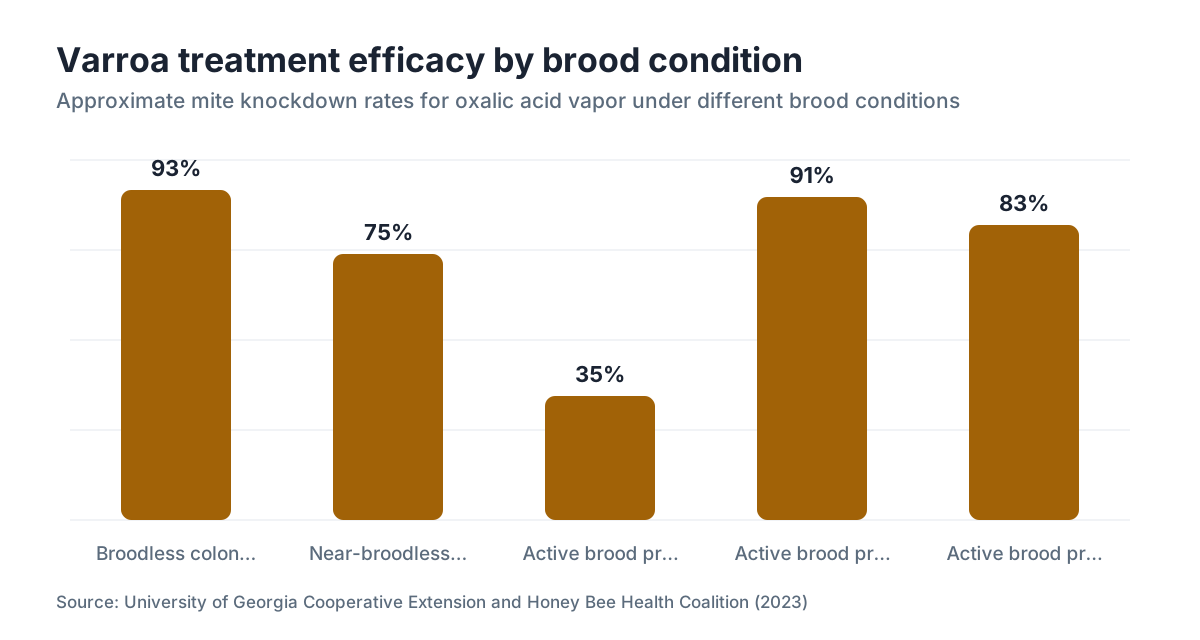
Window 1: The cell-starter phase. When you pull a colony queenless to start grafts, you have roughly 24 to 72 hours before the youngest larvae age past three days. Many beekeepers run a starter box that stays queenless for days. If that colony tests above 2% (2 mites per 100 bees on an alcohol wash), treat right then with oxalic acid vapor during the queenless, near-broodless window. The University of Georgia Cooperative Extension bee program lists oxalic acid vaporization as the highest-efficacy broodless treatment, with knockdown above 90% when no capped brood is present. [2]
Window 2: After grafting, before cells are capped. You have roughly 5 to 6 days from graft to capping. Some beekeepers treat the cell-builder in this open-brood window with a slow-release formic acid product like Formic Pro or Mite Away Quick Strips, because formic vapor penetrates capped cells and hits mites inside worker brood. Keep every queen cell out of any colony you treat with formic acid. Full stop. Formic at label rates kills developing queens. [3]
Window 3: The mating nuc. A mating nuc starts queenless, often with a frame or two of capped worker brood and no open brood. That capped brood emerges over the next 10 to 21 days. Once it's out and before the new queen lays, you have a broodless or near-broodless nuc. That's a clean oxalic acid treatment. One vapor treatment there drops the mites and sets the new queen up to lay into a low-mite colony.
Here's a timeline most hobbyist queen rearers can follow:
| Day | Event | Varroa action |
|---|---|---|
| 0 | Pull colony queenless, graft larvae | Alcohol wash; treat if > 2% |
| 1-5 | Grafts accepted, cells being built | Monitor; no treatment in cell-builder |
| 6-7 | Queen cells capped | Move cells to incubator or nucs |
| 8-14 | Mating nuc queenless, brood emerging | OA vapor if broodless or near-broodless |
| 21-28 | Virgin queen mated, laying | Post-treatment wash; verify < 1% |
The 2% treatment threshold comes from the Honey Bee Health Coalition guide, which uses it as the action threshold during active brood season. [1] Some researchers push for 1% in summer given how fast mites multiply. Nobody has one universally agreed number. But 2% is the most widely cited standard, and it's what I'd act on.
Can you use oxalic acid when queen cells are present?
Yes, with real caveats. Oxalic acid, applied as vapor or dribble, does not appear to harm capped queen cells at normal label rates. Several university trials have vaporized colonies holding capped queen cells and reported acceptable emergence rates. [2] The key word is capped.
Open larvae are the sensitive ones, including freshly grafted larvae sitting in open queen cups. I haven't seen solid published data showing oxalic acid kills open larvae in queen cells at label rates. But as a practical matter, you don't pile extra stress on a one-day-old grafted larva if you don't have to.
My call: if you need to treat during a rearing cycle, time it so grafts are capped before you vaporize, or treat the cell-starter before any grafts go in.
The EPA-registered label for oxalic acid vaporization (Api-Bioxal) says it must not be used when honey supers are on and recommends a single treatment in broodless colonies. [4] The label is the legal limit. Follow it.
Skip the dribble method during queen rearing. The liquid runs onto capped cells, drips into open brood, and soaks nurse bees clustered on developing queens. Vapor is the cleaner tool here.
Which varroa treatments are safe to use near developing queen cells?
This is where you separate what the data says from what beekeepers assume.
Oxalic acid vapor: Safe for capped queen cells at label rates. Avoid it while open grafts are in the colony. Highly effective in broodless or near-broodless conditions. [4]
Formic acid (Formic Pro, MAQS): Not safe near queen cells. Formic vapor penetrates wax and kills developing queens. The Formic Pro label warns against use when queens are being introduced or when queen cells are present. [3] Don't do it.
Amitraz strips (Apivar): A long-contact treatment that sits in the hive for 6 to 8 weeks. Research on amitraz and queen quality is mixed, with some work suggesting exposure lowers sperm storage. A 2021 PLOS ONE study by Traynor and colleagues found amitraz metabolites in wax from US colonies, with possible effects on developing brood; effects on queens specifically are still being worked out. [5] I keep Apivar out of cell-builders and mating nucs during the rearing period. Use it in production colonies before or after.
Thymol (Apilife VAR, ApiGuard): Temperature-sensitive and hard on colonies in warm weather. Thymol has killed queens at high concentrations in small confined spaces, exactly what a mating nuc is. Keep it away from queen cells and nucs. [6]
Hop beta acids (HopGuard 3): Labeled for use with honey supers on and generally lower-risk for queens. Efficacy data in broodless colonies is thin, and it lags OA vapor in the same window. It's a reasonable option if you have capped worker brood and want some knockdown without the formic or thymol risk. [7]
Short version: oxalic acid vapor in a broodless window is the tool you want. Everything else carries trade-offs that get harder to manage once queen cells are in the box.
How do you monitor mite levels in a cell-builder or mating nuc?
Monitoring small colonies is harder than washing a full hive, and most beekeepers skip it. That's a mistake. A tiny nuc can carry a nasty mite load per bee.
A mating nuc with 2 to 3 frames may not give you a clean 300-bee alcohol wash without pulling too many bees. The Honey Bee Health Coalition recommends a minimum 200-bee sample for smaller colonies, with the understanding that the margin of error widens. [1] A sticky board works too, but it gives you a drop count instead of a percentage, which is harder to act on.
Treat the cell-builder like any production colony. Sample 300 bees from the brood nest, wash with 70% isopropyl alcohol, count mites per 100 bees. Do it before a rearing cycle and again about 3 weeks after any treatment to confirm it worked.
A schedule that works: test your cell-builder and any colony you'll pull frames from in early spring, before the first graft cycle. If any of them run above 1 to 2%, treat before you rear a single queen from or in it. High-mite colonies produce worse queens because the nurse bees are stressed and colony health is already sliding.
For mating nucs, I test at setup if the nuc has brood, then again once the queen is mated and laying, usually day 21 to 28 after introduction. That second wash tells you whether the nuc needs treatment before you bank queens or build it out.
Track all of it in one place. VarroaVault's free tools include wash calculators and seasonal treatment calendars that make tracking easier across a row of nucs.
How does a broodless break during queen rearing compare to a winter broodless period?
Both are broodless windows. They are not the same thing.
A winter broodless cluster is a natural pause that can run weeks in cold climates. An artificially created broodless window during queen rearing usually lasts 5 to 14 days depending on technique. Shorter, but still long enough for one or two oxalic acid vapor treatments to work well.
The big difference is temperature. Oxalic acid vaporization works at any temperature above roughly 50 degrees F (10 degrees C), so a summer queen rearing window is fully viable for treatment. Winter treatment is reliable too, but it locks you into the coldest months.
The other difference is control. A winter broodless period happens to you. A queen rearing broodless period is one you build. You can stage supplies ahead of time, pick the right day, and follow up with a wash. Winter treatment rarely gives you that much say.
From a mite population standpoint, a planned summer break can matter more than a winter treatment, because summer is peak mite reproduction. A 90%-plus knockdown in July or August cuts straight into peak mite season. A winter treatment is more of a reset before spring buildup.
The Honey Bee Health Coalition guide makes the same point: treatment timing relative to the mite reproduction cycle matters, and a broodless break during peak mite season has the highest potential impact on colony health. [1]
Does high varroa infestation in the mother colony affect queen quality?
Yes, and it's one of the most overlooked factors in backyard queen rearing.
Graft from a high-mite colony and you're grafting larvae that grew up with deformed wing virus (DWV) circulating around them. DWV is the virus most commonly carried by varroa, and it hits developing bees at the pupal stage. Work by Dainat and colleagues in Apidologie (2011) tied DWV and varroa to reduced life span in bees, and later research connects high-virus rearing environments to queens with smaller spermathecae and lower sperm storage. [8]
You're also pulling nurse bees from that colony to staff your cell-builder. If those bees are heavily parasitized, their hypopharyngeal glands, which produce the royal jelly fed to queen larvae, take a hit. A 2019 Scientific Reports study by Ramsey and colleagues showed varroa feed primarily on fat body tissue, the same tissue that supports gland function and protein reserves in nurse bees. [9]
Practical takeaway: treat the mother colony, the one you graft from, at least 4 to 6 weeks before grafting. That gives it time to raise a fresh generation of nurse bees from mite-free brood. Your cell-builder ends up staffed by healthier bees too, if you're pulling from the same source.
This is also why genetics only get you so far. Select all you want for varroa-sensitive hygiene (VSH) or hygienic behavior, but if the bees you're rearing from are already sick with virus, the selection work goes nowhere. Keep the mother colony below 1% before and during the cycle.
How do you manage varroa in a large mating yard or multiple mating nucs?
Scale adds friction. One beekeeper running 20 to 50 mating nucs faces a different problem than someone with 3 or 4 in the backyard.
Drift and robbing are the main enemies. Mating nucs are small and weak. One mite-laden robbing bee from a neighboring hive can seed a nuc in a single afternoon. Face entrances in different directions, space nucs at least 3 to 6 feet apart where you can, and run reduced entrances during the mating period to cut robbing pressure.
For a yard of 20-plus nucs, batch treatment with oxalic acid vapor during the queenless phase is practical. One person with a vaporizer can treat 20 nucs in under an hour. The trick is knowing which nucs are genuinely queenless and broodless versus which hold a laying queen or emerging brood. Mark nucs at setup and keep records.
Once queens are mated and laying, do a monitoring wash on a sample of nucs, maybe 25 to 30% of them, to read mite load at the yard level. You don't have to wash every nuc. You do need enough data points to catch a problem before it spreads.
For sideline operations grafting hundreds of queens a season, the Honey Bee Health Coalition Varroa guide and state apiarist offices both recommend written integrated pest management (IPM) plans with treatment windows tied to the rearing calendar. [1] Several state extension services, including NC State and the University of Minnesota, publish colony management calendars for queen producers that include mite treatment timing. [10]
Setting up nucs takes gear. The beekeeping supplies guide covers mating nuc options across price ranges.
What's the best overall varroa protocol for a hobbyist queen rearing season?
Here's what I'd actually run, as a simple seasonal protocol. This assumes a temperate climate with a rearing season from April through August.
Before the season (February to March): Treat any overwintered production colony above 1% with oxalic acid during the late-winter broodless period. This is your baseline reset.
Four to six weeks before first graft: Test your planned mother colony and cell-builder. If either runs above 2%, treat with OA vapor, or if brood is present, an appropriate product at label rates. That buys you one full brood cycle of cleaner bees before you graft.
When you pull the cell-starter queenless: Wash it. If it's above 2%, treat with OA vapor during the queenless window, before grafts go in or right after cells are capped.
Mating nuc setup: Wash the brood frames going into the nuc if you can. Once the nuc is queenless and its brood is emerging (usually days 8 to 14), treat with OA vapor.
Post-mating: Wash mated-queen colonies at day 21 to 28. Treat anything above 2% before queens go into production.
End of season (August to September): Full treatment of every colony. This is the most important treatment of the year. Mites peak in late summer, and winter colony deaths are largely driven by August and September mite loads. [11]
Log it across colonies and nucs. VarroaVault's free protocol tools let you record wash results, flag treatment dates, and get reminders before your next action window.
For the biology behind all this, the varroa mite article walks through the full lifecycle.
What mistakes do beekeepers most commonly make with varroa during queen rearing?
A few patterns show up over and over.
Treating the cell-builder with formic acid while queen cells are present. This kills queens. It happens more than it should, usually because someone has Formic Pro on hand and decides to treat everything at once. Read the label before you open the package. [3]
Assuming small nucs don't need monitoring. A mating nuc with 500 to 800 bees and 2 mites per 100 bees has a serious problem. Small size doesn't mean small impact. The virus load per bee can run higher than in a full hive at the same percentage.
Forgetting that mite-heavy nucs become a source population. Run a mating yard with high-mite nucs and robbing and drift will haul those mites into your production colonies. The whole apiary is one connected system.
Skipping the mother colony wash. You can do everything right in the cell-builder and the mating nuc and still get poor queens if the larvae came from a colony sitting at 4 to 5% with heavy virus.
Treating too late in the season. Getting mites below 1 to 2% by August 15 to September 1 across most of North America is the single most impactful move of the year. [11] Beekeepers running a late August rearing cycle sometimes delay this treatment and pay for it with dead winter colonies.
Matching the wrong product to conditions. Thymol stalls below 60 degrees F. OA dribble does little against capped brood. Apivar in a mating nuc is overkill with downsides. Basic stuff, missed constantly. The Honey Bee Health Coalition guide has a product-condition table worth bookmarking. [1]
Does queen rearing affect mite spread across an apiary?
It can, in both directions.
On the downside, queen rearing means moving frames between colonies, which moves bees and the mites riding them. Every time you pull nurse bees from a production colony to staff a cell-builder, you carry that colony's mite load with them. If your source colonies run high, you seed the cell-builder. This is why washing and treating source colonies ahead of time matters.
On the upside, a well-run operation that uses planned broodless windows for treatment can lower apiary-wide mite loads. You're creating treatment openings you wouldn't otherwise have, and the queens you produce start their laying careers in low-mite hives.
Then there's drift at the mating yard. Virgin queens on mating flights and mated queens coming home sometimes land at the wrong nuc. Drifting bees carry mites. It's less of an issue in a well-designed yard with distinct entrance orientations, but it's real. Cram more nucs into a small space and you'll see more drift.
If you share queens or mated nucs with other beekeepers, wash and treat before transfer. Sending a mated queen with a cluster of attendants out of a high-mite nuc into someone else's hive is how mites jump between apiaries. A quick wash before any queen transfer is worth the mild hassle.
For context on how different Apis species vary in natural varroa resistance, the beekeeping species article is a useful read.
Frequently asked questions
Can I treat for varroa while queen cells are capped?
Yes, with oxalic acid vapor. Capped queen cells appear to tolerate OA vapor at label rates without significant pupal mortality. Avoid formic acid and thymol whenever queen cells are present: formic vapor penetrates wax and kills developing queens, and thymol in confined spaces causes similar losses. Treat before grafting or after cells are securely capped.
How long does a broodless window last during queen rearing?
In a cell-starter pulled queenless, the broodless window runs roughly 5 to 14 days depending on how much open and capped worker brood was present at setup. In a mating nuc built from capped brood only, the window opens once that brood emerges, usually days 8 to 15 after assembly. Time your oxalic acid treatment inside this window for the best knockdown.
What mite threshold should trigger treatment in a mating nuc?
The same 2% threshold used for production colonies: 2 mites per 100 bees on an alcohol wash. Small nucs are harder to sample accurately, but a 200-bee minimum sample gives a useful estimate. In practice, many beekeepers treat every mating nuc with OA vapor during the queenless broodless phase as a preventive step regardless of count, since the cost and labor are low.
Can high varroa loads reduce queen quality?
Yes. Queens raised in high-mite colonies tend to have smaller spermathecae and reduced sperm storage, likely because deformed wing virus circulating in high-mite hives disrupts pupal development. Nurse bees carrying varroa also lose fat body reserves that support gland function and royal jelly quality. Treat the mother colony at least 4 to 6 weeks before grafting to raise healthier nurse bees.
Is oxalic acid safe for newly grafted larvae in open queen cups?
There's no good published data confirming it kills grafted larvae at label rates, but open larvae of any kind face more chemical stress than capped brood. To be safe, don't vaporize while open grafts are in the colony. Treat before introducing grafts, or wait until cells are capped 5 to 6 days after grafting. The short delay buys you certainty.
Should I test the mother colony before grafting?
Absolutely. The mother colony's mite load drives the health of the nurse bees feeding your queen larvae and the virus load in the larvae themselves. If it runs above 1 to 2% at graft time, your queens come from a compromised environment. Test 4 to 6 weeks before your planned graft date and treat if needed, giving one full brood cycle to produce cleaner nurse bees.
How many oxalic acid treatments can I do in a mating nuc?
The Api-Bioxal label approves one treatment in broodless colonies per episode. For a mating nuc, that means one vapor treatment during the queenless broodless phase before the virgin queen lays. Once brood is present after she starts laying, OA efficacy drops sharply, and repeated treatments over capped brood are not label-approved. Plan timing to catch the broodless window.
What's the risk of Apivar strips in a cell-builder or mating nuc?
Amitraz residues from Apivar can build up in wax and have been linked in some research to effects on developing brood and queen sperm viability, though the evidence is still emerging. Apivar needs 6 to 8 weeks of contact, and mating nucs are small and temporary, so it's not a practical fit for these colony types. Oxalic acid vapor is cleaner and faster for the broodless windows you're working with.
How do I manage varroa during a late-season queen rearing cycle in August?
August is the most important month to control mites for winter survival. If you're rearing queens then, treat cell-starters and mating nucs with OA vapor during their broodless windows exactly as you would earlier in the year. Also treat all production colonies by mid-August to protect the long-lived winter bees being raised now. Delaying until October costs colonies.
Can I use HopGuard 3 near queen cells?
HopGuard 3 is generally considered safer near queen cells than formic acid or thymol, and the label allows use with honey supers on. But efficacy data in broodless or near-broodless conditions is thin compared to OA vapor. It's a reasonable fallback if you don't have vaporization gear, but it's not the first-choice tool for the broodless treatment window during queen rearing.
How do mites spread in a mating yard?
Drift and robbing are the main routes. Virgin queens and workers returning from orientation flights frequently land at the wrong nuc. Robbing bees from mite-heavy colonies import mites directly. Space nucs at least 3 to 6 feet apart with distinct entrance orientations to cut drift. Run reduced entrances to limit robbing during the mating period. A high mite load in any one nuc puts the whole yard at risk.
What's the difference between treating a cell-starter versus a cell-builder for varroa?
A cell-starter is usually queenless for a short window and may be near-broodless: good conditions for OA vapor. A cell-builder is usually queenright with active brood, so OA vapor is less effective because mites hide in capped worker cells. Never treat the cell-builder with anything that harms queen cells (formic, thymol). Your best lever there is keeping baseline mite load low through pre-season treatment.
How does varroa management during queen rearing fit into a full-season IPM plan?
Queen rearing broodless windows are supplementary to, not a replacement for, your regular spring and fall treatment cycles. Treat them as bonus openings that happen to line up with your queen work. The fall treatment, timed to protect winter bees, stays your most important annual intervention. Use the windows you create during rearing to keep mite loads down mid-season and improve queen quality at the same time.
Do VSH or hygienic queens eliminate the need for varroa management during queen rearing?
No, though they help. VSH queens in production colonies noticeably slow mite population growth, and hygienic traits reduce virus-vectoring mite reproduction. But even VSH colonies are not mite-free, and mating nucs with VSH queens still benefit from monitoring and broodless treatment windows. Treat genetics as a tool that reduces treatment frequency, not one that removes the need to monitor and act.
Sources
- Honey Bee Health Coalition, Varroa Management Guide (2023): Broodless period is the most effective time to treat, as all mites are exposed on adult bees; 2% threshold as action threshold during active brood season
- University of Georgia Cooperative Extension, Honey Bee Program: Oxalic acid vaporization as highest-efficacy broodless treatment, with greater than 90% mite knockdown when no capped brood is present
- Formic Pro EPA-registered label, NOD Apiary Products: Formic Pro label warns against use when queens are being introduced or when queen cells are present
- Api-Bioxal EPA-registered label, EPA Registration No. 86650-4: Api-Bioxal label states not for use when honey supers are on; recommends single treatment in broodless colonies; vaporization approved method
- Traynor et al., PLOS ONE (2021), Pesticide residues in honey bee-collected pollen and wax from US agricultural environments: Amitraz metabolites found in wax with potential effects on developing brood
- Pennsylvania State University Extension, Varroa Mite Management: Thymol has shown queen-killing effects at high concentrations in small confined spaces and is temperature-sensitive
- HopGuard 3 EPA-registered label, BetaTec Hop Products: HopGuard 3 approved for use when honey supers are on; lower efficacy in broodless versus brood-present conditions noted in field data
- Dainat et al., Apidologie (2011), Dead or alive: deformed wing virus and Varroa destructor reduce the life span of winter honeybees: DWV and Varroa destructor reduce life span of bees; high-virus rearing environments linked to reduced queen sperm storage
- Ramsey et al., Scientific Reports (2019), Varroa destructor feeds primarily on honey bee fat body tissue and not hemolymph: Varroa feed primarily on fat body tissue, which supports gland function and protein reserves in nurse bees
- NC State Extension Apiculture, Queen Rearing and Colony Management: State extension services have published colony management calendars for queen producers including mite treatment timing
- University of Minnesota Bee Lab, Varroa Management Recommendations: Fall colony deaths are largely driven by August-September mite loads; August 15 to September 1 treatment window is critical for winter bee protection
- USDA Agricultural Research Service, Honey Bee Health: Varroa mites reproduce only inside capped brood cells; broodless windows increase proportion of phoretic mites accessible to treatments
Last updated 2026-07-09