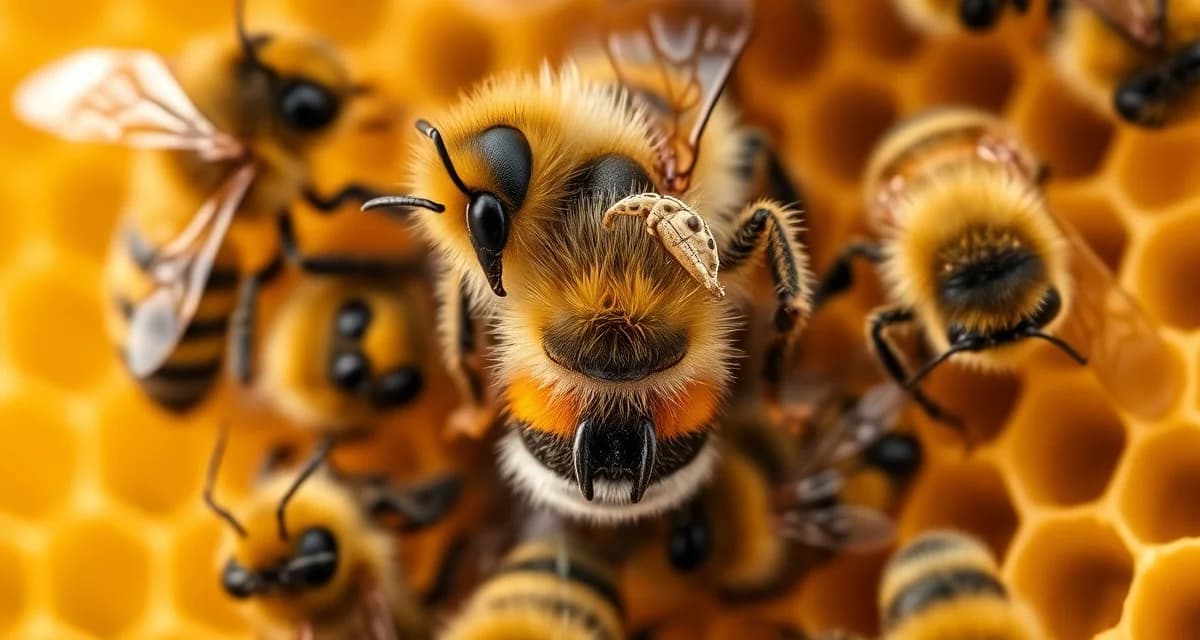
Varroa Mites and Queen Rearing: Protecting Your Queen Program
Varroa infestation in queen cells reduces queen quality and increases early queen failure rates. This is not a minor risk for queen rearers, it's the threat to your whole program.
Varroa mites and queen rearing create a conflict most beekeeping guides don't address directly: the colonies you depend on most for producing quality queens are the ones varroa targets most aggressively. High brood production means high mite reproduction. A cell builder or breeder colony that's carrying mite pressure is quietly damaging the queens you're trying to produce.
No competitor addresses varroa management specifically in the context of queen rearing operations. VarroaVault tracks colony mite loads for queen rearing colonies and flags high-mite breeder colonies before they affect your production quality.
TL;DR
- High varroa loads directly damage queen quality by infesting the queen cell during development
- Mite-damaged queens show reduced sperm viability, shorter productive lifespans, and higher supersedure rates
- Colonies with persistent mite loads above 3% show significantly higher queen failure rates than well-managed colonies
- Track queen events (introduction, supersedure, loss) alongside mite count data to identify correlations
- Spring queen problems that seem random often trace back to fall varroa pressure on the previous queen cohort
- VarroaVault links queen event records to mite count history for each colony
How Varroa Affects Queen Rearing Success
Mite Infestation in Queen Cells
Varroa reproduces preferentially in drone cells and queen cells. A queen cell in a colony with active varroa provides exactly the conditions mites seek, an extended capping period, a developing reproductive female, and a large cell. Mites entering a queen cell at capping can damage the developing queen through feeding and viral transmission.
Queens that emerge from infested cells may appear viable but show:
- Reduced reproductive longevity
- Lower sperm viability
- Compromised immune function
- Higher susceptibility to wing deformity (from DWV transmission)
- Earlier supercedure or failure
You might not see these problems at acceptance. They show up weeks later as spotty brood, early queen failure, or unexplained supersedure.
Mite Pressure in Cell Builder Colonies
Cell builders by definition are strong, well-populated colonies loaded with nurse bees. They're excellent at raising queen cells. They're also excellent environments for varroa reproduction. A cell builder carrying 3% mites produces cells in a high-varroa environment, and some of those mites will enter your cells.
Managing varroa in cell builders requires a different approach than standard treatment timing. You need mite loads low during cell production, not just before or after it.
Contamination of Breeding Stock Assessment
If your breeder colony has elevated mite loads, you can't accurately assess its hygienic behavior or VSH traits. A colony that appears to manage mites well may simply be in a lower-mite environment. Conversely, a colony with genuine hygienic behavior may have its traits masked by external mite pressure.
Accurate breeding selection requires controlled mite environments.
Managing Varroa in Queen Rearing Colonies
Pre-Season Breeder Preparation
Before your queen rearing season opens, treat your breeder colonies if mite loads warrant. The goal is entering the season with breeder colonies below 1%, lower than your general colony threshold. Breeders need to be at low mite loads both for accurate selection and to avoid infesting the queens they'll produce.
Treat 6-8 weeks before your queen rearing season starts. This allows full treatment efficacy and a PHI-clear window before you're grafting from breeder colonies.
Cell Builder Colony Management
Cell builders need active mite management through the production season. A cell builder that looks strong and healthy at 3% mites is still producing cells in a compromised environment. Aim to keep cell builders below 2% during active cell production.
OA vaporization during cell production is an option, it's labeled for use with honey supers on and can be applied during brood rearing. The efficacy is lower than on a broodless colony, but it reduces phoretic mite pressure in the cell builder environment.
When Should I Treat a Queen Rearing Colony?
The conventional treatment threshold (3% in summer) is too high for queen rearing colonies. Use a lower threshold:
- Breeders: Treat above 1%. Keep these colonies at the lowest possible mite load for accurate selection and clean queen production.
- Cell builders: Treat above 2%. Mite pressure during cell production directly affects queen quality.
- Mating nucs: Treat if any count exceeds 2%. Small colonies are more vulnerable, and a failing queen in a mating nuc can't absorb the mite pressure a full colony can.
VarroaVault tracks colony mite loads for queen rearing colonies and flags high-mite breeder colonies with a lower threshold alert than standard colonies. You set the colony type, and the alert level adjusts accordingly.
Selecting for Varroa Resistance Through Your Queen Program
Your queen rearing program gives you an opportunity to actively select against varroa susceptibility.
What to Look For
Hygienic behavior: Colonies that remove varroa-infested brood quickly limit in-hive mite reproduction. Standard hygiene testing involves freezing a section of brood and measuring the removal rate at 24 and 48 hours.
Varroa-Sensitive Hygiene (VSH): A more specific trait where bees detect and remove mite-infested cells specifically. VSH colonies show lower mite reproduction rates even at equal starting mite loads.
Natural mite growth rate: VarroaVault's efficacy history can reveal which colonies naturally suppress mite population growth between treatments. Colonies that hold mite loads steady while neighboring colonies trend upward may carry favorable resistance genetics.
Screening Breeders
When evaluating potential breeder colonies, assess mite load trends over multiple counts rather than a single data point. A colony with consistently low mite counts despite being in a high-mite environment is showing you something meaningful. A colony that maintains low mites because you treated it heavily tells you nothing about its resistance traits.
Standardized mite load history across your candidate breeders lets you compare on equal terms.
Mating Nuc Varroa Management
Mating nucs are small, often 2-4 frames, with limited populations to buffer against mite damage. A mite load that a full colony would manage without immediate crisis can destabilize a mating nuc quickly.
Check mating nuc mite loads before introduction and again 4 weeks later. Use OA vaporization if mite loads warrant. The small space of a mating nuc actually makes vaporization highly efficient. Keep nucs below 2% throughout the mating season.
Related Articles
FAQ
How does varroa affect queen rearing success?
Varroa mites enter queen cells before capping and infest developing queens. This transmits viruses including DWV, reduces queen quality, and increases early queen failure rates. Cell builder colonies with high mite loads produce cells in a high-mite environment, increasing the proportion of infested cells. Managing breeder and cell builder mite loads is essential for consistent queen quality.
When should I treat varroa in a queen rearing colony?
Treat breeder colonies to below 1% before your queen rearing season begins, target 6-8 weeks before grafting to allow treatment completion and PHI clearance. Cell builders should stay below 2% during active production. Mating nucs should be checked and treated above 2%. These thresholds are lower than for standard production colonies.
How do I select varroa-resistant queens?
Evaluate mite load trends over multiple count intervals rather than single-point data. Colonies that maintain low mite counts consistently, especially in high-mite environments or between treatments, may carry hygienic behavior or VSH traits worth propagating. VarroaVault's count history and efficacy tracking surfaces these patterns across your breeder candidates.
How do I know if my varroa treatment is working?
Run a mite count 2-4 weeks after the treatment ends and compare it to your pre-treatment count. The efficacy formula is: ((pre-count - post-count) / pre-count) x 100. A result above 90% indicates effective treatment. Results below 80% should trigger investigation for possible resistance, application error, or reinfestation. Log both counts in VarroaVault to track efficacy trends across treatment cycles.
How often should I check mite levels in my hives?
At minimum, once per month (every 3-4 weeks) during the active season. Increase to every 2 weeks when counts are near threshold or after a treatment to verify it worked. In fall, monitoring frequency matters most because the window to treat before winter bees are raised is narrow. VarroaVault's monitoring reminders can be set to your preferred interval for each apiary.
What records should I keep for varroa management?
Each record should include: date of count or treatment, hive identifier, monitoring method used, number of bees sampled, mites counted, infestation percentage, treatment product name and EPA registration number, dose applied, treatment start and end dates, and PHI end date. State apiarists typically expect this level of detail during inspections. VarroaVault captures all of these fields in a single log entry.
What is Varroa Mites and Queen Rearing: Protecting Your Queen Program?
Varroa Mites and Queen Rearing: Protecting Your Queen Program is a guide addressing how varroa mite infestations directly threaten queen rearing operations. It explains how high mite loads in cell builder and breeder colonies damage queen quality during development, leading to reduced sperm viability, shorter productive lifespans, and higher supersedure rates. VarroaVault provides tools to track mite loads in queen rearing colonies and flag high-mite breeder colonies before they compromise your production.
How much does Varroa Mites and Queen Rearing: Protecting Your Queen Program cost?
VarroaVault's queen rearing mite tracking tools are available as part of the VarroaVault platform. Pricing details are listed on the VarroaVault pricing page. The core value is preventing costly queen failures caused by undetected mite pressure in breeder and cell builder colonies—losses that far outweigh the cost of proactive monitoring.
Sources
- American Beekeeping Federation (ABF)
- USDA ARS Bee Research Laboratory
- Honey Bee Health Coalition
- Penn State Extension Apiculture Program
- Project Apis m.
Protect Your Queen Program at the Foundation
A queen program built on high-mite breeders produces queens that fail prematurely. Learn how [varroa mite lifecycle and reproduction affects your breeder colonies](/varroa-mite-lifecycle-and-reproduction) and review the varroa treatment timing guide to build a pre-season breeder preparation schedule that protects your grafts.
VarroaVault's queen rearing colony type setting adjusts your threshold alerts to protect your production quality, not just your colony survival.
Get Started with VarroaVault
The information in this guide is most useful when you have your own mite count data to apply it to. VarroaVault stores every count, flags threshold crossings automatically, and builds the treatment history you need for state inspections and effective management decisions. See pricing and free tools at varroavault.com.