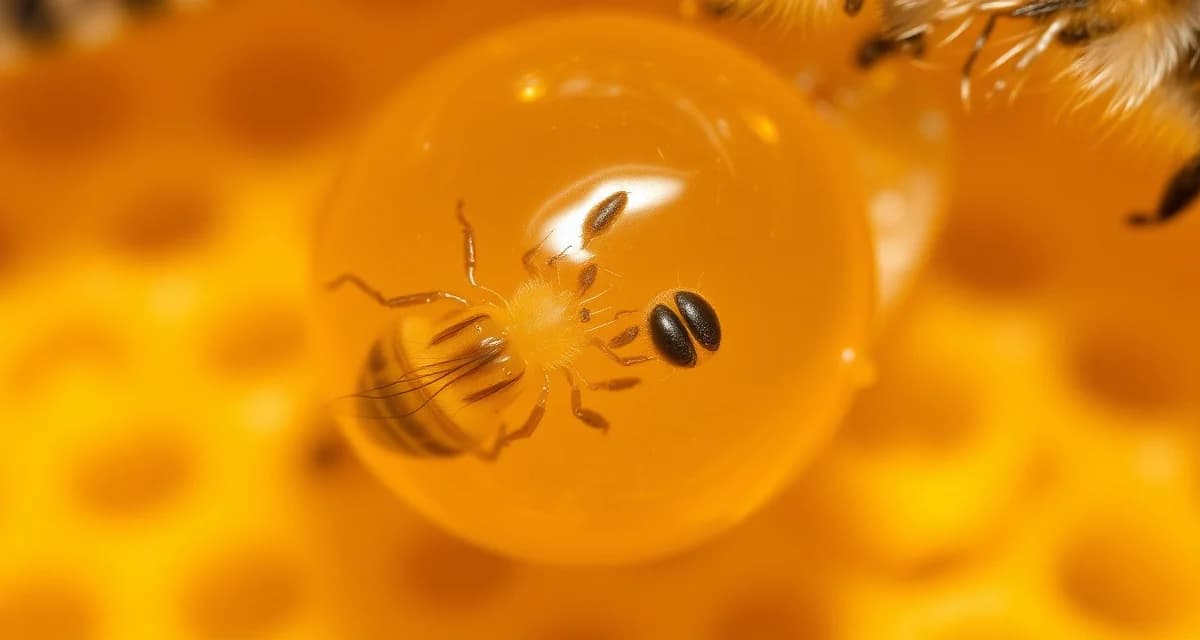
Varroa Mites and Queen Productivity: The Hidden Connection
Colonies with mite loads consistently above 2% have queen supersedure rates 2.5x higher than low-mite colonies. If you've been losing queens regularly and can't figure out why, your mite load may be the explanation you've been missing.
TL;DR
- High varroa loads directly damage queen quality by infesting the queen cell during development
- Mite-damaged queens show reduced sperm viability, shorter productive lifespans, and higher supersedure rates
- Colonies with persistent mite loads above 3% show significantly higher queen failure rates than well-managed colonies
- Track queen events (introduction, supersedure, loss) alongside mite count data to identify correlations
- Spring queen problems that seem random often trace back to fall varroa pressure on the previous queen cohort
- VarroaVault links queen event records to mite count history for each colony
How Varroa Damages Queen Development
Queen cells receive the same attention from nurse bees as worker brood, which means they're vulnerable to the same varroa infestation dynamics. The key difference: while worker brood cells produce one adult bee, queen cells are critical infrastructure for the entire colony's future. Damage to a developing queen has consequences that worker brood damage doesn't.
When varroa infests a queen cell (which it does, at rates comparable to drone brood), the feeding damage affects the developing queen's fat bodies and reproductive anatomy. Research has shown that queens that develop in cells with varroa infestation show:
- Reduced body weight at emergence
- Lower egg-laying rates in the first weeks post-mating
- Shorter productive life before supersedure
- Higher rates of early supersedure (within 90 days of introduction)
The colonies that produce these queens also have fewer nurse bees available to properly feed developing queen larvae, because mite-damaged worker bees have shorter lives and the colony's overall nurse bee population is stressed.
Why High-Mite Colonies Keep Losing Queens
The pattern that frustrates beekeepers in high-mite operations:
- A queen is introduced successfully
- The queen begins laying
- Somewhere between 30 and 120 days later, the colony supersedes or loses the queen
- A new queen is raised (often with questionable mating because the colony is weaker)
- The cycle repeats
This isn't bad luck or poor queen genetics, though those can also be factors. It's a mite-driven colony health problem.
Mite-damaged bees live shorter lives. The colony's population declines. Workers that are failing to thrive experience nutritional deficits that affect their ability to feed and maintain a laying queen properly. The queen's egg production is physically demanding; a colony that can't support her metabolically triggers worker instinct to supersede.
Additionally, some research suggests that elevated viral titers in high-mite colonies (particularly Sacbrood and BQCV, which varroa transmits) may affect the quality of royal jelly produced by nurse bees, impacting queen development and longevity.
The Numbers: What High Mite Loads Do to Queen Retention
Comparative data from tracked colonies shows the supersedure rate differential clearly:
- Colonies maintained below 2% infestation: approximately 8-12% annual supersedure rate (normal background level)
- Colonies with chronic 2-4% infestation: approximately 20-30% supersedure rate
- Colonies with chronic above 4% infestation: above 30% supersedure rate, often with failed queens rather than supersedure
If you're replacing queens every season on one or more colonies, check the mite history for those specific hives. In a significant percentage of cases, high mite loads are a contributing factor.
What This Means for Queen Breeders
For queen breeders, the connection between mite levels and queen quality has direct selection implications:
If you're evaluating queen lines for productivity and longevity, mite loads confound your data. A queen line that appears to produce short-lived queens in a high-mite apiary might produce excellent queens in a lower-mite environment. You need to control mite levels to isolate genetic effects from mite-damage effects.
Queen production colonies need low mite levels, not just average management. The cells you're grafting from, the starter and finisher colonies, and the mating nucs all need mite levels below 1% to produce queens of consistent quality.
Mating nucs are particularly vulnerable. A 2-frame mating nuc at 2% infestation has the same number of mites as a 10-frame colony at 0.4%. In small colony format, that mite burden is proportionally devastating to the developing queen.
Tracking Queen Events and Mite Levels in VarroaVault
VarroaVault's queen event correlation report shows supersedure rate versus mite count history for each hive in your account. To use it:
- Log queen events: introduction dates, supersedure events, queen loss events, replacement dates
- Log mite counts on a regular schedule
- Run the Queen Event Correlation report at the end of the season
The report shows, for each hive with a queen event: the average mite count in the 60 days before the event, whether the event followed a period of elevated mite pressure, and a comparison of the hive's queen event history against the account average.
If you have multiple queen losses in hives that show elevated pre-event mite counts, that pattern is worth addressing. Getting mite levels below 1% year-round on your production colonies is the management change that makes the biggest difference for queen retention.
Frequently Asked Questions
Does varroa damage queens?
Yes. Varroa can infest queen cells directly and damage the developing queen. Beyond direct infestation, high mite loads throughout the colony damage the nurse bees that care for queens and the overall nutritional quality the colony can provide to a laying queen. Colonies with chronic above-2% mite loads show 2.5x higher queen supersedure rates than low-mite colonies.
Why do I keep losing queens in high-mite colonies?
Mite-damaged colonies lose queens for several interconnected reasons: mite-infested queen cells can produce lower-quality queens, mite-damaged nurse bees have less capacity to feed and maintain a laying queen, elevated viral titers in high-mite colonies may affect royal jelly quality, and the overall nutritional deficit in mite-stressed colonies creates conditions that trigger supersedure behavior.
Does VarroaVault track the relationship between mite levels and queen events?
Yes. VarroaVault's Queen Event Correlation report shows queen introduction, supersedure, and loss events alongside the colony's mite count history for the 60 days preceding each event. After a full season of logged data, the report reveals whether queen events are clustering around periods of elevated mite pressure, which helps distinguish mite-related queen problems from genetic or management issues.
How do I know if my varroa treatment is working?
Run a mite count 2-4 weeks after the treatment ends and compare it to your pre-treatment count. The efficacy formula is: ((pre-count - post-count) / pre-count) x 100. A result above 90% indicates effective treatment. Results below 80% should trigger investigation for possible resistance, application error, or reinfestation. Log both counts in VarroaVault to track efficacy trends across treatment cycles.
How often should I check mite levels in my hives?
At minimum, once per month (every 3-4 weeks) during the active season. Increase to every 2 weeks when counts are near threshold or after a treatment to verify it worked. In fall, monitoring frequency matters most because the window to treat before winter bees are raised is narrow. VarroaVault's monitoring reminders can be set to your preferred interval for each apiary.
What records should I keep for varroa management?
Each record should include: date of count or treatment, hive identifier, monitoring method used, number of bees sampled, mites counted, infestation percentage, treatment product name and EPA registration number, dose applied, treatment start and end dates, and PHI end date. State apiarists typically expect this level of detail during inspections. VarroaVault captures all of these fields in a single log entry.
What is Varroa Mites and Queen Productivity: The Hidden Connection?
Varroa Mites and Queen Productivity: The Hidden Connection is an educational article on VarroaVault that explores how varroa mite infestations directly harm queen bee development and colony health. It explains that colonies with mite loads above 2-3% experience queen supersedure rates 2.5 times higher than well-managed colonies, and outlines how tracking mite counts alongside queen events can help beekeepers identify and address the root cause of recurring queen failures.
How much does Varroa Mites and Queen Productivity: The Hidden Connection cost?
This article is free educational content published on VarroaVault. VarroaVault is a colony management platform, and while the article itself costs nothing to read, full access to VarroaVault's tools — including linked queen event records and mite count history tracking — may require a subscription. Check VarroaVault's pricing page for current plan details.
How does Varroa Mites and Queen Productivity: The Hidden Connection work?
The article works by connecting two data points beekeepers often track separately: mite load percentages and queen health events. It explains the biological mechanism by which varroa infest queen cells during development, reducing sperm viability and shortening productive queen lifespans. It also highlights how fall varroa pressure can cause spring queen problems that appear unrelated, helping beekeepers recognize delayed consequences of poor mite management.
What are the benefits of Varroa Mites and Queen Productivity: The Hidden Connection?
The key benefit is understanding a frequently overlooked cause of queen failure. Instead of attributing queen losses to bad luck or poor genetics, beekeepers learn to correlate mite data with queen events. This leads to earlier interventions, better treatment timing, and more stable colonies. For beekeepers using VarroaVault, the platform links queen records directly to mite count history, making these patterns visible and actionable across an entire apiary.
Who needs Varroa Mites and Queen Productivity: The Hidden Connection?
Any beekeeper experiencing unexplained or recurring queen failures will benefit from this article — particularly those who track mite counts but haven't connected them to queen health outcomes. It's especially relevant for beekeepers managing multiple colonies, those preparing for spring splits or requeening, and anyone who lost queens last spring and wants to understand whether fall varroa pressure on the previous queen cohort may have been the underlying cause.
Related Articles
- How Often Should You Test for Varroa Mites?
- How to Treat Varroa Mites: Your Direct Answer
- Sacbrood and Varroa: Is There a Connection?
- Summer Varroa Pressure: Managing Mites During Peak Bee Season
Sources
- American Beekeeping Federation (ABF)
- USDA ARS Bee Research Laboratory
- Honey Bee Health Coalition
- Penn State Extension Apiculture Program
- Project Apis m.
Get Started with VarroaVault
The information in this guide is most useful when you have your own mite count data to apply it to. VarroaVault stores every count, flags threshold crossings automatically, and builds the treatment history you need for state inspections and effective management decisions. See pricing and free tools at varroavault.com.