Sacbrood and Varroa: Is There a Connection?
New beekeepers often open a hive, see dead larvae in cells, and panic. A few dead larvae in an otherwise healthy colony is usually nothing to worry about. But when you're seeing a pattern, the diagnosis matters because the response is different depending on what's causing the problem.
Sacbrood and varroa brood damage can be confused visually. A mite count confirms whether varroa is the primary issue, but knowing what you're looking at in the first place helps you decide whether to count or whether to investigate something else.
TL;DR
- Sacbrood is a viral disease of honey bee brood that can be confused with varroa-damaged brood
- The key distinction: sacbrood larvae dry to a flat dark scale with a gondola shape; varroa damage shows different patterns
- Varroa mites vector sacbrood virus and amplify its spread within colonies under mite pressure
- Sacbrood often clears on its own as colonies strengthen; varroa-transmitted sacbrood is more persistent
- High mite loads consistently correlate with higher sacbrood prevalence in affected apiaries
- Track both sacbrood observations and mite counts in VarroaVault to correlate virus with mite pressure
What Sacbrood Looks Like
Sacbrood is caused by Sacbrood virus (SBV), which infects larvae just before they would normally pupate. The infected larva dies and turns into a sac-like structure filled with watery fluid. The body changes color as it breaks down: yellow, then brown, then dark brown or black as it desiccates.
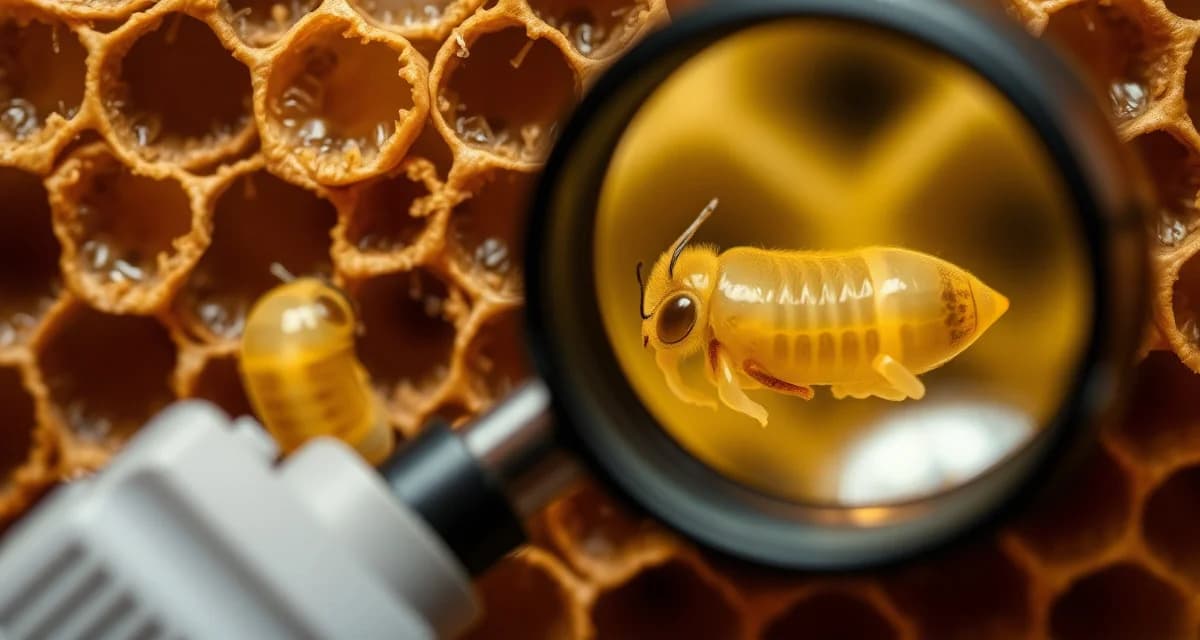
The characteristic appearance is a flat, scale-like dead larva in an uncapped or removed cell, often with the head end slightly raised and the body flattened against the cell wall. Some beekeepers describe it as looking like a gondola shape. The fluid-filled sac stage is most distinctive, though you have to see it early in the sequence.
Sacbrood larvae are in uncapped or recently opened cells. House bees remove cappings from affected cells and attempt to clean them out, which is why you often see spotty, uncapped brood in colonies with sacbrood.
What Varroa Brood Damage Looks Like
Varroa damage is different. Mite-affected pupae typically die in capped cells, so you're looking for sunken, perforated, or discolored cappings over cells where normal pupae should be developing. When you uncap these cells, you may find:
- Underdeveloped pupae
- Multiple dead mites inside a cell (adult female plus offspring)
- Bees that would emerge with DWV symptoms (crumpled wings)
- White or yellowish material from disrupted larval development
Varroa damage is inside capped cells. Sacbrood damage is typically in uncapped or removed-cap cells with visible scale-like or sac-like larvae.
The key practical difference: if you're seeing dead larvae in open cells with a characteristic scale, that's sacbrood. If you're seeing perforated or discolored cappings over sealed brood with abnormal development inside, that's mite-related.
Is Sacbrood Related to High Mite Levels?
The relationship is indirect. Sacbrood virus is present at low levels in most colonies and normally suppressed by healthy bees. Under immune stress, including the kind of immune compromise that high varroa loads impose on developing larvae, Sacbrood virus can express more aggressively.
This is why an alcohol wash is the right next step when you see sacbrood. Only a mite count confirms whether varroa is the primary issue. A colony with active sacbrood and high mite loads needs varroa treatment before anything else, because reducing mite pressure will often allow the colony's immune function to recover and suppress the sacbrood naturally.
A colony with sacbrood but low mite counts is a different situation. There, you're looking at other potential stressors: poor nutrition, a colony that's being run on poor forage, or a sacbrood outbreak that will likely self-resolve as the colony builds strength. Sacbrood often diminishes or disappears as nectar flows improve nutrition and colony strength increases.
Logging Brood Health in VarroaVault
VarroaVault's brood condition log allows side-by-side comparison of sacbrood and mite damage records. When you log an inspection, you can note brood symptoms including sacbrood observations, uncapped dead larvae, and percentage of brood affected, alongside or linked to your current mite count.
This connection lets you review whether your sacbrood events correlate with high mite periods in your hive history. Some colonies show recurring sacbrood at specific mite load levels, and that pattern is only visible if you've logged both sets of data consistently.
Use the mite count tracking app to run an alcohol wash any time you're seeing unusual brood patterns. The broader context on varroa-virus relationships, including how varroa stresses colony immune function, is in the varroa and bee viruses guide.
Treatment Approach
If your alcohol wash comes back above threshold in a colony with sacbrood:
- Treat for varroa as the primary intervention
- Ensure the colony has adequate nutrition (sacbrood and immune stress often coincide with poor forage)
- Monitor brood health over the next 2-3 brood cycles as mite loads drop
- If sacbrood persists after mite loads are controlled and nutrition is improved, consider requeening, particularly if the queen is older
If mite loads are below threshold in a sacbrood-affected colony:
- Look for nutritional causes (patchy brood during dearth, limited pollen availability)
- Check queen quality and brood pattern consistency
- Monitor for improvement as conditions improve
- Sacbrood often resolves without intervention when mite loads stay low and nutrition is adequate
Requeening is the most reliable tool for persistent sacbrood in a colony with otherwise good management. New queens from different genetic stock often break the cycle.
Frequently Asked Questions
What does sacbrood look like versus varroa damage?
Sacbrood affects larvae in open or uncapped cells. Dead sacbrood larvae appear as flat, yellowish-to-brown scales in uncapped cells, sometimes with a raised head end and a fluid-filled sac-like body in early stages. Varroa damage occurs in capped cells, presenting as sunken, perforated, or discolored cappings over sealed brood. Inside mite-damaged cells you'll find underdeveloped pupae, mite debris, or dead pupae. Sacbrood is visible in open cells; varroa damage requires opening capped cells to see. The location in the brood sequence is the clearest visual distinction.
Is sacbrood related to high mite levels?
Indirectly, yes. Sacbrood virus exists at background levels in most colonies and is normally suppressed by healthy bee immune function. High varroa loads compromise larval immune function, which can allow Sacbrood virus to express more aggressively. This is why sacbrood sometimes appears or worsens during high-mite periods. Run an alcohol wash if you're seeing sacbrood, because varroa treatment may be the most effective intervention. However, sacbrood can also occur in low-mite colonies under nutritional stress, so mite count data is essential for distinguishing the underlying cause.
How do I log brood health issues alongside mite data in VarroaVault?
In VarroaVault's brood condition log, add an inspection record noting sacbrood observations, including estimated percentage of affected cells, their location in the brood nest, and the stage of affected larvae. This entry links to your current mite count record and treatment history, creating a side-by-side view of brood health and mite load over time. If you log sacbrood repeatedly, the hive history shows whether these events correlate with threshold-crossing mite levels or with other seasonal factors like nutritional stress.
How do I know if my varroa treatment is working?
Run a mite count 2-4 weeks after the treatment ends and compare it to your pre-treatment count. The efficacy formula is: ((pre-count - post-count) / pre-count) x 100. A result above 90% indicates effective treatment. Results below 80% should trigger investigation for possible resistance, application error, or reinfestation. Log both counts in VarroaVault to track efficacy trends across treatment cycles.
How often should I check mite levels in my hives?
At minimum, once per month (every 3-4 weeks) during the active season. Increase to every 2 weeks when counts are near threshold or after a treatment to verify it worked. In fall, monitoring frequency matters most because the window to treat before winter bees are raised is narrow. VarroaVault's monitoring reminders can be set to your preferred interval for each apiary.
What records should I keep for varroa management?
Each record should include: date of count or treatment, hive identifier, monitoring method used, number of bees sampled, mites counted, infestation percentage, treatment product name and EPA registration number, dose applied, treatment start and end dates, and PHI end date. State apiarists typically expect this level of detail during inspections. VarroaVault captures all of these fields in a single log entry.
What is Sacbrood and Varroa: Is There a Connection??
Sacbrood is a viral brood disease caused by Sacbrood virus (SBV), and its connection to varroa mites is significant: varroa act as vectors that spread SBV between bees, amplifying outbreaks in mite-stressed colonies. This article explores how to visually distinguish sacbrood from varroa-damaged brood, why high mite loads correlate with higher sacbrood prevalence, and how tracking both in VarroaVault helps beekeepers understand whether they're dealing with a virus, a mite problem, or both.
How much does Sacbrood and Varroa: Is There a Connection? cost?
Reading this article is free. Managing the underlying problems it describes involves different costs depending on the cause. Sacbrood often resolves without treatment as a colony strengthens. Varroa management involves treatments like oxalic acid or synthetic miticides, typically ranging from a few dollars to around $30 per colony depending on method. The bigger cost of ignoring high mite loads is colony loss, which makes early detection and accurate diagnosis the most economical approach.
How does Sacbrood and Varroa: Is There a Connection? work?
Varroa mites feed on developing brood and adult bees, suppressing immune response and transmitting viruses including SBV. When mite loads are high, SBV spreads more rapidly through a colony and becomes harder for bees to hygienic-behavior their way out of. Beekeepers confirm the connection by running mite counts alongside brood inspections — if sacbrood symptoms persist alongside elevated mite counts, treating for varroa is the priority intervention to allow the colony to recover.
What are the benefits of Sacbrood and Varroa: Is There a Connection??
Understanding the sacbrood-varroa connection helps beekeepers avoid misdiagnosis and wasted effort. Treating for a bacterial disease when the real driver is mite pressure accomplishes nothing. Recognizing the visual difference between sacbrood scales and varroa-damaged brood lets you triage correctly: investigate the virus or run a mite count. Logging both observations in VarroaVault over time reveals patterns across your apiary, helping you identify colonies under chronic mite pressure before losses occur.
Who needs Sacbrood and Varroa: Is There a Connection??
Any beekeeper managing colonies with brood needs this knowledge, but it's especially relevant for newer beekeepers who encounter dead larvae and aren't sure what they're seeing. Beekeepers in apiaries with historically high mite pressure, those running untreated or treatment-minimal programs, and anyone seeing persistent brood abnormalities should understand this connection. It's also useful for experienced beekeepers mentoring others or conducting hive inspections where sacbrood and varroa damage are easily conflated.
Related Articles
Sources
- American Beekeeping Federation (ABF)
- USDA ARS Bee Research Laboratory
- Honey Bee Health Coalition
- Penn State Extension Apiculture Program
- Project Apis m.
Get Started with VarroaVault
The information in this guide is most useful when you have your own mite count data to apply it to. VarroaVault stores every count, flags threshold crossings automatically, and builds the treatment history you need for state inspections and effective management decisions. See pricing and free tools at varroavault.com.