Varroa and Deformed Wing Virus: Understanding the Connection
Varroa destructor is not just a parasite. It is a vector for a family of viruses that are now the leading cause of colony collapse during winter and fall. Of these, Deformed Wing Virus is the most damaging and the most directly linked to mite management failures. Understanding the Varroa-DWV relationship changes how you think about why Varroa control matters.
What Is Deformed Wing Virus
Deformed Wing Virus (DWV) is an RNA virus that infects developing honey bee pupae. In the absence of Varroa, DWV infections are common but remain at low levels that colonies can tolerate. Infected bees may show no symptoms or have subclinical immune effects. With Varroa, the situation is completely different.
When a Varroa mite reproduces in a capped brood cell, she injects DWV directly into the developing pupa. This bypasses the bee's normal infection defenses and results in high viral titers in the emerging bee. The resulting bee may show obvious symptoms including crumpled, non-functional wings, shortened abdomen, and reduced lifespan, or may appear normal but carry a massive viral load that shortens its functional life and impairs its ability to learn and forage.
Why Varroa-Transmitted DWV Is Different
Varroa acts as a needle for DWV. Without mites, DWV might enter bees through contaminated food or brood care, but at doses the immune system can usually manage. With mites, the virus is delivered directly into the hemolymph during the most vulnerable stage of bee development. Colonies with mite counts above 2% can have 90% or more of their bees carrying DWV at high levels.
This is why controlling Varroa is not just about managing the direct feeding damage of the mite. It is about breaking the DWV transmission cycle. A colony that looks healthy in midsummer but has a 3% mite load is producing DWV-infected winter bees that will die in November rather than March. The colony does not fail because it ran out of bees. It fails because the bees it did produce were pre-damaged before they even emerged.
Recognizing DWV in Your Colonies
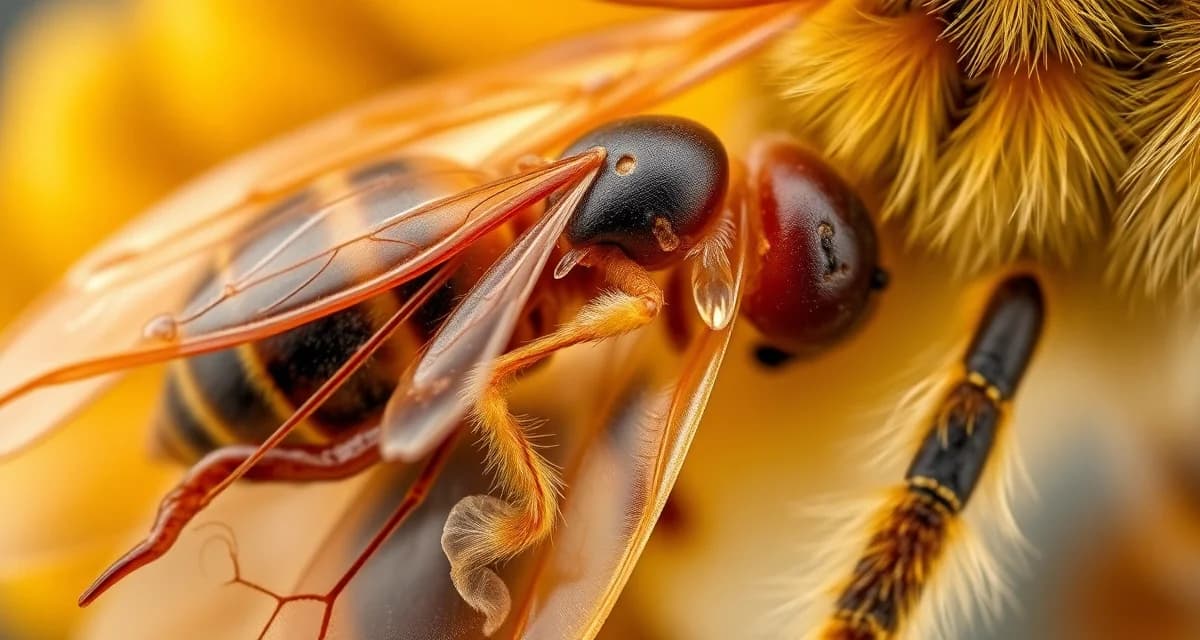
Classic DWV symptoms in adult bees: crumpled, vestigial wings that cannot extend fully, shortened abdomen, discoloration (darker than normal coloring in severe cases), and bees crawling at the hive entrance unable to fly. If you see bees with these symptoms, you almost certainly have significant mite pressure, even if your last mite count was below threshold.
Subclinical DWV is harder to spot. You may simply notice a colony that does not build as fast as expected in spring, has poor foraging performance, or crashes in late fall when mite counts have already been brought down. Post-mortem alcohol washes often reveal the mite levels present earlier in the season.
DWV and Winter Mortality
The most critical period for DWV is August and September when winter bees are being produced. If mites are reproducing in the cells where winter bees develop, those bees emerge with high DWV titers. A winter bee with DWV cannot maintain its fat body stores at normal levels and will die weeks earlier than an uninfected winter bee. A cluster composed largely of DWV-infected bees may consume its food stores faster and fail before spring even when food supply is adequate.
This is the biological mechanism behind the pre-winter mite treatment urgency described in the varroa treatment timing guides on VarroaVault.
Management Implications
Treating for Varroa is treating for DWV. There is no separate DWV treatment. Keeping mite loads below threshold throughout the season, and especially through the August-September winter bee rearing period, is the only effective DWV management strategy. Monthly mite monitoring, timely treatment, and post-treatment efficacy checks all reduce DWV transmission rates in parallel with reducing mite loads.
VarroaVault's trend tracking shows you whether your mite management is keeping populations below the viral transmission threshold that correlates with serious DWV impact. Set your threshold alerts for 1% going into August to ensure your winter bees are reared in a low-mite environment.
FAQ
What is Varroa and Deformed Wing Virus: Understanding the Connection?
This article explains the biological relationship between Varroa destructor mites and Deformed Wing Virus (DWV), one of the most destructive forces in modern beekeeping. It covers how Varroa acts as a direct vector for DWV, injecting the virus into developing pupae during reproduction, and why this transmission method makes mite-vectored DWV far more damaging than natural viral exposure. Understanding this connection is foundational to effective colony management.
How much does Varroa and Deformed Wing Virus: Understanding the Connection cost?
The article is free to read on VarroaVault. There is no cost or subscription required to access this or any other educational content on the site. VarroaVault exists to help beekeepers understand Varroa biology and management strategies without paywalls, so the full article including all supporting sections is available at no charge.
How does Varroa and Deformed Wing Virus: Understanding the Connection work?
The article works by breaking down complex virology and mite biology into practical, accessible explanations. It walks through what DWV is, why Varroa-transmitted infections are uniquely severe, and what happens to bees exposed during pupal development. By connecting the science to real colony outcomes like winter losses and forager impairment, it helps beekeepers understand the mechanism behind why mite control directly affects colony survival.
What are the benefits of Varroa and Deformed Wing Virus: Understanding the Connection?
Reading this article helps beekeepers move beyond treating Varroa as merely a physical parasite and understand it as a virus amplifier. This reframe motivates more consistent mite monitoring and timely treatment. Beekeepers who understand the DWV connection are better equipped to interpret symptoms, anticipate colony decline before it becomes catastrophic, and make informed decisions about intervention thresholds throughout the season.
Who needs Varroa and Deformed Wing Virus: Understanding the Connection?
Any beekeeper managing colonies where Varroa is present, which is virtually everywhere Apis mellifera is kept, needs this foundational knowledge. It is especially relevant for those experiencing unexplained winter losses, seeing bees with crumpled wings, or struggling to understand why colonies crash despite seemingly low mite counts earlier in the season. New and experienced beekeepers alike benefit from understanding the viral dimension of Varroa infestations.
How long does Varroa and Deformed Wing Virus: Understanding the Connection take?
The article itself takes roughly 10 to 15 minutes to read. However, the real timeline that matters is applying this knowledge to your apiary management calendar. DWV damage accumulates over weeks as mite populations grow through the summer. Acting on this understanding means implementing monitoring and treatment schedules well before the critical late-summer period when winter bees are being raised.
What should I look for when choosing Varroa and Deformed Wing Virus: Understanding the Connection?
When evaluating resources on Varroa and DWV, look for content grounded in current research, clear explanations of the transmission mechanism rather than just symptom lists, and practical guidance tied to the biology. This article focuses specifically on the Varroa-DWV vector relationship rather than general mite management, so pair it with VarroaVault's treatment and monitoring guides for a complete picture of effective integrated pest management.
Is Varroa and Deformed Wing Virus: Understanding the Connection worth it?
Yes. Understanding the Varroa-DWV connection is arguably the single most important conceptual shift a beekeeper can make. Colonies do not just weaken from mite feeding. They collapse because DWV destroys the winter bee cohort that carries the colony through to spring. Beekeepers who understand this treat Varroa management as urgent and time-sensitive rather than optional. That understanding directly translates to healthier colonies and fewer unexplained losses.