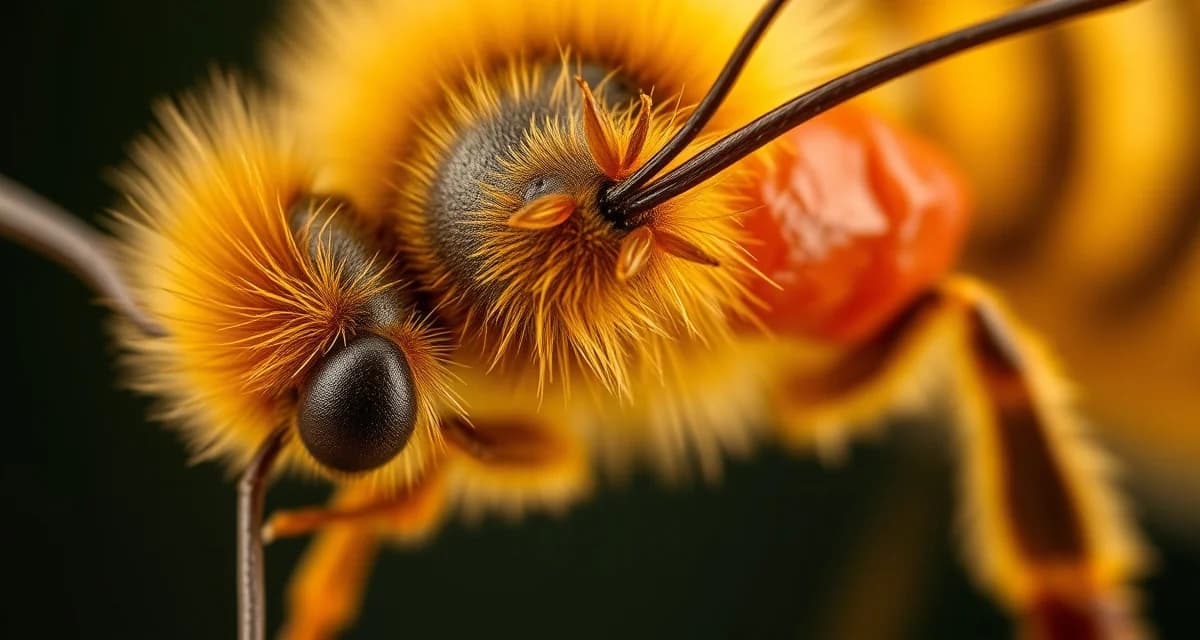
Varroa Mite Biology: Understanding the Enemy to Fight It Better
You can follow all the threshold guidance, buy the right treatments, and still be surprised when colonies collapse. Often, what's missing isn't better products, it's an understanding of why varroa is so hard to control in the first place.
Varroa destructor is one of the most successful parasites in agricultural history. It jumped from its original host (Apis cerana, the Asian honey bee) to Apis mellifera (the Western honey bee) roughly 70 years ago, and it's been winning ever since. To fight it effectively, you need to understand what you're up against.
TL;DR
- Varroa destructor reproduces exclusively in capped honey bee brood cells, preferring drone brood 8:1 over worker brood
- The mite's reproductive cycle is synchronized with the bee pupal stage: females enter cells just before capping
- A single founding female can produce 1-2 reproductive daughters per brood cycle when conditions are favorable
- Phoretic mites (those on adult bees) are the only life stage killed by most varroa treatments
- Understanding the lifecycle explains why treatments targeting only phoretic mites need multiple applications
- Mite populations can double every 4-6 weeks during peak brood rearing season
The Varroa Life Cycle
The Phoretic Phase
Between reproductive cycles, a mated female varroa mite rides on an adult bee, feeding on the bee's fat body and hemolymph, traveling through the colony, waiting for an opportunity to enter a brood cell. This is called the phoretic phase.
In summer, with heavy brood production, a mite might spend as few as 4-9 days in the phoretic phase before entering a new cell. In winter, when brood production stops entirely, all mites are phoretic, riding on adult bees with nowhere to reproduce. That's why winter is the one time OA dribble on a broodless colony can achieve near-100% efficacy.
The phoretic phase is when varroa is most vulnerable. Most treatments work by killing phoretic mites, either through direct contact or fumigation.
Entering the Brood Cell
A phoretic mite enters a brood cell 20-30 hours before capping. She times this precisely, entering when the larva is at the correct feeding stage. She hides in the royal jelly at the bottom of the cell.
Once the cell is capped, the mite begins feeding on the developing pupa's fat body. She lays her first (unfertilized, male) egg, then subsequent fertilized (female) eggs at 30-hour intervals.
Reproduction in the Cell
Inside a capped worker cell (12 days between capping and emergence), a female mite produces:
- 1 male egg (first laid, this male will mate with his sisters)
- 1-3 female eggs (subsequent eggs, potential reproducing daughters)
Only some of the female eggs mature to mated adults before the bee emerges. In a worker cell, typically 1-2 daughters mature successfully and mate with the male before emergence.
The mother mite and her mated daughters all exit with the emerging bee, ready for new phoretic phases and new reproductive cycles.
This is why the population compounds exponentially. A single mated female becomes multiple mated females per brood cycle.
A single mated female varroa can produce 1-2 daughters per brood cycle, exponentially compounding infestations.
How Does Varroa Mite Reproduce?
Here's the population math at work:
Starting with 100 mites in a colony in April:
- Each reproductive cycle: 100 mites → 150-200 mites (50-100% increase per cycle)
- With brood cycles of approximately 12 days, there are roughly 4-5 reproductive cycles per month in summer
- By August, that 100-mite starting population can become 2,000-5,000+ mites
This isn't a linear increase, it's geometric. Which is why a 1% count in April becomes a 4% count in August in an untreated colony, seemingly out of nowhere.
The math also explains why missing the fall treatment window is so costly. A colony entering October with 5% infestation has vastly more mites than one entering October at 1%. Both will be in the broodless cluster by January, but the high-mite colony has already damaged the winter bees being produced in September.
Why Is Varroa So Difficult to Eliminate?
Several biological features make varroa uniquely resistant to simple control:
Protected reproduction. Mites in capped cells are physically inaccessible to most treatments. Only formic acid genuinely penetrates capped brood. OA, amitraz, and thymol work primarily or exclusively on phoretic mites. This is why a single treatment rarely achieves >90% reduction in a colony with brood.
Rapid reproduction. The 50-100% per-cycle increase means mite populations recover quickly after treatment. A 90% knockdown still leaves a mite population that will double back toward threshold within weeks if treatment is not repeated or if reinfestation occurs.
Reinfestation from neighboring colonies. Drifting bees, robbing events, and swarms constantly introduce new mites from untreated or poorly treated colonies in the area. Your perfect treatment result can be undermined by your neighbor's neglected apiary.
Genetic adaptability. Varroa has shown the ability to develop resistance to chemical treatments. Fluvalinate resistance is widespread. Amitraz resistance is growing. Oxalic acid resistance has not been documented at scale, but continued reliance on any single treatment creates selection pressure.
Winter survival. Unlike many bee pathogens, varroa doesn't die off in winter. Mites ride the winter cluster and are ready to begin reproducing the moment the queen starts laying in late winter.
How Does Varroa Mite Biology Affect Treatment Choices?
Understanding the biology directly informs every treatment decision:
Timing relative to brood cycle: Treatments that work only on phoretic mites (OA, most methods) are most effective when brood is minimal or absent. Treatments that penetrate capped brood (formic acid) are valuable when brood is heavy.
Frequency and repetition: Because mites are continuously emerging from cells, a single treatment clears the phoretic population but doesn't touch the reproductive population. Extended protocols and sequential treatments work better than single applications in most cases.
Reinfestation awareness: If your post-treatment count rebounds faster than the mite reproduction rate alone can explain, reinfestation is likely. Logging your counts allows you to see rebound rate and flag outliers.
Resistance rotation: Continuous use of the same treatment class selects for resistance in the mite population. Rotating treatment classes slows this selection process. Understanding why, because only mites with tolerance mutations survive repeated exposure of the same type, makes rotation feel like prevention rather than an arbitrary rule.
Using Biology to Guide Your Program
The biology section in VarroaVault links directly to the mite-level calculator: understand why 2% is dangerous, then measure yours. This pairing, biology education alongside actual measurement tools, closes the gap between understanding and action.
Knowing that a single mated female can produce 1-2 daughters per brood cycle makes it obvious why acting at 1% instead of 3% matters. By the time you're at 3%, you already had a 1% problem for 6-8 weeks.
For the full varroa management overview that applies this biology to your season-by-season program, see the complete varroa management guide. For measurement tools, the mite count tracking app connects your count data to the biology-driven thresholds.
How does varroa mite reproduce?
A mated female varroa mite enters a capped brood cell shortly before it seals, then lays a series of eggs on the developing pupa. The first egg is unfertilized (male); subsequent eggs are fertilized females. The male and mature females mate inside the cell before the bee emerges. The mother and 1-2 mated daughters exit with the emerging bee, ready for new reproductive cycles. This produces a 50-100% population increase per brood cycle, driving the exponential mite growth that makes varroa so dangerous if left unmanaged.
Why is varroa so difficult to eliminate?
Several features make varroa exceptionally hard to control: mites reproduce inside capped cells where most treatments can't reach; the rapid per-cycle population increase means mite loads rebuild quickly after any treatment; reinfestation from neighboring colonies undermines successful local treatment; and mites survive winter on the adult bee cluster, ready to resume reproduction with the first spring brood. No single treatment achieves complete elimination, management requires ongoing monitoring, timely intervention, and treatment rotation to manage resistance.
How does varroa mite biology affect treatment choices?
The biology should drive every treatment decision. Treatments working only on phoretic mites (OA, thymol, amitraz) are most effective when brood is minimal; formic acid's cell-penetrating ability makes it the better choice when brood is heavy. The mite's rapid reproduction rate means single treatments rarely provide lasting control, extended protocols, sequential treatments, and timed follow-up counts are standard practice. And the documented resistance to fluvalinate and emerging amitraz resistance make class rotation a biological necessity, not just a guideline.
How do I know if my varroa treatment is working?
Run a mite count 2-4 weeks after the treatment ends and compare it to your pre-treatment count. The efficacy formula is: ((pre-count - post-count) / pre-count) x 100. A result above 90% indicates effective treatment. Results below 80% should trigger investigation for possible resistance, application error, or reinfestation. Log both counts in VarroaVault to track efficacy trends across treatment cycles.
How often should I check mite levels in my hives?
At minimum, once per month (every 3-4 weeks) during the active season. Increase to every 2 weeks when counts are near threshold or after a treatment to verify it worked. In fall, monitoring frequency matters most because the window to treat before winter bees are raised is narrow. VarroaVault's monitoring reminders can be set to your preferred interval for each apiary.
What records should I keep for varroa management?
Each record should include: date of count or treatment, hive identifier, monitoring method used, number of bees sampled, mites counted, infestation percentage, treatment product name and EPA registration number, dose applied, treatment start and end dates, and PHI end date. State apiarists typically expect this level of detail during inspections. VarroaVault captures all of these fields in a single log entry.
FAQ
What is Varroa Mite Biology: Understanding the Enemy to Fight It Better?
Varroa Mite Biology: Understanding the Enemy to Fight It Better is an educational guide published on VarroaVault that explains how Varroa destructor lives, reproduces, and spreads through honey bee colonies. It covers the mite's phoretic and reproductive phases, its preference for drone brood, and why its lifecycle makes it so difficult to eradicate. The article gives beekeepers the biological foundation needed to make smarter treatment decisions rather than relying on products alone.
How much does Varroa Mite Biology: Understanding the Enemy to Fight It Better cost?
This article is completely free to read on VarroaVault. There is no subscription, paywall, or purchase required. VarroaVault publishes varroa management resources at no cost to help beekeepers at every level access accurate, science-based information. If you want to go deeper, the site links to related tools and data visualizations that are also freely available.
How does Varroa Mite Biology: Understanding the Enemy to Fight It Better work?
The article works by breaking down the varroa lifecycle into clear phases — phoretic (mites riding adult bees) and reproductive (mites hidden inside capped brood cells). It explains how the mite's biology determines when treatments are effective, why mite populations can double every four to six weeks during brood season, and how a single founding female can produce one to two reproductive daughters per cycle.
What are the benefits of Varroa Mite Biology: Understanding the Enemy to Fight It Better?
Understanding varroa biology helps beekeepers stop guessing and start targeting the right life stage at the right time. The main benefit is knowing why most treatments only kill phoretic mites, which explains why repeated applications are often necessary. With this knowledge, beekeepers can time interventions more precisely, reduce unnecessary chemical use, and avoid the colony collapses that catch even experienced keepers off guard.
Who needs Varroa Mite Biology: Understanding the Enemy to Fight It Better?
Any beekeeper managing Apis mellifera colonies needs this knowledge, but it is especially valuable for those who have followed threshold guidelines and still lost hives. New beekeepers benefit from building the right mental model early. Experienced keepers benefit from understanding the 'why' behind treatment protocols. If you have ever been confused about why a single oxalic acid treatment did not solve your mite problem, this article is for you.
How long does Varroa Mite Biology: Understanding the Enemy to Fight It Better take?
Reading the article takes roughly ten to fifteen minutes. Applying the concepts is an ongoing process that plays out across the beekeeping season. The mite's reproductive cycle runs on the same schedule as brood rearing, so understanding the biology once gives you a framework you will use every time you inspect a hive, plan a treatment, or evaluate whether a brood break makes strategic sense for your apiary.
What should I look for when choosing Varroa Mite Biology: Understanding the Enemy to Fight It Better?
When choosing educational resources on varroa management, look for content grounded in the actual biology of Varroa destructor rather than generic treatment checklists. Good resources explain the phoretic and reproductive phases separately, acknowledge the drone brood preference, and connect lifecycle timing to treatment strategy. This article does all three. It also links to threshold data and visualization tools so you can move from understanding to active monitoring.
Is Varroa Mite Biology: Understanding the Enemy to Fight It Better worth it?
Yes. Most varroa treatment failures come down to a mismatch between treatment timing and mite lifecycle stage, not product quality. Understanding that treatments only reach phoretic mites, and that the reproductive phase inside capped cells is largely protected, fundamentally changes how you plan your management calendar. The time invested in reading this article pays back every season by helping you intervene earlier, more precisely, and with a clearer sense of what you are actually trying to accomplish.
Sources
- American Beekeeping Federation (ABF)
- USDA ARS Bee Research Laboratory
- Honey Bee Health Coalition
- Penn State Extension Apiculture Program
- Project Apis m.
Get Started with VarroaVault
The information in this guide is most useful when you have your own mite count data to apply it to. VarroaVault stores every count, flags threshold crossings automatically, and builds the treatment history you need for state inspections and effective management decisions. See pricing and free tools at varroavault.com.